Showing posts with label food. Show all posts

Monday, September 29, 2025

Repugnance and consequence-insensitivity (in connection to opposition to genetically-engineered food)

 There is a well developed literature on repugnance connected to food, and here is a recent, interesting example that focuses on the relationship between consequence-insensitivity and other correlates of moral outrage.

Inbar, Yoel, Sydney E. Scott, and Paul Rozin. "Moral opposition to genetically engineered food in the United States, France, and Germany." Annals of the New York Academy of Sciences (2025). 

 ABSTRACT: "When people are morally opposed to a practice, they often profess to be consequence-insensitive—that is, they say that they think it ought to be prohibited regardless of the risks and benefits. We investigate consequence-insensitive opposition to genetically engineered (GE) food in France, Germany, and the United States. Using nationally representative samples (total N = 1599), we find that most GE food opponents in all three countries are consequence-insensitive (France: 93.1%; Germany: 87.4%; United States: 81.3%). Consequence-insensitive opponents differ from other opponents in other ways consistent with their holding moral beliefs. They are more likely to display other properties of sacred moral values, like quantity insensitivity and universalism. They also see GE food as more personally important, are less willing to consume it, are more in favor of policies restricting it, and are more willing to engage in activism against it."


"In their research on moral GE food opposition in the United States, Scott et al. [15] asked par “It is equally wrong to allow some of this to happen as to allow twice as much to happen. The amount doesn't matter” (quantity insensitivity); and “This would be wrong even in a country where everyone thought it was not wrong” (universalism)ticipants three questions that were originally developed by Baron and Spranca [14] for their research on sacred values (which they call “protected values”). Scott et al.’s primary analyses focused on the consequence-insensitivity question, which asked whether GE food “should be prohibited no matter how great the benefits and minor the risks from allowing it.” Likewise, we here focus on the consequence-insensitivity item and test whether responses to other questions theoretically related to sacred values differ between consequence-sensitive and consequence-insensitive opponents. In the current study, we used two other items related to sacred values that were previously used in Scott et al.: “It is equally wrong to allow some of this to happen as to allow twice as much to happen. The amount doesn't matter” (quantity insensitivity); and “This would be wrong even in a country where everyone thought it was not wrong” (universalism). We also added two new exploratory items that were intended to tap moral outrage at the juxtaposition of secular (financial) considerations with sacred values [19]: “I am offended by the idea of putting a monetary price on allowing this”; and “It is morally wrong to put a monetary price on allowing this practice.” For each of these items, we test whether responses differ between consequence-sensitive and consequence-insensitive opponents. If consequence-insensitive opponents are more likely to display quantity insensitivity, universalism, and moral outrage at sacred-secular tradeoffs than consequence-sensitive opponents, then this would provide further evidence that consequence-insensitive opponents moralize GE food more than consequence-sensitive opponents."
 

Sunday, August 31, 2025

Abhijit Banerjee's column on food and economics, in The Times of India

 Abhijit Banerjee writes a monthly column on food (cooking it and eating it) and economics, in The Times of India

You can see them all at the link, but here's a recent example:

Trade wars and chocolate bars, what India of the 1970s can teach Trump  May 31, 2025,  Abhijit Banerjee in Tasting Economics

"One advantage/disadvantage of being old is that I lived through what is history to so many others. President Trump adores William McKinley, the 25th US president, for his tariffs, but at 78, he is way too young to have lived behind a properly high tariff wall. I, on the other hand, lived in the India of the 1970s, when we had managed to kill almost all international trade through a combination of tariffs and other rules for importing (non-tariff barriers in trade parlance).

I mostly experienced trade barriers through the important lens of chocolate."

Sunday, August 24, 2025

Meat and dairy allergy ( to alpha-gal), ticks and gene-modified pigs

 A previously rare allergy to a sugar molecule called alpha-gal, found in almost all mammals but humans, is now being spread by tick bites.  But alpha-gal is also the sugar that is genetically engineered out of pigs that are being bred for xenotransplants. So there may be a secondary market for pork chops from those pigs... 

‘We can no longer eat burgers or ice cream — all because of a tick bite’
A bug-borne disease has taken over Martha’s Vineyard and is turning people vegan
, locals claim.  by Samuel Lovett 

"Sufferers cannot eat any food products that contains alpha-gal, a sugar molecule carried by the lone star tick and which is present in all mammals — except humans and some monkeys. This means cheeses, milk and meats from beef to venison are all off the menu. For some, even white sugar cannot be tolerated because it is processed using animal-bone char.

"Alpha-gal symptoms including hives, stomach cramps, vomiting and breathlessness often start to appear several hours after eating foods containing the molecule, giving the syndrome its nickname “the midnight allergy”.

...

"Although the prevalence of alpha-gal syndrome on Martha’s Vineyard has rocketed in recent years, the island is “definitely not the worst off”, said Roden-Reynolds. Data from the Centers for Disease Control and Prevention indicates that the Midwest has the highest rates per capita, and the agency estimates that about 450,000 people are living with the disease in the US."


Saturday, August 23, 2025

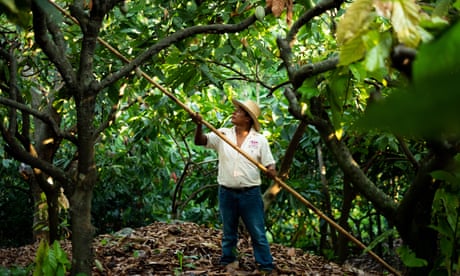
Chocolate fermentation and its microbiome (coming to desserts near you)

 The Guardian brings us the latest breakthrough in chocolate science:

Scientists claim to have unlocked ‘secret sauce’ needed for fine chocolate
Results of studying cocoa bean fermentation in Colombia could pave way to manipulate flavour, say researchers  by Nicola Davis 

"Whether you enjoy an aromatic bar with notes of caramel or something less fancy, chocolate can have many tastes. Now researchers say they have shed fresh light on a key ingredient that could open the door to new flavours.

They claim to have unpicked how and why the bacteria and fungi involved in the fermentation of cocoa beans influence the flavour of chocolate.

“We understand now what microbes we need and what they’re doing. And I think that opens up the opportunity … to be a lot more directed [about] how we make our chocolate in terms of its flavour,” said Prof David Salt, co-author of the work from the University of Nottingham.

Writing in the journal Nature Microbiology, the team report how they studied beans fermented at cocoa farms in three different regions of Colombia – Santander, Huila and Antioquia.

...

"The team then used genetic sequencing to identify the microbes involved in cocoa bean fermentation from multiple sites in Colombia and beyond, explore the genes they contained, and hence identify the flavour substances they could produce during fermentation.

As a result, the researchers identified nine microbes that together were predicted to produce the notes of a fine flavour cocoa. They then introduced this community to sterile cocoa beans, and allowed them to ferment.

The upshot, said Salt, was a cocoa with floral, fruity and citrus notes and a recognisable cocoa flavour but with reduced astringency and bitterness."

Sunday, August 17, 2025

Cat food, for big cats in zoos (you could call it pet food)

 Zoos are complicated.

Here's the story from NPR:

A zoo in Denmark asked patrons to donate their pets. Not as attractions, but for food  By Alana Wise
 

"In a post on Facebook, the Aalborg Zoo in Denmark asked people to donate unwanted pets that would be "gently euthanized" and fed to predators in captivity.

...

"The zoo also accepts horses as part of its fodder program.


"The Facebook post quickly became a battleground between commenters who were appalled at the concept of euthanizing healthy pets for animal feed, and those who applauded the zoo for its method of maintaining a practical food supply for its animals.

...

"The Aalborg Zoo says dogs and cats are excluded from the program. Donatable animals are limited to chickens, rabbits, guinea pigs, and horses, it says, adding that this is a practice it has maintained with patrons for years.

"When keeping carnivores, it is necessary to provide them with meat, preferably with fur, bones, etc., to give them as natural a diet as possible," zoo Deputy Director Pia Nielsen said in a statement to NPR.

"Therefore, it makes sense to allow animals that need to be euthanized for various reasons to be of use in this way. In Denmark, this practice is common, and many of our guests and partners appreciate the opportunity to contribute," Nielsen added."

Wednesday, July 16, 2025

Incinerating food aid

 Here's a story from The Atlantic about a decision that captures the Trump administration's policies towards food aid, carbon emissions, and the Biden administration:

The Trump Administration Is About to Incinerate 500 Tons of Emergency Food
Federal workers warned for months that the high-energy biscuits would go to waste
. By Hana Kiros 

"Five months into its unprecedented dismantling of foreign-aid programs, the Trump administration has given the order to incinerate food instead of sending it to people abroad who need it. Nearly 500 metric tons of emergency food—enough to feed about 1.5 million children for a week—are set to expire tomorrow, according to current and former government employees with direct knowledge of the rations. Within weeks, two of those sources told me, the food, meant for children in Afghanistan and Pakistan, will be ash.

...

"Sometime near the end of the Biden administration, USAID spent about $800,000 on the high-energy biscuits,"

Tuesday, July 15, 2025

Cellular agriculture points the way to removing killing from the food chain

Here's a story from the Washington Post about growing fish-flesh and meat from cells in a lab. The story emphasizes sustainability, but this may be a process that could one day return fish and poultry to the diets of ethical vegetarians. (Of course this is one of those things that could be coming tomorrow and always will be...)

No bones, no scales, no problem: The first lab-grown salmon sold in the U.S.  Wildtype’s cell-cultivated salmon is the first seafood to earn FDA approval, marking a significant milestone for the alternative protein industry.  By Allyson Chiu

"The Coho salmon, pinkish orange and streaked with lines of white fat, wasn’t wild-caught in Alaska or farmed in Chile. It comes from cells grown in tanks at a former microbrewery in San Francisco, and in late May it became the first cell-cultured seafood to receive safety approval from the U.S. Food and Drug Administration.

...

"At least two lab-grown chicken products have previously gotten the FDA’s green light. But the okay for the salmon, made by California-based Wildtype, marks a significant milestone for the alternative protein industry, which has been working to produce substitutes for traditional meat and fish that can help meet the world’s growing demand for food while minimizing environmental and climate impacts. "

Friday, May 9, 2025

Cacao, cocoa, and coca (Etymology meets botany, agriculture and health)

Cocoa and cacao and coca?  Which one of these three things is different from the other two? (I'll leave the harder question of milk versus dark chocolate to the end of the post...)

from Microsoft copilot:

"Coca refers to the Erythroxylum coca plant, native to South America. Its leaves have been traditionally used by indigenous cultures for medicinal and stimulant purposes. Coca contains cocaine alkaloids, which can be extracted to produce the drug cocaine. However, when consumed in its natural form—such as in teas or chewed leaves—it has mild stimulant effects similar to caffeine
 

"Cocoa and cacao come from...the Theobroma cacao tree—but they go through different processing methods, leading to distinct characteristics.
Cacao refers to the raw and less processed version of the seed from the cacao tree. It is typically cold-pressed to preserve its natural enzymes, antioxidants, and nutrients. Cacao nibs and powder have a slightly bitter and earthy flavor, making them popular in health-conscious recipes.
Cocoa, on the other hand, is cacao that has been roasted"


What is the etymology of cocoa and cacao?

"The word cacao comes from the Nahuatl (Aztec) word "cacahuatl," which means "cocoa bean". The cacao tree is native to Central and South America, and its cultivation dates back to at least 1500 BCE among the Mayans and Aztecs.
The word cocoa, on the other hand, is actually a corruption of "cacao" that emerged in English around the 18th century. The confusion likely arose due to the similarity between "cacao" and "coco" (which refers to the coconut), and the mistake was reinforced when dictionary printers accidentally merged the entries for "cocoa" and "coco". By the early 1800s, "cocoa" had become the standard spelling.
So, while "cacao" is the original term, "cocoa" became the more commonly used word in English, especially when referring to processed products like cocoa powder.

#########

Now for the important news on chocolate science from Harvard's School of Public Health:

Eating dark chocolate linked with reduced risk of type 2 diabetes By Maya Brownstein 

"Our findings suggest that not all chocolate is created equal,” said lead author Binkai Liu, doctoral student at the Harvard Kenneth C. Griffin Graduate School of Arts and Sciences, studying in the Harvard Chan School Department of Nutrition. “For anyone who loves chocolate, this is a reminder that making small choices, like choosing dark chocolate over milk chocolate, can make a positive difference to their health.”

The study was published online Dec. 4 in The BMJ.


Monday, April 28, 2025

Drinking less but paying more

 Bloomberg has the story:

We May Have Already Hit Peak Booze. A habit as old as civilization is fading from our society.  By David Fickling


Monday, April 21, 2025

Food: from luxuries to tragedies--chocolate and peanut butter at the opposite ends of human welfare

Below are two stories about food, that couldn't be more different (although the foods, chocolate and peanut butter, have some connection when times are good).

 The (sort of) luxury story, from the Guardian comes with a picture of bonbons:

 US chocolate prices surge amid soaring cocoa costs and tariffs
Price of cocoa – chocolate’s key ingredient – has climbed over past year and tariffs on imports will keep prices high
  by Lauren Aratani

 And here's the tragedy, reported on in The Atlantic

‘In Three Months, Half of Them Will Be Dead’
Elon Musk promised to preserve lifesaving aid to foreign children. Then the Trump administration quietly canceled it. By Hana Kiros

"As DOGE was gutting USAID in February, it alarmed the global-health community by issuing stop-work orders to the two American companies that make a lifesaving peanut paste widely recognized as the best treatment for malnutrition"

...

"The move reneged on an agreement to provide about 3 million children with emergency paste over approximately the next year. What’s more, according to the two companies, the administration has also not awarded separate contracts to shipping companies, leaving much of the food assured by the original reinstated contracts stuck in the United States."


Monday, February 17, 2025

Climate crisis contributing to chocolate market meltdown

 The canary in the coalmine that is climate change is starting to show important signs of stress.

The Guardian has this story:

Climate crisis contributing to chocolate market meltdown, research finds.  Scientists say more-frequent hotter temperatures in west African region are part of reason for reduced harvests and price rises

"The climate crisis drove weeks of high temperatures in the west African region responsible for about 70% of global cacao production, hitting harvests and probably causing further record chocolate prices, researchers have said.

Farmers in the region have struggled with heat, disease and unusual rainfall in recent years, which have contributed to falling production.

The decline has resulted in an increase in the price of cocoa, which is produced from the beans of the cacao tree and is the main ingredient in chocolate.

A new report found that “climate change, due primarily to burning oil, coal and methane gas, is causing hotter temperatures to become more frequent” in places such as the Ivory Coast, Ghana, Cameroon and Nigeria.

The study, by the independent research group Climate Central, found the trend was particularly marked in Ivory Coast and Ghana, the two biggest cacao producers."

Tuesday, September 3, 2024

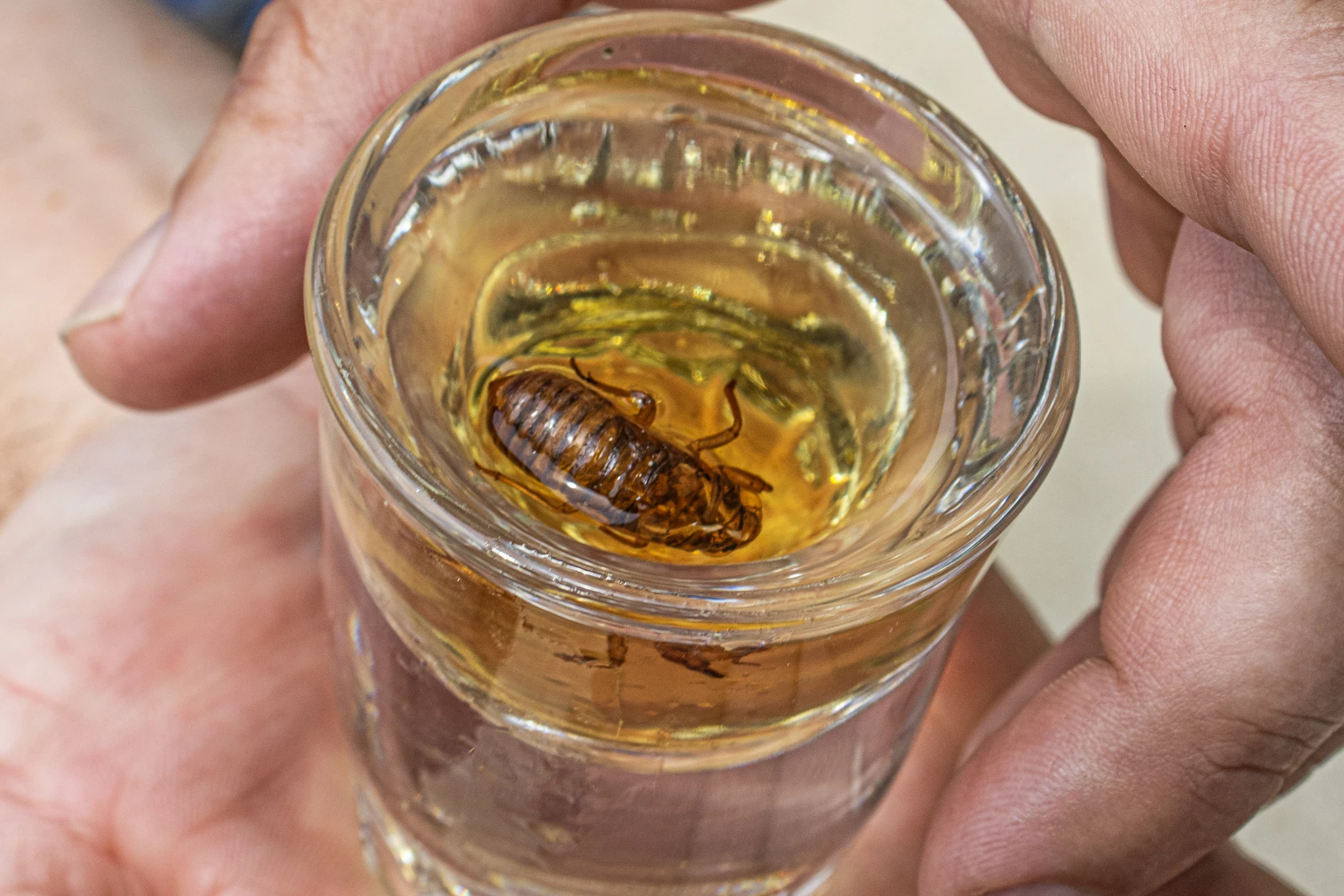
It's illegal to sell cicada infused liquor in Illinois

 Alcohol and insects don't mix in Illinois.  

The Chicago Sun Times has the story:

Suburban brewery fined for selling cicada-infused Malört shot. Noon Whistle Brewing garnered headlines for selling the creative drink during the rare overlap of two cicada broods. But it turns out the shot wasn’t just disgusting — it was also illegal.  By  David Struett 


########

It's a good think the Illinois Liquor Control Commission wasn't running the IRB that approved Sandro Ambuehl's experiment that involved eating insects.

Sunday, March 10, 2024


Saturday, July 20, 2024

Black markets in everything bagels (in S. Korea)

 South Korea is not a hub of everything bagels, it turns out. In fact they are banned.

The NYT has the story:

Why Everything Bagel Seasoning Was Banned in South Korea. The seasoning is sold by Trader Joe’s, a brand whose popularity has skyrocketed in the region in recent years.By Eve Sampson

"Food containing poppy seeds, “including popular bagel seasoning blends,” is considered contraband in South Korea, according to the U.S. Embassy, making the coveted topping a forbidden treat.

...

"As more travelers have tried to bring the popular seasoning mix into South Korea, local news and social media sites have reported in recent weeks on an increase in confiscations at airports.

"Poppy seeds are not opiates but may be contaminated by the plant’s fluid, which contains opiates, when they are harvested. 

...

"In South Korea, poppy seeds are banned because they are considered a narcotic.

...

"South Korea is among the few countries with laws regulating poppy seeds. The United Arab Emirates bans the seed, and Singapore requires anyone wishing to import poppy seeds to submit a sample for opiate testing.

"In the United States, there has also been mixed messaging about poppy seeds. In 2023, the Department of Defense warned members of the military that eating poppy seeds could result in a positive drug test, despite the military previously feeding service members poppy seed breads in ready-to-eat meals."

Sunday, May 5, 2024

Baby formula and U.S. supply chains

 Martha Gershon points me to her latest column, to be followed in due time by a book on feeding babies in America.

The U.S. needs a reliable supply of baby formula. A new bill in Congress can help      By Martha Gershun and Rosa DeLauro  May 2, 2024

"Here’s the background: In February 2022, Abbott recalled three brands of its baby formula after four babies became sick with bacterial infections after consuming the company’s formula. When a Food and Drug Administration inspection uncovered traces of a potentially deadly bacteria in Abbott’s main production plant in Sturgis, Mich., the company shut down the plant, which at the time produced more than 40% of U.S. formula. The shutdown caused cascading supply chain problems, creating a severe shortage of baby formula that lasted more than a year."

Sunday, March 10, 2024

Does high pay equal "undue inducement"? An experiment by Sandro Ambuehl

 Here's an experiment about repugnant transactions, by Sandro Ambuehl.

Ambuehl, Sandro, "An experimental test of whether financial incentives constitute undue inducement in decision-making." Nature Human Behavior (2024). https://doi.org/10.1038/s41562-024-01817-8

Abstract: Around the world, laws limit the incentives that can be paid for transactions such as human research participation, egg donation or gestational surrogacy. A key reason is concerns about ‘undue inducement’—the influential but empirically untested hypothesis that incentives can cause harm by distorting individual decision-making. Here I present two experiments (n = 671 and n = 406), including one based on a highly visceral transaction (eating insects). Incentives caused biased information search—participants offered a higher incentive to comply more often sought encouragement to do so. However, I demonstrate theoretically that such behaviour does not prove that incentives have harmful effects; it is consistent with Bayesian rationality. Empirically, although a substantial minority of participants made bad decisions, incentives did not magnify them in a way that would suggest allowing a transaction but capping incentives. Under the conditions of this experiment, there was no evidence that higher incentives could undermine welfare for transactions that are permissible at low incentives.


From the conclusions:

"Given the potentially high costs of preventing voluntary transactions, experiments paralleling those reported here should be conducted in the field. Unless their results differ drastically from the current ones, the rules and guidelines restricting incentives due to undue inducement concerns should be reconsidered."

Sunday, February 18, 2024

When "demand can't keep up with supply"

Headlines catch my eye more often than subheadlines, but the story below was the exception that proves the rule (a confusing saying in itself, until you realize that "proves" can mean "tests" as in proof reading...) 

The WSJ reports that pork producers are having a problem that is usually associated with some kinds of production in planned economies: demand can't keep up with supply of pork. It makes you wonder if prices are also an issue...

We’re Not Eating Enough Bacon, and That’s a Problem for the Economy. The American pork industry has become so efficient that demand can’t keep up with supply.  By Patrick Thomas

"The American pork industry has a problem: It makes more tenderloin, ham, sausage and bacon than anybody wants to eat. 

"From giant processors to the farmers who supply them, they are in a predicament largely of their own making. They made production so efficient that demand can’t keep up with supply. "

Thursday, November 23, 2023

Thanksgiving cranberries (brought to you by the Ocean Spray cranberry cooperative)

 The WSJ has the story:

These People Are Responsible for the Cranberry Sauce You Love to Hate  By Ben Cohen

"Ocean Spray['s...] farmers are responsible for 65% of the world’s cranberries. It’s not a publicly traded company. It’s not a traditional private company, either. It’s a cooperative founded nearly a century ago and owned by roughly 700 families. 

...

“The mindset and attitude that we need to come up with something is the spirit of what farmers do,” Hayes said. 

"It’s not exactly Apple, but that kind of innovation is baked into the world’s most valuable cranberry business. Ocean Spray wouldn’t have $2 billion in annual sales if it hadn’t adapted and produced new ideas at several critical junctures in the past century.

...

"The cooperative was started in 1930 by “three maverick farmers,” as Ocean Spray calls its founders. One of those entrepreneurs was Marcus Urann, a lawyer who purchased a bog in Massachusetts and went looking for ways to preserve cranberries and sell them year-round. His experiments led him to come up with something: He invented cranberry sauce in a can. The market for canned products soon became so large, and the competition in the cranberry industry so fierce, that Urann came up with something else, banding together with two farmers to establish Ocean Spray. 

...

"The model for Ocean Spray, Dairy Farmers of America and Land O’Lakes became popular because of a 1922 federal law that exempts cooperatives from antitrust regulations, allowing farmers to pool their resources for scale and collective power."

Tuesday, October 17, 2023

The international market for squid (and how squid came to be calamari...)

China's fishing fleet plays a giant role in the international market for squid. The New Yorker has the story:

THE CRIMES BEHIND THE SEAFOOD YOU EAT.  China has invested heavily in an armada of far-flung fishing vessels, in part to extend its global influence. This maritime expansion has come at grave human cost.  By Ian Urbin in collaboration with the Outlaw Ocean Project.

"In the past few decades, partly in an effort to project its influence abroad, China has dramatically expanded its distant-water fishing fleet. Chinese firms now own or operate terminals in ninety-five foreign ports. China estimates that it has twenty-seven hundred distant-water fishing ships, though this figure does not include vessels in contested waters; public records and satellite imaging suggest that the fleet may be closer to sixty-five hundred ships. (The U.S. and the E.U., by contrast, have fewer than three hundred distant-water fishing vessels each.) 

...

" The country is largely unresponsive to international laws, and its fleet is the worst perpetrator of illegal fishing in the world, helping drive species to the brink of extinction. Its ships are also rife with labor trafficking, debt bondage, violence, criminal neglect, and death. “The human-rights abuses on these ships are happening on an industrial and global scale,” Steve Trent, the C.E.O. of the Environmental Justice Foundation, said.

...

"Vessels can now stay at sea for more than two years without returning to land. As a result, global seafood consumption has risen fivefold.

"Squid fishing, or jigging, in particular, has grown with American appetites. Until the early seventies, Americans consumed squid in tiny amounts, mostly at niche restaurants on the coasts. But as overfishing depleted fish stocks the federal government encouraged fishermen to shift their focus to squid, whose stocks were still robust. In 1974, a business-school student named Paul Kalikstein published a master’s thesis asserting that Americans would prefer squid if it were breaded and fried. Promoters suggested calling it “calamari,” the Italian word, which made it sound more like a gourmet dish. (“Squid” is thought to be a sailors’ variant of “squirt,” a reference to squid ink.) By the nineties, chain restaurants across the Midwest were serving squid. Today, Americans eat a hundred thousand tons a year.

...

"China has invested heavily in its fleet. The country now catches more than five billion pounds of seafood a year through distant-water fishing, the biggest portion of it squid. China’s seafood industry, which is estimated to be worth more than thirty-five billion dollars, accounts for a fifth of the international trade, and has helped create fifteen million jobs. The Chinese state owns much of the industry—including some twenty per cent of its squid ships—and oversees the rest through the Overseas Fisheries Association. Today, the nation consumes more than a third of the world’s fish."


Saturday, August 12, 2023

Repugnance watch: British satire considers cellular agriculture in human meat

In The Conversation:

The British Miracle Meat: how banning repugnant choices obscures the real issue of poverty  by Renaud Foucart

"A provocative Channel 4 satirical programme, The British Miracle Meat, has led to hundreds of complaints to media regulator Ofcom. The mockumentary depicts ordinary Britons facing the cost of living crisis selling thin slices of their tissue to an innovative factory that uses it to grow lab meat.

The show was inspired by Jonathan Swift’s satire A Modest Proposal (1726), in which the author of Gulliver’s Travels suggests poor Irish people sell their children for food. The Channel 4 show’s creators wanted to make viewers think about the effects of the cost of living crisis, as well as the future of food.

Viewers were left baffled, however, seeing the show as promoting cannibalism. In the UK, it is illegal to sell human organs and other tissues. But in economics, we teach our students the theory of “repugnant markets” – those in which disgust or distaste lead governments to ban certain transactions rather than tackling the underlying economic reasons for them."

Sunday, June 18, 2023

Black market for mustard in Bogotá

 The NYT has the story:

Colombia’s Mustard Lovers Grow Desperate Amid Saucy Shortage of Dijon. Colombians are scrambling to find the beloved French condiment as a new health law removes it from shelves  by Genevieve Glatsky

"In Colombia, a new illicit product is on the rise. Desperate consumers are sneaking it in suitcases from abroad, hoarding it in their homes, paying outrageous prices online and lining up at clandestine locations to buy it.

"The contraband? Dijon mustard.

"A new health law intended to improve Colombians’ diets — which are heavy on meat and fried food — has led to the disappearance of a host of fare from market shelves, including the French delicacy of the condiment world.

...

"Inspired by a push by the Pan American Health Organization to address high rates of cardiovascular disease in the region, Colombia’s Health Ministry in 2020 imposed limits on high-sodium products, with the measure taking effect last November.

...

"Mustard must have less than 817 milligrams of sodium per 100 grams. A jar of Grey Poupon Dijon mustard has nearly three times that ratio."