Showing posts with label financial. Show all posts

Sunday, November 2, 2025

Surrogacy, and escrow accounts

 Surrogacy contracts involve a long term relationship, focused on a nine month pregnancy.  So commercial surrogacy depends on secure financial arrangements, which generally require funds to be held in escrow.  The WSJ article below documents that these escrow accounts are insufficiently regulated in some states, which can cause serious problems for surrogates and intended parents when the account holders are dishonest or careless.

Surrogacy Is a Multibillion-Dollar Business. Sometimes the Money Goes Missing.  "The growing industry has little regulation and many cases of financial abuse; escrow funds taken to pay gambling debts, buy bitcoin." By Ben Foldy
 

"Escrow companies, used in the majority of surrogacies, can handle millions of client dollars with almost no oversight, according to a Wall Street Journal review of court filings and interviews with parents and surrogates.

...

"The lack of regulation means that parents and surrogates frequently have little legal recourse and dim hopes of recovering lost funds. Already-pregnant surrogates must carry through with labor that they know they may not be paid for, while potentially being on the hook for medical bills they may not be able to afford. Parents face the prospect of messy litigation from unpaid surrogates. One couple whose surrogacy funds disappeared due to fraud before they were able to successfully transfer an embryo said they gave up hope for a pregnancy.

“Holding other people’s money is usually such a highly regulated industry,” said Andrew Bluebond, an attorney in Texas who helped Gallozzi look into what happened at SEAM. The surrogacy community’s relatively small size and intimate domain, Bluebond said, fostered a false sense of financial security.

“Rather than using the safeguards other industries use, they let their trust betray them,” he said. 

...

"Surrogacy has exploded into a multibillion-dollar industry, driven by increasing rates of infertility, expanded insurance coverage, the growing prevalence of LGBTQ families and an influx of couples from countries where the practice is illegal, including China. Last week, President Trump announced a deal aimed at lowering the price of medications used in IVF. 

There were around 10,850 transfers of embryos to surrogates in the U.S. in 2023 involving clinics reporting to the Society for Assisted Reproductive Technology, which says it represents clinics that perform around 95% of all procedures. That was up from 8,461 in 2021. The group’s data and other analyses expect an annual growth rate of about 15% over the coming years. About half of those embryo transfers resulted in successful deliveries.

Despite the growth, there are no federal laws regulating the financial or other aspects of surrogate pregnancies, and the practice is subject to a patchwork of state regulations. In Louisiana, for example, compensating surrogates is outlawed entirely. In a handful of other states, the contracts that often accompany surrogacy arrangements are legally unenforceable. 

...

"Last month, the nonprofit Society for Ethics in Egg Donation and Surrogacy, which functions as a kind of industry best-practices group in lieu of regulation, passed new guidelines for escrow accounts, although they have no binding power. The suggestions recommend escrow providers have relevant credentials, are subject to audits by certified accountants and have more than $10 million in bond coverage. " 


Sunday, June 29, 2025

Harvard's finances (Endowment, expenses, revenue by school)

 Harvard Magazine has a collection of stories related to Harvard's ongoing battle with the Trump administration:  Harvard in the Crosshairs

Here's the introduction to the collection:

The Standoff: Harvard’s Future in the Balance
Introducing a guide to the issues, players, and stakes.  

 Here's a look at Harvard's finances:

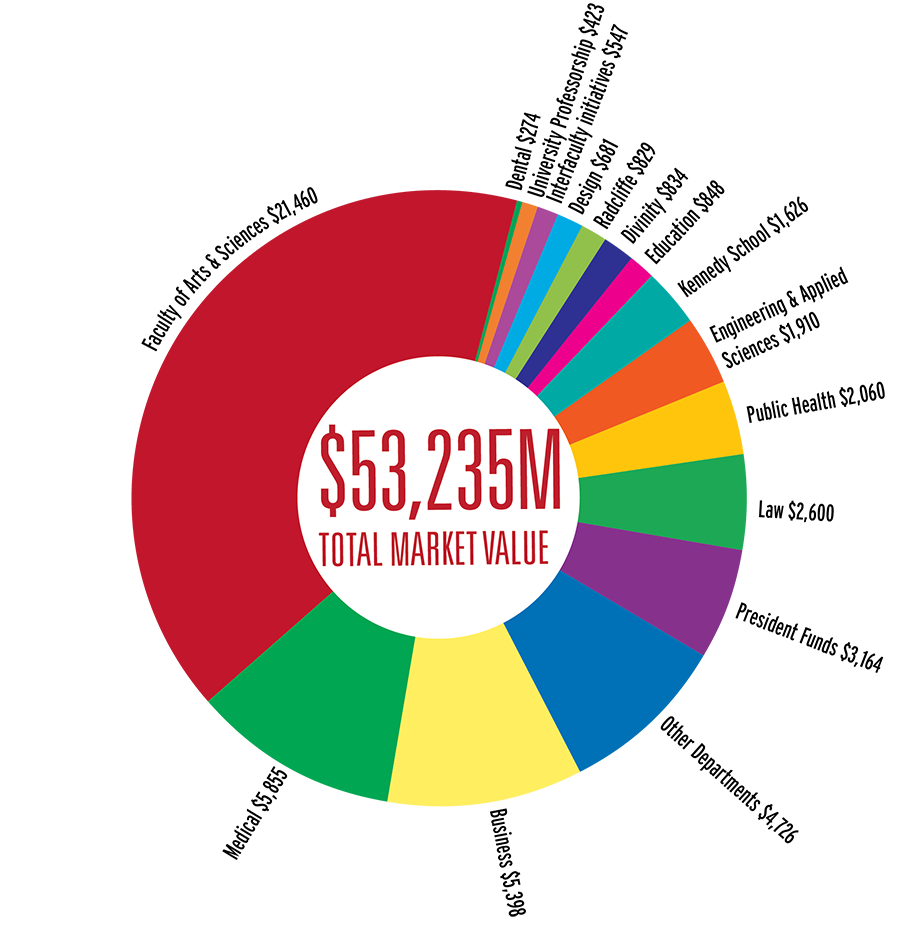
Harvard’s Standoff: The Financial Stakes. Putting Harvard’s $53 billion endowment into perspective
by Jonathan Shaw

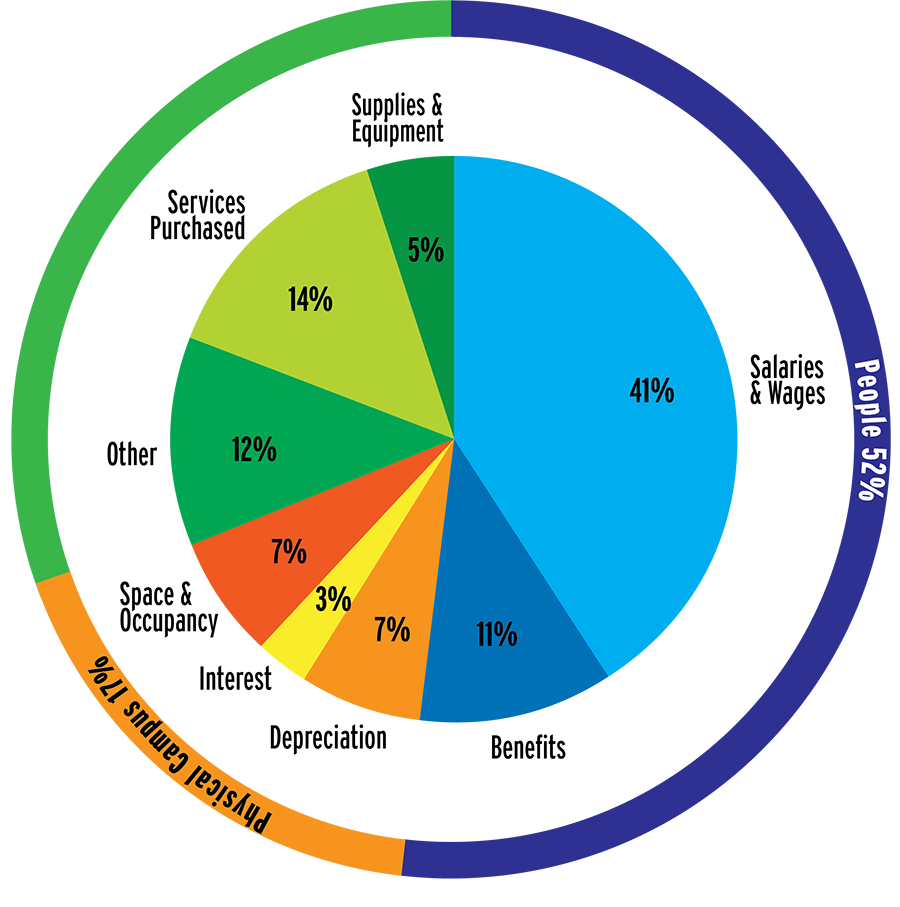
 "Harvard’s $53.2-billion endowment might sound limitless, but not when compared to the University’s annual expenses: $6.5 billion. If Harvard relied entirely on the endowment to fund its operations (ignoring investment returns), the total would be depleted in a little more than eight years. Nor does the endowment seem large when considering that it is not a single pot of money but 14,600 separate funds. Eighty percent of those funds are restricted to specific uses defined by the original donor. And most belong not to the Harvard president, but to the individual schools, which maintain separate budgets under a principle known as “every tub on its own bottom.”

Harvard, if taxed on endowment investment gains at the 21.4 percent rate discussed in Congress in May, would pay about $850 million annually on an average investment gain of 7.5 percent. That sum is greater than Harvard’s total federal support for research in fiscal year 2024 ($686 million, now frozen) and larger than the last fiscal year’s $525 million in annual gifts for current use. But even philanthropic sources of income would likely diminish if the tax treatment of donations were to change. And while the loss of federal grants and contracts would cost the University about $2.2 billion over the next five years (the typical length of a federal grant), taxing the endowment would result in lost income of more than $4.25 billion by the end of that period—combined blows from which the country’s premier academic research institution might not recover, scientists say."


Endowment (2024)

Colorful pie chart showing a $53,235M total market value, with Harvard Management Company holding the largest share.


Operating expenses (2024)

Pie chart of Harvard’s operating expenses showing 52% for people, 17% for campus, and smaller slices for other costs.


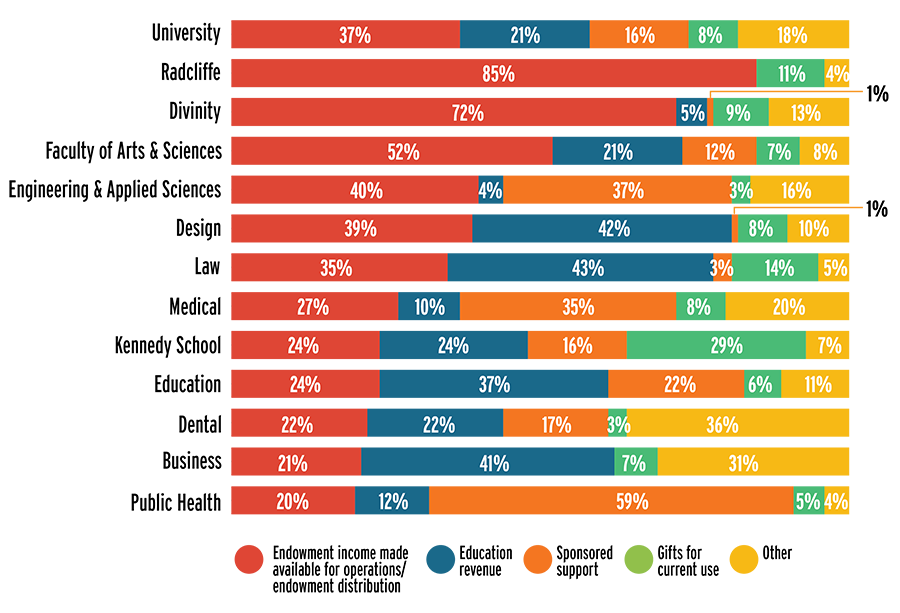
Revenue by school (2024)

Stacked bar chart showing Harvard schools' operating revenue sources, with largest shares in student income and endowment.


Thursday, February 23, 2023

Money Laundering

 Financial regulation plays a big role in law enforcement, by helping investigators to follow the money, which is often easier than following the crimes that generate the money. So, for example, drug dealers and others have trouble turning their income (which is often in cash) into bank accounts that can be used to buy the things that legal money can buy.  Money laundering involves turning ill got gains into reportable income.  Gambling, it turns out, offers some possibilities: if I come into the casino with some cash, and come out with some cash, it's hard to prove that I'm paying tax on more than my winnings.

Here's a story that touches on that, from the WSJ:

Cantor Fitzgerald Gambling Affiliate to Pay $22.5 Million to Settle Probes. CG Technology is said to have admitted aiding and abetting illegal gambling and money laundering   By Kate O’Keeffe and Alexandra Berzon

"Cantor Fitzgerald LP’s sports-betting affiliate has agreed to pay $22.5 million in penalties and forfeiture to the U.S. government in conjunction with its involvement in illegal gambling and money laundering, according to people familiar with the matter.

...

"The agreement comes as the U.S. Treasury and Justice Departments have been increasingly focused in recent years on potential money-laundering violations at casinos. The probes generally center on how the gambling companies allegedly help to facilitate money laundering or fail to report suspicious activities.

...

"Two people who were running their own illegal bookmaking operations elsewhere laundered money through Cantor as part of this system, the people said."

Tuesday, January 24, 2023

"Financial incentives for vaccination do not have negative unintended consequences," in Nature

 Here's a recent article in Nature whose title effectively summarizes its conclusions, and brings some evidence from RCTs to bear on the issue of whether financial incentives corrupt innate values:

Florian H. Schneider, Pol Campos-Mercade, Stephan Meier, Devin Pope, Erik Wengström & Armando N. Meier, "Financial incentives for vaccination do not have negative unintended consequences. Nature (2023). https://doi.org/10.1038/s41586-022-05512-4

Abstract: Financial incentives to encourage healthy and prosocial behaviours often trigger initial behavioural change1,2,3,4,5,6,7,8,9,10,11, but a large academic literature warns against using them12,13,14,15,16. Critics warn that financial incentives can crowd out prosocial motivations and reduce perceived safety and trust, thereby reducing healthy behaviours when no payments are offered and eroding morals more generally17,18,19,20,21,22,23,24. Here we report findings from a large-scale, pre-registered study in Sweden that causally measures the unintended consequences of offering financial incentives for taking the first dose of a COVID-19 vaccine. We use a unique combination of random exposure to financial incentives, population-wide administrative vaccination records and rich survey data. We find no negative consequences of financial incentives; we can reject even small negative impacts of offering financial incentives on future vaccination uptake, morals, trust and perceived safety. In a complementary study, we find that informing US residents about the existence of state incentive programmes also has no negative consequences. Our findings inform not only the academic debate on financial incentives for behaviour change but also policy-makers who consider using financial incentives to change behaviour.


"We exploit a randomized controlled trial (RCT) in the context of financial incentives for COVID-19 vaccination (P.C.-M. et al., unpublished, and ref. 5). Participants were offered payments of 200 Swedish krona (SEK; about US $24 at the time) for taking a first dose of a COVID-19 vaccine, which increased first-dose uptake by 4 percentage points 30 days after the trial (uptake remained higher even 3 months later). The RCT setting is ideal in that it allows us to compare individuals who were randomly offered financial incentives for vaccination with individuals who were not offered any financial incentives. We combine the RCT data with new Swedish administrative records for second-dose uptake and with rich, individual-level survey data.

...

"We complement our evidence from Sweden with evidence on the effects of large-scale incentive programmes implemented by US state governments. In a pre-registered study in the USA (n = 3,062), participants randomly assigned to the incentives condition received detailed information about their state’s COVID-19 vaccine incentive programme, whereas participants in the control condition did not receive this information. Because most of the participants were unaware that their state offered incentives for vaccination, this experimental design overcomes the identification problems by creating random variation in perceived exposure to incentives. In line with the evidence from Sweden, we find no negative impacts of being informed about incentive programmes on the willingness of participants to take a further dose"

Monday, April 4, 2022

Transplant wait lists and patient finances

 Here's a disturbing commentary on how the regulation of transplant centers interacts with patient finances and the decision of who to put on transplant wait lists. The authors suggest extending to all organs the financial coverage that Medicare currently gives to kidney transplants.

Viewpoint March 31, 2022

Medical Need, Financial Resources, and Transplant Accessibility by Sharad I. Wadhwani, MD, MPH1; Jennifer C. Lai, MD, MBA1; Laura M. Gottlieb, MD, MPH  JAMA. Published online March 31, 2022. doi:10.1001/jama.2022.5283

"In the US, the need for lifesaving organ transplants exceeds the availability of transplantable organs, and in 2021, approximately 12 000 patients died or developed complications that precluded a transplant while awaiting an organ.1 Transplant centers are thus forced to ration these scarce resources. The first step for patients to receive an organ is for them to be placed on a national waiting list, ranked according to objective clinical criteria intended to reflect medical necessity. However, the listing system permits transplant centers to factor in patient financial resources in making this initial wait listing decision, which equates to withholding lifesaving medical therapy from those deemed to have insufficient financial resources. This approach contributes to inequities in transplant accessibility and outcomes.

...

"The OPTN policy specifically prohibits allocation to be based on race and ethnicity or socioeconomic status. Wait listing decisions (a prerequisite to allocation) are instead made based on a transplant candidacy evaluation, a process undertaken to assess transplant suitability. This includes an assessment of the patient’s insurance and financial security for expenses associated with the transplant surgery and lifelong posttransplant immunosuppression and enables transplant centers to circumvent the final rule mandate prohibiting allocation based on socioeconomic status. For instance, expenses for immunosuppression medications can exceed several thousand dollars a month; even insured patients can incur out-of-pocket, noncovered expenses that may exceed $1000 a month, including parking costs, missed work, and medication co-payments.2

"In theory, financial evaluations are included in listing determinations because low-socioeconomic status (measured by neighborhood socioeconomic deprivation and public insurance) has been associated with wait list mortality and posttransplant outcomes, and these outcomes are closely monitored for the approximately 250 US transplant centers.3 If transplant outcomes deviate from national benchmarks, the center risks losing accreditation and center of excellence designations, thus jeopardizing the ability of the center to offer transplants to other patients in need. The financial implications for a transplant center with poor outcomes are substantial: the average billed charges during the 30 days prior through the 180 days after a transplant range from an estimated $440 000 for a kidney transplant to an estimated $1.7 million for a heart transplant.4 Considering that in 2018, each US transplant program performed a median of 250 kidney transplants in adults, the financial implications of losing accreditation may motivate transplant centers to select transplant candidates most likely to survive until and after receiving a transplant. The system appears designed to disadvantage patients with inadequate financial resources thereby excluding them from the transplant waiting list."

...

"One strategy for improving insurance coverage could be to expand Medicare coverage to every individual requiring a transplant. Patients with end-stage kidney disease of all ages qualify for Medicare insurance in the US, and this coverage extends for the life of the transplant, thereby ensuring that patients continue to receive organ-preserving immunosuppression. A similar bill could extend Medicare coverage to any organ transplant recipient, starting when entered on the waiting list and continuing for the life of the transplant. This could help alleviate the potential risks that transplant centers may perceive around care adherence but would not comprehensively address all financial barriers to care. To ensure patients have adequate resources for long-term graft survival and patient health, changes to insurers’ incentives will need to be accompanied by other national, state, and local strategies to strengthen financial stability for families experiencing medical hardship.

"Solid organ transplantation is one of the greatest medical achievements of the 20th century and has transformed many terminal illnesses to treatable conditions. Yet almost 70 years after the first successful transplant surgery, this procedure remains out of reach for too many. As the nation continues to grapple with racism and classism, medicine must continue to identify and reform policies and procedures that contribute to health inequities. Withholding a transplant from those with inadequate insurance, limited financial resources, or both, is a tragic example of ongoing injustice."

Saturday, July 3, 2021

The art of money laundering through the art market

 What looks like privacy to some looks like secrecy to others.

The NY Times has the story:

As Money Launderers Buy Dalís, U.S. Looks at Lifting the Veil on Art Sales. Secrecy has long been part of the art market’s mystique, but now lawmakers say they fear it fosters abuses and should be addressed.  By Graham Bowley

"Billions of dollars of art changes hands every year with little or no public scrutiny. Buyers typically have no idea where the work they are purchasing is coming from. Sellers are similarly in the dark about where a work is going. And none of the purchasing requires the filing of paperwork that would allow regulators to easily track art sales or profits, a distinct difference from the way the government can review the transfer of other substantial assets, like stocks or real estate.

...

"In January, Congress extended federal anti-money laundering regulations, designed to govern the banking industry, to antiquities dealers. The legislation required the Department of the Treasury to join with other agencies to study whether the stricter regulations should be imposed on the wider art market as well. The U.S. effort follows laws recently adopted in Europe, where dealers and auction houses must now determine the identity of their clients and check the source of their wealth.

“Secrecy, anonymity and a lack of regulation create an environment ripe for laundering money and evading sanctions,” the U.S. Senate’s Permanent Subcommittee on Investigations said in a report last July in support of increased scrutiny.

"To art world veterans, who associate anonymity with discretion, tradition and class, not duplicity, this siege on secrecy is an overreaction that will damage the market. They worry about alienating customers with probing questions when they say there is scant evidence of abuse.

...

"What is the origin of such secrecy? Experts say it likely dates to the earliest days of the art market in the 15th and 16th centuries when the Guilds of St. Luke, professional trade organizations, began to regulate the production and sale of art in Europe. Until then, art was not so much sold as commissioned by aristocratic or clerical patrons. But as a merchant class expanded, so did an art market, operating from workshops and public stalls in cities like Antwerp. To thwart competitors, it made sense to conceal the identity of one’s clients so they could not be stolen, or to keep secret what they charged one customer so they could charge another client a different price, incentives to guard information that persist today.

...

"Auction catalogs say works are from “a private collection,” often nothing more. Paintings are at times brought to market by representatives of owners whose identities are unknown, even to the galleries arranging the sale, experts and officials say. Purchasers use surrogates, too. 

************

Here's a related State Department report on how art sales have been used to circumvent U.S. sanctions on Russian oligarchs:

THE ART INDUSTRY AND U.S. POLICIES THAT UNDERMINE SANCTIONS.  STAFF REPORT, PERMANENT SUBCOMMITTEE ON INVESTIGATIONS, UNITED STATES SENATE