Showing posts with label chocolate. Show all posts

Sunday, August 31, 2025

Abhijit Banerjee's column on food and economics, in The Times of India

 Abhijit Banerjee writes a monthly column on food (cooking it and eating it) and economics, in The Times of India

You can see them all at the link, but here's a recent example:

Trade wars and chocolate bars, what India of the 1970s can teach Trump  May 31, 2025,  Abhijit Banerjee in Tasting Economics

"One advantage/disadvantage of being old is that I lived through what is history to so many others. President Trump adores William McKinley, the 25th US president, for his tariffs, but at 78, he is way too young to have lived behind a properly high tariff wall. I, on the other hand, lived in the India of the 1970s, when we had managed to kill almost all international trade through a combination of tariffs and other rules for importing (non-tariff barriers in trade parlance).

I mostly experienced trade barriers through the important lens of chocolate."

Saturday, August 23, 2025

Chocolate fermentation and its microbiome (coming to desserts near you)

 The Guardian brings us the latest breakthrough in chocolate science:

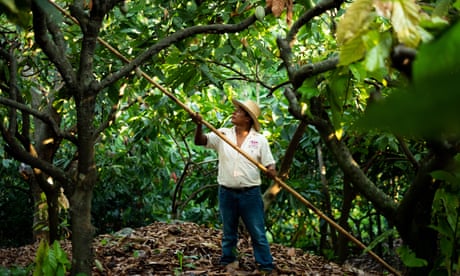
Scientists claim to have unlocked ‘secret sauce’ needed for fine chocolate
Results of studying cocoa bean fermentation in Colombia could pave way to manipulate flavour, say researchers  by Nicola Davis 

"Whether you enjoy an aromatic bar with notes of caramel or something less fancy, chocolate can have many tastes. Now researchers say they have shed fresh light on a key ingredient that could open the door to new flavours.

They claim to have unpicked how and why the bacteria and fungi involved in the fermentation of cocoa beans influence the flavour of chocolate.

“We understand now what microbes we need and what they’re doing. And I think that opens up the opportunity … to be a lot more directed [about] how we make our chocolate in terms of its flavour,” said Prof David Salt, co-author of the work from the University of Nottingham.

Writing in the journal Nature Microbiology, the team report how they studied beans fermented at cocoa farms in three different regions of Colombia – Santander, Huila and Antioquia.

...

"The team then used genetic sequencing to identify the microbes involved in cocoa bean fermentation from multiple sites in Colombia and beyond, explore the genes they contained, and hence identify the flavour substances they could produce during fermentation.

As a result, the researchers identified nine microbes that together were predicted to produce the notes of a fine flavour cocoa. They then introduced this community to sterile cocoa beans, and allowed them to ferment.

The upshot, said Salt, was a cocoa with floral, fruity and citrus notes and a recognisable cocoa flavour but with reduced astringency and bitterness."

Friday, May 9, 2025

Cacao, cocoa, and coca (Etymology meets botany, agriculture and health)

Cocoa and cacao and coca?  Which one of these three things is different from the other two? (I'll leave the harder question of milk versus dark chocolate to the end of the post...)

from Microsoft copilot:

"Coca refers to the Erythroxylum coca plant, native to South America. Its leaves have been traditionally used by indigenous cultures for medicinal and stimulant purposes. Coca contains cocaine alkaloids, which can be extracted to produce the drug cocaine. However, when consumed in its natural form—such as in teas or chewed leaves—it has mild stimulant effects similar to caffeine
 

"Cocoa and cacao come from...the Theobroma cacao tree—but they go through different processing methods, leading to distinct characteristics.
Cacao refers to the raw and less processed version of the seed from the cacao tree. It is typically cold-pressed to preserve its natural enzymes, antioxidants, and nutrients. Cacao nibs and powder have a slightly bitter and earthy flavor, making them popular in health-conscious recipes.
Cocoa, on the other hand, is cacao that has been roasted"


What is the etymology of cocoa and cacao?

"The word cacao comes from the Nahuatl (Aztec) word "cacahuatl," which means "cocoa bean". The cacao tree is native to Central and South America, and its cultivation dates back to at least 1500 BCE among the Mayans and Aztecs.
The word cocoa, on the other hand, is actually a corruption of "cacao" that emerged in English around the 18th century. The confusion likely arose due to the similarity between "cacao" and "coco" (which refers to the coconut), and the mistake was reinforced when dictionary printers accidentally merged the entries for "cocoa" and "coco". By the early 1800s, "cocoa" had become the standard spelling.
So, while "cacao" is the original term, "cocoa" became the more commonly used word in English, especially when referring to processed products like cocoa powder.

#########

Now for the important news on chocolate science from Harvard's School of Public Health:

Eating dark chocolate linked with reduced risk of type 2 diabetes By Maya Brownstein 

"Our findings suggest that not all chocolate is created equal,” said lead author Binkai Liu, doctoral student at the Harvard Kenneth C. Griffin Graduate School of Arts and Sciences, studying in the Harvard Chan School Department of Nutrition. “For anyone who loves chocolate, this is a reminder that making small choices, like choosing dark chocolate over milk chocolate, can make a positive difference to their health.”

The study was published online Dec. 4 in The BMJ.


Monday, April 21, 2025

Food: from luxuries to tragedies--chocolate and peanut butter at the opposite ends of human welfare

Below are two stories about food, that couldn't be more different (although the foods, chocolate and peanut butter, have some connection when times are good).

 The (sort of) luxury story, from the Guardian comes with a picture of bonbons:

 US chocolate prices surge amid soaring cocoa costs and tariffs
Price of cocoa – chocolate’s key ingredient – has climbed over past year and tariffs on imports will keep prices high
  by Lauren Aratani

 And here's the tragedy, reported on in The Atlantic

‘In Three Months, Half of Them Will Be Dead’
Elon Musk promised to preserve lifesaving aid to foreign children. Then the Trump administration quietly canceled it. By Hana Kiros

"As DOGE was gutting USAID in February, it alarmed the global-health community by issuing stop-work orders to the two American companies that make a lifesaving peanut paste widely recognized as the best treatment for malnutrition"

...

"The move reneged on an agreement to provide about 3 million children with emergency paste over approximately the next year. What’s more, according to the two companies, the administration has also not awarded separate contracts to shipping companies, leaving much of the food assured by the original reinstated contracts stuck in the United States."


Monday, February 17, 2025

Climate crisis contributing to chocolate market meltdown

 The canary in the coalmine that is climate change is starting to show important signs of stress.

The Guardian has this story:

Climate crisis contributing to chocolate market meltdown, research finds.  Scientists say more-frequent hotter temperatures in west African region are part of reason for reduced harvests and price rises

"The climate crisis drove weeks of high temperatures in the west African region responsible for about 70% of global cacao production, hitting harvests and probably causing further record chocolate prices, researchers have said.

Farmers in the region have struggled with heat, disease and unusual rainfall in recent years, which have contributed to falling production.

The decline has resulted in an increase in the price of cocoa, which is produced from the beans of the cacao tree and is the main ingredient in chocolate.

A new report found that “climate change, due primarily to burning oil, coal and methane gas, is causing hotter temperatures to become more frequent” in places such as the Ivory Coast, Ghana, Cameroon and Nigeria.

The study, by the independent research group Climate Central, found the trend was particularly marked in Ivory Coast and Ghana, the two biggest cacao producers."

Wednesday, November 9, 2022

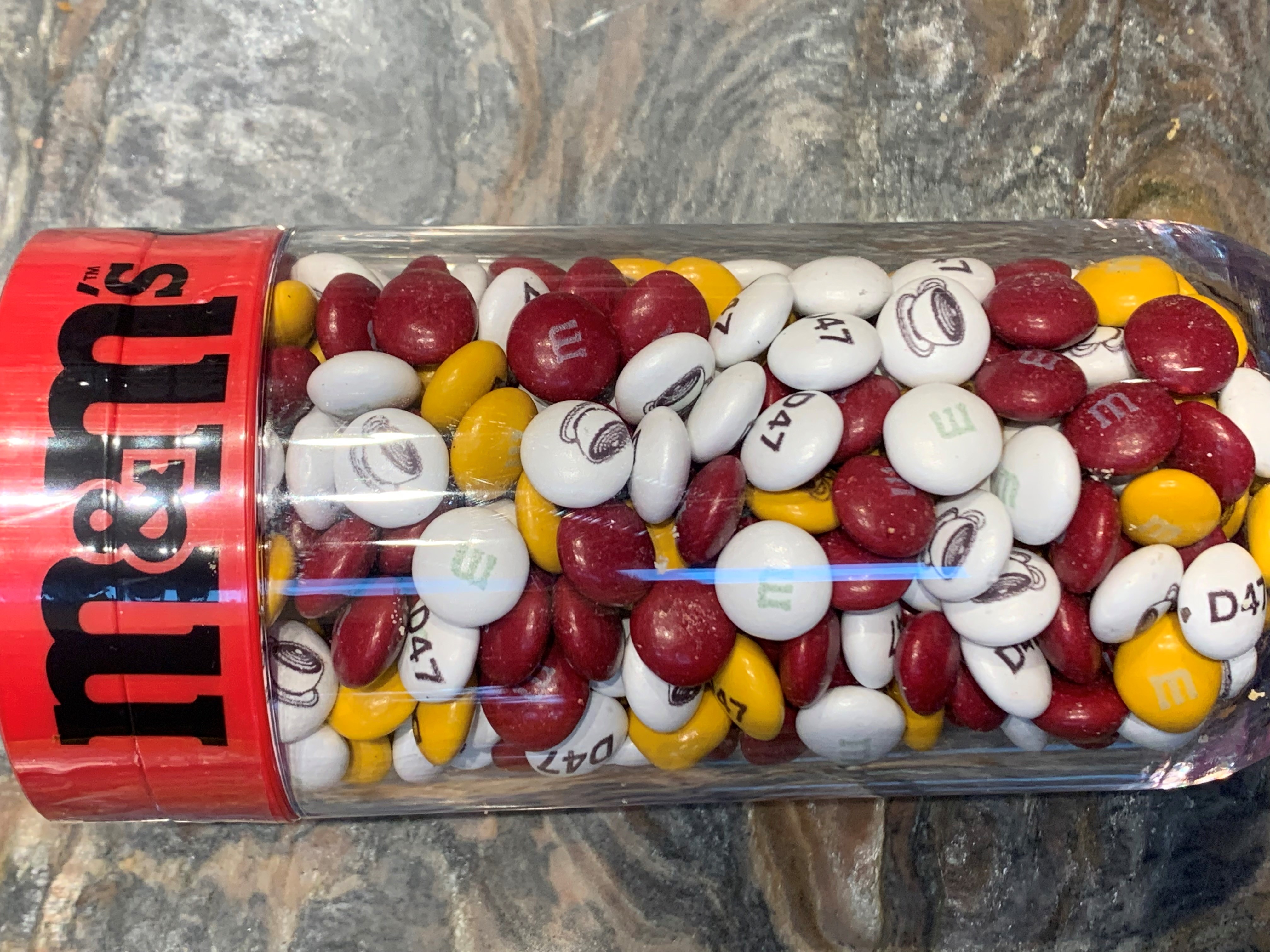
Market design coffee m&ms

 Here's an inside joke, for market design coffee (and candy) fans, particularly for regulars at our market design coffees at Stanford.


Here's a clue:

D4Market Structure, Pricing, and Design
D40General
D41Perfect Competition
D42Monopoly
D43Oligopoly and Other Forms of Market Imperfection
D44Auctions
D45Rationing • Licensing
D46Value Theory
D47Market Design
D49Other

HT: Carmen Wang


Sunday, December 27, 2020

Global chocolate production and consumption

This map  of cocoa production and consumption from the Cocoa Barometer 2020 would make it easy to guess which way is North (were it not for Australia)...


Sunday, July 26, 2020

Chocolate is good for your heart

Breaking (good) news on the chocolate science front--from the European Journal of Preventive Cardiology

Association between chocolate consumption and risk of coronary artery disease: a systematic review and meta-analysis
Chayakrit Krittanawong, Bharat Narasimhan, Zhen Wang, Joshua Hahn, Hafeez Ul Hassan Virk, Ann M Farrell, HongJu Zhang, WH Wilson Tang
First Published July 22, 2020  https://doi.org/10.1177/2047487320936787

"Clinical trials have shown that the consumption of chocolate has favorable effects on blood pressure and endothelial function.1 The previous meta-analysis showed that many dietary components, including chocolate, appear to be beneficial for cardiovascular disease.2 However, the potential benefit of increased chocolate consumption, reducing coronary artery disease (CAD) risk is not known. We aimed to explore the association between chocolate consumption and CAD.
...
"In the present meta-analysis, we found that chocolate consumption (>1 time per week or >3.5 times per month) is associated with a reduced risk of CAD."