I post market design related news and items about repugnant markets. See my Stanford profile. I have a 2026 book : Moral Economics The subtitle is "From Prostitution to Organ Sales, What Controversial Transactions Reveal About How Markets Work."
I was recently interviewed at the gambling hyper-site Covers.com about the growth of sports gambling both on dedicated sites and on prediction markets.
"It’s not often, or ever, you see a Nobel Laureate writing about his ties to match-fixing.
That is until you see Nobel Prize-winning economist Alvin E. Roth writing in his new book that he feels “a certain connection” to point-shaving. It's just for reasons that have less to do with economics or match-manipulation and more because of a shared name.
Another Alvin Roth, nicknamed "Fats," was banned from the NBA because of a college basketball point-shaving scandal that came to light in the early 1950s.
Roth spoke to Covers over the phone recently about his book and his framework for approaching “repugnant transactions,” which, yes, can include sports betting.
“Remember that when I say something is repugnant, I don't mean that I don't like it or that you shouldn't like it,” Roth said. “I mean that some people don't like it, and I think that gambling falls squarely into that category. Lots of people like to gamble, and lots of people, other people, think they shouldn't be allowed to, so it's a repugnant transaction, and there have been laws of all sorts allowing or banning it. And we've gone back and forth with the United States on lotteries, and more recently on sports betting.”
...
“I fear that online gambling will have much to teach us about addiction,” Roth writes.
...
Again, gambling is not the focus of Roth’s work. Nor are prediction markets, which critics often describe as a new form of gambling. Yet Roth says one of the things he writes about is that it is hard to ban something in a given jurisdiction when it’s legally available and within reach in another jurisdiction.
“And, of course, the internet makes everybody a neighbor to everybody else,” Roth says.
In other words, the fact that prediction markets have popped up offering de facto sports wagering in states that have yet to legalize sports betting is not some new phenomenon. It’s all in keeping with society’s ongoing tug-of-war with morally contested markets. You can ban, you can regulate, but somebody will probably be unhappy in the end with what you’ve done and may still seek out what you’ve forbidden or restricted.
Reading lists are interesting both for the books they describe, and for what they say about the list makers. Here are a dozen interesting-looking books from people at the venture capital firm Andreeason Horowitz (aka A16Z).
A reading list for the deeply curious Part one of our summer reading list: 12 books on technology, markets, AI, code, and the systems behind change. a16z crypto
Four of the twelve recommended books come under the heading How markets are designed.
These are those:
Moral Economics: From Prostitution to Organ Sales, What Controversial Transactions Reveal About How Markets Work by Alvin E. Roth
“My doctoral advisor, Al Roth, has been thinking for decades about ‘repugnance’ – why some people prefer that some markets should not exist. In Moral Economics, he tackles the motivation for these prohibitions and the trade-offs they force, head-on. And he explores, in particular, how such non-market norms emerge and sometimes later collapse — limitations on alcohol and drugs, and, in a completely different category, same-sex marriage have all been relaxed in recent years — and what this means for making markets in the future.” – Scott Duke Kominers, research
Why Nations Fail by Daron Acemoglu and James A. Robinson
“Acemoglu and Robinson’s central thesis, that inclusive institutions drive prosperity while extractive ones cause stagnation, maps surprisingly well onto crypto. Decentralized protocols are essentially an attempt to hard-code inclusive institutions: open access, no gatekeepers, rules enforced by code rather than by whoever’s in power. The book is a great lens for understanding why certain blockchain ecosystems thrive while others are captured by insiders. A must-read for anyone thinking seriously about governance, whether at the nation-state or protocol level.” – Kira Song, finance
An Engine, Not a Camera: How Financial Models Shape Markets by Donald MacKenzie
“Sociologist Donald MacKenzie’s An Engine, Not a Camera is nominally a book about financial economics, but its real subject is more provocative: What happens when theories stop describing the world and start changing it? MacKenzie traces how academic models of markets escaped the university and became embedded in the markets themselves. First published in 2006, it remains relevant today in a number of contexts — not least because of the recent interest from TradFi in crypto. But I wanted to read it again because of the book I’m working on with colleague Robert Hackett, about how computer science theories acted on the world.” – Tim Sullivan, editorial
A Man for All Markets: From Las Vegas to Wall Street, How I Beat the Dealer and the Market by Edward O. Thorp
“Growing up, I was obsessed with the movie 21 and the idea that you could actually use math to beat the house. This book is the autobiography of the man who essentially started it all. Edward Thorp went on to apply those same principles to Wall Street, becoming the father of quantitative investing. It’s an incredible story about using pure logic to disrupt rigged legacy systems, which perfectly captures the same builder mindset we see in crypto today.” – Ben Wu, talent
"The economist Al Roth, a professor at Stanford University, shared a 2012 Nobel Prize for his work in market design and matching theory. He spoke with Sarah Kessler about his latest book, “Moral Economics,” which offers a framework for understanding controversial markets, and how it applies to prediction markets. The conversation has been edited and condensed.
Your book explores what you call repugnant markets — meaning some people don’t think they should exist — like prostitution, surrogacy and drugs. How do prediction markets fit in?
When I think about repugnance and prediction markets, I think back to when Darpa proposed a policy prediction market that became characterized as a terrorist prediction market, and people really objected to that.
That objection was sort of misplaced. It would be great if terrorists who were planning attacks wanted to tip their hand by betting on them in advance. But also, if you were a terrorist who knew about the 9/11 attacks in 2001, and you wanted to make money, you wouldn’t bet on a prediction market. You would short United Airlines and American Airlines. What do you make of all the reports of insider trading on prediction markets?
The reason we forbid insider trading in securities markets is to give people confidence in them. Securities markets have an important financial function that is threatened by insider trading, and I’m not sure that prediction markets necessarily do.
What worries me about the current state of prediction markets and Washington insiders is more the blurring of private and public functions. I don’t think that being an associate of the president should allow you to bet on a Truth Social post by President Trump. That is very bad public policy, but not necessarily an indictment of prediction markets per se.
Do you have an opinion on whether prediction markets should be regulated by the C.F.T.C. or state gambling authorities?
Futures markets, like securities markets in general, play other roles in society. If you’re a farmer who’s growing wheat, a futures market allows you to sell your wheat before you’ve planted it, which allows you to buy the fertilizer and make plans. That’s one role for federal regulators.
The contract has a delivery date. It says on a certain day a freight car is going to deliver potatoes to me. If, for example, someone tried to corner the potato market by reserving all the freight cars so that you wouldn’t be able to deliver on the contract, the regulator could intervene. With prediction markets, there’s nothing that has to be delivered. It’s just that someone has to adjudicate whether the bet was a yes or a no. That requires maybe some kind of regulation, but that seems more like a customer relations thing.
Is there anything that you would change about the design of prediction markets?
I have some ideas about what we can do about gambling and addiction. An appropriate regulator or consumer protection agency could start to require that apps allow you to put a limit on your betting.
Before the game starts, you can say to the app: When I’ve lost a hundred dollars, shut down. Don’t let me make any more bets.
And that might help some people just the way bartenders are supposed to stop serving you if you’ve had too much to drink. "
A child receiving medical aid in dying clearly arouses more repugnance than when an adult accesses MAID. But surely that isn't because we think that a child dying in agony can tolerate it better than an adult. Difficult cases should make everyone think more clearly about their positions.
" A doctor in the Netherlands assisted in the death of a terminally ill child aged between 1 and 12 for the first time, a Dutch minister told lawmakers.
"Sophie Hermans, the minister of health, welfare and sport, disclosed the death in a letter this week to the Dutch House of Representatives. Assistance in death for children in this age range has been legal under certain rules since 2024.
"She wrote that it had been reported late last year to an expert committee that reviews such cases, and was its first notification for a child between 1 and 12.
"Ms. Hermans’s letter referred to “a termination of life” without giving specifics.
...
"In 2020, the Dutch government announced plans to allow doctors to end the lives of terminally ill children who are under 13 years old. Hugo de Jonge, the health minister at the time, predicted that the rule — which went into effect in 2024 — would facilitate the deaths of about five children a year. " Before the rule change, the country already allowed doctors to assist the deaths of people who are over 12 or less than a year old as long as their parents had consented.
...
"In Colombia, assisted death is allowed for children between the ages of 6 and 12, so long as the child understands the concept of death. Belgium also allows children to die with the help of a doctor."
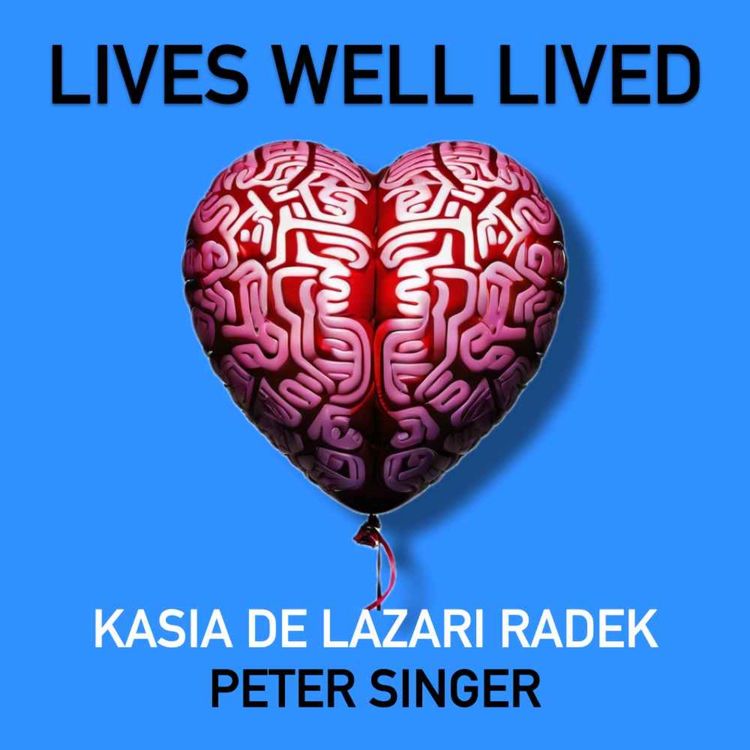
The moral philosophers Peter Singer & Kasia de Lazari Radek interviewed me about Moral Economics on their podcast Lives Well Lived. At the end, they ask their guests to think about their own life, and to what extent their own life has been well lived. That's a bit like being asked what you would like to have inscribed on your tombstone. So I hedged a bit. But the conversation that followed was interesting, so if you scroll down you'll see the transcript of that last bit, which starts about minute 1:09 in the recording.
Jun 25, 2026 "Nobel Prize-winning economist Alvin Roth explains how innovative market designs can reduce exploitation and save lives. Drawing on his pioneering work in kidney exchanges, Roth explores some of society’s most contentious moral dilemmas involving organ markets, surrogacy, and unpacks the ethical tensions surrounding what he calls “repugnant transactions.”
"Lives Well Lived is hosted by Peter Singer & Kasia de Lazari Radek. Episodes consist of interviews with remarkable guests who have lived well, both in the sense of living an ethical life, but also in that they are fulfilled and happy with what they have achieved in their lives. Some of these guests will be well-known figures, but others who are doing extraordinary things will be unfamiliar to almost all of our listeners. The conversations will often cover ground that involves ethics, how to live well, and how to make a positive difference in the world. It will inspire and empower its audience to change their own lives for the better. "
Here's the transcript of the last few minutes of the conversation (starting around minute 1:09 of the recording).
PETER: We always asked our guests to think about their own life, and to what extent their own life has been well lived, and by what criteria they make that judgment? Would you like to comment on that, Al?
Al: Sure. Has my life been well lived so far? Well, first, I've had a very fortunate life so far. I am lucky in my family, and my children, and my grandchildren, and my friends. And when you talk about friends, one thing that's often not talked about are the relations that professors have with students. So I've made lifelong friendships with many students who are productively engaged around the world, and that's very gratifying, and I hope it helps make my life worthwhile.
But also, I'm a market designer, and market design is very outward facing part of, economics. And, one of its goals is, a phrase even older than effective altruism, which is tikkun olam (תִּיקּוּן עוֹלָם) mending the world. And one of the things that market designers try to do is fix markets when they're broken or create them when they're absent. When you think of something like kidney exchange, you know, in a different podcast, on a different subject, I could tell you about victory after victory, where thousands, many thousands of transplants have been done, and lives have been saved through kidney exchange, even though it's in a war that we're losing: the shortage of kidneys is growing faster than the increase in transplants as diabetes grows, and high blood pressure, things like that. So, I would hope that some of my life has looked well lived, not just from the inside, but perhaps also from the outside.
Peter: Absolutely sure that it has. You're right. And what you've done for kidney markets is just one example, where you've saved many lives, and I think that obviously would be an important part of living well. despite the fact that the problem, as you say, has not been solved as a whole.
Kasia: It must be very satisfying.
Al: People often say that to me, and it will be satisfying when I'm retired. Right now, it's still frustrating, right? There's so much left to do, and it's not so easy to do it. But the times are changing. In two weeks, I'm gonna be opening up the American Transplant Conference in Boston, and, you know, there are people who invite me to these things. I sometimes joke with my young colleagues that as the old people who feel a lot of repugnance die off, it'll be left to just us young people. And we'll see.
I was in a transplant conference in Cairo in November. in which we tried to reach consensus on the question of, should countries have to be self sufficient in transplantation, which is the traditional position of the World Health Organization and some other organizations. And, of course, it works against countries that don't have much kidney exchange, because you need a big pool of patient-donor pairs to find lots of exchanges. And in that spirit, incidentally, during COVID, I was in the United Arab Emirates for the first kidney exchange between the UAE and Israel. And, that had to overcome a lot of obstacles, but it makes a lot of sense, because the UAE and Israel each have only a population of about 10 million. And that's not enough to find kidneys in your domestic pool for the hard to match patients, for patients who have a lot of antibodies to human proteins. So, we would like to see much more cooperation and not just between rich countries, but also inviting patients from poor countries, patient-donor pairs, to take part in American kidney exchange. And that's something that remains very controversial, but I think that we might be on the verge of making some progress with that. That's something that Peter has written about also.
Peter: Yes, I certainly hope so, and because I'm now working as a regular visiting professor in Singapore, which is another small country, the population of about 6 million, there's a very good case for saying that Singapore should also get into international kidney exchanges, and perhaps assist some of the poorer countries in its region. So we're trying to make that argument, and let's hope we succeed. One thing I've tell you, there might be bad news. I don't believe that when you retire from Stanford, you're going to stop working on these issues and be able to relax and feel satisfied, because I know I retired from Princeton 2 years ago, but the issues that I'm concerned about, whether it's the factory farming or global poverty, or all these kidney issues as well, I'm still concerned about, I can't let them go just because I'm no longer paid to be a professor at Princeton.
#########
In terms of lives lived well and deeply, here's an earlier post of mine about teachers and students.
Here's a new report from Italy on initiating kidney exchange chains with a deceased donor.* In Italy to date, 34 deceased donor initiated chains generated 84 transplants (34 from deceased donors and 50 from living donors), including 56 among incompatible pairs and 28 to candidates on the waitlist.
"Integrating deceased and living donation through deceased-donor (DD)-initiated chains can expand kidney transplant access in small paired exchange pools. The Italian DEC-K program allocates a DD kidney to initiate a chain (chain-initiating kidney, CIK) among incompatible living-donor (LD) pairs, ultimately returning a LD kidney to the national waiting list (WL). We report the first long-term national results of this donor organ allocation model.
"Methods: All DEC-K chains performed in Italy (2018-2025) were retrospectively analyzed. Recipients were stratified by kidney source (CIK vs LD).
... "Results: Thirty-four DEC-K chains generated 84 transplants (34 DD and 50 LD), including 56 among incompatible pairs and 28 to candidates on the WL. Donor withdrawal occurred once. Four chains were terminated early after CIK transplantation due to newly developed contraindications to donation. At a median follow-up of 60 months, 1- and 3-year graft survival was 100% in both groups, while patient survival was 97.1% for CIK and 98.0% for LD. Three CIK and one LD recipients died with functioning graft (suicide, sepsis, urothelial carcinoma, and acute myocardial infarction, respectively). One CIK recipient experienced graft loss after 40 months due to chronic rejection. Adjusted eGFR trajectories were comparable between CIK and LD (P = 0.48). Chain-ending kidney recipients, with 4 graft loss overall (1 antibody-mediated rejection and 3 vascular thrombosis), showed outcomes comparable to LD (P = 0.64 for eGFR; P = 0.57 for graft survival).
"Conclusions: The DEC-K program proved feasible, safe, and effective in expanding transplant opportunities for incompatible and hard-to-match patients."
########
* Some earlier posts on deceased donor initiated chains:
The FT has brief reviews of four new economics books: Moral Economics, The Common Good Economy: A New Compass, We Need to Tax Billionaires, and Money: The Inside Story
The price of good intentions Four new books that examine the morals, markets and money behind modern capitalism. by Tej Parikh
Here are the remarks about the one of the four that I'm most familiar with:
"At a time when public outrage can shape policy decisions faster than ever before, Nobel Prize-winning economist and Stanford professor Alvin Roth makes a compelling case for evidence over instinct in Moral Economics: What Controversial Transactions Reveal About How Markets Work (Basic Books £25/Basic Venture $35). Roth, whose pioneering work in market design transformed systems for kidney donation, examines some of the most contentious exchanges in modern society, including prostitution, organ sales, drugs and medical aid for the dying.
"In the process, Roth delivers some eye-opening hard-truths to those who might think moral intuition ought to underpin all regulation and law. He shows why most policy decisions involve unavoidable moral trade-offs, and how bans of activities deemed objectionable can result in transactions being pushed underground (where they become harder to regulate). He also makes the case for treating markets in distasteful services as moral tools, not failures.
“My goal is not to tell you what to think, but to help you think,” Roth writes in the introduction. He largely succeeds. This is an entertaining and mind-opening read from start to finish. Some may find the discussions about morally “repugnant” topics somewhat offensive — but that’s the point."
The latest episode of Freakonomics looks at the controversies and philosophies involved in the growing legalization of medical aid in dying (MAID). Stephen Dubner interviews people with multiple perspectives, and offers a personal insight of his own.
"DUBNER: I have a sister who died last year, it was a pretty rotten death, honestly, and she wanted to hasten it. We couldn’t physically orchestrate it. And it really made me see this issue in a new way. It just seemed, you know, I don’t want to say the scales fell from my eyes, but I’d never encountered it first-hand. And it made me think that almost anyone who did encounter it first-hand might have a reckoning, might be in favor of it. But I don’t know, maybe that’s just me. Do you have any sense of how broad the support is for it generally?
ROTH: We’re an aging population, so I think not only do more people have a reason to contemplate their own death, but more people know a peer who’s died, and certainly parents have died, and relatives, you know, siblings and friends. So I would think that anyone who’s seen an agonizing death should at least give some thought to whether we should be legalizing medical aid in dying."
You can listen or read the transcript at this link:
Who Gets to Choose a “Good Death”? New York is the latest state to legalize medical aid in dying. Stephen Dubner speaks with the governor who signed the law, a Nobel Prize-winning economist, a death doula — and an ethicist who thinks the very idea is wrong.
"SOURCES: Kathy Hochul, governor of New York. Suzanne O'Brien, death doula, founder of Doulagivers Institute. Al Roth, economist at Stanford University. Daniel Sulmasy, physician, philosopher, director of the Kennedy Institute of Ethics at Georgetown University.
I'll be speaking Sunday at the American Transplant Congress, on kidney exchange. It will be hard to squeeze in all the recent developments in my half hour, including current controversies.
"People increasingly trust AI to make decisions—but research by Alex Chan finds they avoid evaluating the algorithm's rationale if it causes moral discomfort. How can organizations encourage employees to think more critically? "
Abstract Participants acted as loan officers deciding whether to approve real $10,000-loans issued by a private U.S. lender using an AI’s default-risk predictions. When explanations revealed that the AI penalized non-White or female borrowers, participants were more likely to override the AI’s profit-maximizing recommendation. When their bonuses depended on repayment, however, they sought predictions but avoided explanations, consistent with willful ignorance; this effect disappeared when explanations were framed as purely financial or demographics were hidden. A secondary experiment reveals a novel bias: participants failed to reason contingently and undervalued explanations even when these complemented private information and improved decision accuracy.
I'm no expert on the production of foie gras, but I am glad to see arguments about repugnant transactions and controversial markets that take seriously the concerns of opponents.
"There is now a proposedballot initiativemoving through Washington that wouldban foie gras entirely. No producing it, no selling or serving it. Fines between $1,000 and $5,000 per violation. License suspension for repeat offenses
...
""I am asking you to not sign the petition. But first I want to do something the other side rarely does, which is to take their concerns seriously.
"Gavage — force-feeding through a tube inserted down a bird’s throat — looks terrible. I know because I have seen it. I understand completely why someone sees footage of it and reacts with horror. If you imagine the same thing done to human beings, it looks like violence.
"But here is what I also know, and what the activists with the megaphones do not know and do not want to know because it would complicate the argument they have decided to make.
...
' A duck’s esophagus, where the gavage tube is inserted, is desensitized, without a gag reflex, and it is capable of swallowing whole crustaceans and scaly fish in the wild. Its windpipe is separate from the esophagus, meaning the gavage process has no impact on breathing. More importantly, this overfeeding is something the bird does naturally. Before their annual migration, ducks gorge — they stuff themselves with excess food. The calories are stored as fat, not only in the liver but in the expanded esophagus. (The verb “gorge” comes from this behavior.) What foie gras farming does is amplify a natural biological process rather than invent a cruel one .
...
"The producer I buy foie gras from exemplifies the kind of care and attention good farming demands. Their ducks are raised for 15 weeks, about twice the poultry industry standard, in open barns, on a vegetarian diet. Force-feeding by hand happens three times a day for the final three weeks. Each feeding takes approximately 1½ seconds, and, from my observation, the ducks barely seem to notice it."
"I asked Roth if he’s a libertarian, since libertarians say people should be free to do what they want as long as it doesn’t hurt others. No, Roth told me.
“People who call themselves libertarians often don’t like market regulation of any sort, but I’m a market designer,” Roth said. “I think that good regulations help markets work well.”
" Peter Coy, the veteran New York
Times economics columnist, writes about kidney exchange, after an
interview/conversation sparked by a recent working paper of mine, Market Design and Maintenance. (He's a rare economic journalist who reads economists' papers.)
He's
also a rare interviewer: his column includes the names of more of my
coauthors than I can recall in any other interview. In order of
appearance: Tayfun Sonmez and Utku Unver, Frank Delmonico, Susan
Saidman, Mike Rees (implicitly) when he names Mike's nonprofit Alliance for Paired Kidney Donation, and Elliott Peranson. Market design is, after all, a team sport."
Here's a forthcoming review paper on organ allocation and transplantation that focuses on the allocation of deceased-donor organs, particularly kidneys, and goes through the whole supply chain, from donor registration and family consent after death, to patient prioritization, and organ allocation. We also discuss the regulatory and political practices and ethical concerns that keep the availability of transplants far short of their need.
Abstract: There is a large shortage of solid organs for transplants. This survey reviews the allocation of organs (particularly kidneys), with an emphasis on how deceased donor organs are obtained and allocated in the United States but with pointers to related issues involving living donors and transplantation around the world. We review some of the key institutional details and theoretical and empirical studies and describe some open questions that we hope will continue to attract attention from researchers interested in the economic and operational aspects of organ allocation.
The paper ends with a set of open questions and research directions, followed by these concluding paragraphs about the future:
"THE DAY AFTER TOMORROW
"Efforts to quickly improve the availability of transplants include recovering more transplantable organs from deceased donors, successfully transplanting more of those recovered organs, and facilitating more living donor organ transplants of kidneys and livers. In the longer term, efforts are under way to reduce the need for human organ transplants by reducing the need for re-transplantation (after graft failure) and by preventing organ failure or curing it by other means.
"It is common to hear that xenotransplantation is tomorrow’s cure for organ failure, and always will be. However, recent developments in transplanting organs from genetically modified pigs into primates and humans suggest that the future possibilities are real, even though (as of this writing) no pig organ transplant to a human has yet survived for as much as a year (although there have now been some pig kidney and heart transplants that worked for months; Tector 2025). Another somewhat related approach involves trying to bioengineer an artificial kidney by removing from a pig kidney the pig cells that would be attacked by the human immune system, leaving a scaffold that could be populated with human kidney cells (Lo et al. 2024). Less developed so far is the hope of regrowing kidneys through some kind of stem cell manipulation, although some kidney cell growth in mice has been achieved (Araoka et al. 2025).
"Each of these lines of research offers the possibility of reducing or ending the need for, and hence the scarcity of, human organs for transplantation. That scarcity would also be reduced by medical progress in reducing the incidence and progression of kidney disease and its precursors and of other kinds of organ failure that now require transplantation. Yet it remains likely that almost everyone whose life could be extended by a human organ transplant today will die without one, and so our attention to the shortage of transplants is still needed."
And that list is one among many that Amazon compiles:
With so many best books, I asked Microsoft Copilot for an estimate of total numbers of new books annually, and got this table, which notes that the vast majority of new books are self-published. (I wonder how many are written by A.I....):
While I'm on the subject, here's a picture a friend sent me from a bookstore in Chicago's OHare airport. (Maybe Moral Economics is an airport book after all:)
###########
Afternoon update (this just in, still June 12): It turns out Moral Economics is a Best Book Club book too:)




 ,,,
,,,


 Posts
Posts

