Tuesday, April 28, 2020

AEA Awards: Clark Medal and Distinguished Fellows

Here's the AEA announcement:

2020 American Economic Association Awards
Congratulations to the 2020 John Bates Clark Medalist, Melissa Dell, and to the newly elected Distinguished Fellows: Katharine Abraham, Shelly Lundberg, Paul Milgrom, and Whitney Newey. View the Press Release for all award announcements.

Melissa Dell, Clark Medalist 2020

Distinguished Fellows
The Award of Distinguished Fellow was instituted in 1965. Past Presidents of the Association and Walker Medalists shall be Distinguished Fellows. Additional Distinguished Fellows may be elected, but not more than four in any one calendar year from economists of high distinction in the United States and Canada. The following economists have received this award:

2020

Mentoring women assistant professors of Economics: an RCT (and some thoughts on the word "mentor")

From the NBER:

Can Mentoring Help Female Assistant Professors in Economics? An Evaluation by Randomized Trial
Donna K. Ginther, Janet Currie, Francine D. Blau, Rachel Croson

"Women continue to be underrepresented in academic ranks in the economics profession. The Committee on the Status of Women in the Economics Profession of the American Economics Association established the CeMENT mentoring workshop to support women in research careers. The program was designed as a randomized controlled trial. This study evaluates differences between the treatment and control groups in career outcomes. Results indicate that relative to women in the control group, treated women are more likely to stay in academia and more likely to have received tenure in an institution ranked in the top 30 or 50 in economics in the world."

***************
There is probably no appropriate place to bring this up, but the word "mentor" always seemed to me to be faintly inappropriate in the particular context of addressing the difficulties associated with doing economics while female.

In Homer's Odyssey, Mentor is a man. But in fact, it is the goddess Athena who (in Alexander Pope's translation) " took Sage Mentor’s form, and thus like Mentor spoke." That is, often the advice that appears to come from (male) Mentor, in fact came from (female) Athena, disguised as Mentor.

So maybe female mentors of female economists should be athenas?


Monday, April 27, 2020

Corona virus research networks for economists

Corona virus, and the lockdowns and other policies it elicits, are attracting considerable attention from economists.  Below are some efforts to coordinate these research activities.

Stockholm School of Economics (SSE) is sponsoring the:
SSE CORONA ECONOMIC RESEARCH NETWORK

"The SSE Corona Economic Research Network (SSE-CERN) brings together researchers in economics and other disciplines that conduct research or policy work related to the Covid-19 pandemic. The network aims to stimulate research related to Covid-19, for example by communicating research and policy ideas and by organizing webinars. We also provide a list of research questions that we believe need to be answered and links to useful material about Covid-19."

**********
David Levine at the European University Institute (EUI) is coordinating a site for
COVID 19 RESEARCH 
Researchers collaborating for the endgame of the pandemic.

"Statement of Purpose: The purpose of this group is to draw on the talents and technical expertise of researchers to provide cost benefit analysis of mitigation measures and policy recommendations to be adopted, particularly for the endgame. The aim is to provide a conduit through which research can flow: matching expertise with questions and taking advantage of economies of scale to establish a credible organization that will be taken seriously by policy makers. The disease is international and so are we."

***********

And the European Economic Association is maintaining a List of Projects on corona virus related topic.

Sunday, April 26, 2020

City of Science museum in Naples

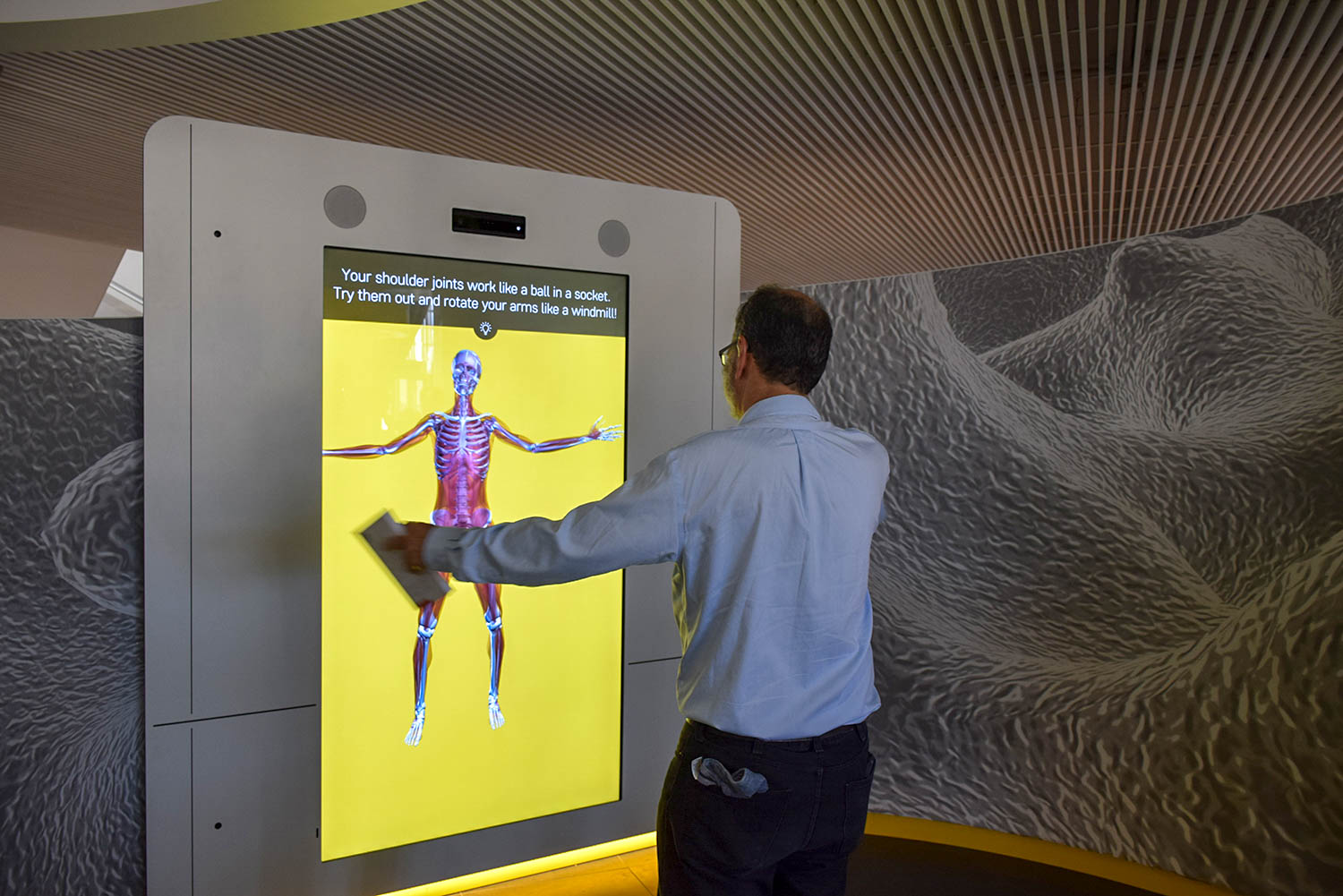
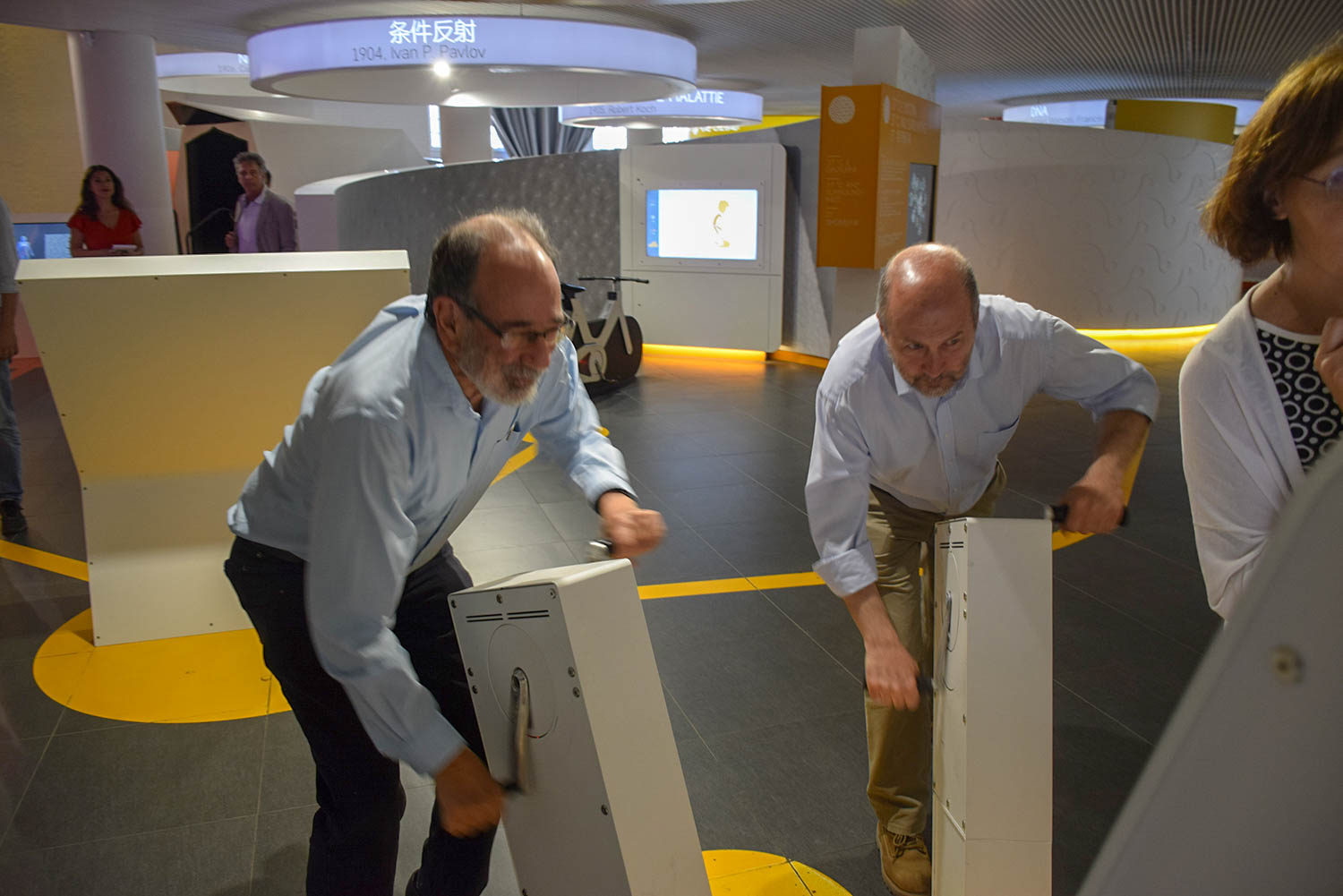
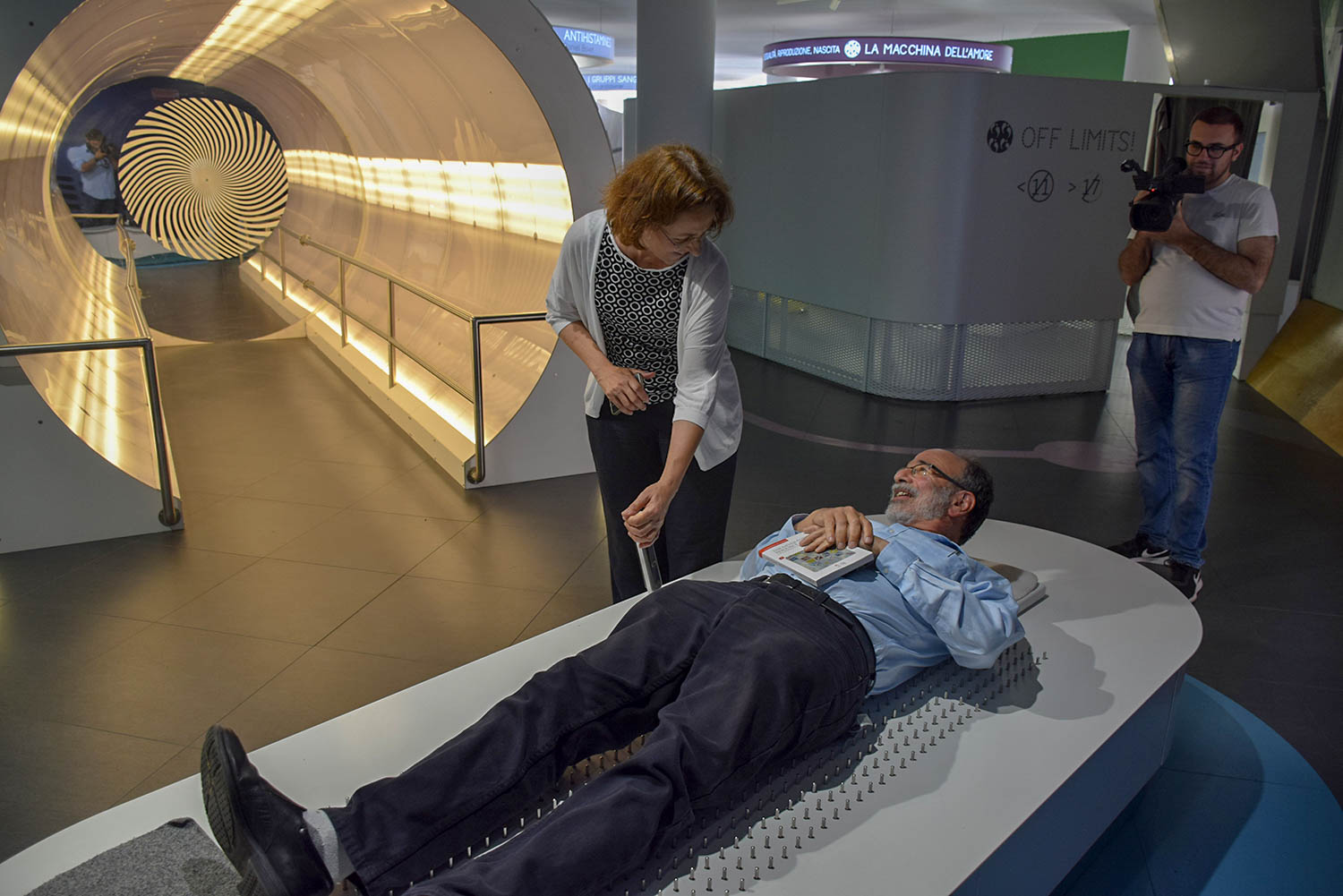
Last June I gave some talks in Italy (back when there were airplanes, and in-person talks--remember?) One side trip took me to the City of Science museum in Naples.  I've just now come across a web page that memorialized that visit, with some pictures that reminded me of what a fine science museum it is.  (I still enjoy science museums, even though I'm temporarily out of kids to bring with me...)

Il Premio Nobel per l’Economia 2012 Alvin Eliot Roth in visita a Città della Scienza
19 giugno 2019


Saturday, April 25, 2020

More essential services, from the lockdown in New Zealand


The Guardian has the breaking news from New Zealand (and the sub-headline makes you glad for experts..):

Sex toy sales triple during New Zealand's coronavirus lockdown
Speculation rife about an impending baby boom, but experts say uncertain times mean this is unlikely

"New Zealanders are permitted to leave their homes only to access essential services or take walks during the national shutdown, which began a fortnight ago and will remain in place for at least a further two weeks.
...
"The restrictions also prompted a tripling of sex toy sales in the 48 hours before the lockdown was imposed on 25 March
...
"“We’re selling a lot of beginner toys ... all our beginner ranges are very popular,” said Emily Writes, a spokesperson for the business. “It definitely looks like people are saying: ‘I’ve got time, I might try something new.’”

"Sales of condoms, lubricant, and menstrual cups were among the other purchases that spiked after Ardern announced the lockdown, as well as adult board games and – perhaps reflecting a wider trend towards disinfecting behaviour – sex toy cleaner.
...
"Adult Toy Megastore was deemed an essential service by New Zealand’s government and was allowed to continue operating during the shutdown because it sells condoms and medical items."

Friday, April 24, 2020

Rabbi Yeshayahu Haber (1965-2020), who founded "Gift of Life" kidney donor organization

Rabbi Yeshayahu Haber, who founded the Matnat Chaim ("Gift of Life") organization of kidney donors in Israel, has died of coronavirus. He was 55 years old.

YNet has the story:
הרב שהציל חיים נפטר מקורונה (Google Tranlate: The rabbi who saved lives died of corona)

Here's a story in English from Vos Iz Neias? (Yiddish: "What's New?")
Rabbi Yeshayahu Haber, Who Founded “Gift Of Life” For Kidney Donations, Passes Away From Coronavirus

and this from the Jerusalem Post:
'Gift of Life' founder Rabbi Haber passes away at age 55 due to COVID-19

"Haber's funeral will take place at 2 a.m. in Jerusalem. The public is asked not to come to the funeral procession."
GIFT OF Life: Matnat Chaim donors, 2016-2017.


Here are all my posts on Matnat Chaim, which recently recorded its 800th kidney donation.

Thursday, April 23, 2020

Gaming organ allocation: Heart failure treatment responds to changes in the priority rules for heart transplants

Recent changes in the allocation of deceased donor hearts for transplantation have focused on what kinds of mechanical interventions a patient has.  And as choice of alternative interventions has changed priorities for donation, cardiologists have responded by changing the interventions they choose.

Several articles in JAMA Cardiology speak to this and related matters, and here's an editorial describing the issue:

Anticipating a New Era in Heart Transplantation
Clyde W. Yancy, MD, MSc1,2; Gregg C. Fonarow, MD3,4
JAMA Cardiol. Published online April 15, 2020. doi:10.1001/jamacardio.2020.0611

The first paragraph gives this capsule history:

"The 50th anniversary of heart transplantation was celebrated in 2018. During those 50 years, heart transplantation as treatment of advanced heart failure evolved from a heroic intervention with uncertain outcomes to a guideline-directed treatment appropriate for selected patients to restore quality of life and to improve survival. Today, 1-year survival after heart transplant is nearly 90%, and the conditional half-life after heart transplant is now 13 years.1 Those robust outcomes reflect myriad breakthrough initiatives, including the definition of brain death; introduction of routine endomyocardial biopsy for rejection surveillance, development of potent immunosuppressive therapies, particularly those inhibiting calcineurin and in turn interleukin 2 production, and advances in therapies to support the failing ventricle, especially mechanical circulatory support devices. For more than 2 decades, the number of heart transplants performed in the United States has been approximately 2000 per year and, having recently increased, was 3551 in 2019.2 Taken together, the observed early and late benefits of heart transplant punctuate an incredible journey from heretical concept to clinical standard of care. The courageous pioneer physicians and especially the early patients who faced overwhelming risks are revered for establishing a foundational pillar in the care of patients with advanced heart failure. It is reasonable to assert that after 50 years, heart transplantation is a well-established success poised for the next era."

They then turn their attention to ways in which cardiologists have responded to changes in the deceased donor allocation system:

"Three articles in this issue of JAMA Cardiology further address new challenges in the process of care improvement for heart transplantation, some of which we think may require urgent attention.

"The first of these articles, by Hanff and colleagues,7 evaluated changes in the use of mechanical circulatory support under the auspices of new organ allocation rules introduced in October 2018 by the Organ Procurement and Transplantation Network. The new system was intended to redirect available donors to those patients of greatest need. The original status IA category was partitioned into 3 categories, and the original status IB category became category 4. A patient with advanced heart failure supported with a left ventricular assist device (LVAD) without LVAD-associated complications became a status 4 candidate. A similar patient with advanced heart failure experiencing manageable LVAD-associated complications became a status 3. Status 2 now captures those patients with LVAD device malfunction who may be facing eminent demise or need for LVAD replacement, whereas status 1 captures patients with life-threatening arrhythmias or patients being supported with venoarterial extracorporeal membrane oxygenation (VA-ECMO). Evaluating data through June 2019, Hanff and colleagues7 noted an abrupt increase in the use of VA-ECMO support that was temporally associated with implementation of the new system. Concomitantly, LVAD support for advanced heart failure in patients awaiting heart transplant abruptly decreased from 35.1% before implementation of the new rules to 24.5% after their implementation."

Finally, they also consider center variability to understand what happens to patients when a proffered heart transplant is declined:

"In another article in this issue of JAMA Cardiology, Choi et al10 evaluated data in the US National Transplant Registry between 2007 and 2017 with the intention to assess transplant center variability in donor organ acceptance. The evaluable data emanated from 93 transplant centers and encompassed 19 703 donors and 9628 candidates, with 32% of the donors accepted as first-ranked candidates. After adjustment for pertinent donor, candidate, and geographic covariates, the center variability in acceptance rates was quite remarkable at 12% to 62%. For every 10% increase in center acceptance rate, waiting-list mortality decreased by 27%. Those centers with lower acceptance rates experienced higher waiting-list mortality among candidates listed for a heart transplant..."


Wednesday, April 22, 2020

Surrogacy finally becomes legal in New York

Passed last month, to come into effect next year, New York follows most of the rest of the country into the American consensus on surrogacy, including commercial surrogacy (so very different than in Europe).

The New York Daily News had this account:

Good news for couples who want children and need a surrogate as N.Y. legalizes the process
By DENIS SLATTERY

"New York legalized paid gestational surrogacy Thursday as lawmakers approved a sweeping budget package containing the measure.

"Gay and infertile couples in the Empire State can now enter into a contract and pay a woman to carry a baby to term through in-vitro fertilization.

"Gov. Cuomo made the measure a priority over the past year and a half as New York remained one of only three states that explicitly banned the practice.

"Pushback from an unlikely combination of religious organizations and women’s groups concerned about the potential exploitation of surrogates, particularly those from low-income backgrounds, preceded the bill’s failure to gain enough support in the Assembly during the last legislative session.Assemblywoman Amy Paulin (D-Scrasdale), who first introduced a bill to lift the ban back in 2012, applauded the inclusion in the budget.

“Today, we bring New York law in line with the needs of modern families, while simultaneously enacting the strongest protections in the nation for surrogates," she said.
...
"The measure also streamlines the “second-parent adoption” process by requiring only a single visit to court to recognize legal parenthood while the child is in utero. Once all of the requirements set forth in the law are met, the intended parents can seek an “Order of Parentage” from a court, which becomes effective immediately upon birth."
***********
Here's an earlier post, about the complicated coalitions involved in last year's failure to pass the bill

Friday, June 21, 2019  Surrogacy in NY...remains complicated

***********
Here's a link to and snippets of the new statute itself:


TITLE OF BILL:  An act to amend the family court act, in relation to
establishing the child-parent security act; and to repeal section 73 and
article 8 of the domestic relations law, relating to legitimacy of chil-
dren born by artificial insemination and surrogate parenting contracts

PURPOSE OR GENERAL IDEA OF BILL:
To legally establish a child's relationship to his or her parents where
the child was conceived through third party reproduction including those
children born through gestational surrogacy arrangements.
 ...
"JUSTIFICATION:
New York law has failed to keep pace with medical advances in assisted
reproduction, causing uncertainty about who the legal parents of a child
are upon birth. In many cases, the parentage of children created through
donated sperm, eggs and embryos is unsettled or open to attack at the
time of the child's birth and thereafter. Confusion or uncertainty
regarding the parental rights of donors and intended parents (both
genetic and non-genetic) who participate in the conception of the child
through assisted reproduction is detrimental to the child and secure
family relations. Where children are born to a gestational carrier the
parentage of the intended parents may not be recognized under current
law. This is not only detrimental to the child; it also causes confusion
in many critical situations. For example, a hospital does not know who
must give consent when a newborn requires medical procedures.

"The Child Parent Security Act will provide clear and decisive legal
procedures to ensure that children born through third party reproduction
have secure and legally recognized parental relationships with their
intended parents.The law will make it clear that donors do not have
parental rights or obligations and that those rights and obligations
reside with the Intended Parents.

"Importantly, this legislation lifts the ban on surrogacy contracts to
permit enforceable gestational carrier agreements and sets forth the
criteria for such agreements. When all of the requirements set forth in
the law are met, the intended parents can seek an "Order of Parentage"
from a court, prior to the birth of the child, which becomes effective
immediately upon birth. The requirements are designed to ensure that all
parties enter into the agreement on an equal footing and with full know-
ledge of their duties and obligations. For example, all parties must be
represented by independent legal counsel, and the agreement may not
limit the right of the carrier to make her own healthcare decisions.

"Because of existing New York laws, couples facing infertility and same-
sex couples are forced to go out of state in order to have a child with
the assistance of a gestational carrier. This is overly burdensome to
the parents, who have often struggled for many years to have a child.
Having an out-of-state gestational carrier may make it difficult, if not
impossible, for the parents to fully participate in the pregnancy by
attending doctor's appointments, etc. It also requires the participants
to use out-of-state clinics and medical professionals despite the fact
that New York is home to world-class medical facilities and fertility
professionals.

"New York appellate courts have repeatedly called upon the Legislature to
act to provide much needed clarity to the essential question of who is a
parent. The need to answer that call is more important today than ever
as increasing numbers of children are being conceived and born through
third party reproduction. The Child-Parent Security Act clarifies the
issue of who is a parent and establishes clear legal procedures which
ensure that each child's relationship to his or her parent(s) is legally
recognized from birth. As the New York Court of Appeals held in Brooke
S.B. v Elizabeth A.C.0 biology and adoption are not the only touchstones
to determine parentage. The Child Parent Security Act provides a frame-
work for determining the parentage of the large number of children
unprotected under existing New York state law.


...
 PART 5
    34                 PAYMENT TO DONORS AND GESTATIONAL CARRIERS
    35  Section 581-501. Reimbursement.
    36          581-502. Compensation.
    37    §  581-501.  Reimbursement.   (a) A donor who has entered into a valid
    38  agreement to be a donor, may  receive  reimbursement  from  an  intended
    39  parent  for  economic  losses  incurred  in connection with the donation
    40  which result from the retrieval or storage of gametes or embryos.
    41    (b) Premiums paid  for  insurance  against  economic  losses  directly
    42  resulting  from  the  retrieval  or  storage  of  gametes or embryos for
    43  donation may be reimbursed.
    44    § 581-502. Compensation.  (a) Compensation may be paid to a  donor  or
    45  gestational  carrier based on services rendered, expenses and or medical
    46  risks that have been or will be incurred, time, and inconvenience. Under
    47  no circumstances may compensation be paid to purchase gametes or embryos
    48  or to pay for the relinquishment of a parental interest in a child.
    49    (b) The compensation, if any, paid to a donor or  gestational  carrier
    50  must be reasonable and negotiated in good faith between the parties, and
    51  said  payments to a gestational carrier shall not exceed the duration of
    52  the pregnancy and recuperative period of up to  eight  weeks  after  the
    53  birth of the child.
    54    (c)  Compensation may not be conditioned upon the purported quality or
    55  genome-related traits of the gametes or embryos.
        A. 6959--A                         12

     1    (d) Compensation may not be conditioned on actual genotypic or  pheno-
     2  typic characteristics of the donor or of the child.

Tuesday, April 21, 2020

Residential real estate sales, social distancing, and traditional marketplace institutions

In some places, residential real estate is an essential service (open houses allowed) and in others not.  Virtual, internet showings are becoming more important.
But some of the particular marketplace institutions, of closing and title ceremonies (including notarized signatures) resist social distancing, and in many U.S. states must be conducted in person. Of course, the security of undisputed ownership is of huge importance in real estate, and online security is imperfect (I'm told...), so it isn't clear how to proceed here.

Here's a story from the Washington Post:

With hand sanitizer and elbow bumps, real estate agents are still selling during pandemic
By Kathy Orton

"Now, as nonessential businesses are shuttering to wait out the pandemic, some real estate professionals are carrying on as usual — albeit with masks, gloves and hand sanitizer. Agents were holding open houses until they were prohibited by local officials. Nearly 200 open houses were listed last weekend and more than 600 open houses the week before in the D.C. region on the area’s multiple listing service. Mayor Muriel E. Bower (D) banned open houses as of Saturday; Maryland Gov. Larry Hogan (R) and Virginia Gov. Ralph Northam (D) forbid them as of Monday.

"Home appraisers and inspectors are donning masks and gloves. Settlement companies are putting buyers and sellers in separate conference rooms and opening a new box of pens for each client who comes to a closing.
...
"Illinois, despite being hit hard by the coronavirus outbreak, has said that real estate is an essential service, and therefore is not required to close like retail outlets and restaurants.

"But California, New York and Pennsylvania have said it is not. Seattle’s multiple listing service no longer allows agents to post open houses.
...
"The number of 3-D home tours created on Zillow went up 326 percent on March 20.
...
"Although many aspects of buying a home can be done online, certain parts of the process — inspection, appraisal, closing — typically are done in person.
...
"According to Todd Ewing, chief executive at Federal Title, Fannie Mae and Freddie Mac are reluctant to buy loans without legislation that allows for remote online notarization.

"Some states, including Virginia, permit remote online notarization, but others such as the District and Maryland, do not. Federal legislation was introduced on March 18 that would allow it in all states."

Monday, April 20, 2020

Organ donation after medically assisted dying, in Canada

In the New England Journal of Medicine, with many authors,
Organ Donation after Medical Assistance in Dying — Canada’s First Cases

February 6, 2020
N Engl J Med 2020; 382:576-577
DOI: 10.1056/NEJMc1915485

"In 2016, following the Supreme Court of Canada’s Carter Decision,1 medical assistance in dying (MAID) became possible with individual court orders. However, owing to the lack of a centrally coordinated Canadian response to the requests of some patients for voluntary euthanasia, as well as concern for individual repercussions, many Canadian providers of assisted dying operate largely independently. With 3 years now passed since euthanasia was approved, it is important to ensure our understanding of current practice for the purpose of quality assurance, provider education, and future research opportunities geared to improve patient-centered practice. Among the practices related to the legalization of euthanasia, organ donation raises challenging issues.

"We performed a historical cohort study of completed MAID organ-donation cases using data from three Canadian provincial organ-donation organizations (Trillium Gift of Life Network, Transplant Québec, and British Columbia Transplant) from June 2016 through January 2019 to describe the initial experience with euthanasia-associated organ donation. A total of 56 patients were referred as potentially eligible for organ donation after MAID on the basis of preliminary assessment by one of the three organ-donation organizations. The mean age was 61 years; 39% of the patients were female. The most common diagnosis was amyotrophic lateral sclerosis, followed by end-stage chronic obstructive pulmonary disease and Parkinson’s disease. Although the majority of Canadian euthanasia cases have involved patients with active cancer,1 our data showed that there is a substantial variety of conditions for which organ donation is a viable possibility. Among the 56 patients in the study, 30 were able to become donors and donated 74 organs. Twenty patients were single-organ donors, while 10 were multiorgan donors. 

Sunday, April 19, 2020

Bike matching in NYC


Program Matches Bicycles To Essential Workers Who Need Them In New York 

ARI SHAPIRO, HOST: If you're looking for ways that you can help out these days, there's plenty of need. Food pantries need non-perishable food. Hospitals need masks. And lots of people, it turns out, need wheels.

MARY LOUISE KELLY, HOST: Yeah. That is the idea behind a new program from the New York City-based advocacy group Transportation Alternatives.

"SHAPIRO: Danny Harris says they've matched 42 people with bikes so far, and many more are in the works.
...
"SHAPIRO: And Salazar says with car traffic way down, biking in New York City these days is actually quite nice."


HT: Ellen Kominers

Saturday, April 18, 2020

Covid-19 is now a leading cause of death in the U.S.

The Washington Post has the story:

Covid-19 is rapidly becoming America’s leading cause of death
By Dan Keating and Chiqui Esteban


Kidney disease is moved down to number 10.

Of course, "cause of death" is a squishy kind of data, since a given death can be recorded in different ways. See yesterday's post on how Covid-19 also contributes to kidney failure, (and how dialysis in crowded clinics can expose kidney failure patients to infections of all sorts, including corona virus).

Friday, April 17, 2020

Covid-19, kidney failure, and dialysis

Corona virus and kidney failure are a bad combination, whichever way you look at it. On the one hand, Covid-19 is causing kidney failure. On the other, if you are already on dialysis, you are exposed to Covid-19 infection whenever you go to spend a few hours at a crowded dialysis clinic.

Frank McCormick points me to this story from Politico:
U.S. races to stock up on dialysis supplies as kidney failure ravages virus patients
Approximately 20 percent of coronavirus patients in intensive care around the city need the kidney treatment, often for weeks.

"Hospitals in New York City are running out of dialysis fluids as thousands of coronavirus patients develop kidney failure, an unexpected development that could presage the next critical supply shortage nationwide.

"Approximately 20 percent of coronavirus patients in intensive care around the city need the kidney treatment, often for weeks, a development that many providers did not see coming. FEMA held a call Monday with FDA and CMS to discuss the possibility of issuing emergency use authorizations to import more dialysis fluids, according to a document obtained by POLITICO.
...
"Gov. Andrew Cuomo recently said that New York’s ventilator needs are beginning to plateau, and he has begun diverting the equipment to states in greater need. But hospital staff say that the extended nature of dialysis treatment means that shortages of fluids, trained personnel and even equipment there could just be starting."
**********

And here's a NY Times story on dialysis patients and clinics:

 Dialysis Patients Face Close-Up Risk From Coronavirus
As the pandemic sweeps the United States, patients needing kidney dialysis and employees of the clinics worry about keeping the virus at bay in such tight spaces.

"As the coronavirus rages from state to state, the 500,000 people whose failing kidneys require them to get dialysis are among the most vulnerable. Each clinic may have dozens of patients during a single shift, often sitting less than the recommended six feet apart for hours.
...
"Infection has traditionally been one of the industry’s biggest problems.

“The second leading cause of death among hemodialysis patients is infections,” said Dr. Alan Kliger, a Yale nephrologist who is leading efforts to control the spread of coronavirus among dialysis patients. As many as one in 10 patients die from complications from an infection, often at the site where a patient has a catheter.


Thursday, April 16, 2020

Corona lockdown, and the food supply chain in India, by Matt Lowe and Ben Roth

Matt Lowe and Ben Roth look at the effect of India's corona virus lockdown on the food arriving at the big wholesale produce market in Delhi.  They describe breakdowns in the supply chains.

Arrivals Dropped 50% Post Lockdown. When Will Azadpur Mandi’s Supply Return to Normal?
Since the lockdown has been extended till May 3, it has become all the more crucial for the government to intervene and ensure that the broader food supply chain operates smoothly. 

"The disruption can already be seen in Delhi’s (and Asia’s) largest wholesale fruit and vegetable market – the Azadpur mandi – which has seen a precipitous decline in the volume of fruits and vegetables flowing through the market.

"Relative to the three prior years, the volume of produce arriving at Azadpur fell by about half on March 24, and has hovered at around that level since (Figure 1).


Wednesday, April 15, 2020

Coronavirus information, mis-information, conspiracy theories, web search, and social media

The coronavirus / Covid-19 pandemic is constantly generating new information, and misinformation.  How to separate them?

A number of social media sites, and Google, have decided not to rely on their organic recommender systems. So e.g. if you search for "coronavirus" in Google, you get what appear to be all curated sites (e.g. government and University sources, and major newspapers), and if you google "coronavirus conspiracy theories" you get news stories about some of the craziness out there, but not the first hand insanity.

The Guardian has this story:

Tech giants struggle to stem 'infodemic' of false coronavirus claims

"Click over to Google, type in “coronavirus”, and press enter.

"The results you see will bear little resemblance to any other search.

"There are no ads, no product recommendations, and no links to websites that have figured out how to win the search engine optimisation game. Government, NGO and mainstream media sources dominate.

"Algorithms and user-generated content are out; gatekeepers and fact checking are in.
...
"Across the social web – on Facebook, Twitter, YouTube, Reddit, Instagram and Pinterest – search results related to Covid-19 are similarly predetermined.

"Instagram delivers a pop-up urging US users to go to the website for the Centers for Disease Control and Prevention (CDC) – or UK users to the NHS – rather than look at the memes and pictures tagged with #coronavirus.

"On Facebook, a dedicated “Information Center” includes a mix of curated information and official medical advice. On Pinterest, the only infographics and memes to be found on topics such as “Covid-19” or “hydroxychloroquine” are those made by internationally recognised health organisations, such as the WHO.
...
"Another complicating factor is that normally trustworthy sources are not providing reliable information.

“We’ve seen the US government, particularly the White House, becoming a significant purveyor of misinformation around the virus,” Bergstrom said.

Facebook and Twitter have removed posts by prominent and powerful people over coronavirus misinformation, including the Brazilian president, Jair Bolsonaro, but the real test of their resolve will be whether they ever take action against misinformation by Trump."
*********

Here's another story, concerning a particular conspiracy theory:

Facebook acts to halt far-right groups linking Covid-19 to 5G

"Facebook has stepped up efforts to stop the promotion of baseless conspiracy theories linking Covid-19 to 5G, after research highlighted a “toxic cocktail” of far-right-influenced groups pushing the idea alongside incitement to attack telecommunications infrastructure.

"Groups in the UK promoting the conspiracy theory on Facebook – often linking it to explicitly antisemitic messages – have been growing at a significant rate, warned the campaign group Hope not Hate.

"The largest group in the UK, Stop 5G UK, added almost 3,000 members in just 24 hours from 6-7 April while another, Direct Action Against 5G, gained more than 1,400 members in its first week after it was created on 31 March"

Tuesday, April 14, 2020

John Horton Conway (1937-2020)

John Horton Conway, the  John von Neumann Professor in Applied and Computation Mathematics, Emeritus, at Princeton, passed away on April 11, while suffering from corona virus Covid-19.

Readers of this blog likely know him for his theorem that, in Gale and Shapley's marriage model with strict preferences, the set of stable matchings is a lattice with respect to the partial order of the men's common preferences, or the women's, and that these two lattices are the dual of one another. This helped us understand the observation already made by Gale and Shapley that the set of stable matchings included a man-optimal stable matching that every man likes at least as much as any stable matching, and similarly  a woman-optimal stable matching that is  (weakly) preferred by all the women to any other stable matching (and that the best stable matching for the men is the worst for the women and vice versa).

He was a man of wide interests and many theorems. (When I met him once and told him that he was famous in the market design community for his lattice theorem about stable matching, he pretended not to know which theorem I meant.)

Here are some obituaries (which focus on some of his more widely famous accomplishments):

COVID-19 Kills Renowned Princeton Mathematician, 'Game Of Life' Inventor John Conway In 3 Days

""I am sorry to confirm the passing of my colleague John Conway. An incomparable mathematician, a pleasant neighbor, and an excellent coffee acquaintance," Wang tweeted.
...
"Conway's most notable contribution to his field may have been his invention of the Game of Life, leading to the popularization of cellular automaton."
*********

John Conway Dies From Coronavirus

"According to Princeton University Conway's proudest achievement was the invention of new system of numbers, the surreal numbers—a continuum of numbers that include not only real numbers but also the infinitesimal and the infinite numbers, noting:

"When he discovered them in 1970, the surreals had John wandering around in a white-hot daydream for weeks.

"His surreal numbers inspired a mathematical novel by Donald Knuth, which includes the line:

“Conway said to the numbers, ‘Be fruitful and multiply.’”

"He also invented a naming system for exceedingly large numbers, the Conway chained arrow notation."
*******
And this, from Scott Aaronson:

John Horton Conway (1937-2020)
"His The Book of Numbers (coauthored with Richard Guy, who himself recently passed away at age 103) made a huge impression on me as a teenager. I worked through every page, gasping at gems like eπ√163 (“no, you can’t be serious…”), embarrassed to be learning so much from a “fun, popular” book but grateful that my ignorance of such basic matters was finally being remedied."


Monday, April 13, 2020

Teaching online: Singapore, NYC react to Zoombombing of online classes

Some of us are old enough to remember when email didn't come with security concerns.  Things are moving faster these days, so it's no surprise that there are Zoom trolls and scammers.  Singapore and NYC schools have decided not to use Zoom to conduct their online classes any more.

Here's the Singapore story from the Guardian:

Singapore bans teachers using Zoom after hackers post obscene images on screens
‘Very serious incidents’ have forced suspension from online schools as conferencing app faces renewed questions over security

"Singapore has suspended the use of video-conferencing tool Zoom by teachers after “very serious incidents” in the first week of a coronavirus lockdown that has seen schools move to home-based learning.

"One incident involved obscene images appearing on screens and male strangers making lewd comments during the streaming of a geography lesson with teenage girls, media reports said."
**********
Here's the NYC story from CNN:

New York City schools won't be using Zoom anymore because of security concerns
By Nicole Chavez and Sarah Jorgensen

"Schools in New York City are moving away from using the video conference app Zoom after a review of security concerns.
...
"The department does not have a central contract with Zoom, Filson said, and students and staff will be transitioning to Microsoft Teams, which has "the same capabilities with appropriate security measures in place."

"Earlier this week, federal officials began warning of a new potential privacy and security concern called "Zoombombing."
...
"Eric Yuan, the founder and CEO of Zoom, apologized to the video conferencing app's users for the privacy issues earlier this week, saying his team will stop adding new features for the next 90 days and instead focus solely on addressing privacy issues.
...
"Yuan said over 90,000 schools across 20 countries have been using the platform for online teaching since the company offered its services free of charge to schools because of the Covid-19 pandemic."

Sunday, April 12, 2020

Behavioral Economics, Computation, and Game Theory, all in Budapest in July, or online...

Here's the (appropriately cautious) announcement:

Behavioral EC '20
2nd Workshop on Behavioral Economics and Computation

The 2nd Workshop on Behavioral EC will be held in conjunction with the 21st ACM Conference on Economics and Computation (ACM EC '20) and will be co-located with the 6th World Congress of the Game Theory Society (GAMES 2020), on July 17, 2020, in Budapest, Hungary. The goal of the workshop is to bring together researchers from diverse subareas of EC who are interested in the intersection of human economic behavior and computation, to share new results and to discuss future directions for behavioral research related to economics and computation. It will be a full-day workshop, and will feature invited speakers, contributed paper presentations and a panel discussion.

...
Submission deadline: May 18, 2020, 11:59pm PDT.
Notification: June 11, 2020
The workshop: July 17, 2020
COVID-19 Updates: We are aware of the severe restrictions across the globe due to the COVID-19 pandemic. The SIGecom board will update with the final plans for the EC 2020 conference on or by May 6. In the event the in-person conference does not happen, we will hold the workshop virtually.  

Saturday, April 11, 2020

Market design seminars on Zoom, Monday afternoons in Paris

For those of you missing your local market design seminars, here's a convenient substitute, Monday afternoons if you're in Europe, or before breakfast if you're in California... (The first one was this past Thursday.)

Virtual MD Seminar Series
The Virtual Market Design Seminar is an open online alternative to seminars cancelled due to the COVID-19. Seminars will cover all fields from market design. Talks usually take place bi-weekly on Monday at 4:00-5:00pm (Paris UTC) on Zoom. Please check the schedule below, different days and times are possible.
Registration
If you would like to participate and to stay up to date about upcoming presentations, please join our mailing list. You will receive the Zoom link for each talk. 

Upcoming Presentations
Thursday, April 9, 2:00pm (Paris UTC).
Maarten Janssen (University of Vienna): "Regulating Product Communication". (with S. Roy). [slides]
Monday, April 20, 4:00pm (Paris UTC).
Scott Duke Kominers (Harvard Business School): "Redistribution through Markets" (with P. Dworczak and M. Akbarpour).
Monday, May 4, 4:00pm (Paris UTC).
Renato Gomes (Toulouse School of Economics): "Regulating Platform Fees under Price Parity" (with A. Mantovani).
Monday, May 18, 4:00pm (Paris UTC).
Benny Moldovanu (University of Bonn):"tba".

Organizers
Olivier Bos (Paris II), Nicolas Fugger (Cologne), Vitali Gretschko (ZEW), Helene Mass (Bonn), Marion Ott (ZEW), Martin Pollrich (Bonn), Nora Szech (KIT).

Friday, April 10, 2020

Clearinghouses are hard to organize in a hurry: volunteer medical workers in NYC

Many healthcare workers are willing and able to come to New York to help with the shortages that Covid-19 has created there.  But existing staffing marketplaces seem to be the avenue by which many of them are in fact matched.

The NY Times has the story:

Volunteers Rushed to Help New York Hospitals. They Found a Bottleneck.
When New York called for volunteers to help fight the coronavirus, 90,000 people responded. The hard part? Getting them into hospitals.

"Ms. Strickland, a former pediatric intensive care unit nurse in High Point, N.C., spent hours trying to submit her volunteer application online, and then emailed city and state representatives. She never heard back.

"Frustrated, she reached out directly to Mount Sinai Queens hospital in New York City. A manager told her to use a private recruiting agency, which the hospital had used for years to bring in temporary staff.

"Within two days, Ms. Strickland, 47, received her assignment. She started this week in the hospital’s emergency department, making about $3,800 a week for three 12-hour shifts instead of doing it for free, as she had initially wanted.
...
"As of Wednesday, more than 90,000 retired and active health care workers had signed up online to volunteer at the epicenter of the pandemic, including 25,000 from outside New York, the governor’s office said.
...
"New York City hospitals have only deployed 908 volunteers as of Wednesday, according to city health officials.

"The urgent need for medical personnel is colliding head-on with the immovable bureaucracy of hospital regulations
...
"State officials said the volunteer portal, which was built from scratch, was initially overwhelmed by the response, but has since connected about 10,000 volunteers to hospitals in New York State within two weeks.
...
"The challenge of screening so many medical workers has opened an opportunity for the dozens of established private agencies that place temporary nurses and doctors at hospitals nationwide
...
"The staffing agencies, an $18 billion industry, say that unlike the state, they already have the technology and infrastructure in place to quickly check credentials for health professionals. In normal times, hospitals hire them to fill short-term staffing needs, such as during a regular flu season.

“As great as it is that the state is trying to help, it’s a very complex process to staff a clinician,” said Alexi Nazem, chief executive of Nomad Health, a health recruiting agency based in New York. “There are dozens of documents to verify. Our company has spent years building those systems.”
...
"New York City’s public hospitals had used private recruiters to bring in about 3,600 new medical workers as of late last week and were seeking to hire 3,600 more, according to the mayor and a city spokesman.

"One of those recruiting agencies, NuWest Group, began contracting with the city less than two weeks ago. Since then, the agency has secured hundreds of nurses and respiratory therapists for city hospitals, with some positions paying more than $10,000 a week, a spokeswoman for the agency said.

"Agencies, who negotiate the rates with hospitals, say that without the high pay, there would not be enough qualified clinicians willing to take jobs at the front lines
...
"Hospital staff members say they are grateful for any reinforcements, but some residents and nurses have expressed frustration over the pay disparities."