skip to main | skip to sidebar

Market Design

I post market design related news and items about repugnant markets. See my Stanford profile. I have a forthcoming book : Moral Economics The subtitle is "From Prostitution to Organ Sales, What Controversial Transactions Reveal About How Markets Work."

Saturday, April 7, 2018

School choice in Chicago and in D.C.

Here's some news about the new school choice system in Chicago.
Here's the press release from Chicago Public Schools:
Overwhelming Majority of CPS Students Receive Offers to Preferred School Choices Through GoCPS High School Application Process 
81 Percent of Students Will Receive Their First, Second or Third Choice; More Than 26,909 Incoming Freshmen Participated in GoCPS

And here's some background information from GoCPS
Round 1 high school offers were officially released to 8th grade students and families by Chicago Public Schools (CPS) this afternoon via the new single application system—GoCPS.

Last spring, the Chicago Board of Education voted unanimously in favor of moving to a single application for all public high schools in the district. The decision was a historic shift that solved a major pain point for families and students who, until now, had to navigate more than 290 schools and program options.

New Schools for Chicago and Kids First Chicago have worked diligently alongside community partners, schools, students, parents, and district leaders to ensure successful implementation in the first year of GoCPS. Together with CPS, we are excited to highlight some results of the Round 1 application period:
  • 93% of 8th graders successfully submitted applications to high school through the new GoCPS system.
  • 92% of students who applied were matched to a school.
  • 81% of students were matched to one of their top 3 choices.
Compared to other urban districts, these participation and match results in GoCPS’s first year are exceptional. For example, Denver Public Schools uses a similar system and their highest participation rate is 84% after many years of implementation.

With the right support and plan for continued improvement, Chicago could emerge as the leader not only in universal enrollment, but also in the adoption of modern systems and processes to better serve large, complex student populations.
More Information


OUR WORK TO SUPPORT CHILDREN, FAMILIES & THE DISTRICT
  • Free enrollment support to families, communities, and schools via our Kids First Chicagoinitiative. 
  • Ongoing parent focus groups on the GoCPS application process. Working in partnership with CPS, we have polled parents at each stage of the new enrollment process to gain insightful user feedback. 
  • Work directly with the district in creating and distributing clearer and more effective information on school quality for parents and students as they prepare to apply to and accept their school options.
***********
Here's a story from D.C. that highlights that even a good school choice enrollment system doesn't create enough good schools to accommodate all the children, so that until we have enough good schools, school choice will be "playing the lottery" for some families. (But a good system allocates places more efficiently...)
The D.C. lottery is intended to give all kids a fair shot at a top school. But does it?

"Before the District implemented a lottery system using a single application in 2014, parents had to keep track of about 30 lottery deadlines and applications. Charter schools operated their own lotteries, and the traditional public school system ran separate lotteries for lower and upper grades. Chaos ensued. Parents often had to go to each school to submit a lottery application.

Adding to the confusion, charter schools informed parents of the lottery results at different times, which resulted in parents enrolling their children in the first school they heard back from and then, when they received a slot at a more desirable campus, enrolling them there, too.

When Scott Pearson took over the D.C. Public Charter School Board in 2012, he met with Kaya Henderson, who was chancellor of D.C. Public Schools, and they pushed for a unified lottery system. Denver, New Orleans and New York had already streamlined the process, so the technology and precedent were there.

By spring 2014, My School DC was ready for use. Schools aren’t required to enlist in the common lottery, and Pearson said it wasn’t an easy sell.

He worked on convincing the big charter networks, including KIPP and Democracy Prep, to participate, and most other schools followed.

“We had a target customer in mind, and it was a single mom living east of the river who was unbelievably burdened and often locked out of the ability to participate in school choice,” Pearson said.

The engineering behind My School DC is based on the algorithm that earned the 2012 Nobel Prize in economics for formulas that matched thousands of medical residents with hospitals, kidney donors with recipients and New York students with high schools.

Neil Dorosin, executive director of the Institute for Innovation in Public School Choice, which develops lottery algorithms, said parents can’t cheat the system, and schools can’t sift through applicants to choose who they want.

Software assigns participants a number that sticks with them until they are matched with a school. Children then get to enroll in that school while remaining on the wait list for any school that a family ranked higher but did not get into.

“All the algorithm is doing is just implementing what that city’s rules are,” Dorosin said. “If you are looking for unfairness, it is not in the algorithm.”

"
Posted by Al Roth at 5:21 AM 0 comments
Labels: chicago, school choice

Friday, April 6, 2018

Market Design: Public lecture at Reed College

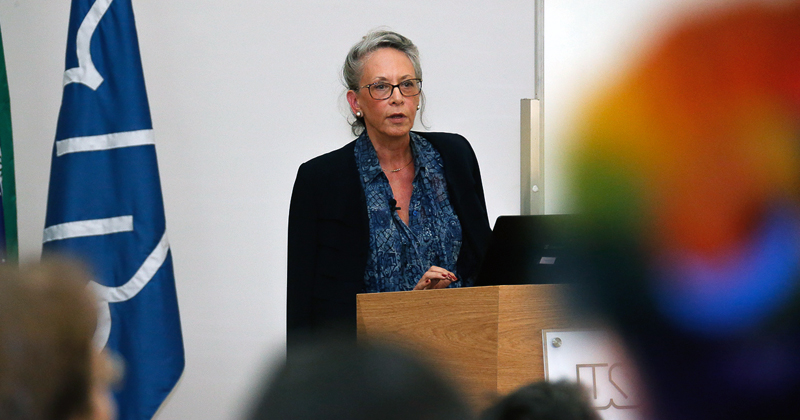
I'll speak today at Reed College in Portland OR:

Matching Markets and Market Design

Markets and marketplaces, which are ancient human artifacts and ubiquitous modern ones, come in many varieties. Roth will speak about some unusual marketplaces he's helped design, including the National Resident Matching program through which most American doctors get their first jobs, school choice, and kidney exchange.

Alvin Roth is the Craig and Susan McCaw Professor of Economics at Stanford University and the George Gund Professor Emeritus of Economics and Business Administration at Harvard. Roth shared the Nobel Memorial Prize in Economics for the theory of stable allocations and the practice of market design. His work is in game theory, experimental economics, and market design.

Free and open to the public. Sponsored by the economics department.
 Friday, April 6 at 4:15pm
 Vollum College Center, Vollum lecture hall 

**************
Update: here's an account of the day (in Portugese) by my host, Carol Franceschini:

Querido diário: Um dia (surreal) com Alvin Roth, Nobel em Economia 2012

Posted by Al Roth at 5:25 AM 0 comments
Labels: public lectures

Thursday, April 5, 2018

Cursing sex traffickers in Nigeria

In some religious traditions, curses are performative, i.e. performing a curse is thought to have consequences for those cursed.  In Nigeria, a traditional leader is applying this to public policy.

The NY Times has the story:
A Voodoo Curse on Human Traffickers

"On March 9, Oba Ewuare II, the traditional ruler of the kingdom of Benin, in southern Nigeria, put a voodoo curse on anyone who abets illegal migration within his domain. At the same time, he revoked the curses that leave victims of trafficking afraid that their relatives will die if they go to the police or fail to pay off their debt.

"Before being smuggled into Europe, women and girls in the area, which falls in present-day Edo State, are made to sign a contract with the traffickers who finance their journey, promising to pay them thousands of dollars. The agreement is sealed with a voodoo, or juju, ritual, conducted by a spiritual priest, known here as a native doctor.
...
"Edo is not one of Nigeria’s poorest states. But in the early 1980s women there started traveling to Italy to trade in gold and beads, and “saw a thriving market in prostitution,” said Kokunre Agbontaen-Eghafona, a professor at the University of Benin and a researcher for the International Organization for Migration. She believes this “founders factor” is the main reason Edo has become such a center of human trafficking."
Posted by Al Roth at 5:40 AM 0 comments
Labels: crime, prostitution, religion, repugnance, trafficking

Wednesday, April 4, 2018

Universidade de São Paulo celebrates Marilda Sotomayor

Marilda Sotomayor

Especialista fala de trajetória na Teoria dos Jogos e “Matchings”

Em evento da série “USP Lectures”, Marilda Sotomayor falou de Teoria dos Jogos, suas experiências e contato com laureados do Nobel
[G.translate: Specialist talks about trajectory in Game Theory and "Matchings"
In an event of the "USP Lectures" series, Marilda Sotomayor spoke about Game Theory, her experiences and contact with Nobel laureates]
Posted by Al Roth at 5:27 AM 0 comments
Labels: market designers

Tuesday, April 3, 2018

Bob Wilson, Paul Milgrom and Dave Kreps on the future (and past) of Economics

An interview at Stanford GSB with three of the greatest game theorists. You can read it at this link:
The Future of Economics
Three award-winning economists talk about where the field has been and where it’s heading.

Related
David M. Kreps
David M. Kreps
Professor, Economics
Paul R. Milgrom
Paul R. Milgrom
Professor (by courtesy), Economics
Robert Wilson
Robert Wilson
Professor Emeritus, Economics
John Roberts
John Roberts
Professor Emeritus, Economics
Posted by Al Roth at 5:35 AM 0 comments
Labels: game theory, stanford

Monday, April 2, 2018

Dutch marijuana: where a legal market must purchase from an illegal black market

 The Dutch (legal) market for marijuana seems as confused as the legal American markets in (now) 30 states, but in different ways.
The NY Times has the story:
Solving the Dutch Pot Paradox: Legal to Buy, but Not to Grow
By CHRISTOPHER F. SCHUETZE

"While licensed coffee shops have the right to sell small amounts of recreational cannabis and hash to buyers older than 18, they have to rely on the black market to acquire their wares in bulk.

“Right now, you are allowed to buy the milk, but you can’t know anything about the cow,”...
...
"Last month, the national police union, Politie Bond, released a stinging report warning of the growth of organized crime in the country, fueled by the drug trade.

“The Netherlands fulfills many characteristics of a narco-state. Detectives see a parallel economy emerging,” the report stated, noting that while crime over all had decreased, those producing and trafficking drugs were becoming ever more sophisticated.
*********

The situation in the U.S. is at least as conflicted.  After a long history as a popular illegal drug, thirty states and Washington D.C. have legalized marijuana in some forms and for at least some uses. But marijuana is still a banned Schedule I drug under Federal law, even though marijuana (spelled “Marihuana” in Schedule I) seems no longer to fit the legal definition of a Schedule I drug.
(See Title 21 Code of Federal Regulations, Part 1308 — Schedules Of Controlled Substances, https://www.deadiversion.usdoj.gov/21cfr/cfr/2108cfrt.htm )


See, earlier,

Saturday, December 9, 2017


The gray market for marijuana in Holland

Posted by Al Roth at 5:37 AM 0 comments
Labels: black market, crime, marijuana, Netherlands, repugnance

Sunday, April 1, 2018

Headlines that could have been dated April 1


A woman tried to board a plane with her emotional-support peacock. United wouldn't let it fly.

Hundreds of Canadian doctors demand lower salaries

Academic Conferences May Save Lives — by Keeping Big-Name Doctors Busy

French waiter says firing for rudeness is 'discrimination against my culture'
Guillaume Rey filed a complaint after being dismissed from a Canada restaurant for being ‘aggressive, rude and disrespectful’
Posted by Al Roth at 5:57 AM 0 comments
Labels: news

Saturday, March 31, 2018

Science in society at the Exploratorium (video of a panel discussion)

In late February I took part in a panel discussion about Science in Society, at the Exploratorium. Below is a photo, and the video of the discussion (about half an hour--the introductions go 'til 8:50, and the panel starts then).

On stage: Moira Gunn, Saul Perlmutter, Elizabeth Blackburn, Alvin Roth, Brian Kobilka


Posted by Al Roth at 5:32 AM 0 comments
Labels: public lectures, science

Friday, March 30, 2018

Kidney dialysis on the California Ballot?

An Orange County Register op-ed discusses a likely referendum to control dialysis costs, and some better proposals...

How to help the 18,000 Californians who need kidney transplants
By KURT SCHULER and MARC JOFFE

"The Kidney Dialysis Patient Protection Act, which is likely to appear on the state’s November ballot, is a well-intentioned but inefficient way for California voters to help dialysis patients.  The initiative would try to restrain kidneMy dialysis costs by limiting the profit margins of dialysis corporations to 15 percent. The group has collected more than 450,000 signatures to put the initiative on the ballot and will soon submit them to election officials. A much better policy option, however, is to encourage more kidney donations, which save lives and get patients off dialysis once and for all..."

"Kurt Schuler, a kidney donor, lives in Virginia and belongs to the Organ Reform Group and Network. Marc Joffe is a senior policy analyst at Reason Foundation."


HT: Frank McCormick
Posted by Al Roth at 5:54 AM 0 comments
Labels: compensation for donors, dialysis, l

Thursday, March 29, 2018

Early admissions to competitive colleges

The WSJ updates us on early admissions (they continue to be a big deal):
 The Decision That Hurts Your Chances of Getting Into Harvard
Dartmouth College expects early-decision admits to make up nearly half its first-year class in the fall


"The admission rate for early-round candidates, who typically learn their fates in December, is often two or three times that of regular applicants. Harvard last year admitted 14.5% of early-action applicants and about 3.3% of regular-decision applicants. At Yale, those rates were 17.1% and 5%, respectively. Many institutions fill 40% or more of their incoming classes with early applicants.

"Dartmouth College expects students admitted through its early-decision process to make up nearly half its first-year class next fall. The school received 2,270 early applications, compared with roughly 20,000 in the regular cycle. Early-decision applicants make up 53% of Northwestern University’s current freshman class, and just over half at Vanderbilt University."
**********
And here's the view from Harvard:
Record-Low 4.59 Percent of Applicants Accepted to Harvard Class of 2022
"The College notified 998 students of their acceptance in the regular decision cycle at around 7 p.m. Wednesday afternoon. These accepted students make up 2.43 percent of the total 36,119 regular decision applicants, plus the 4,882 students deferred in the early action process. The accepted regular decision students join 964 students who were offered admission through Harvard’s early action process in December."
***************

Update: the Stanford story...
University admission rate drops to 4.3 percent for Class of 2022
"Stanford announced on Friday the admission of 1,290 students to the Class of 2022. These students, joined by the 750 who were accepted under the restrictive early action program in December, make up a total of 2,040 total students admitted to the incoming class."
Posted by Al Roth at 5:34 AM 0 comments
Labels: college admissions, unraveling

Wednesday, March 28, 2018

An anthropologist (Dr. Elham Mireshghi) looks at the market for kidneys in Iran


Elham Mireshghi completed her Ph.D. in Anthropology at UC Irvine in 2016. Her dissertation is
Kidneys on Sale? An Ethnography of Policy, Exchange, and Uncertainty in Iran

Here's the abstract:
"Since 1997, Iran has implemented the world’s only program for living paid kidney donation. The program has been developed and administered by a non-profit NGO – the Kidney Patient Foundation (KPF). Though sanctioned by Shi‘a Muslim jurists and celebrated in the West as the “Iranian Model,” the program has been rife with moral unease and uncertainty in Iran. While organ donation after death is valorized, undergoing transplantation for cash is stigmatized. Furthermore, there is little agreement among policy actors that facilitating paid organ giving is a good idea. In this dissertation, I examine kidney “selling” both at the level of the exchange – where I analyze the experiences of kidney givers and recipients – and at the level of institutional and bureaucratic process, legal and scientific reasoning, and practical and ethical negotiation, to explain how Iran came to uniquely sanction and bureaucratically routinize kidney selling. I disentangle the dense threads of moral reasoning and experience among a range of actors - from donors and recipients to doctors, policy activists, and Islamic jurists – that undergird the policy’s development and implementation. I have conducted ethnographic field research (2011-2013), including observation inside medical and Islamic institutions in Tehran and Qom, and indepth interviews of kidney givers and patients, KPF personnel, doctors and legal scholars and jurists. I have also analyzed Islamic legal texts, as well as visual and textual media.

"My analysis brings together analytic approaches within the anthropology of public policy, medicine, morality, and exchange, while also contributing to a growing interest in Iranian Studies to venture beyond themes of repression and resistance. I consider Iran’s living kidney giving program within the context of Iran’s post-revolution medical modernization projects, its haphazard economic liberalization, and ongoing commitment to social welfare, alongside an examination of the role of Islamic jurists and other “experts” in policy making. I elucidate the socio-economic conditions and aspirations that motivate kidney givers, and the “medical imaginary” that facilitates their decision as well as the legal reasoning of jurists. Lastly, I offer an alternative to the “commodity paradigm” in examining exchanges involving money that can contribute to bioethical discussions of organ sales."


Here's a paragraph describing the reduction in waiting time for a kidney transplant resulting from the market:

"The culmination of these regulations has resulted in a much shorter wait for kidney transplants in Iran than is the case in, for example, the United States, where paid donation is prohibited and most organs from unrelated donors come from cadavers and brain-dead individuals. This has often been touted as one of the most important outcomes of permitting kidney sales. In the US, if one does not find a donor among family or friends or an “altruist” living stranger, then the wait can take nearly four if not more years. In Iran, the wait can be a little over a year, if not less; though celebratory reports on what is now called the “Iranian Model” often claim that there is no waiting list at all .... If a patient chooses non-living donation, then much like the US the wait can take much longer than a year. "

Much of her interaction was with a social worker who was reluctant to enroll kidney sellers:
"Management was not unaware of Ms. xxx’s principled opposition to kidney selling and her attempts at talking people out of it. Ms. xxx explained to me once that she framed her activities as a benefit for the organization in the form of counseling for sellers. It would garner legitimacy for a program that had frequently come under domestic and international scrutiny, she argued. So management and Ms. xxx shared an interest in counseling prospective donors while assuring that a certain number made it to the list. For management, the interest had to do with protecting the organization’s credibility while also assisting in the treatment of suffering kidney patients. For Ms. xxx, it had to do with ensuring that fewer young men and women fell into what she called the “sick cycle of disease and poverty” (what she deemed to be the likely result of kidney selling) while also maintaining her employment."

One aspect of her work concerns the religious rulings that permit the Iranian kidney market.

Here's a quote from Ayatollah Makarem Shirazi  about what can be sold:
“The severing of an organ from a living person and the transplantation of that to someone whose kidneys have both decayed (fasid) is permissible on the condition that the owner (sahib) of the organ consents, and his life (jan) is not put into danger; and caution requires that if money is received in exchange, that it be in exchange for the permission to proceed with the taking (giriftan) of the organ, and not the organ itself.”

 I blogged about this part of Dr. Mireshghi's work earlier here:

Friday, June 5, 2015


The Shi'a religious jurisprudence behind Iran's legal market for kidneys

Posted by Al Roth at 5:11 AM 0 comments
Labels: compensation for donors, Iran, kidneys, transplantation

Tuesday, March 27, 2018

French university admissions

The World View has a story on what I take to be ongoing attempts to reform university admissions in France in response to sometimes conflicting concerns.

The Reform of French University Admissions
by Stephanie Mignot-Gerard , March 13, 2018

"After months of extensive consultations, the French Minister of Higher Education and Research, Frederique Vidal, disclosed her bill for a reform of the French public universities admission system on October 30. The reform was rushed due to the turmoil of the random enrollment of 3000 bacheliers at 169 university programs. The randomized procedure concerned the fields of studies where student applications exceeded the seats available (especially in sport studies, psychology and law). The new system had been in place for a couple of years, but remained unnoticed until massive numbers of students were affected this year. A glitch in the software—Admission Post Bac (APB)—allowed 2016 bacheliers to re-start their first year in university in a different field. The result spurred student union protests throughout the summer.
...
"Prior to 2008, when APB was put in place, students had to rank 24 degree choices and university seats were allocated through a complex algorithm that took into account high school grades and the geographical location of student’s home. With the 2017 reform, students can only make 10 non-ranked program choices at any university within the national territory. But the major innovation is twofold. First, high school teachers now have responsibility for providing orientation and offering recommendations based on the choices a student has made. Second, even if the decision about where to apply remains with the student, universities still have the autonomy and right to reject them.

"Student unions remain divided on the government proposal. The reformist association, the FAGE, now a leader at the national level, sees the government’s decision to allow students to decide where to study as a victory. On the other hand, the leftist UNEF claims that the government project undermines the French legal principle of higher education for all and calls for demonstrations. Surprisingly, high school and university students are not easy to mobilize; the UNEF actually—likely deliberately—seems to ignore that the selective admission taboo ended a long time ago. A survey by the magazine L’Etudiant in 2016 of 2500 high school and university students indicated that more than 57% were in favor of some selection."
Posted by Al Roth at 5:36 AM 0 comments
Labels: college admissions, France

Monday, March 26, 2018

Surrogacy becomes legal in the state of Washington

Above the Law has the story:

Washington State Flips Its Anti-Surrogacy Stance
"Following the trend of jurisdictions named after our first president, Washington State just enacted into law a comprehensive new Uniform Parentage Act, effective January 1, 2019. While the state had previously allowed altruistic surrogacy — the type where you don’t get paid and where it’s really hard to find a very nice person willing to be pregnant for you for free — the Super Surrogacy-Friendly New Law (not its official name), eliminated the previous state ban on compensated surrogacy."
***********

And here's the Act itself (although not in a format that makes it easy to read...)
Chapter 26.26 RCW UNIFORM PARENTAGE ACT
Posted by Al Roth at 5:36 AM 0 comments
Labels: compensation for donors, surrogacy

Sunday, March 25, 2018

The demand for blue eyed babies (from American sperm donors) in Brazil

The WSJ has the story:
Demand for American Sperm Is Skyrocketing in Brazil
Explosive growth spurred by more wealthy single women and lesbian couples turning to U.S. donors

"Over the past seven years, human semen imports from the U.S. to Brazil have surged as more rich single women and lesbian couples select donors whose online profiles suggest they will yield light-complexioned and preferably blue-eyed children.

"is one of the fastest-growing markets for imported semen in recent years, said Michelle Ottey, laboratory director of Virginia-based Fairfax Cryobank, a large distributor and the biggest exporter to Brazil. More than 500 tubes of foreign semen frozen in liquid nitrogen arrived at Brazilian airports last year, officials and sperm-bank directors said, up from 16 in 2011. Complete data from Anvisa, Brazil’s health-care regulator, isn’t yet available for 2017.
...
"Money is also a factor setting parameters for the DNA import boom. Carefully categorized and genetically vetted sperm from U.S. providers has to be procured from Brazilian fertility clinics at a cost of some $1,500 a vial, often as part of an in vitro fertilization procedure that costs roughly $7,000 an attempt. Whites are more likely able to afford that in a country where about 80% of the richest 1% are white, according to Brazil’s statistics agency.

"Imports are rising in part because many Brazilians simply don’t trust the national product. Unlike in the U.S., it is illegal to pay men to donate their sperm here, so domestic stocks are low and information about Brazilian donors sparse.

“It basically says ‘brown eyes, brown hair, likes hamburgers’ and what their zodiac sign is—that’s it,” said Alessandra Oliva, 31, of the information available on local donors. She has 29 pages of information on the American father of her 14-month-old son, from a photo of him as a child to genetic tests for cystic fibrosis."
Posted by Al Roth at 5:23 AM 0 comments
Labels: compensation for donors, reproduction

Saturday, March 24, 2018

The NCAA cartel

The March 2018 issue of the Review of Industrial Organization is devoted to a Symposium: The NCAA Cartel

In the Introduction, Roger Blair begins by noting
"Becker (1987) once characterized the National Collegiate Athletic Association (NCAA) as a “cartel in Sheepskin clothing,” which seems to be an apt description. Under the organizing umbrella of the NCAA, the member institutions collusively exploit both monopolistic and monopsonistic power. "

Here's the table of contents


  1. Symposium: The NCAA Cartel—Introduction

    Roger D. BlairPages 179-183
  2. No Access
    OriginalPaper

    The National Collegiate Athletic Association Cartel: Why it Exists, How it Works, and What it Does

    Allen R. Sanderson, John J. SiegfriedPages 185-209
  3. No Access
    OriginalPaper

    Athlete Pay and Competitive Balance in College Athletics

    Brian Mills, Jason WinfreePages 211-229
  4. No Access
    OriginalPaper

    Modeling Competitive Imbalance and Self-Regulation in College Sports

    Rodney FortPages 231-251
  5. No Access
    OriginalPaper

    Rent Sharing and the Compensation of Head Coaches in Power Five College Football

    Michael A. Leeds, Eva Marikova Leeds, Aaron HarrisPages 253-267
  6. No Access
    OriginalPaper

    State of Play: How Do College Football Programs Compete for Student Athletes?

    Jill S. HarrisPages 269-281
  7. No Access
    OriginalPaper

    Strategic Interaction in a Repeated Game: Evidence from NCAA Football Recruiting

    Brad R. Humphreys, Jane E. RuseskiPages 283-303
  8. No Access
    OriginalPaper

    The Role of Broadcasting in National Collegiate Athletic Association Sports

    Allen R. Sanderson, John J. SiegfriedPages 305-321
  9. No Access
    OriginalPaper

    The NCAA and the Rule of Reason

    Herbert HovenkampPages 323-335
  10. No Access
    OriginalPaper

    Whither the NCAA: Reforming the System

    Andrew ZimbalistPages 337-350
  11. No Access
    OriginalPaper

    The NCAA Cartel and Antitrust Policy

    Roger D. Blair, Wenche WangPages 351-368
Posted by Al Roth at 5:07 AM 0 comments
Labels: college admissions, football, NCAA, papers, sports, universities

Friday, March 23, 2018

Organ donation in Singapore: mandated choice?

Here's a commentary on deceased organ donation controversies in Singapore:

Mandated Consent – Not a Viable Solution for Organ Transplant in Singapore
Jing Jih Chin, Annals Academy of Medicine, February 2018, Vol. 47 No. 2, 71-73.

The final paragraph:
"While there is no denying the ethical value of a properly administered mandated consent policy, the practical solution for Singapore’s low rate of cadaveric organ transplant in the immediate and near future is unlikely to be found in such a system. What is critical to sustaining organ transplantation as a collective societal institution is to step up the efforts to change mindsets through sharing of knowledge and promotion of altruism and social compact between citizens. Ultimately, we need to negotiate an appropriate and sustainable balance between an individual’s right of autonomy and his obligation towards communal interests."
Posted by Al Roth at 5:29 AM 0 comments
Labels: deceased donors, mandated choice, papers, Singapore, transplantation
Newer Posts Older Posts Home
Subscribe to: Comments (Atom)

Subscribe To

Posts
Atom
Posts
All Comments
Atom
All Comments

Blog Archive

  • ▼  2025 (340)
    • ▼  December (4)
      • Scientists and policy makers with feet of clay
      • AEA Survey of hiring plans of U.S. Economics Depa...
      • Interview with Joel Mokyr: "I'm Not Sure Democracy...
      • Lucky By Design: book talk by Judd Kessler tomorrow
    • ►  November (30)
    • ►  October (28)
    • ►  September (30)
    • ►  August (31)
    • ►  July (31)
    • ►  June (31)
    • ►  May (30)
    • ►  April (33)
    • ►  March (32)
    • ►  February (29)
    • ►  January (31)
  • ►  2024 (372)
    • ►  December (31)
    • ►  November (31)
    • ►  October (32)
    • ►  September (30)
    • ►  August (31)
    • ►  July (31)
    • ►  June (30)
    • ►  May (32)
    • ►  April (32)
    • ►  March (32)
    • ►  February (29)
    • ►  January (31)
  • ►  2023 (369)
    • ►  December (31)
    • ►  November (30)
    • ►  October (31)
    • ►  September (30)
    • ►  August (31)
    • ►  July (32)
    • ►  June (30)
    • ►  May (33)
    • ►  April (30)
    • ►  March (31)
    • ►  February (29)
    • ►  January (31)
  • ►  2022 (370)
    • ►  December (31)
    • ►  November (30)
    • ►  October (31)
    • ►  September (30)
    • ►  August (31)
    • ►  July (31)
    • ►  June (31)
    • ►  May (34)
    • ►  April (30)
    • ►  March (32)
    • ►  February (28)
    • ►  January (31)
  • ►  2021 (372)
    • ►  December (31)
    • ►  November (30)
    • ►  October (31)
    • ►  September (32)
    • ►  August (31)
    • ►  July (32)
    • ►  June (31)
    • ►  May (32)
    • ►  April (30)
    • ►  March (31)
    • ►  February (29)
    • ►  January (32)
  • ►  2020 (381)
    • ►  December (32)
    • ►  November (30)
    • ►  October (34)
    • ►  September (31)
    • ►  August (31)
    • ►  July (31)
    • ►  June (30)
    • ►  May (32)
    • ►  April (31)
    • ►  March (33)
    • ►  February (34)
    • ►  January (32)
  • ►  2019 (383)
    • ►  December (32)
    • ►  November (31)
    • ►  October (34)
    • ►  September (31)
    • ►  August (32)
    • ►  July (31)
    • ►  June (30)
    • ►  May (32)
    • ►  April (31)
    • ►  March (36)
    • ►  February (32)
    • ►  January (31)
  • ►  2018 (377)
    • ►  December (31)
    • ►  November (31)
    • ►  October (33)
    • ►  September (31)
    • ►  August (34)
    • ►  July (31)
    • ►  June (32)
    • ►  May (31)
    • ►  April (31)
    • ►  March (31)
    • ►  February (30)
    • ►  January (31)
  • ►  2017 (393)
    • ►  December (33)
    • ►  November (30)
    • ►  October (36)
    • ►  September (31)
    • ►  August (32)
    • ►  July (34)
    • ►  June (32)
    • ►  May (32)
    • ►  April (31)
    • ►  March (33)
    • ►  February (30)
    • ►  January (39)
  • ►  2016 (405)
    • ►  December (34)
    • ►  November (30)
    • ►  October (32)
    • ►  September (38)
    • ►  August (33)
    • ►  July (32)
    • ►  June (31)
    • ►  May (34)
    • ►  April (34)
    • ►  March (36)
    • ►  February (35)
    • ►  January (36)
  • ►  2015 (434)
    • ►  December (36)
    • ►  November (32)
    • ►  October (37)
    • ►  September (32)
    • ►  August (33)
    • ►  July (37)
    • ►  June (42)
    • ►  May (36)
    • ►  April (36)
    • ►  March (42)
    • ►  February (35)
    • ►  January (36)
  • ►  2014 (386)
    • ►  December (34)
    • ►  November (32)
    • ►  October (31)
    • ►  September (30)
    • ►  August (35)
    • ►  July (33)
    • ►  June (30)
    • ►  May (32)
    • ►  April (32)
    • ►  March (34)
    • ►  February (31)
    • ►  January (32)
  • ►  2013 (382)
    • ►  December (33)
    • ►  November (31)
    • ►  October (31)
    • ►  September (31)
    • ►  August (31)
    • ►  July (33)
    • ►  June (34)
    • ►  May (33)
    • ►  April (33)
    • ►  March (32)
    • ►  February (29)
    • ►  January (31)
  • ►  2012 (402)
    • ►  December (33)
    • ►  November (34)
    • ►  October (33)
    • ►  September (35)
    • ►  August (31)
    • ►  July (33)
    • ►  June (34)
    • ►  May (35)
    • ►  April (33)
    • ►  March (35)
    • ►  February (32)
    • ►  January (34)
  • ►  2011 (393)
    • ►  December (33)
    • ►  November (31)
    • ►  October (35)
    • ►  September (34)
    • ►  August (33)
    • ►  July (32)
    • ►  June (31)
    • ►  May (35)
    • ►  April (33)
    • ►  March (33)
    • ►  February (28)
    • ►  January (35)
  • ►  2010 (487)
    • ►  December (38)
    • ►  November (34)
    • ►  October (38)
    • ►  September (36)
    • ►  August (39)
    • ►  July (49)
    • ►  June (39)
    • ►  May (40)
    • ►  April (36)
    • ►  March (41)
    • ►  February (48)
    • ►  January (49)
  • ►  2009 (470)
    • ►  December (37)
    • ►  November (43)
    • ►  October (45)
    • ►  September (50)
    • ►  August (38)
    • ►  July (33)
    • ►  June (36)
    • ►  May (43)
    • ►  April (33)
    • ►  March (40)
    • ►  February (36)
    • ►  January (36)
  • ►  2008 (200)
    • ►  December (38)
    • ►  November (41)
    • ►  October (72)
    • ►  September (49)

About Me

Al Roth
View my complete profile

Labels

  • a cademic marketplace (2)
  • abortion (30)
  • academic economics (211)
  • academic marketplace (148)
  • addiction (29)
  • adoption (27)
  • advertising (47)
  • AEA (17)
  • affirmative action (21)
  • Afghanistan (3)
  • Africa (8)
  • AI (14)
  • Air Force (8)
  • air traffic (12)
  • airbnb (8)
  • airlines (18)
  • airports (12)
  • alcohol (22)
  • Alex Chan (9)
  • algorithms (42)
  • altruism (33)
  • anatomy (2)
  • animal rights (35)
  • anonymity (13)
  • antibiotics (8)
  • APKD (9)
  • Argentina (16)
  • Armed Forces (12)
  • Army (5)
  • art (41)
  • Ashlagi (4)
  • attention (1)
  • auctions (142)
  • audio (29)
  • Australia (36)
  • austria (2)
  • bailout (14)
  • bangladesh (3)
  • bankruptcy (5)
  • banks (24)
  • barter (6)
  • behavioral economics (46)
  • Belgium (11)
  • bibliography (3)
  • bikes (6)
  • biology (10)
  • black market (253)
  • blasphemy (4)
  • blockchain (8)
  • blood (76)
  • book (14)
  • books (53)
  • boston (23)
  • brain (5)
  • Brazil (14)
  • bride price (11)
  • Britain (122)
  • Budish (5)
  • c (1)
  • cadavers (25)
  • Canada (74)
  • carbon (3)
  • cars (21)
  • cartels (8)
  • censorship (2)
  • chains (159)
  • challenge (26)
  • charity (13)
  • Chechnya (1)
  • chicago (6)
  • chile (14)
  • China (102)
  • chocolate (8)
  • class (28)
  • clearinghouse (37)
  • clerks (24)
  • climate (17)
  • clothes (12)
  • coffee (11)
  • collectibles (1)
  • college admissions (208)
  • Colombia (4)
  • combinatorial auction (13)
  • committee (1)
  • common application (28)
  • communication (6)
  • compensation for donors (549)
  • computer assisted markets (24)
  • computer science (120)
  • concrete (1)
  • conf (1)
  • conference (358)
  • conferences (49)
  • conflict of interest (9)
  • congestion (156)
  • consent (10)
  • consulting (7)
  • contraception (6)
  • contracts (19)
  • controversial markets (4)
  • coordination (18)
  • corona (111)
  • corruption (6)
  • counterfeits (1)
  • couples (30)
  • course allocation (17)
  • covid (32)
  • credit (44)
  • crim (1)
  • crime (261)
  • crowd sourcing (4)
  • crypto (5)
  • Cyprus (2)
  • Czech (7)
  • Darwin (1)
  • data (27)
  • dating (74)
  • daycare (1)
  • deaccessioning (15)
  • deadlines (3)
  • death (33)
  • deceased donor chains (12)
  • deceased donors (267)
  • defense (28)
  • Denmark (12)
  • denver (10)
  • development (12)
  • dialysis (23)
  • difficult circumstances (2)
  • digital goods (2)
  • diplomats (2)
  • disaster management (3)
  • discrimination (15)
  • disgust (5)
  • display ads (1)
  • divorce (11)
  • DNA (7)
  • doctors (31)
  • downloads (2)
  • dowry (6)
  • draft (6)
  • drugs (126)
  • dwarves (5)
  • eBay (10)
  • ebikes (1)
  • economic research (16)
  • economics (5)
  • Ecuador (2)
  • egg donation (26)
  • Egypt (12)
  • Einstein (7)
  • elder care (1)
  • electricity (18)
  • eminent domain (2)
  • endgame (3)
  • energy (7)
  • enforcement (2)
  • England (22)
  • entrepreneurial market design (106)
  • ERAS (2)
  • ethics (53)
  • Europe (22)
  • evolution (2)
  • experiments (230)
  • exploding offers (22)
  • export controls (3)
  • exports (2)
  • fairness (29)
  • fashion (10)
  • financial (6)
  • financial markets (76)
  • finland (1)
  • firms (1)
  • fish (22)
  • food (126)
  • food aid (7)
  • football (20)
  • foster care (1)
  • France (44)
  • fraud (33)
  • galleries (1)
  • gambling (18)
  • game theory (105)
  • gender (31)
  • gender identity (8)
  • genomics (16)
  • Germany (57)
  • Ghana (1)
  • gifts (5)
  • global kidney exchange (101)
  • globalisation (6)
  • GM crops (3)
  • gold farming (2)
  • government funding (16)
  • guaranteed market (1)
  • guns (27)
  • Haiti (1)
  • harm reduction (68)
  • harvard (28)
  • health care (33)
  • hearts (9)
  • hepatitis (5)
  • high prices (64)
  • history (25)
  • hitmen (8)
  • Hong Kong (10)
  • honorary degree (9)
  • horse (16)
  • hospitals (14)
  • households (2)
  • houses (27)
  • Hungary (14)
  • i (1)
  • ickonomics (1)
  • iipsc (45)
  • immigrants (28)
  • incentives (134)
  • income (6)
  • India (79)
  • informed consent (4)
  • innovation (3)
  • insurance (38)
  • intellectual property (6)
  • interdisciplinary (1)
  • intermediaries (6)
  • international kidney exchange (46)
  • international kidneyexchange (2)
  • international trade (8)
  • internet (122)
  • internships (17)
  • interview (81)
  • interviews (49)
  • Iran (33)
  • IRB (1)
  • Ireland (5)
  • Israel (120)
  • Italy (27)
  • ivf (5)
  • Japan (40)
  • job marcket (1)
  • job market (255)
  • job market; (2)
  • job market; matching (3)
  • Jordan (1)
  • journals (34)
  • judges (34)
  • jury (1)
  • kid (1)
  • kidnapping (6)
  • kidney exchange (621)
  • kidney exchange; laws (1)
  • kidneys (382)
  • Kojima (6)
  • Kominers (4)
  • Korea (15)
  • kosher (4)
  • kuwait (1)
  • l (3)
  • language (18)
  • large markets (3)
  • law (164)
  • laws (14)
  • lawyers (69)
  • learning (15)
  • licensing (6)
  • litigation (13)
  • liver (29)
  • liver exchange (23)
  • LLM (1)
  • LMICs (1)
  • local production (3)
  • lotteries (5)
  • Luohan (1)
  • luxury (2)
  • Lyft (2)
  • machine learning (1)
  • Malaysia (1)
  • mandated choice (2)
  • manufacturing (1)
  • marijuana (77)
  • market des (1)
  • market design (400)
  • market designers (144)
  • marketing (7)
  • markets (2)
  • marriage (183)
  • match (13)
  • matching (348)
  • matching; market design (1)
  • matchmaking (18)
  • mathematics (17)
  • measurement (4)
  • meat (3)
  • mechanism design (14)
  • media (1)
  • medical tourism (4)
  • Medicare (10)
  • medicine (206)
  • metaverse (1)
  • mexico (20)
  • michigan (3)
  • middlemen (20)
  • Milgrom (48)
  • milk (18)
  • misinformation (3)
  • money (22)
  • Moral Economics (2)
  • murder (9)
  • music (9)
  • Myanmar (2)
  • NASA (1)
  • National Health Service (4)
  • nber (10)
  • NCAA (24)
  • Netherlands (28)
  • networks (17)
  • New Orleans (20)
  • new york (70)
  • New Zealand (9)
  • news (43)
  • nft (2)
  • nicotine (24)
  • Niederle (3)
  • Nigeria (4)
  • NLDAC (23)
  • Nobel (63)
  • nondirected donor (34)
  • norway (3)
  • NRMP (75)
  • NSF (10)
  • nudges (7)
  • nurses (4)
  • obituary (4)
  • obscenity (4)
  • obsolete skills (2)
  • online (40)
  • op-ed (5)
  • open letter (24)
  • open source (3)
  • Operations Research (26)
  • opiods (2)
  • opioids (43)
  • opt in (14)
  • opt out (17)
  • organ donation (200)
  • organ sales (41)
  • organs (77)
  • overtime (2)
  • Pakistan (6)
  • pap (1)
  • papers (496)
  • parents (4)
  • parking (9)
  • patents (3)
  • paternalism (10)
  • Pathak (9)
  • peak-load (4)
  • peer effects (4)
  • peer review (14)
  • peer-to-peer (4)
  • performativity (14)
  • Philippines (6)
  • philosophy job market (4)
  • photography (16)
  • picture (11)
  • piracy (10)
  • plasma (63)
  • podcast (35)
  • Poland (1)
  • police (4)
  • politics (72)
  • pollution permits (11)
  • polygamy (3)
  • pornography (20)
  • portugal (7)
  • post-Nobel (37)
  • prediction markets (13)
  • pricing (35)
  • prisons (10)
  • privacy (57)
  • prize (82)
  • prizes (51)
  • property rights (9)
  • prostitution (84)
  • protected transaction (43)
  • public goods (25)
  • public lectures (146)
  • public lectures video (1)
  • Qatar (2)
  • Quar (1)
  • queuing (18)
  • radio (7)
  • radio spectrum (23)
  • ransom (4)
  • real estate (30)
  • recommendations (6)
  • recruiting (4)
  • refugees (56)
  • registry (19)
  • regulation (114)
  • religion (47)
  • replication (6)
  • repr (1)
  • reproduction (143)
  • repu (1)
  • repug (1)
  • repugnance (1607)
  • reputation (31)
  • reservations (4)
  • residents and fellows (175)
  • restaurants (12)
  • retailing (15)
  • reverse transplant tourism (3)
  • rights (8)
  • RIP (120)
  • risk (14)
  • Rome (2)
  • Russia (4)
  • safety (12)
  • salaries (19)
  • sales (3)
  • same sex marriage (119)
  • San Francisco (20)
  • satire (6)
  • Saudi Arabia (25)
  • scalping (25)
  • Scarf (4)
  • Schelling (1)
  • school choice (345)
  • schools (51)
  • science (87)
  • Scotland (3)
  • scramble (31)
  • search engines (3)
  • secondhand market (9)
  • security (10)
  • seminar (17)
  • service (4)
  • sex (92)
  • sexual assault (4)
  • sexual harassment (2)
  • sexual orientation (1)
  • Shapley (3)
  • shifts (1)
  • shipping (5)
  • signaling (85)
  • Singapore (12)
  • slavery (15)
  • sniping (10)
  • sociology (22)
  • software (8)
  • SoHO (3)
  • soldiers (23)
  • spain (25)
  • spam (5)
  • speech (11)
  • sperm donation (17)
  • sport (4)
  • sports (102)
  • standards (2)
  • stanford (44)
  • State Department (1)
  • statistics (2)
  • STEM (1)
  • students (42)
  • suicide (98)
  • summer school (10)
  • supply chains (24)
  • surrog (1)
  • surrogacy (114)
  • Sweden (9)
  • Switzerland (5)
  • Talmud (1)
  • tariffs (2)
  • tax (6)
  • telephones (8)
  • television (3)
  • temporary workers (2)
  • tests (9)
  • texas (5)
  • textbooks (9)
  • thick markets (30)
  • ticket prices (9)
  • timing (14)
  • tipping (3)
  • tourism (5)
  • traffic (13)
  • trafficking (31)
  • transgender (8)
  • translation (21)
  • transplantation (397)
  • transplants (61)
  • triage (1)
  • trust (8)
  • TTC (7)
  • turkey (7)
  • turkeys (2)
  • twitter (2)
  • UAE (11)
  • UAE kidney exchange (10)
  • Uber (13)
  • Uganda (2)
  • Ukraine (5)
  • unions (3)
  • universities (46)
  • university tuition (5)
  • UNOS (22)
  • unraveling (191)
  • urban planning (1)
  • Uruguay (1)
  • US travel ban (8)
  • usury (3)
  • uterus transplants (9)
  • vacancy chains (7)
  • vaccine (76)
  • Venezuela (2)
  • video (108)
  • Vietnam (2)
  • voting (12)
  • vouchers (2)
  • waiting (58)
  • Wales (1)
  • war (2)
  • water (4)
  • WGWaW (107)
  • WHO (2)
  • Wilson (27)
  • xenotransplant (19)
  • Yahoo (2)
  • YouTube (1)