Sunday, October 12, 2025

John Gurdon (1933-2025)

One hope for a future free of the need for human organ transplants is that it might become possible to re-initiate the process by which embryos originally grow their own kidneys from stem cells, i.e. from cells that are "pluripotent,"  in that they retain the possibility  of growing into any of the organs with which we humans come originally equipped.

Great progress is being made in that direction, although  obviating the need for transplants is still only a distant hope.   I had the good fortune to meet two of the pioneers of those efforts, in Stockholm in 2012, when that year's Nobel Prize in Physiology or Medicine was awarded jointly to Sir John B. Gurdon and Shinya Yamanaka "for the discovery that mature cells can be reprogrammed to become pluripotent"  

John has now died, at the age of 92.  I hope he  derived great satisfaction from the fact that his pioneering work is continuing to lead to steady progress.

 Here's his obituary from the Guardian, which contains an anecdote that I recall he shared in Stockholm. His story should give comfort to students unappreciated by teachers who don't realize that students retain a good deal of pluripotency regarding what kind of adults and scholars they will become.

 Sir John Gurdon obituary. Biologist who won the Nobel prize for discovering that adult cells can be reprogrammed.  byGeorgina Ferry

 " His career narrowly missed being driven off course by a report from his biology teacher, placing him last in his year and dismissing his idea of becoming a scientist as a “sheer waste of time, both on his part, and of those who have to teach him.”

Saturday, October 11, 2025

“I will not be bookended by two fascist regimes.” writes Joachim Frank of Columbia University

  Joachim Frank, who shared the 2017 Nobel Prize in Chemistry, powerfully condemns the attacks on universities, and what he sees as the failure of his own university, Columbia, to mount  a principled defense.

“I will not be bookended by two fascist regimes.” he begins, recounting his birth in Germany, and his immigration to the U.S. as a young scientist. 

 But current events move him to write

"But in 2025, things are starting to feel all too reminiscent of the world I left behind in the Germany of my childhood." 

Nobel Winner: Colleges Teach Critical Thinkers. That’s Why We’re Being Targeted., US News & World Reports, Oct. 7

 "Autocrats try to control universities because we nurture independent thought. It’s time to defend our freedoms."

...

 "Columbia University, where I work as a professor of biochemistry and molecular biophysics, was put in a difficult historical position by being one of the first universities in the Trump administration’s line of fire earlier this year. In July, the university was pressured to pay the
government $200 million and accept numerous outrageous demands – including limiting international student admissions and allowing outside oversight of certain academic disciplines –in order to unfreeze $1.3 billion in federal funding the Trump administration had withheld to bully Columbia into compliance.


"I had hoped the leadership of my esteemed university would resist the administration’s unreasonable demands, rather than negotiating away its autonomy. But instead of suing the government for illegally freezing grants – as Harvard did – Columbia caved in, setting a
dangerous precedent that encouraged those in power to escalate pressure on other institutions. Trump is now demanding that Harvard pay $500 million and UCLA cough up $1 billion – and accept other conditions to end persecution by the government."


 HT: Richard Roberts


Friday, October 10, 2025

Job market advice for new Ph.D. economists, from John Cawley

 From applying for jobs, to signaling for interviews,  through interviews, flyouts, offers and the scramble, John Cawley, the chair of the American Economic Association's Committee on the Job Market has measured advice in this video.  If you're on the market this year, do yourself a favor (pour a stiff drink) and listen, not just to the beginning discussion of disruptions in demand thisyear, but to the whole thing.

    
2025 Webinar on the Economics PhD Job Market 

Thursday, October 9, 2025

Pig liver to human transplant: in China: a short story that may get longer...

 Here's a forthcoming article in the Journal of Hepatology.

Pioneering transplantation often provides tragic short stories of first attempts, that over time become longer, much more hopeful stories. 

Genetically engineered pig-to-human liver xenotransplantation

Zhang, Wenjie et al., Journal of Hepatology,

"In China alone, hundreds of thousands of individuals experience liver failure every year, but only approximately 6000 received a liver transplant in 2022[6]. Compared to the heart and kidney, the human liver exhibits more complex functions, including metabolism, detoxification, and immune regulation, which present unique challenges in xenotransplantation and might limit the success of cross-species transplantation[7, 8]. Encouragingly, xenotransplantation of pig livers has experienced a surge in 2024. In January, a United States based team connected a genetically modified pig liver outside the body of a brain-dead person, and the liver circulated the patient’s blood for three days[9]. In March, a Chinese team transplanted a 6-gene edited pig liver into a brain-dead individual and lasted for 10 days[10]. The pig liver exhibited signs of functionality, including the daily secretion of more than 30 milliliters of bile, which aids in digestion and is indicative of its metabolic activity[11]. These studies provide evidence of the feasibility and functionality of genetically modified porcine-to-human liver xenotransplantation. ... Unlike full xenotransplantation, which requires complete removal of the native liver, auxiliary xenotransplantation preserves a portion of the recipient’s liver while providing additional hepatic support. This less invasive strategy offers potential as a bridging therapy for patients awaiting recovery or subsequent human liver transplantationIn this groundbreaking study, a 71-year-old patient was the first living individual to receive a liver transplant from a genetically modified pig. During the initial 31 postoperative days, the patient showed no signs of infection or rejection, with gradual improvements in liver function and coagulation parameters. 

"However, on day 31, symptoms of xenotransplantation-associated thrombotic microangiopathy (xTMA) emerged, and antibody therapy was ineffective. As a result, the porcine liver was removed, relying on regeneration of the patient's left hepatic lobe. Following a course of antibody treatment, the xTMA symptoms resolved. Unfortunately, on postoperative day 135, the patient experienced sudden upper gastrointestinal hemorrhage. Despite repeated medical interventions, the bleeding episodes persisted. ultimately leading to the patient’s death on postoperative day 171."


Wednesday, October 8, 2025

New Fellows of the Econometric Society

 The Econometric Society has announced the results of the 2025 election of new Fellows.

Congratulations to all of them. It's a great list, that includes important market designers and  experimental/behavioral economists.

"The Society is pleased to announce the election of 25 new Fellows of the Econometric Society. The 2025 Fellows of the Econometric Society follow.

Atila Abdulkadiroglu, Duke University
S. Nageeb Ali, Pennsylvania State University
Heather Anderson, Monash University
Debopam Bhattacharya, University of Cambridge
Francis Bloch, Universite Paris 1 and Paris School of Economics
Eric Budish, University of Chicago Booth School of Business
Yi-Chun Chen, National University of Singapore
Xavier D’Haultfoeuille, CREST-ENSAE
Cecile Gaubert, University of California, Berkeley
Bryan Graham, University of California, Berkeley
Nathaniel Hendren, MIT
Oscar Jorda, Federal Reserve Bank of San Francisco/University of California, Davis
Anil K Kashyap, University of Chicago Booth School of Business
Jinwoo Kim, The Hong Kong University of Science and Technology
Frank Kleibergen, University of Amsterdam
Ivana Komunjer, Georgetown University
Leslie Marx, Duke University
Edward Miguel, University of California, Berkeley
Debasis Mishra, Indian Statistical Institute, Delhi
Tymofiy Mylovanov, Kyiv School of Economics and University of Pittsburgh
Fabrizio Perri, Federal Reserve Bank of Minneapolis
David Romer, University of California, Berkeley
Roland Strausz, Humboldt University of Berlin
Francesco Trebbi, University of California, Berkeley
Eyal Winter, Lancaster University and the Hebrew University"

######## 

In each of the years 2020-2024 the lists of new Fellows have been somewhat longer, and my sense is that we should keep trying to have longer lists, because we're  we're systematically missing many who would be jolly good Fellows.

Tuesday, October 7, 2025

Online dating in the US--is it past peak?

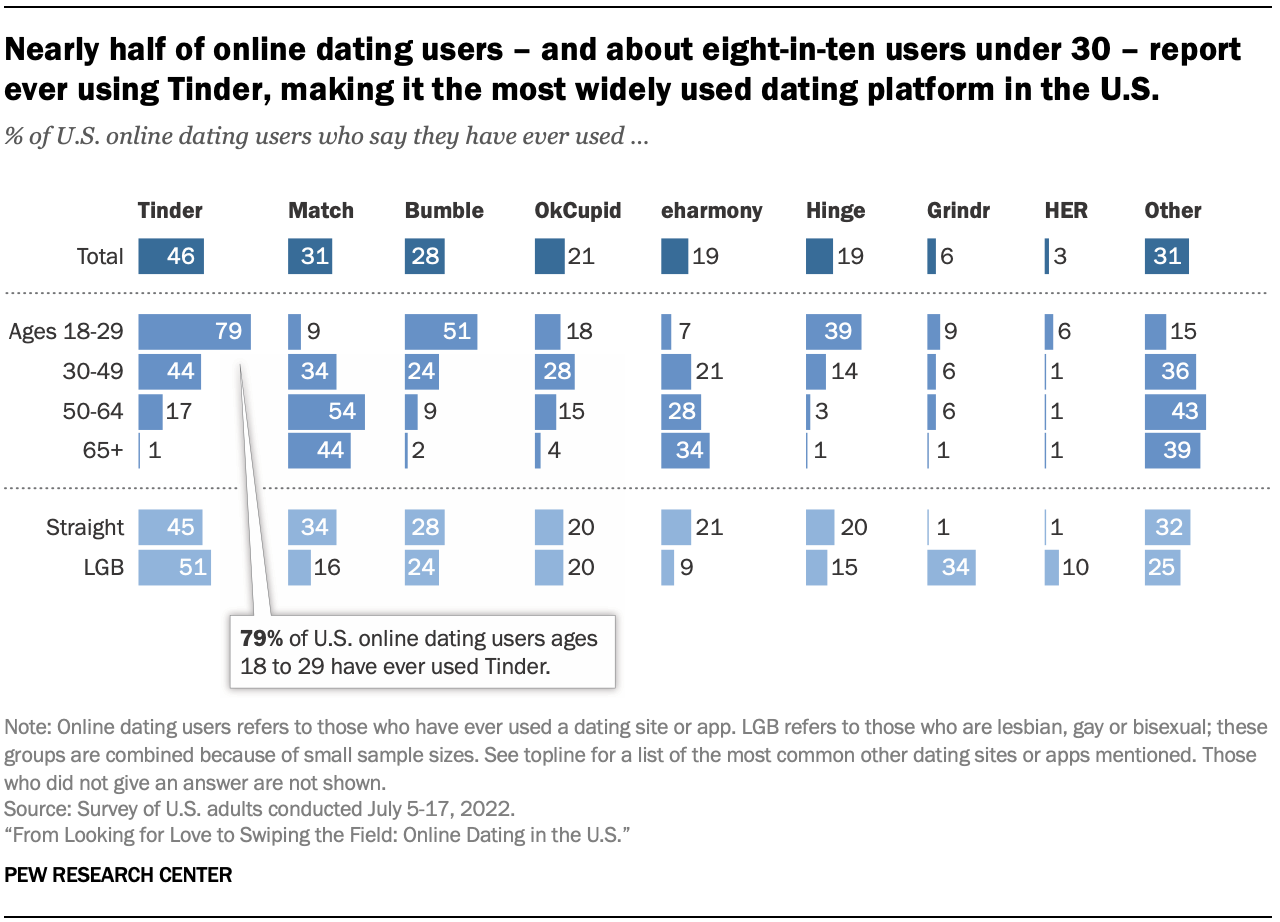
 Here's a 2022 survey I just came across from Pew Research. It caught my eye because it reports a much lower percentage of life partners arising from dating sites than were found in surveys by sociologists in 2009 and 2017.

From Looking for Love to Swiping the Field: Online Dating in the U.S.
Tinder is the most widely used dating platform in the U.S. About half of those who have used dating sites or apps have had positive experiences, and some have met their partners on one. But safety and harassment remain issues
By Colleen McClain and  Risa Gelles-Watnick 


Nearly half of online dating users – and about eight-in-ten users under 30 – report ever using Tinder, making it the most widely used dating platform in the U.S. 


"One-in-ten adults who are partnered – that is, they are married, living with a partner or in a committed romantic relationship – say they met this person on a dating site or app. The share rises to 20% of partnered adults under 30 who say online dating brought them together; about a quarter of LGB partnered adults say the same."

####### 

Those numbers of partnerships seem a lot lower than earlier numbers I recounted in this post:

Friday, August 9, 2019  Coupling up with the help of the internet


Monday, October 6, 2025

Guido Imbens reflects on "What’s it like to win a Nobel Prize?

 What’s it like to win a Nobel Prize? 

"Stanford physical chemist W.E. Moerner, who received the 2014 Nobel Prize in chemistry, and Stanford economist Guido W. Imbens, who received the 2021 Nobel Memorial Prize in economic sciences, reflect on what changed – and what didn’t – after receiving the award."

"Where were you when you learned you had won?

Imbens: I was at home and was woken up by a call from Sweden. It’s just this very strange sensation as they tell you, “Congratulations, we’ve voted to award you the prize and we’re going to have a press conference in half an hour.” So you have this half hour where there’s nothing happening, but there’s also a lot happening. It was this very delightful, exciting moment when the rest of the world didn’t know yet. Once it was announced, there were telephone calls and interviews the whole night and morning. Stanford sent over a team for video, photos, and to help with the press. Our kids made pancakes for the Stanford crew, who had the idea of having the three kids interview me, and the video is an absolute highlight from that morning.

 ...

How did winning the prize change your life?

Imbens: It does change the way people outside of academics treat you, and it opens up a lot of new opportunities. The Swedes are very keen on having people take on this role model part, and they took us to high schools there to talk to the students. That was a very nice and fun experience. The attention and invitations die down, but as far as I hear from other people, it doesn’t really go away. It’s a permanent change.

Within the academic world, it doesn’t change things all that much. I still write my papers, I submit my papers, I get them rejected. But it has broadened my research and changed a little bit of what I try to do. I spend more time trying to leverage what I do by working with students and other groups to do what I can to push the field forward.

...

The Nobel Prize Museum in Stockholm exhibits artifacts from past laureates that offer a glimpse into their lives and work. What object did you donate?

Imbens: When I did the work with Josh Angrist for which I got the prize, we were living in Harvard faculty housing and we didn’t have laundry facilities there. On Saturday mornings we would go to the local laundromat and do our laundry. That’s where we worked on the paper for which we won the prize. So I donated a bottle of laundry detergent to the museum. Recently, the museum had an advertising campaign and they had posters with “the detergent that changed the world.”

###########

And here's an article in Nature about other science prizes, and how none of them have yet captured the world's attention the way the Nobels have:

These science prizes want to rival the Nobels: how do they compare?
By Chris Simms 

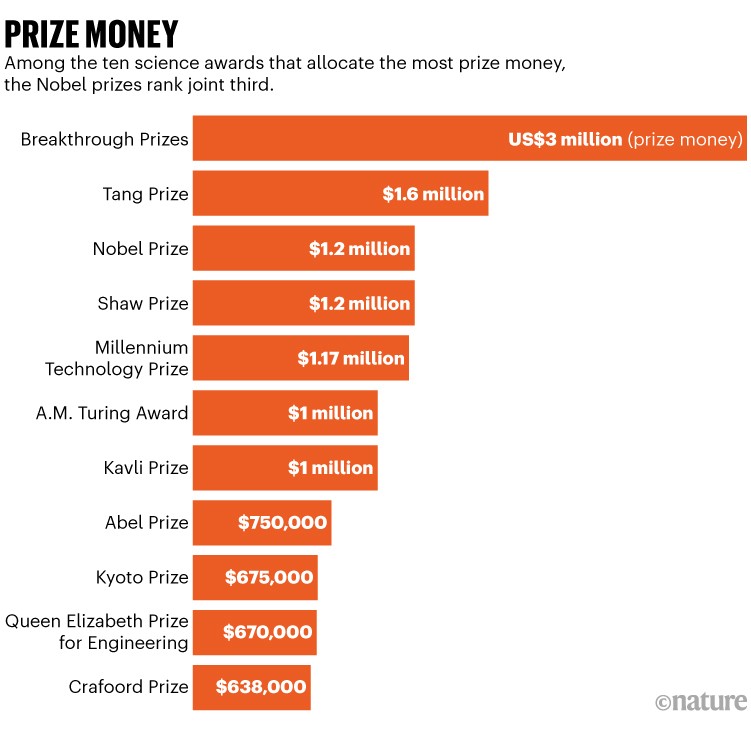
Prize money. Among the ten science awards that allocate the most prize money, the Nobel prizes rank joint third. The Breakthrough Prizes award US$ 3 million, the Tang Prize awards $1.6 million and the Nobel and Shaw Prizes award $1.2 million each. 


Sunday, October 5, 2025

Grace Guan defends her dissertation at Stanford

 Grace Guan defended her Ph.D. dissertation this past Friday.

Welcome to the club, Grace. 


 Here's my earlier post about one of the papers she spoke about--for extra credit, see if you can identify four of her coauthors in the above post-defense photo:

Friday, May 23, 2025  Deceased organ allocation: deciding early when to move fast


Saturday, October 4, 2025

Jane Goodall (1934-2025)

Iconoclastic scientists not only do novel science, but they do science in novel ways. Jane Goodall also communicated to a broad audience, and became an advocate as well as an observer.

 Nature publishes an appreciation of her life and work and its impact on science itself, and scientists.

Jane Goodall’s legacy: three ways she changed science.  The primatologist challenged what it meant to be a scientist. By Rachel Fieldhouse & Mohana Basu

"Goodall is best known for her work with chimpanzees in Gombe National Park in Tanzania. She was the first to discover that chimpanzees made and used tools1. She went on to become an advocate for conservation, human rights and animal welfare, including stopping the use of animals in medical research."

######### 

 Here's the NY Times obit: ( which mentions some of her recognitions, including an unusual one)

Jane Goodall, Who Chronicled the Social Lives of Chimps, Dies at 91. Her discoveries as a primatologist in the 1960s about how chimpanzees behave in the wild were hailed as “one of the Western world’s great scientific achievements.” By Keith Schneider 

"Her many awards include the National Geographic Society’s Hubbard Medal, presented in 1995, and the Templeton Prize, given in 2021. In 2003, Queen Elizabeth II named her a dame of the British Empire. In January, she was awarded the Presidential Medal of Freedom, the United States’ highest civilian honor, by President Joseph R. Biden Jr.

...

"In July 2022, Mattel released a Jane Goodall doll as part of its Barbie-branded Inspiring Women series." 

Friday, October 3, 2025

Race to the bottom: NLDAC and NY State both aim to be payers of last resort for reimbursing kidney donors

A tale of bureaucracy, in two acts 

1.  NLDAC, the federally funded National Living Donor Assistance Center, was for a long time the only organization that would reimburse  some expenses of living organ donors who qualified by not having high incomes, or any other sources for reimbursements.  That is NLDAC is a funder of last resort:

" Individuals considering becoming a living organ donor can apply for help with their travel expenses, lost wages, and dependent care expenses from NLDAC if they cannot be reimbursed for these costs by their recipient, a state program, or an insurance company.

2. In (very) late 2022,  New York State's Living Donor Support Act (LDSA, S. 1594) became law, and it is about to go into effect this year. The Act provides "state reimbursement to living organ donors, who are state residents, for medical and associated expenses incurred as a result of the organ donation, when the organ donation is made to another resident of the state" 

It further defines NY State as a payer of last resort:, and explicitly rules out payments to donors eligible for payment by NLDAC.

" THE  PROGRAM  SHALL  NOT  PAY  REIMBURSEMENT FOR EXPENSES PAID OR  REQUIRED TO BE PAID FOR BY ANY THIRD-PARTY  PAYER,  INCLUDING  WAGES  OR  OTHER  EXPENSES THAT WERE COVERED UNDER PAID MEDICAL LEAVE BY THE LIVING  DONOR'S EMPLOYER OR THAT ARE COVERED BY OTHER SOURCES  OF  REIMBURSEMENT  SUCH  AS  THE  FEDERAL  NATIONAL  LIVING  DONOR  ASSISTANCE PROGRAM. THE  PROGRAM SHALL BE THE PAYER OF LAST RESORT WITH RESPECT  TO  ANY  BENEFIT  UNDER THE PROGRAM. " 


I'm on NLDAC's mailing list, and  a few days ago received an email containing their policy statement on the NY State law. They say they will no longer make payments to NY residents who are covered by the NY State law.


Incidentally, here's my blog post from when the NY State law was passed:

Sunday, January 1, 2023 New York State's Living Donor Support Act (LDSA, S. 1594) was signed by Governor Hochul on Dec. 29

 "like the authorization for NLDAC,  the NY State law (https://www.nysenate.gov/legislation/bills/2021/S1594) "requires that the Program shall be payer of last resort..." I hope that this doesn't turn into a competition to be the payer of last resort in a way that might cause some NY donors to fall between the cracks, and not be reimbursed either by NLDAC or the State of New York."


I suppose the larger lesson is that designers of competing markets can create paradoxical situations. 

########

Related:

Sunday, July 16, 2023  National Living Donor Assistance Center (NLDAC): I rotate off the advisory board


Wednesday, October 1, 2025

Trading cycles for board games

 Trading cycles, often without the use of money, crop up here and there.  Here's an instance that was recently pointed out to me on Bluesky.

https://boardgamegeek.com/wiki/page/Math_Trades

"What is a math trade?

This is a trade between a whole bunch of people at once, using an algorithm (such as used by TradeMaximizer) to decide who should send their game to whom. Because of the algorithm used, you can only get a game you prefer over what you started with. (Or at worst, you may just keep your original game; i.e. it doesn't trade.)

This kind of trade was originally called a "mathematical no-risk trade list." Today, it's simply known as a math trade.

In a math trade, any potential trades found are always going to be "1 for 1" which is one of your offering(s) that you will ship out (or deliver if it's a "no ship") to another participant in the math trade. You will receive exactly one offering (from your "want list" for your offering) from most likely yet another participant. An "offering" is a single geeklist item, but the offering/item could be a bundle of more than one thing."

########

The software link goes to one that maximizes trade volume. So these aren't top trading cycles.

But here's a survey paper on those:

1.       Morrill, Thayer, and Alvin E. Roth, “Top trading cycles,” Journal of Mathematical Economics. 112, June, 2024,   https://www.sciencedirect.com/science/article/pii/S0304406824000466