The moral philosophers Peter Singer & Kasia de Lazari Radek interviewed me about Moral Economics on their podcast Lives Well Lived. At the end, they ask their guests to think about their own life, and to what extent their own life has been well lived. That's a bit like being asked what you would like to have inscribed on your tombstone. So I hedged a bit. But the conversation that followed was interesting, so if you scroll down you'll see the transcript of that last bit, which starts about minute 1:09 in the recording.
Here's the YouTube video of the whole conversation from beginning to end: The moral marketplace with ALVIN ROTH
Jun 25, 2026
"Nobel Prize-winning economist Alvin Roth explains how innovative market designs can reduce exploitation and save lives. Drawing on his pioneering work in kidney exchanges, Roth explores some of society’s most contentious moral dilemmas involving organ markets, surrogacy, and unpacks the ethical tensions surrounding what he calls “repugnant transactions.”
Here's the audio link (and the other episodes of Lives Well Lived): https://shows.acast.com/lives-well-lived/episodes/alvin-roth
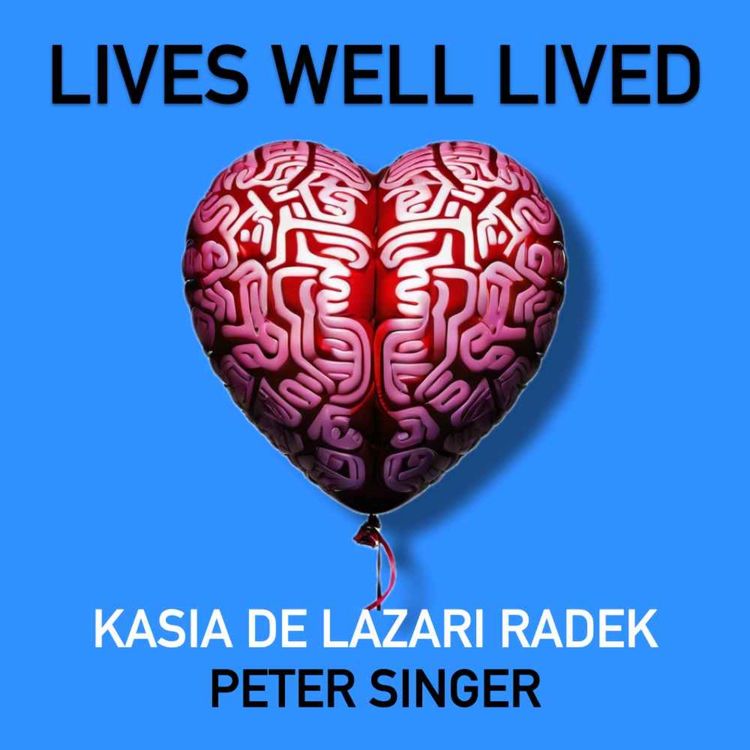
"Lives Well Lived is hosted by Peter Singer & Kasia de Lazari Radek. Episodes consist of interviews with remarkable guests who have lived well, both in the sense of living an ethical life, but also in that they are fulfilled and happy with what they have achieved in their lives. Some of these guests will be well-known figures, but others who are doing extraordinary things will be unfamiliar to almost all of our listeners. The conversations will often cover ground that involves ethics, how to live well, and how to make a positive difference in the world. It will inspire and empower its audience to change their own lives for the better. "
Here's the transcript of the last few minutes of the conversation (starting around minute 1:09 of the recording).
PETER: We always asked our guests to think about their own life, and to what extent their own life has been well lived, and by what criteria they make that judgment? Would you like to comment on that, Al?
Al: Sure. Has my life been well lived so far? Well, first, I've had a very fortunate life so far. I am lucky in my family, and my children, and my grandchildren, and my friends. And when you talk about friends, one thing that's often not talked about are the relations that professors have with students. So I've made lifelong friendships with many students who are productively engaged around the world, and that's very gratifying, and I hope it helps make my life worthwhile.
But also, I'm a market designer, and market design is very outward facing part of, economics. And, one of its goals is, a phrase even older than effective altruism, which is tikkun olam (תִּיקּוּן עוֹלָם) mending the world. And one of the things that market designers try to do is fix markets when they're broken or create them when they're absent. When you think of something like kidney exchange, you know, in a different podcast, on a different subject, I could tell you about victory after victory, where thousands, many thousands of transplants have been done, and lives have been saved through kidney exchange, even though it's in a war that we're losing: the shortage of kidneys is growing faster than the increase in transplants as diabetes grows, and high blood pressure, things like that. So, I would hope that some of my life has looked well lived, not just from the inside, but perhaps also from the outside.
Peter: Absolutely sure that it has. You're right. And what you've done for kidney markets is just one example, where you've saved many lives, and I think that obviously would be an important part of living well. despite the fact that the problem, as you say, has not been solved as a whole.
Kasia: It must be very satisfying.
Al: People often say that to me, and it will be satisfying when I'm retired. Right now, it's still frustrating, right? There's so much left to do, and it's not so easy to do it. But the times are changing. In two weeks, I'm gonna be opening up the American Transplant Conference in Boston, and, you know, there are people who invite me to these things. I sometimes joke with my young colleagues that as the old people who feel a lot of repugnance die off, it'll be left to just us young people. And we'll see.
I was in a transplant conference in Cairo in November. in which we tried to reach consensus on the question of, should countries have to be self sufficient in transplantation, which is the traditional position of the World Health Organization and some other organizations. And, of course, it works against countries that don't have much kidney exchange, because you need a big pool of patient-donor pairs to find lots of exchanges. And in that spirit, incidentally, during COVID, I was in the United Arab Emirates for the first kidney exchange between the UAE and Israel. And, that had to overcome a lot of obstacles, but it makes a lot of sense, because the UAE and Israel each have only a population of about 10 million. And that's not enough to find kidneys in your domestic pool for the hard to match patients, for patients who have a lot of antibodies to human proteins. So, we would like to see much more cooperation and not just between rich countries, but also inviting patients from poor countries, patient-donor pairs, to take part in American kidney exchange. And that's something that remains very controversial, but I think that we might be on the verge of making some progress with that. That's something that Peter has written about also.
Peter: Yes, I certainly hope so, and because I'm now working as a regular visiting professor in Singapore, which is another small country, the population of about 6 million, there's a very good case for saying that Singapore should also get into international kidney exchanges, and perhaps assist some of the poorer countries in its region. So we're trying to make that argument, and let's hope we succeed. One thing I've tell you, there might be bad news. I don't believe that when you retire from Stanford, you're going to stop working on these issues and be able to relax and feel satisfied, because I know I retired from Princeton 2 years ago, but the issues that I'm concerned about, whether it's the factory farming or global poverty, or all these kidney issues as well, I'm still concerned about, I can't let them go just because I'm no longer paid to be a professor at Princeton.
#########
In terms of lives lived well and deeply, here's an earlier post of mine about teachers and students.
Friday, June 7, 2013 Notes on teachers and students from the rabbinical literature


 Posts
Posts

