Showing posts with label market designers. Show all posts

Sunday, March 29, 2026

Alex Chan on deceased organ donation

 The Harvard Gazette points to this interview with HBS professor Alex Chan:

Designing Incentives That Matter—Even After Death: Interview with Alex Chan By Avery Forman 

"In “Reimagining Transplant Center Incentives Beyond the CMS IOTA Model,” published in January in the Journal of the American Medical Association, Chan explores a government experiment that pays kidney centers for volume and efficiency—not just outcomes—which could increase transplant numbers. Chan cowrote the article with Alvin E. Roth, the George Gund Professor of Economics and Business Administration, Emeritus, at HBS.

In addition, covering funeral costs for organ donors could increase donation rates by up to 35%, and save up to 419,000 life years and as much as $800 million in Medicare expenses, Chan and coauthor Kurt Sweat of the University of Texas Southwestern Medical Center write in “Funeral Expense Reimbursement as a Strategy to Enhance Organ Donation and Transplantation Access,” published in October in NPJ Health Systems.

 ...

"Why Chan felt compelled to study the organ market

“Two things pulled me in. First, this is a market where the stakes are brutally clear. Organ transplantation is one of the few places where inefficiency shows up not as a deadweight loss in a textbook, but as people dying on a waiting list. When a market fails here, it fails loudly.

Second, the level of inefficiency is staggering. Each year, more than 5,000 organs are recovered and then discarded, while roughly the same number of people die waiting for an organ. These are million-dollar transactions once you account for surgery, lifelong care, and avoided dialysis. So even small improvements in incentives can save lives directly and save the healthcare system billions of dollars.

For an economist or market designer, that’s a rare alignment: moral urgency and economic leverage pointing in the same direction.”

Incentives must consider what’s socially acceptable

“Incentive design is much harder than we like to admit. Organ transplantation is a supply chain. You have procurement organizations, hospitals, surgeons, patients, regulators, all responding to different incentives.

Designing a good incentive for one actor is already difficult. Designing incentives so that the entire chain works well is not just adding up the optimal incentives for each link. Sometimes improving one part of the system quietly breaks another.

The choice isn't between market and no market. It’s between a system we design on purpose and a system that fails by accident.

This is a market with moral and political constraints embedded in it. In healthcare, and frankly now in most markets, the incentives that are economically sensible also need to be socially legitimate.

Incentives don’t just change behavior; they express values. In markets that touch life, death, or dignity, people react not only to what the incentive does, but to what it seems to say. That makes incentive design less like tuning a machine and more like negotiating a fragile social contract.

 ...

"The ‘ick factor’ might prevent progress

“Very often people do not want to use the right incentives because they have this concept of it being repugnant.

[For instance], we would pay for the funeral of someone who gives their life for their country when they serve in the military. We will pay for the funeral of someone who donated their body for scientific research to advance society. But if people want to donate an organ to save another person's life? If [that donor’s] family would very much welcome some support at a moment of crisis, we are not going to pay for the funeral. Even a very sensible incentive sometimes is bound by social norms, or even what we call the ‘ick factor,’ and we have a less effective system at the end.

People worry that incentives will corrupt the gift of life. But the truth is that we already have incentives; they’re just accidental and poorly distributed. The choice isn't between market and no market. It’s between a system we design on purpose and a system that fails by accident. Ignorance of incentives doesn't make a system moral; it just makes it inefficient.”


Tuesday, March 10, 2026

Fuhito Kojima wins the R. K. Cho Economics Prize from Yonsei University

 Here's the announcement:

R. K. Cho Economics Prize 

"The R. K. Cho Economics Prize 2026 will be awarded to Professor Fuhito Kojima (University of Tokyo) for the practical development and implementation of matching theory.

"Professor Kojima is a leading scholar in the fields of matching theory and market design. He has developed these fields by studying practical aspects of matching markets such as large markets and distributional constraints. Building on his theoretical knowledge, he has contributed to the improvement of real-world matching and allocation mechanisms, including medical residency programs and nursery school admissions in Japan."

Here's the program of celebratory events:

2026 R. K. Cho Economics Prize Events  (May 6-8)

Symposium Celebrating 
Fuhito Kojima's Prize
323 Daewoo Hall, Yonsei University
May 6 (Wednesday)
9:00-9:20 Registration, Opening Remark

9:20-10:10 Fuhito Kojima (University of Tokyo)

"Fragmentation of Matching Markets and How Economics Can Help Integrate Them"

10:10-11:00 Michihiro Kandori (University of Tokyo)

"The Second Welfare Theorem in Markets with Discrete and Continuous Goods"

11:10-12:00 Yeon-Koo Che (Columbia University)

"Learning Against Nature: Minimax Regret and the Price of Robustness"

13:00-13:50 Duk Gyoo Kim (Yonsei University)

"Good-Citizen Lottery"

14:00-14:50 Jinwoo Kim (Hong Kong University of Science and Technology)

"Monotone Comparative Statics without Lattices"

Prize Ceremony
B130 Daewoo Hall, Yonsei University
May 6 (Wednesday)
15:00-15:20 Registration

15:20-16:10 Award Ceremony

16:20-17:10 Award Lecture by Fuhito Kojima

"Science and Engineering of Market Design: Call for Action"


Fuhito Kojima Public Lecture Series
323 Daewoo Hall, Yonsei University
May 7 (Thursday)
13:00-14:30 Lecture 1: "Introduction to Matching Theory and Market Design"

15:00-16:30 Lecture 2: "How to Use Market Design under Practical Constraints of Society: Part 1"

May 8 (Friday)
10:00-11:30 Lecture 3: "How to Use Market Design under Practical Constraints of Society: Part 2"

Organizers: Jaeok Park, Daeyoung Jeong, Duk Gyoo Kim

Contact: rkcho.prize@yonsei.ac.kr 

Friday, January 31, 2025

The NBER celebrates market design

 From the NBER Reporter:

Working Group Report: Market Design  By Michael Ostrovsky and Parag A. Pathak

Here are the introductory paragraphs (after which the report goes on to survey various areas of market design research).


"The Market Design Working Group, established in 2009 under the leadership of Susan Athey and Parag Pathak, is a preeminent research forum in the field of market design. The working group meets annually, alternating between Cambridge, Massachusetts, and Palo Alto, California, to present research that bridges theoretical economics and practical applications, all focused on what The Economist aptly characterized as “an intelligently designed invisible hand.”1 Research in market design has been celebrated in academic circles, as evidenced by recognitions like the 2012 Nobel Prize for work on matching markets and the 2020 Nobel Prize for auction theory, and has also been instrumental in catalyzing tangible reforms in real-world institutions and markets.

"One feature that sets market design apart from much of traditional economic theory is its unwavering commitment to practical applications. Market designers have developed a unique professional profile, equally at home in university lecture halls, hospital surgery wards, school committee meetings, and the boardrooms of technology companies. This versatility allows them to translate complex economic models and analyses into solutions for real-world problems. The field’s research has informed an impressive range of applications across various sectors of society. "

Monday, November 18, 2024

What preferences are revealed by market designs? by Oğuzhan Çelebi (who is on the job market)

Oğuzhan Çelebi is on the job market this year (listed on the job market websites of both MIT and Stanford where he's finishing a two year postdoc). He has a new paper that takes a really novel approach to market design.  It looks at the implicit preference relation (if one exists) that a mechanism reveals when a revealed preference analysis is done of the choices it makes from different possible menus of alternatives. The specific focus is on preferences for diversity revealed by mechanisms used in connection with affirmative action.

Diversity Preferences and Affirmative Action, by Oğuzhan Çelebi 

Abstract: "In various contexts, institutions allocate resources using rules that determine selections given the set of candidates. Many of these rules feature affirmative action, accounting for both identity and (match) quality of individuals. This paper studies the relationship between these rules and the preferences underlying them. I map the standard setting of market design to the revealed preference framework, interpreting choice rules as observed choices made across different situations. I provide a condition that characterizes when a rule can be rationalized by preferences based on identities and qualities. I apply tests based on this condition to evaluate real-world mechanisms, including India’s main affirmative action policy for allocating government jobs, and find that it cannot be rationalized. When identities are multidimensional, I show that non-intersectional views of diversity can be exploited by dominant groups to increase their representation and cause the choice rules to violate the substitutes condition, a key requirement for the use of stable matching mechanisms. I also characterize rules that can be rationalized by preferences separable in diversity and quality, demonstrating that they lead to a unique selection within the broader set of policies that reserve places based on individuals’ identities."

########

He's a target of opportunity for any department interested in market design.

Wednesday, September 25, 2024

Mohammad Akbarpour, interviewed by Scott Cunningham

Here's an interview of Mohammad Akbarpour, as part of Scott Cunningham's growing series of interviews of interesting economists. (Even the picture of the two of them looks interesting, and it gets better:)


Scott writes:
"Welcome to the Mixtape with Scott! Sometimes the shortest distance between point A and point B is a straight line, but other times the shortest distance is a winding path. This week’s guest, Mohammad Akbarpour from Stanford University, is perhaps an example of the latter. Mohammad is a micro theorist at Stanford who specializes in networks, mechanism and design and two sided matching. Mohammad is an emerging young theorist at Stanford, student of such luminaries as Matt Jackson and Al Roth, whose background in engineering, mathematics and computer science has given him a fresh approach to topics that I associate with Stanford’s theory people as a whole — policy oriented, applied work, mechanism design, networks and matching. He got into economics “the long way” — growing up in Iran, majoring in engineering, and then moving into Stanford’s operations research PhD program. In this interview, he generously shares a snippet of the arc of his life, and it’s a remarkable story, and one I really enjoyed hearing. I think you will too."

Tuesday, September 17, 2024

Yale celebrates Vahideh Manshadi

Vahideh Manshadi is the Michael Jordan of Operations.

 Here's the announcement from Yale News:

Vahideh Manshadi appointed the Michael H. Jordan Professor of Operations. Manshadi investigates the operations of online and matching platforms, and studies algorithmic fairness.

"Vahideh Manshadi, who investigates the operations of online and matching platforms, and studies algorithmic fairness and inclusion has been named the Michael H. Jordan Professor of Operations, effective immediately.

...

"She has pioneered the study of emerging systems and platforms with societal impact, including crowdsourced food recovery, volunteer crowdsourcing, refugee resettlement, and organ allocation. She has collaborated with nationwide platform-based nonprofits, including Feeding America, Food Rescue US, VolunteerMatch, and national kidney exchange programs, and often impacted the practice of these organizations.

...

"She received her Ph.D. in electrical engineering at Stanford University, where she also received M.S. degrees in statistics and electrical engineering. Before joining Yale, she was a postdoctoral scholar at the MIT Operations Research Center."

Friday, September 6, 2024

Stanford celebrates Susan Athey

 This  from Stanford Report:

What motivates Susan Athey. The economist weighs in on incremental innovation, data-driven impact, and how economics is evolving to include a healthy dose of engineering. 

"Today, Athey, the Economics of Technology Professor at Stanford GSB, is using her expertise to promote the public good. In 2019, she founded the Golub Capital Social Impact Lab, which uses digital technology and social science research to improve the effectiveness of social sector organizations.

...

"For more than a decade, Athey’s professional passions have been linked to their potential for impact. She chose to return to Stanford — after six years teaching at Harvard — because of the opportunity for cross-disciplinary collaboration. And she has helped make such collaboration possible. In 2019, she was a founding associate director of the Stanford University Human-Centered Artificial Intelligence Institute. She is also a leader of the Business and Beneficial Technology pillar within Stanford GSB’s newly launched Business, Government, & Society Initiative, which brings together academics, practitioners, and policymakers to address issues such as technology, free markets, and sustainability.

"Athey’s Golub Capital Social Impact Lab epitomizes interdisciplinary work, putting students from computer science, engineering, education, and economics backgrounds to work helping partner organizations leverage digital tools and expertise that are generally only available to — or affordable for — large technology companies.

“I like building things that demonstrate how a class of problems can be solved,” Athey says. “If there is a problem worth solving, and I can solve it myself in a particular case, I know there are other people like me who are going to encounter the same problem. Part of the motivation and theory of change of the lab is that we will solve particular problems for particular social-impact organizations but also create the research that will guide others in solving similar problems.”

...

"Athey says some parts of economics are evolving to include a healthy dose of engineering. In the Microsoft Research interview, she described stereotypical economics research as evaluating existing programs and often finding that “stuff doesn’t work.”

“There’s a lot of negativity,” she says. With help from data and machine learning techniques, “my prediction is that economists are going to become more [like] engineers. Instead of complaining that nothing works, we’re going to start building things that do work to achieve economic outcomes…. We’re going to realize that nothing works if it’s one size fits all, but that a lot of things work if they are actually personalized and appropriately delivered.”

Thursday, July 4, 2024

YingHua He 何 英华 has died.

 Yan Chen passes on the devastating news that YingHua He 何 英华 passed away on Tuesday night, after struggling with kidney cancer.

May his memory be a blessing.

He graduated from college in China in 2001, got an MA at Peking University, received his Ph.D. at Columbia in 2011, taught in Toulouse, and was an associate professor at Rice University when he died.

Here's his CV, and here is his Google Scholar page.  He did important work on market design, including on school choice and kidney exchange.

He was one of the pioneers of empirical market design, combining econometrics with matching theory. 

He had many friends, and I was lucky to be among them. Here's a photo I took of him giving a seminar at Stanford, when he was a visiting scholar in 2014-15

Yinghua He at Stanford, January 2015


Here are some of my blog posts on his work:

Sunday, December 3, 2023

Photos from the daily market design activity at Stanford

Two photos remind me of the day to day market design activity at Stanford. 

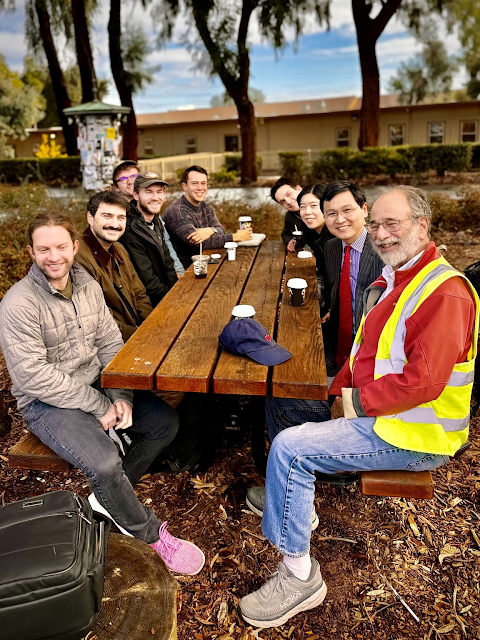
Tinglong Dai joined our Wednesday market design coffee and sent along this picture. (You can see who came by plane and who came by bike...)  He wrote about his visit here.


And Matias Cersosimo successfully defended his dissertation on Friday, which  included market design experiments like this one.


 Welcome to the club, Matias.

Tuesday, August 15, 2023

Affirmative action in Brazilian universities: guest post by Inácio Bó

 Recent legislation in Brazil addresses university admissions with affirmative action that targets multiple characteristics that individuals may have (in different combinations), namely income, ethnicity, and the type of institution at which they studied. Early attempts to implement such a system produced undesirable outcomes, but recent legislation, informed by market design, is on the path to correcting this. Below, Inácio Bó brings us up to date:

Guest blog post by Inácio Bó

For many decades, Brazilian’s federal universities were—and still are— the top higher education institutions in the country. They had, however, a contradictory combination of circumstances: all of them were public-funded and tuition-free, but their students were overwhelmingly from a minority white higher socio-economic class. In response to that, in 2012 congress passed legislation mandating affirmative action in the access of all such institutions.

Orhan Aygün and I were at that time classmates pursuing our PhD in economics at Boston College. We spent days and weeks looking at the details of the structure of the rules for implementing the law, trying to better understand it. While working on some examples, we noticed that there could in principle be situations that were at odds with the intended objective of the law. Under some circumstances, black and low-income candidates would be rejected from positions where white and high-income candidates would be accepted, despite the former having higher entry-level exam grades than the latter. This  would be an outcome that goes in the opposite direction from the intended objective of helping black and low-income students attend these institutions.

The reason for this problem lies on the method used for implement the affirmative action law in the universities. Seats in each program in each university were split into groups of seats, including “open seats”, “black candidates”, “low-income candidates”, and “black and low-income candidates”. When applying for a program, a candidate would choose one of the alternatives for which she is eligible. The top candidates among those applying for each set of seats, ranked by their grade in a national exam, would be accepted. This method might, however, result in different levels of competition for different seats in the same program, resulting for example in tougher requirements for acceptance for “black and low-income” candidates than for “black” candidates, even if on average low-income candidates have lower grades overall.

In a paper published in the AEJ:Micro in 2021 (Aygün, Orhan, and Inácio Bó. 2021. "College Admission with Multidimensional Privileges: The Brazilian Affirmative Action Case." American Economic Journal: Microeconomics, 13 (3): 1-28.), we showed how this problem can be solved while still satisfying the text and spirit of the affirmative action law in Brazil with small changes in the way by which candidates are selected. (The idea is to order slot-specific priorities so that candidates with protected characteristics can compete for all of those slots for which their characteristics qualify them.) The paper also shows “smoking gun” evidence that these “unfair rejections” were taking place, showing that programs where the cutoff grades for acceptance for each subset of seats were compatible with these rejections constituted almost half of the programs offered across the nation.

While the article gained praise in the academic economic community, our hopes that it would reach the policymakers in Brazil were initially dashed. Despite having the chance of personally visiting the Ministry of Education in 2015 for two weeks, my attempts to talk with those in power were unsuccessful, and people to whom I explained some of our findings deemed its contents “critical of the government”.

 Especially in light of the political developments that took place in Brazil in the years that followed, I had mostly moved on from my hopes of seeing the changes we proposed being implemented.

Things started to change, however, around May of 2022. The staff from the office of representative Tábata Amaral, who is a prominent young politician with a focus on education, were having talks with Ursula Mello, now a professor at the Department of Economics at PUC-Rio in Rio de Janeiro, about some aspects of the affirmative action law related to her work. Given her knowledge about the AEJ:Micro paper, Ursula suggested that I join the discussions. A meeting where this happened even ended up in the press (https://www1.folha.uol.com.br/educacao/2022/05/pesquisadores-defendem-novo-algoritmo-no-sisu-para-nao-prejudicar-cotistas.shtml).

Adriano Senkevics, her co-author in related papers who works at the INEP—an agency connected to the Brazilian Ministry of Education in charge of evaluating educational systems—also joined.

In these discussions, it became clear that if we wanted our ideas to have any chance of gaining traction, we needed to write a policy-oriented paper, focused on the current Brazilian specifics, in Portuguese, and with policy-makers as the audience—not academics.

Adriano and I worked together in that project, now with a much more detailed dataset. We tailored the proposal to the updated law, which also included reservations for candidates with disabilities, and were finally able to quantify the negative impact of the failures we identified. Our estimates indicate that, in the selection process of 2019, at least ten thousand students were “unfairly rejected” from their applications, with more than 8 thousand being left unmatched to any university despite having an exam grade high enough to be accepted for less restrictive reserved seats. These numbers greatly exceeded our expectations, and made a clear political case for a change. The working paper went out in January of 2023 (“Proposal to change the rules for the occupation of quotas in the student entrance to federal institutions of higher education,” by Inácio Bó and Adriano Souza Senkevics).

While the theoretical arguments were already in the AEJ:Micro paper, the proposal had a greater and faster impact in the corridors of the Brazilian capital. Articles in the main newspapers in the country reported on the findings and the proposal (https://oglobo.globo.com/brasil/educacao/enem-e-vestibular/noticia/2023/03/quase-650-candidatos-para-uma-vaga-maiores-concorrencia-do-sisu-estao-entre-os-alunos-cotistas.ghtml

, https://oglobo.globo.com/brasil/antonio-gois/coluna/2023/02/reformar-o-sisu.ghtml

, https://www1.folha.uol.com.br/colunas/rodrigo-zeidan/2023/04/desenhando-mercados.shtml )

People were openly sharing the article on twitter with members of the ministry of education

(https://twitter.com/thiamparo/status/1621189953785839617?s=20 ,

https://twitter.com/mgaldino/status/1621008428763332612?s=20 ). We could feel the momentum.

In the months that followed, I started having regular interactions with members of the Ministry of Education. The text and zoom discussions involved technical and political aspects of changes in the law, which extended beyond the specific changes we suggested.

Different variations of the changes and some alternative proposals were considered. I had to run simulations while flying to deliver them before a meeting that the secretary had with the minister. I also had the incredible experience of joining a meeting at the “Casa Civil”—a department somewhat comparable to the prime minister in a parliamentary system—with the presence of secretaries from multiple ministries , where I presented our proposal and discussed some details and scenarios. Around that time, and without our knowledge, a senator presented a bill explicitly based on our proposal (https://www25.senado.leg.br/web/atividade/materias/-/materia/156995 ).

By the end of June, our belief that the changes would be implemented became stronger. Since our proposal was (by design) already compatible with the quotas law, its implementation could be done even in the absence of new legislation, and there was clear interest on the part of those in charge for making it happen.

A momentous event in this journey, however, took place on August 9th.

Because of a series of political circumstances, an urge to pass a renewed law for the affirmative action led to a bill proposed by Representative Dandara—the first member of congress who herself benefitted from the quotas law—to be brought to the floor for a vote.

Among other changes, it made the affirmative action policy permanent, changed the order in which seats are filled, and included text that should, in the following secondary legislation, include text that describes our proposal. As if emotions were not high enough, we had urgent calls to send the text of our proposal to members in the floor of congress minutes before the vote took place. And this resulted in the photo below, showing Dandara giving a speech before the vote, with a page from our paper in her hand.


The journey is not yet over. The bill must still pass the senate, and the legislation with the implementation details will follow. But I learned that these changes are made of so many steps that one has to choose one as the turning point. We believe that this is a good one.

The INEP (National Institute of Educational Studies and Research) thinks so too: (https://www.gov.br/inep/pt-br/assuntos/noticias/linha-editorial/inep-contribui-com-atualizacao-da-lei-de-cotas)

Saturday, July 8, 2023

Liver exchange in Turkey


Here's a forthcoming article in the AJT, reporting on a collaboration between physicians and market designers with experience in kidney exchange:

The First 4-Way Liver Paired Exchange from an Interdisciplinary Collaboration between Healthcare Professionals and Design Economists by Sezai Yilmaz, MD, FACS  Tayfun Sönmez, PhD  M. Utku Ünver, PhD  Volkan Ince, MD  Sami Akbulut, MD, FACS  Burak Isik, MD  Sukru Emre, MD  American Journal of Transplantation, BRIEF COMMUNICATION|ARTICLES IN PRESS, Open Access Published: July 05, 2023 DOI:https://doi.org/10.1016/j.ajt.2023.06.016 

Abstract: We report initial results of a Liver Paired Exchange (LPE) program established at the Liver Transplant Institute at Inonu University through collaboration with design economists. Since June 2022, the program has been using a matching procedure that maximizes the number of living donor liver transplants (LDLTs) to the patients in the pool subject to the ethical framework and the logistical constraints of the program. In one 4-way and four 2-way exchanges, twelve LDLTs have been performed via LPE in 2022. The 4-way exchange, generated in the same match run with a 2-way exchange, is a first worldwide. This match run generated LDLTs for six patients, revealing the value of the capacity to carry out larger than 2-way exchanges. With only 2-way exchanges, only four of these patients would receive LDLT. The number of LDLTs from LPE can be increased by developing the capacity to perform larger than 2-way exchanges in either high-volume centers or multi-center programs.


Sunday, February 26, 2023

Judd Kessler on Market Rules

 Judd Kessler is writing a book (that I'm looking forward to reading):


Thursday, December 8, 2022

Three way liver exchange in Pakistan, reported in JAMA Surgery by Salman, Arsalan, and Dar, in collaboration with economist Alex Chan

 Here's an exciting account, just published in JAMA Surgery, of a three way liver exchange in Pakistan, achieved in part by collaboration with economist and market designer Alex Chan (who is on the job market this year).

Launching Liver Exchange and the First 3-Way Liver Paired Donation by Saad Salman, MD, MPH1; Muhammad Arsalan, MBBS2; Faisal Saud Dar, MBBS2, JAMA Surg. Published online December 7, 2022. doi:10.1001/jamasurg.2022.5440 (pdf)

Here are the first paragraphs:

"There is a shortage of transplantable organs almost everywhere in the world. In the US, about 6000 transplant candidates die waiting each year.1 In Pakistan, 30% to 50% of patients who needed a liver transplant are unable to secure a compatible donor, and about 10 000 people die each year waiting for a liver.2 Kidney paired donations, supported by Nobel Prize–winning kidney exchange (KE) algorithms,3 have enabled living donor kidneys to become an important source of kidneys. Exchanges supported by algorithms that systematically identify the optimal set of paired donations has yet to take hold for liver transplant.

"The innovation reported here is the successful implementation of a liver exchange mechanism4 that also led to 3 liver allotransplants and 3 hepatectomies between 3 incompatible patient-donor pairs with living donor–patient ABO/size incompatibilities. These were facilitated by one of the world’s first documented 3-way liver paired donations (LPD) between patient-donor pairs.

"Since 2018 and 2019, we have explored LPD as a strategy to overcome barriers for liver failure patients in Pakistan in collaboration with economist Alex Chan, MPH.2 With LPD, the incompatibility issues with relative donors can be solved by exchanging donors. The Pakistan Kidney and Liver Institute (PKLI) adopted a liver exchange algorithm developed by Chan4 to evaluate LPD opportunities that prioritizes clinical urgency (Model for End-stage Liver Disease [MELD] scores) while maximizing transplant-enabling 2-way or 3-way swaps that ensures that hepatectomies for every donor within each swap has comparable ex ante risk (to ensure fairness). As of March 2022, 20 PKLI liver transplant candidates had actively coregistered living and related but incompatible liver donors. Evaluating these 20 incompatible patient-donor pairs with the algorithm,4 we found 7 potential transplants by two 2-way swaps and the 3-way swap reported. In contrast to ad hoc manual identification of organ exchange opportunities, the hallmark of a scalable organ exchange program is the regular deployment of algorithms to systematically identify possible exchanges. Regular deployment of LPD algorithms is novel.

"A total of 6 procedures took place on March 17, 2022. Patient 1, a 57-year-old man, received a right liver lobe from donor 2, a 28-year-old coregistered donor of patient 2 (56-year-old man), who in turn received a right liver lobe from donor 3, a 35-year-old woman who was a coregistered donor of patient 3. Patient 3, a 46-year-old man, received a right liver lobe from donor 1, a 22-year-old woman who was a coregistered donor of patient 1, completing the cycle (Figure). Five PKLI consultant surgeons and 7 senior registrars led the hepatectomies and liver allotransplants; 6 operating rooms were used simultaneously. One month postsurgery, all patients and donors are robust with no graft rejection. All the donors are doing well in the follow-up visits and have shown no psychological issues."


Here's a sentence in the acknowledgements:

"We thank Alex Chan, MPH (Stanford University, Palo Alto, California), whose initiative and expertise in economics were the key driving forces for launching liver exchange."

*********
NB: this is a "Surgical Innovation" article, for which the journal requires that there be no more than three authors.

And here are the references cited:

1.
Chan  A, Roth  AE. Regulation of organ transplantation and procurement: a market design lab experiment. Accessed April 28, 2022. https://www.alexchan.net/_files/ugd/a47645_99b1d4843f2f42beb95b94e43547083b.pdf
2.
Salman  S, Gurev  S, Arsalan  M, Dar  F, Chan  A. Liver exchange: a pathway to increase access to transplantation. Accessed April 1, 2022. http://www.hhpronline.org/articles/2021/1/14/liver-exchange-a-pathway-to-increase-access-to-transplantation
3.
Henderson  D. On marriage, kidneys and the Economics Nobel. Wall Street Journal. October 15, 2012. Accessed March 5, 2022. https://www.wsj.com/articles/SB10000872396390443675404578058773182478536
4.
Chan  A. Optimal liver exchange with equipoise. Accessed April 23, 2022. https://www.alexchan.net/_files/ugd/a47645_36e252f4df0c4707b6431b0559b03143.pdf
5.
Hwang  S, Lee  SG, Moon  DB,  et al.  Exchange living donor liver transplantation to overcome ABO incompatibility in adult patients.   Liver Transpl. 2010;16(4):482-490. doi:10.1002/lt.22017PubMedGoogle ScholarCrossref
6.
Patel  MS, Mohamed  Z, Ghanekar  A,  et al.  Living donor liver paired exchange: a North American first.   Am J Transplant. 2021;21(1):400-404. doi:10.1111/ajt.16137PubMedGoogle ScholarCrossref
7.
Braun  HJ, Torres  AM, Louie  F,  et al.  Expanding living donor liver transplantation: report of first US living donor liver transplant chain.   Am J Transplant. 2021;21(4):1633-1636. doi:10.1111/ajt.16396

 ********

Here's a Stanford story on this collaboration:

Stanford student devises liver exchange, easing shortage of organs. A rare three-way exchange of liver transplants in Pakistan was made possible with a new algorithm developed by a Stanford Medicine student.  by Nina Bai

"The liver exchange idea actually came out of a term paper in a first-year market design class at Stanford," Chan said.

"As he learned more about liver transplants, Chan realized there were important biological and ethical differences from kidney transplants. 

...

"Instead of just finding compatible swaps, we want to find swaps that prioitize the most urgent patients first in order to prevent the most deaths," Chan said.

*******

Here are some contemporaneous stories from March in the newspaper Dawn (now that the JAMA embargo on the story is lifted):

Mar 18, 2022 — A highly-trained team of the surgeons headed by PKLI Dean Prof Faisal Dar had performed liver transplants at the institute and other members ...