I was delighted to be invited to discuss healthcare with Drs Wendy Dean and Matt Ramsey. We had a discussion ranging from the health care markets described in Moral Economics, to the experiments on trust in medicine conducted by my colleague Marcella Alsan And there's a transcript for those who prefer to read than to listen.
53 min 35 sec
Episode Description
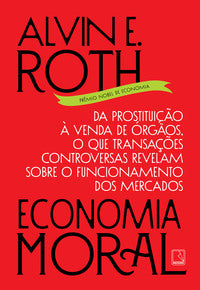
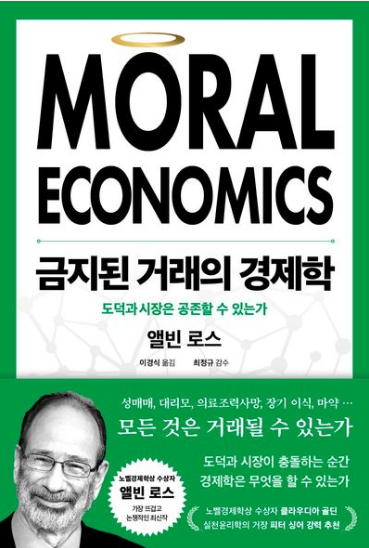
What does a morally defensible, healthy, legal, commercial marketplace look like, and how can we design one for healthcare? Nobel laureate Alvin Roth, Professor of Economics at Stanford University and the George Gund Professor of Economics and Business Administration Emeritus at Harvard University, joins us to about his new book, Moral Economics: From Prostitution to Organ Sales, What Controversial Transactions Reveal About How Markets Work.
And here's a largely A.I. generated transcript (which I've edited very lightly and reproduce here with permission):
Ep. 079 Alvin Roth FINAL June 29 2026.mp3
Wendy Dean, MD: [00:00:00] This is a moral matters podcast. Good
human healing. Well, I was a science kid in college, but I do remember taking
econ 101, and I loved it because it made so much sense. But I was also really
stubborn and I was not going into the family. Well, shall we say the business
of business, so to speak. What about you, Matt?
Matt Ramsey, MD: [00:00:32] Well, I loved economics 101. Economics
201 was my downfall. Uh, I got in way over my head in economics way too early.
And that was the end of that. So beyond supply and demand, beyond
macroeconomics, that was the end for me. And I too was a science kid. And, you
know, economics is somewhat science based and can make sense mathematically,
but there was a lot of soft, gushy stuff in economics that I couldn't really
get my arms around. So it was like, I'm out. Let's get me back to the chemistry
lab, please.
Wendy Dean, MD: [00:01:19] Yeah. Well, I mean, today we're getting
a master class in market design from a Nobel Prize winner.
Matt Ramsey, MD: [00:01:25] So yeah. So buckle up. Um, this is a
rare privilege. Um, you know, it's I don't know that I've talked to many Nobel
Prize winners in my life, and I probably would be safe to say probably it's a
one and done for me. So I'm going to really relish, uh, this conversation we
have tonight.
Wendy Dean, MD: [00:01:47] Yeah. Well, our guest today is Alvin
Roth. He's the Craig and Susan McCaw professor of economics at Stanford
University and the George Gund Professor of Economics and Business
Administration emeritus at Harvard University, a pioneering expert in the field
of market design. He was awarded the Nobel Prize in Economics in 2012. His
latest book is Moral Economics, and in it he asks what a morally defensible,
healthy, legal commercial marketplace might look like in controversial markets
such as organ sales or prostitution. But we'd like to ask, what does a morally
defensible, healthy, legal commercial marketplace look like in health care? And
how can we design it?
Matt Ramsey, MD: [00:02:27] That is a great question. I'm Matt
Ramsey.
Wendy Dean, MD: [00:02:32] And I'm Wendy Dean, and this is the 43
CC podcast. Welcome to the show.
Alvin Roth, PhD: [00:02:41] Thank you. Happy to be here.
Wendy Dean, MD: [00:02:45] All right. Can we just start with the
very basics. What does moral economics mean.
Alvin Roth, PhD: [00:02:52] So moral economics is, I guess, an economics that tries to understand
where moral questions are important and critical and unavoidable, and where
what sometimes appear to be moral questions are really just questions about
what trade offs we can and must make and how we should make them.
Matt Ramsey, MD: [00:03:11] So how does the average Joe know when
they encounter a morally healthy market? Or in a broader sense, I guess, a
morally healthy economy?
Alvin Roth, PhD: [00:03:23] Well, I think our intuitions about
moral decisions of all sorts come to us fairly quickly. I think it's now a
commonplace observation that we quickly decide what we think is right and
wrong, and then we look for reasons to explain why we feel that way. So I think
that's as true in economic environments
as it is in other environments.
Matt Ramsey, MD: [00:03:46] So you write that stories about market
design often begin with failure. Failure to provide what you describe as
thickness, which I love that term, by the way, to ease congestion or to make
participation safe and simple. that
sounds very much like health care today. can you talk to us a little bit about what a
failing or unraveling market, as you describe it looks like, and what happens
when those on the receiving end, specifically patients are unable to exercise
their control in that market?
Alvin Roth, PhD: [00:04:25] Okay. So that's a good question.
Unraveling and control. let me spend a
moment talking about how those play out in non-health care markets. when I speak about unraveling, I'm often
talking about decisions unraveling in time, becoming earlier and earlier than would be a really timely time to make the
decisions. Because decisions take time or because some decisions have to be
planned in advance. And, and therefore, people can't wait to take care of all
the decisions that they have to, which will be time consuming at a time when
they would like to. So just incidentally, American doctors get their first jobs
through a centralized clearinghouse that I've had a hand in helping design. And
that's because before there was such a clearinghouse, doctors often were asked to say yes or no to job offers years
before they graduated from medical school, before they could properly plan. And
this was a burden also on the employers. They had to hire doctors before they
knew what kind of doctors they would become. That's called unraveling in time.It’s
one of the places where you see worries about the timeliness of decision.
Alvin Roth, PhD: [00:05:36] One controversial medical market right
now is the controversy over medical aid in dying. So there are now a dozen jurisdictions in the
United States, and there'll be a few more come the fall that have legal medical aid in dying.
And there are a number of countries that allow medical aid in dying, Canada
being one of them. And the Canadian Supreme Court had a very interesting
decision, explanation of its decision to legalize medical aid in dying in
Canada. What they said is Canadians are
entitled to security in their lives, and if there's no medical aid in dying,
then there may be people with terrible diseases who feel compelled to take
their own life while they still can, because they won't be able to get aid if their illness becomes unbearable. And so to
prevent that, to prevent that unraveling in time, that might force people to
take their own life, the Canadian Supreme Court said, we're going to authorize
Canadian doctors, under some circumstances, to give aid to people who are dying
so that they don't have long, lingering, painful deaths.
Wendy Dean, MD: [00:06:44] That is such a fascinating topic.
Medical assistance in dying is such a timely topic right now.
Alvin Roth, PhD: [00:06:54] Where are you located?
Wendy Dean, MD: [00:06:55] I'm in Pennsylvania. Well, we're both
in Pennsylvania. Jill is in Boston.
Alvin Roth, PhD: [00:07:00] Okay. Well, so I'm not sure what the
Pennsylvania story is, but New York will have medical aid in dying in the fall. And I think so will Illinois.
They're the latest two states. And there are some states that don't have
residency requirements. And of course, there are countries that you can go to,
to, to access medical aid in dying. So one of the things about bans, of course,
is they they put up barriers, but they don't necessarily stop people from
accessing things that they want to access.
Matt Ramsey, MD: [00:07:32] Yeah, exactly.
Wendy Dean, MD: [00:07:33] So true. And, you know, just this is
just a question that I'm going to throw out there. But, um, on the back end of
it, we're offering medical assistance in dying while people are still
struggling to get access to the full range of health care.
Alvin Roth, PhD: [00:07:50] Yes. And of course, one of the
controversies about medical aid in dying is, people who are opposed to medical
aid in dying laws say, some people just want to access medical aid in dying
because they don't have access to medicine, to medical care. And we'd be better
off working as hard as we can to give everyone good access so that they don't
think of medical aid in dying as an attractive alternative. And of course,
there's an association of palliative care doctors in the United States who deal
with hospices, and their position is interesting. They have a policy statement
that says they are studiously neutral on the question of whether medical aid in
dying should be legal, but they worry about the slippery slope that might come
with legal medical aid in dying. But they also acknowledge that there's covert
medical aid in dying. That is, even in places where it's not legal, there is
medical aid in dying because the same pharmaceuticals, the same drugs that can ease
pain can shorten life. And so they know, and the doctors I talked to know of
cases where someone in great pain is given enough morphine so that they won't
wake up in the morning.
Wendy Dean, MD: [00:09:03] Yeah. Yeah. There's no easy answer
there, which is probably why you're studying it.
Alvin Roth, PhD: [00:09:12] Oh, yeah. I don't propose answers. I mean, the answers
to many of these questions are above my pay grade.
Wendy Dean, MD: [00:09:19] You know.
Alvin Roth, PhD: [00:09:20] I know you've looked at my earlier book
called Who Gets What and Why, and that was sort of an optimistic book about
market design. It was a book that says sometimes markets are broken and we can
fix them. It was a good feeling book for an economist. And this is a less
optimistic book, Moral Economics. This says there are markets that aren't
working very well at all. They're broken, but it's going to be hard to fix them
because we don't necessarily agree on what we want them to do. And that coming
to agreement is going to be an important part of, of trying to improve the
function of these markets. And it may not be easy to do.
Wendy Dean, MD: [00:09:53] Yeah. Well, one of the things that you
write about is that the importance of reputation and trustworthiness in health,
health care markets, like in healthy markets as a whole. What happens when
those elements aren't viewed as priorities, when trustworthiness and reputation
take a back seat to something else?
Alvin Roth, PhD: [00:10:13] Well, so one of the big points in my
book that I look at in a lot of controversial markets is that markets need
social support to work well, and so do bans on markets. But medical care
sometimes suffers from lack of social support that it needs to work well. I
have a colleague here at Stanford named Marcella Alsan, who studied the
perception of American medical care among black Americans. And one of the
things she finds is that everyone she talks to, whether or not they're highly
educated, know about the Tuskegee experiments. They know that there were
unethical experiments in which black men were left untreated for syphilis, and
that that gives them some distrust of the American medical system. And she ran
an experiment in a black barbershop in Oakland. Apparently, hypertension, high
blood pressure is quite common among black men. And so she had an experiment in
which she came armed with a leaflet that
said, if you want, I can put you in an Uber right now and take you to a nearby
clinic. Where this doctor (and there would be a picture of the doctor on the
leaflet) will take your blood pressure and talk to you about it and what you
might do about it. And the experimental control was either the leaflet had a
white doctor or a black doctor, and she followed not just how many people went
to see the doctor, but often they had high blood pressure and the doctor would
recommend that they do something about it. She tracked how often they took the advice of the
doctor, and it turned out that black doctors were more effective at getting
young black men who had apparently very high blood pressure to do something
about it. So this question of trust
doesn't isn't just a hypothetical question. It's a question of compliance. You
know, someone who's giving you advice and is it advice that's good for you or
good for them? And believing that it's advice that's good for you makes it more
likely that that you'll follow it.
Wendy Dean, MD: [00:12:16] Yeah.
Matt Ramsey, MD: [00:12:18] So I'm, I'm fascinated. I'm fascinated
in both of your books, but about the whole concept of market design, you know,
that, you know, my economics 101 in college, where it was a supply and demand
was. So, you know, that was so kind of superficial. And the fact that you can
actually design markets. Um, and have them work effectively is fascinating to
me. Um, you know, one, one concern that you talk about in market design is
objectification, you know, the fear that the act of putting a price on certain
things and then buying or selling them might move them into a class of
impersonal object to which they should not belong. That is, they risk losing
their moral value. Uh, I guess a question very specific to health care is how
can we maintain a moral value in health care in, in a, in a market that
demonstrates some elements of objectification?
Alvin Roth, PhD: [00:13:21] Okay, that's a complicated question,
for which I bet we'd have different discussions on different parts of health
care. But one place it's come up a lot for me is in organ transplantation and
donation. And so, in particular, I've
been involved with kidney transplantation and how it's organized, and it's
against the law almost everywhere in the world to pay a kidney donor, a living
kidney donor, or the family of a deceased donor for their donation. So, kidneys are a little special when it comes to
organs because healthy people have two and can remain healthy with one. And so
healthy people can donate a kidney to someone who's dying of kidney failure. but we have 130 000 new cases of kidney
failure in the United States each year. And we do fewer than 30,000 transplants
each year. So most people who might be able to profit from a transplant will
die without receiving one, because there's a big shortage of kidneys, we get
about 27,000. About 22,000 deceased donor kidney transplants a year in the
United States, and not quite 7000 living donor transplants. So a lot of the
work I've been involved with has involved kidney exchange, ways to increase the
chance that someone can get a compatible kidney from a living donor without
involving any payment to the donor, so that just circumvents that problem. and we've made a lot of success: on a different kind of podcast, I could tell
you about victory after victory and how we've increased the number of
transplants, but it's in a war that we're losing. The incidence of kidney
failure has risen faster than the number of kidney transplants.
Alvin Roth, PhD: [00:15:05] But so, so one thing that comes up when
economists see there are not quite 100,000 people waiting for a deceased donor
kidney in the United States now, and they would be more on that waiting list
if, if it were more possible to, to survive the waiting list and get a kidney. when economists see a long line of people
waiting for a scarce resource, we know that prices aren't being allowed to
increase the supply of the scarce resource. And indeed, That's true around the
world. It's against the law to pay a
donor for a kidney. Everywhere in the world for it's against the law to pay a living donor for
a kidney. Everywhere in the world except in the Islamic Republic of Iran. And
I've read some of the Shia fatwas on that. And they're interesting to read. But
the concern that you raised that by
allowing people to be paid for kidneys, we might be treating people more as
means than as ends, we might be commodifying them, treating them as a carrier
of a kidney rather than as a person, that plays a significant role in the
distaste, the repugnance of, not allowing kidney sales. Now, it's not just
kidneys that people feel that way and
legislators have legislated that way. There are other substances of human
origin that play important roles in medicine, and one of them is blood and
blood plasma. So ever since World War
One, when we started to have blood banks
and blood transfusions, blood has played an important role in medicine.
Alvin Roth, PhD: [00:16:43] And increasingly now, plasma plays a very important role. The World Health
Organization has a list of essential
medicines. If you want to start a hospital anywhere in the world, they have a list of things that you have to
have in your pharmacy. And on that list are many plasma pharmaceuticals,
pharmaceuticals made from human plasma, which so far still has to be donated by
a person, by a living, healthy person. But many countries in the world,
including a lot of the countries in
Western Europe, not all of them, have laws against paying plasma donors. And so
they would have great shortages of plasma. None of the countries that that have
laws against paying plasma donors are able to collect as much plasma as they
need from unpaid domestic donors. But it turns out there isn't this great
shortage of plasma in Europe, Because
you can buy the plasma you need from the United States. In the United States,
we allow plasma donors to be paid, and we export tens of billions of dollars a
year of plasma pharmaceuticals to save lives around the world. And indeed, many
of the biopharma companies that collect plasma from paid donors in the United
States are subsidiaries of biopharma companies in countries like Spain, where
it's illegal to pay plasma donors. But I guess their feeling is it's immoral to
pay for plasma. It commodifies the donor. And besides, you can buy all you need
from the United States. So.
Matt Ramsey, MD: [00:18:12] Exactly.
Alvin Roth, PhD: [00:18:13] So, you know, so out of sight, out of
mind is one of the ways of dealing with moral complexities.
Wendy Dean, MD: [00:18:21] I could have had 1 or 2 fellow medical
students who were supplementing their income in medical school with plasma
donation.
Matt Ramsey, MD: [00:18:29] Count a third.
Alvin Roth, PhD: [00:18:33] There's a recent paper by two
economists about another controversial
market I talk about. They're not all medical markets. Another controversial
market I talk about is payday loans. People who live paycheck to paycheck have
more trouble getting loans than you and I do. And they pay higher interest
rates. But if they have regular
paychecks, they can get a loan secured by their next paycheck at high interest
rates. It's not a great part of the financial system at all. But someone did a
study, two economists did a study that looks at the opening of plasma donation
facilities, where plasma donors are paid. And they find that in regions where
plasma donation becomes available, payday lending goes down. In other words the same urge, the same need
that says, you know, I, I need my car to get to work and it's just broke down
and it's going to cost something to fix it. That same need could cause you to
go to a payday lender and have a loan at a higher annual interest rate than
your credit cards have, because these guys don't have credit cards. Instead,
you could donate plasma and save lives.
So, so you know, there's something. The world is a complicated place. We might
want to live in a world where no one felt a need to donate plasma for money.
But, uh, just passing a law against it doesn't make the need go away. And it's,
it's a pretty good thing to do. I sort of hope that people who sell their
plasma are proud of it. I was a very early adopter of Covid, and when I started
to get well, the local Stanford blood bank, which doesn't pay for plasma,
wanted my plasma as convalescent plasma. And so I donated plasma after I
recovered for a couple of months, unpaid, until they fired me when my antibody
titer got too low.
Matt Ramsey, MD: [00:20:27] You're of no use to us anymore.
Alvin Roth, PhD: [00:20:29] Yeah, exactly. But I no longer donate
plasma, although I still donate whole blood because in the United States we get
our whole blood from unpaid donors. And so it's a good thing to do, but I don't
feel any urge to donate plasma. There's plenty of plasma. I don't want to take
jobs away from people.
Matt Ramsey, MD: [00:20:46] Who need it.
Alvin Roth, PhD: [00:20:47] Right. So a lot of the argument about
not paying for substances of human origin, I think, is, is based on bad
economics. It's that people won't want to do it anymore if, if other people are
paid for it. And there's some truth in that: I don't want to donate plasma
anymore, but there's no shortage of plasma because people are paid for doing
it. So, I think that carefully regulated markets in which people can be paid
for plasma are a good thing, because plasma saves millions of lives every year
around the world.
Wendy Dean, MD: [00:21:18] Yeah. So you've mentioned the term the
phrase repugnant transaction a couple of times. Could you just define it for
the listeners?
Alvin Roth, PhD: [00:21:28] Okay, so I use that as a technical
term. Repugnance, of course, is a word that has existed in English for a long
time. And I started using it when I was writing about the repugnance of paying
donors for kidneys, but in general, and I've now started to see it all over.
There are many causes of controversy, moral controversy, moral contests that I
talk about in my book, but one kind that's really interesting to me involves
what I call repugnant transactions, which are transactions that some people
want to engage in and other people think shouldn't be allowed, and particularly
the other people who think it shouldn't be allowed feel that way because of
moral or religious arguments, not because they're personally harmed by the
transaction. And indeed to make it clear, I say it might even be that they
can't even tell if the transaction has happened unless someone tells them. By
this definition, same sex marriage is a repugnant transaction. And when I say
that, I don't mean that I disapprove of it or that you should, but that some
people want to marry each other and other people don't think they should be
allowed. And you can't tell whether someone is married unless they tell you
which they might do by wearing a wedding ring. So it's not because of the direct personal
harm the people who object to same sex marriage suffer when someone gets
married. but of course it was a giant
political issue for the first part of this century.
Alvin Roth, PhD: [00:22:54] It became legal in the United States
and maybe anywhere for the first time, in 2004 in Massachusetts from a court
decision. And it became legal in every state in the United States in 2015 with
a Supreme Court decision about equal protection under the law. but it was a
tough fight for, for a long time. You know, the idea of same sex marriage had been around for decades before without making
any progress. And of course, there are other controversies, many, many
controversial markets in the United States get adjudicated by the Supreme
Court, and some of them are medical in nature, like abortion. And so what we've
seen recently is those can go both ways. Roe v Wade had established a personal right to
abortion under some circumstances for Americans that stood for 50 years. And
then the Dobbs decision sent it back to the States. And in his concurring
opinion to the Dobbs decision overturning Roe v Wade, Justice Thomas had said
that there were other judicial decisions that he thinks are mistakes that we
should reconsider, including banning. There were laws that banned selling
contraceptives, for instance. and of
course, similar to the abortion laws, we've now had controversies about, uh,
aid in, in reproduction, like in vitro fertilization. So there are a number of
medically adjacent markets that, that are contested in this way.
Wendy Dean, MD: [00:24:36] Yeah. Well, I'm, I'm going to ask you
to, to come up, you know, to 50, zero zero zero feet and think about health
care as a whole. Um, so for decades, healthcare has been treated like almost
any other market yet it is a little bit different in some ways. It is. And I
think there are some people who would argue that it is repugnant. It has
repugnancy at its core, meaning that we're profiting in some places from other
people's misfortune. Right. So how do we square health care decisions driven by
money rather than morals? Especially when the AMA code of ethics says the
practice of medicine is fundamentally a moral activity And so we're asking
clinicians to behave in ways that will benefit the system, but might work
against the clinicians oaths, for example. So the administrators want them to
act in one way. They don't want to act in that other way. The patients don't
know the difference. Maybe who's being who's being asked to work in what way
would you define that as a repugnant system? And if so, how do we mitigate it?
Alvin Roth, PhD: [00:25:52] Okay. So when you talk about medicine
as a whole, you're talking about lots of different kinds of transactions. And
as a market designer, I find myself forced to get down in the weeds and deal
with details. So, so I can tell you a little bit about, you know, artificial
reproductive technologies. I can tell you a little bit about abortion. I can
tell you a little bit about transplantation. When you say health care as a
whole, I get a little nervous because that's a big bundle of things. But let me
start by saying that I don't think there's much traction in the idea that
medicine as a whole might be repugnant because doctors profit from people's
illness any more than farmers profit from people's hunger or roofers profit from people's desire not to be
rained on. Uh, on the contrary, I think of all those people as, as helping
people meet their needs, right? Doctors help you when you're not feeling well,
or maybe they ideally, maybe they help you to avoid not feeling well by, by
practicing preventive medicine. You know, farmers grow food, so we're not
hungry. And so we don't have to grow our own food. We can be doctors. I mean,
there was a lot less, uh, medical care provided for people before the invention
of agriculture. Uh, so filling needs is not a wrong thing, and filling needs as
a way to earn your living is often the way we fill our most basic needs.
Because if you couldn't make a living as a farmer, there'd be a lot fewer
farmers. If you couldn't make your living as a doctor, there'd be a lot fewer
doctors. If people who wanted to do
health care, if physicians had to make their living some other way, they'd be a
lot less experienced in health care.
Alvin Roth, PhD: [00:27:40] They'd spend their days, you know,
doing, doing lawn care or whatever we made doctors do instead of being paid for
health care. And they'd have a lot less experience doing knee surgeries or, diagnosing
unusual illnesses. So. So I'm very glad that my medical care is provided by
professionals who can devote themselves full time to medical care and who can,
you know, get educated in medicine. That being said, you know, we're a rich
country that doesn't have universal health insurance. So there's lots of things
to worry about. And market designers worry about these things. There'd be a lot
less repugnance in the world, There'd be a lot less moral contest about markets
if there wasn't so much income inequality and wealth inequality. If we were all
roughly as rich as each other, then the
differences in what we consumed would be just a matter of taste as opposed to
what we could afford. So that's a giant problem, not just of medicine, but of
global economics, right? we're doing
better and better at providing resources and making resources less scarce. And
a sign of that is people are living longer than they used to and living longer,
healthier lives. That's a good sign of human progress over the last 200 years
and over the last hundred years, too. So some of that is medicine, some of that
is public health. Some of that is good nutrition. I mean, a lot of things go
into helping people live longer, healthier lives. But medicine is a significant
part of it. So. So I don't think you have to feel bad about being a physician.
Wendy Dean, MD: [00:29:19] Uh, yeah. Um, so I spent an awful lot
of time when I was reading your two books, thinking about just that, just that
question of would this, would this largely not be an issue if there were more
income equality? And it was so I'm so grateful to hear you say that.
Matt Ramsey, MD: [00:29:40] So, um, in, in, uh, the book Moral
Economics, you write about how we should think about building societies that
support human welfare, balancing the rights of people to pursue their
individual and mutual goals with the need to protect society's most vulnerable
members from harms that may arise from markets, including black markets growing
without boundaries. So let's talk a little bit about boundaries. Um, you know,
what does the point of no return look like in a poorly regulated market. And
you know, how soon do new markets need regulation? And who is it? You know,
you've just said that regulation can occur on multiple levels from multiple
entities. Like who? Who is it who decides when and how regulation happens?
Alvin Roth, PhD: [00:30:34] Okay, so let's talk about the American
experience with alcohol.
Matt Ramsey, MD: [00:30:39] Okay. So let's.
Alvin Roth, PhD: [00:30:42] Yeah, we can meet and have a drink
later. But in the 1920s through the early 30s, we passed a constitutional
amendment that made it illegal to produce or sell most alcoholic beverages,
didn't make it illegal to drink them, but it made it illegal to to produce or
sell them. Nevertheless, the consumption of alcohol didn't drop to nothing. On
the contrary, it stayed pretty much as it had at pre-prohibition levels after
an initial dip, and it gave rise to serious organised crime. People who
competed for market share with machine guns. The Saint Valentine's Day massacre
is a famous example. Al Capone's gang was the victim of that, incidentally, not
the perpetrator, But he was a famous alcohol prohibition era gangster. Um, so
in the early 1930s, we amended the Constitution again to repeal the amendment
that banned the production and sale of alcohol. And so today we have legal
regulated markets for alcohol. And they're regulated in lots of ways. Not every
restaurant gets a liquor license. Uh, children can't buy alcohol. People under
21, not just children can't buy alcohol legally. Uh, there are different state
rules in different places. I lived in a county in Illinois when I lived in
Farmer City, Illinois, where, alcohol wasn't sold on Sundays, for instance. so there are regulations. The problems of
alcohol have not gone away with the legalization of alcohol.
Alvin Roth, PhD: [00:32:23] There's still alcoholism and there's
drunk driving. There are organizations like Alcoholics Anonymous that help people try to deal with alcohol
addiction. So the problems of alcohol didn't go away, but the gangsters did.
You can't buy moonshine whiskey from gangsters anymore. On the contrary, you
buy it from fancy Scottish, producers
who age their whiskey in American oak. And, you know, it's a sign of great prosperity
to to be a judge of fine whisky. Uh, so, but the problems of alcohol didn't go
away. But we're trying to manage them and we've been trying to manage them now
for decades, and we like that better than we like the Wild West criminal market
for alcohol. Now, that's the kind of market we have for opioids these days,
right? There's great violence associated with the supply of, of heroin, for
instance, heroin, fentanyl, I mean, all sorts of things. Fentanyl is funny, of
course, because it's a prescription drug as well. I've had fentanyl, I've had
too many surgeries and I've had fentanyl in many of them. Uh, you know, it
comes and goes quickly. It's a good hospital kind of pharmaceutical, but it can
also be mixed with heroin and, and cause people to have to be uncertain about
what doses they're taking.
Alvin Roth, PhD: [00:33:50] so getting your opioids from criminals on the
street is much more dangerous than getting them from pharmacists, who would be
responsible for what you're getting. So I think we're at a point where we have
to rethink the market for heroin. and again, it's because not just that markets
need social support, but bans on markets need social support. So one of the
things I talk about in the in the moral economics book is why is it so easy to
buy drugs but so hard to hire a hitman? you know, we have very little
commercial murder in the United States. It doesn't even make it into the
national crime statistics. And part of the reason is, if I suggested to you
that I was looking for a hitman, you'd be surprised and horrified. And later
you might decide to call the police. You know, if I pressed you to tell me
where I could find a hitman in Pennsylvania, and the police, when you call
them, they would be interested. They would say, you know, when he comes to
Philadelphia, tell them to go to this bar and bring $5,000 in 20s and ask for
for Sam and Sam will take care of him. And indeed, the way we catch most of the
people who try to hire hitmen as they end up trying to hire a policeman.
Alvin Roth, PhD: [00:35:06] Undercover policeman. But if I said to
you, I'm coming to Pennsylvania, and I wondered if you would know where I could
buy some heroin in Pennsylvania, you'd also be very surprised. But you wouldn't
call the police. And you may even know where heroin is sold in Pennsylvania.
Um, so we just react, you know, the ban on hitmen has much more social support
from from you, from the police, from, everyone than the ban on heroin, because
there are people who live in neighborhoods where heroin is sold and, and, you
know, you can learn to live with it. So, coming back to heroin and to other
kinds of drugs, we can't even in the US, we can't even keep drugs out of our
prisons. And prisons are the places where there's the most possibility of using
police and armed methods for keeping control. So the chance that we can use
police and military methods to keep drugs off the street, we've pretty much
convinced ourselves we can't do that. And so it might be time to start
thinking, as we did at the end of prohibition, of how are we going to reduce
the harm that this criminal market. We so much don't like heroin.
Alvin Roth, PhD: [00:36:16] We made drugs of that sort illegal to
sell. And as a result, we have a market for just those drugs run by criminals.
And are we happy with that? Maybe we should think about legalizing and then
regulating. You know, I say in the book that having a legal market for heroin
doesn't mean there'd be vending machines in elementary schools for heroin. You
know, it would presumably be something more like the prescription drug market.
And it might come together with diagnoses that in order to be prescribed heroin
also required other kinds of treatment for your disease of addiction to heroin.
And maybe we could do a better job because the violence we saw of prohibition
era gangs In the 1920s, and 30s is not on a bigger scale than the violence
we're seeing around the world associated with drug cartels today. So so we have
a lot of trouble in the United States as a consumer of heroin and other kinds
of drugs. But there's countries where drugs are produced, where the drug
cartels are alternate governments. I mean, they're in military conflict with
the authorities. So so there's lots of harm coming. It might be time to think
about harm reduction and and at least in some dimensions, treating opioid
addiction more like a medical problem than a crime.
Matt Ramsey, MD: [00:37:40] That drives us right back to the
repugnancy discussion, though. So it's not often that we get to speak with the
architects of health care's infrastructure. So as a person who directed the
redesign of the national Resident Matching program's matchmaking algorithm, we
have to ask you about the match program. As a practicing physician, one of the
most memorable days in my life was the day I matched in orthopedics. And it is
a very.
Speaker 4: [00:38:10] What year was that?
Matt Ramsey, MD: [00:38:11] Oh, that was 1990. 1990. Okay.
Alvin Roth, PhD: [00:38:16] And you're talking about your residency
or did you do a specialty?
Matt Ramsey, MD: [00:38:19] I did both actually. And I, I can tell
you the story about markets unraveling because we didn't have a match for
fellowships for many years. And it was a complete circus.
Alvin Roth, PhD: [00:38:32] I remember I actually helped that organization to get some fellowship
matches.
Matt Ramsey, MD: [00:38:37] Yeah. So, so. You know, one of the,
when we talk to folks about the residency match, we have, I mean, one, one of
the things that the residency residency match has is an antitrust exemption.
Um, and Until recently it's been unchallenged. And I guess a question, and
because I have some very strong thoughts about this, can can something like a
residency match exist without the exemption or regulation?
Alvin Roth, PhD: [00:39:14] So, so I remember the circumstances in
which that exemption came. It came in reconciliation, in a pension bill.
Matt Ramsey, MD: [00:39:26] Of course, buried deep in some other
legislation.
Alvin Roth, PhD: [00:39:30] Yeah, exactly. Exactly. Uh, and before
that, the match had operated for many years without an antitrust exemption.
What now? Now, I've talked to lawyers about this, and they say it's a real
antitrust exemption, but it does have an exception. What it says, well, this is
not the legal reading,it says running a
match is not itself a violation of the Sherman Antitrust Act. Well, maybe maybe
the Clayton Antitrust Act, I forget. But but if you can show harm to to doctors
or to residents or to hospitals, you can still sue under the antitrust laws.
But you have to show harm. You can't just say that it's a per se violation.
Now, that's not the plain language of the of the legislation. It's my
interpretation. but the reason it came about was there had been a class action,
a double class action lawsuit against the match and all the medical
associations, associated with it and all the hospitals that involved themselves
in resident training. And when I say double class action, a class action
lawsuit has a class of, of plaintiffs. And this was a class action lawsuit on
behalf of all doctors who had had residencies, which is to say all doctors, but
it was suing the class of all hospitals that employed residents And what that
meant was the legal defense bills for
the hospitals. Every hospital had to have its own law firm. And I would meet
with some of these guys in those days. And their tickers were running. I was at Harvard and I didn't like to travel
for this. So they would come to me and they would be these big groups of, of,
of lawyers with their, with their meters ticking.
Alvin Roth, PhD: [00:41:17] So there was a lot of pressure to try
to settle. And the, the class action lawsuit, which was brought by 16 law firms
on behalf of, I think half a dozen named residents, they appeared to be
interested in a settlement. That was what they were shooting for. And the reason they were suing a whole class
of hospitals was to make it easier to to get a settlement, to extract a
settlement because the the defense costs were so high. But at the same time,
that was sort of a strategic error because every senator has hospitals. So the AMA and some of the related organizations,
were able to get legislative relief that
said, you'd have to prove harm. You can't just say what the antitrust laws do,
among other things, is they forbid conspiracies in restraint of trade. And the
main object of the suit was that the
match itself was a conspiracy. They say, what could be more conspiratorial than
than a centralized clearinghouse that, uh, you know, that tells every doctor
where to go. And one of the arguments against that was what could be more
conspiratorial than the New York Stock Exchange, which at every moment in the
day determines the prices of all the commodities, all the all the securities
that are being sold on the stock exchange. So the argument in defense was, this
is a marketplace. That doesn't mean that it violates the antitrust law. But the
exemption cut off this source of contention through class action lawsuits. So
it's true that that one of the House committees is now thinking that that they
should repeal that exemption, and maybe they will. I don't think that will
necessarily interfere with the match if it doesn't lead to more extensive
litigation.
Matt Ramsey, MD: [00:43:07] Well, I can just tell you personally,
unraveling of that market will be a wild experience because I've lived through
an unmatched fellowship kind of, and it was no fun. I mean, I can tell you that
once the match happened, it was a big sigh of relief that we could.
Alvin Roth, PhD: [00:43:26] Well, so let me tell you a story about
the organization of the fellowship Orthopedic surgery matches of which there
are many, because orthopedic surgeons divide up the parts of the body. You
know, there's hand and wrist and shoulder and elbow. And, you know, it's sort
of like going into an old timey butcher and seeing the cow.
Matt Ramsey, MD: [00:43:48] Give me some shoulder.
Wendy Dean, MD: [00:43:49] With better tools, though.
Speaker 4: [00:43:50] Yeah, yeah, yeah.
Alvin Roth, PhD: [00:43:52] so that was a market that had unraveled and
people were getting exploding offers as early as the second year of their five
year general surgery residency. So I started to talk to orthopedic surgeons
when I heard about these problems. And I would say to them, gee, can you really
tell who's going to be an orthopedic surgeon at the second year of their
general surgery residency? And the first reactions I got said, well, you know,
that's not a problem. I mean, we can tell who's going to be a good surgeon. And
then sometime later, they came back to me and they said, you know, actually
there is a problem. The problem is not who's going to be a good surgeon. It's
that sometimes we've hired people who, when they arrive three years later to be
orthopedic surgery fellows, turn out to be assholes.
Alvin Roth, PhD: [00:44:43] And what they meant By that is they're disruptive in the O.R..
They're not nice to the nurses, things like that. And you couldn't detect that
when they were second year surgical residents because as second year surgical
residents, they were still polite to everyone, but that if you could have
delayed hiring them until they had time to blossom, then you could have avoided
some problems.
Speaker 4: [00:45:01] In the Or.
Matt Ramsey, MD: [00:45:02] Oh, the stereotype of orthopedic
surgeons, my lord.
Speaker 4: [00:45:08] These were.
Alvin Roth, PhD: [00:45:08] Orthopedic surgeons telling.
Speaker 4: [00:45:09] Me this. Yeah, of.
Matt Ramsey, MD: [00:45:10] Course, of course.
Wendy Dean, MD: [00:45:13] Yeah.
Alvin Roth, PhD: [00:45:14] So there's a problem on both sides of
hiring people well before you have enough information. And that's of course
each year there are more fellowship matches as, subspecialties that don't have matches run into the same
problems that the market ran into in the
1950s and the 1980s and the 1990s.
Matt Ramsey, MD: [00:45:39] Yeah. For sure. Well, al, thanks so
much for being here. This was a wonderful conversation. Um, you know, obviously
we're talking big issues and, um, you've solved a lot of issues in health care
with.
Alvin Roth, PhD: [00:46:03] Very good. Well, I had a lot of fun
writing the book. I learned a lot, and I'm glad to have had the opportunity to
talk to you about it.
Wendy Dean, MD: [00:46:09] Yeah. Thank you so much. I really loved
reading both of the books. Not not just not just the optimistic one, but moral
economics was great too.
Speaker 4: [00:46:17] Well, I'm.
Alvin Roth, PhD: [00:46:17] Still optimistic about market design.
Alvin Roth, PhD: [00:46:20] But, you know, nobody said it was going
to be easy.
Speaker 4: [00:46:23] Right.
Wendy Dean, MD: [00:46:25] Right. Well thank you.
Alvin Roth, PhD: [00:46:26] Thank you.




 Posts
Posts

