Wednesday, October 14, 2026

Kidney exchange in India at a national scale: a growing consensus

There's growing consensus in India on moving towards a nationwide kidney exchange program. 

Kute V, Kumar A, Balwani M et al.
Operational guidelines for kidney swap transplantation in India: an ISOT-NOTTO Delphi consensus
The Lancet Regional Health – Southeast Asia, 2026; 0 


 Among the consensus recommendations is this one, which summarizes the general positive tone adopted for national kidney exchange.

"Each transplant center should initiate and expand swap transplantation, given that it is legal, cost-effective, yields better outcomes, and can help prevent unethical commercial transplants by improving access. Multicentric swap transplantation programmes should roll out in phases: start with intra-city exchanges, then intra-state, and eventually inter-state and national collaborations. This phased approach ensures growing scale is matched with operational readiness, providing safe, equitable, and efficient transplants across regions." 

Tuesday, October 13, 2026

The University of Cincinnati celebrates Steve Woodle

Dr. Steve Woodle, one of the pioneers of kidney exchange, is being honored in Cincinnati.  You can read of his many distinctions below, but here's a striking one: he is the "the first liver transplant recipient to perform a liver transplant."

2026 Daniel Drake Medals  The University of Cincinnati College of Medicine’s highest honor 

E. Steve Woodle, MD

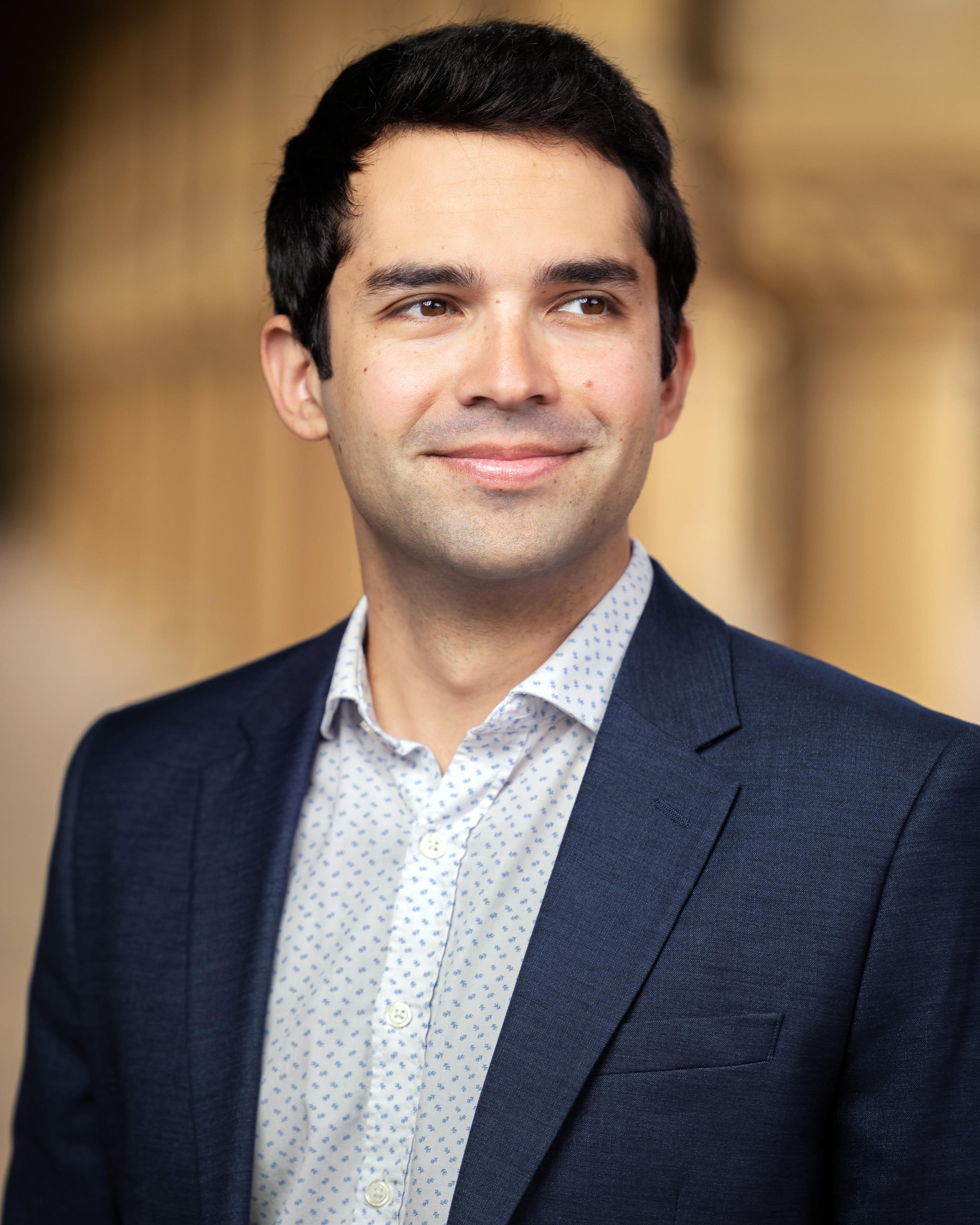
Professional portrait of E. Steve Woodle, MD

E. Steve Woodle, MD

Woodle, professor of surgery and the William A. Altemeier endowed chair in surgery at the College of Medicine, is a multiorgan transplant surgeon and transplant immunologist who has spent more than four decades advancing the understanding of organ rejection and pioneering immunosuppressive therapies that have reshaped transplantation. Earlier in his career at the University of Chicago, he performed a liver transplant on a 10-day-old infant, setting a Guinness World Record for the youngest liver transplant recipient. He joined the College of Medicine in 1999 and directed the Division of Transplantation for nearly two decades, building an internationally recognized program of clinical and research excellence. In 2001, he performed Ohio’s first allogeneic islet transplant for type 1 diabetes. After undergoing his own liver transplant in 2003, Woodle returned to the operating room and became the first liver transplant recipient to perform a liver transplant.

Woodle has helped originate several therapeutic approaches now considered standard in transplantation. As a fellow, he conceived the genetic re-engineering of OKT3, the first FDA-approved monoclonal antibody — work later developed into teplizumab (Tzield), which the FDA approved in 2022 as the first immunomodulatory therapy for type 1 diabetes. He was the first investigator to introduce plasma cell-targeted therapy for a non-malignant human disease, using proteasome inhibitors to treat antibody-mediated rejection in kidney transplant recipients. He also pioneered corticosteroid-free immunosuppression, including the field’s landmark double-blind, placebo-controlled trial of early corticosteroid withdrawal. He helped conceive and establish clinical kidney exchange for incompatible living-donor pairs, publishing the field’s first peer-reviewed description in the New England Journal of Medicine in 1997. Kidney exchange now accounts for roughly one in five living-donor kidney transplants in the U.S.

His scholarship includes more than 400 scientific publications cited more than 22,000 times, and he has delivered more than 700 invited lectures and mentored generations of transplant surgeons, physicians and pharmacists. In 2025, he received the American Society of Transplantation’s Senior Achievement Award in Clinical Transplantation and was named an Ashbel Smith Distinguished Alumnus by the University of Texas Medical Branch, where he earned his medical degree.

Featured photo at top: Daniel Drake Medal. Photo/University of Cincinnati.


Monday, October 12, 2026

The once and future market for prostitution in Rhode Island

 Kim Krawiec, the great legal scholar of repugnant transactions, has written that rare (almost never seen) book review that extends the empirical study of an important, well-studied social science event, namely Rhode Island's experience of legal prostitution. It provides an illuminating followup to the germinal paper by Cunningham and Shah. (Prostitution in R.I. is one of the controversial markets covered in Moral Economics, and I believe Krawiec's book review is headed for a forthcoming symposium on the book in Œconomia ­­.)

The Smallest State's Big Experiment by Kimberly D. Krawiec
 October 09, 2026

Abstract
Rhode Island’s accidental decriminalization of prostitution in 1980 is typically told as the story of a legal change that went unnoticed for more than two decades. This review of Alvin Roth’s latest book, Moral Economics, challenges that standard account and explores its implications for Roth’s argument that markets need social support to flourish. Drawing on court records, contemporaneous news reports, arrest statistics, and legislative proceedings, I show that the statutory change was noticed almost immediately. Prostitution-related arrests continued, not because police and prosecutors were ignorantly arresting and charging sex workers and clients under a statute that no longer existed, but because the legal system adapted using tools – primarily the loitering prohibition that survived the 1980 rewrite – that have long been used to police behavior and individuals considered repugnant. After a 2003 judicial ruling closed an important enforcement avenue against indoor sex work and vaulted the market into the open, a coalition formed around trafficking concerns that eventually paved the way for recriminalization in 2009. Rhode Island’s accidental experiment with decriminalized sex work provided neither the deliberately designed regulatory framework nor the political backing that could build the type of social support that Roth insists (correctly, in my view) markets need to function well. 

Sunday, October 11, 2026

Canada tweaks its Medical Aid in Dying law

 Canada has reversed its plan to expand access to medical aid in dying to people with only psychiatric illnesses, after a long controversy (now characterized as a  lack of "perfect consensus." But Canada has expanded access to allow those with progressive diseases to make advanced commitments, ahead of the day when they no longer may be capable of consent.

Canada Halts Plan to Allow Medically Assisted Death for the Mentally Ill.  People who have mental illness alone will not qualify for assisted death, but patients who have other conditions and expect to have a cognitive decline can make an advanced request.  By Vjosa Isai

"Canada will reverse its plan to allow people whose sole condition is a mental illness to seek medically assisted death, the government announced on Wednesday, abandoning a move to expand access to these patients.

“While there is not a perfect consensus on this issue, we believe this is the correct approach,” Sean Fraser, the minister of justice, told reporters on Parliament Hill.

"A law, introduced under the former Prime Minister Justin Trudeau, that allowed people with intolerable suffering from incurable mental health conditions to access a medically assisted death was initially poised to take effect in March 2023. Access for these patients was postponed for a year after public and some medical-community concerns that the existing system was not yet prepared to evaluate applications from these patients. In March 2024, the government delayed again, this time until March 2027, pending reviews by a panel of experts.

"With the clock ticking toward that deadline, Mr. Fraser said the government “very recently” formalized its stance and that Canadians can soon expect parliament to pass legislation that will indefinitely bar people whose sole medical condition is a mental disorder from seeking medically assisted death.

"The government is broadening the law to allow people with serious illnesses to make advance requests for medically assisted death if they anticipate their cognitive health will decline in a way that would prevent them from providing consent for the procedure in the future. This is already available to patients in the province of Quebec. The ability to make an advance request for assisted death has considerable public support."

Saturday, October 10, 2026

Privacy, and menstrual tracking apps

Here's an interview with Harvard Professor Sarah Richardson about her recent article raising concerns about menstrual tracking apps. She has doubts both about whether they give useful advice, and about the low or absent guardrails on the data they generate.

Alarm over menstrual tracking apps
GenderSci Lab director warns of health, privacy risks in medical journal analysis by Clea Simon 

"According to GenderSci Lab director Sarah Richardson, Aramont Professor of the History of Science and professor of studies of women, gender, and sexuality, the apps can dangerously mislead women while also exposing them to commercial exploitation and legal concerns. 

...

"These apps are marketed as wellness and medical tools, but there are no protections on the data. Data is often sold, raising concerns for reproductive autonomy and privacy. Menstrual apps are unique compared to other kinds of digital trackers because they can expose reproductive and gender status.

"It is possible for there to be misuse of this data. This was deeply scrutinized after the Dobbs decision a couple of years ago with many scholars recommending that people not use these tracking apps, because there had been explicit threats made by regulators to try to access that data for use in criminal prosecution.

"Menstrual status can be used to give evidence of reproductive status. If the use of one of these apps exposed somebody as having been pregnant and then no longer being pregnant, for example, that could potentially be, in some jurisdictions, used either to discriminate against them or to implicate them criminally under laws that are meant to restrict abortion. "

 #####

Here's the article in the BMJ:

Digital menstrual tracking risks creating more harm than benefit
BMJ 2026; 394 doi: https://doi.org/10.1136/bmj-2026-100858 (Published 30 September 2026) by  Lee, Katharine MN, Marina DiMarco, Madeleine Pape, Meredith Reiches, Patricia Homan, Sheree Bekker, Margo Mountjoy, and Sarah S. Richardson. 

"Digital menstrual tracking apps claim to scientifically analyse individual data to provide guidance that will improve health, wellbeing, and performance based on estimated menstrual cycle phase. But neither digital menstrual tracking nor related practices of cycle syncing—that is, synchronising physical activity and nutrition to menstrual cycle phases—have been convincingly shown to improve health or other performance outcomes. Moreover, these practices raise serious concerns, given their risks of harm." 


Friday, October 9, 2026

Congratulations to the new Fellows of the Econometric Society

 Congratulations to these 30 new Fellows of the Econometric Society, who were announced yesterday.

 The Econometric Society Elects 30 New Fellows  
 
October 8, 2026 (New Haven, CT)—The Econometric Society is pleased to announce the election of 30 new Fellows. 
 
"Election as a Fellow of the Econometric Society is a recognition of important contributions to Economics.  The Fellows  represent the highest authority of the Society. I congratulate them on this great honor,” said Nobu Kiyotaki, President  of the Econometric Society.  
 
Since 1931, only 1,254 total fellows have been elected. The 30 new fellows bring this number to 1,284
elected. To  date, 90 Econometric Society Fellows have won the Nobel Prize in Economics (the Sveriges Riksbank Prize in Economic  Sciences in Memory of Alfred Nobel). Of these 90, 28 have been President of the Econometric Society. 
 
Following are the new 2026 Fellows:  
Nikhil Agarwal, Paul A Samuelson Professor of Economics, Massachusetts Institute of Technology 
Juliano Assunção, Professor, PUC-Rio 
Panle Barwick, Todd E. and Elizabeth H. Warnock Distinguished Chair Professor, UW-Madison 
Francisco J. Buera, Sam B. Cook Professor of Economics, Washington University in St. Louis 
Ariel Burstein, Professor, University of California, Los Angeles  
Ivan Canay, Breen Family Professor, Northwestern University 
Matias Cattaneo, Professor, Princeton University 
Adeline Delavande, Professor of Economics, Nova School of Business and Economics; University Technology Sydney 
Firmin Doko Tchatoka, Professor, Adelaide University 
Piotr Dworczak, Professor, University of Cologne, Northwestern University, and GRAPE 
Ivan Fernandez-Val, Professor, Boston University 
Eric French, Montague Burton Professor of Industrial Relations and Labour Economics, University of Cambridge 
Alex Gershkov, Professor, Hebrew University of Jerusalem and University of Southampton 
Nezih Guner, Professor, CEMFI 
Sergei Guriev, Professor, London Business School 
Christian Hansen, Wallace W. Booth Distinguished Service Professor of Econometrics, Statistics, and Applied AI,  University of Chicago Booth School of Business 
Jonathan Heathcote, Monetary Advisor, Federal Reserve Bank of Minneapolis 
Paul Heidhues, Professor, Heinrich-Heine University Düsseldorf 
Charles A. Holt, A. Willis Robertson Professor of Political Economy, University of Virginia 
Jennifer La'O, Professor, Columbia University 
Tong Li, Gertrude Conaway Vanderbilt Chair and Professor of Economics, Vanderbilt University 
Justin Yifu Lin, Professor, Peking University 
Simon Loertscher, Professor, University of Melbourne 
Antonio Penta, ICREA Research Professor, Universitat Pompeu Fabra 
Marek Pycia, Professor of Organizational Economics, University of Zurich 
Nancy L. Rose, Charles P. Kindleberger Professor of Applied Economics, Massachusetts Institute of Technology 
Stephanie Schmitt-Grohe, Professor, Columbia University 
Martin Uribe, Robert A. Mundell Professor of Economics, Columbia University 
Rakesh Vohra, George A. Weiss and Lydia Bravo Weiss University Professor, University of Pennsylvania 
Daniel Yi Xu, David Rubenstein Distinguished Professor, Duke University 
 
For a full list of all Society Fellows please click here. 

Thursday, October 8, 2026

First Hungarian 3-way kidney exchange

 Semmelweis University announces the first 3-pair kidney exchange in Hungary. (HT: Péter Biró  ).

For the first time in Hungary, Semmelweisen performed triple living donor kidney transplants within the framework of a cross-donation program
Wednesday, 7 October 2026 Posted by: Eszter Csatári-Földváry
 

"The three kidney transplant patients who received a new organ at the same time two weeks ago as part of the so-called living donor kidney exchange program at Semmelweis University are doing well. The extraordinary medical feat is the result of six hours of coordinated work by thirty health care professionals. For the first time in Hungary, triple living donor cross-donation was carried out, when the immunological or blood group incompatibility between patients and donors was bridged by the medical team by swapping the donated organs between three pairs who were strangers to each other. 

...

"Until the summer of 2025, organ exchange was only possible between two couples, the first such intervention was performed at the beginning of this year at the Clinical Center in Pécs. However, with a legislative amendment last summer, several couples can participate in the – otherwise anonymous – organ exchange, which significantly increases the likelihood of optimal pairings and thus the chance of successful kidney transplants, added Dr. Attila Szijártó. He emphasized: As the number of donor organs from the dead is limited, the importance of living donation is increasing, as it can reduce the current average waiting time of 3.5 years. "

#######

Earlier:

Wednesday, February 4, 2026 Kidney exchange comes to Hungary


Wednesday, October 7, 2026

The first 100 cases of organ donation after euthanasia in the Netherlands

 Here's a controversial market with something for everyone to argue about: organ donation after euthanasia, including psychiatric patients, in the Netherlands.

van Dijk, N., Wijffels, S., Wind, T. et al. The first 100 cases of organ donation after euthanasia in the Netherlands: lessons from preliminary experiences. BMC Med Ethics (2026). https://doi.org/10.1186/s12910-026-01590-5 

"Background
Organ donation after euthanasia (ODE) is an evolving, patient-initiated procedure in the Netherlands. While it gives meaning to donors at the end-of-life, it introduces complex ethical and practical challenges for healthcare professionals. This study aims to describe the clinical characteristics and donation outcomes of the first 100 ODE procedures in the Netherlands, while outlining the practical and ethical dilemmas encountered.

Methods
A retrospective analysis was performed on prospectively collected data from the first 100 ODE procedures conducted between September 2012 and February 2023. To gain deeper insight into practical experiences and ethical themes, these data were discussed with organ donation coordinators and intensivists involved in the procedures. The analysis focused on clinical characteristics and donation outcomes, as on ethical and practical challenges.

Results
Neurodegenerative disorders were the primary underlying cause of suffering (52%), followed by psychiatric conditions (31%). The first 100 procedures resulted in 408 transplanted organs. Most procedures were performed in intensive care units, with general practitioners performing euthanasia. Key ethical and practical challenges included the tension between clinical protocols (e.g., fasting) and patient comfort, the medicalisation of the dying process through invasive monitoring, and the logistical barriers of starting ODE from home (ODEH). Furthermore, ethical concerns persist regarding euthanasia in psychiatric and dementia cases, and the emotional burden on healthcare professionals.

Conclusions
Patient-initiated ODE is feasible and allows patients to fulfil altruistic end-of-life wishes, but introduces complex ethical and practical challenges. Balancing organ donation with a dignified, non-medicalised death requires careful planning, especially as ODE expands to psychiatric and early dementia cases. Healthcare professionals face emotional and logistical burdens, yet are motivated by the positive impact on donors and recipients. Insights from these initial cases contributed to the development of the 2024 Dutch guideline, which supports both local and centralised procedures and which removed distinctions between somatic and psychiatric suffering. Further research should explore relatives’ perspectives to understand the broader impact of ODE(H). "

Monday, October 5, 2026

Moral Economics in Portuguese

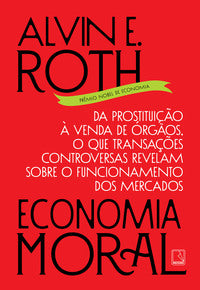
 Moral Economics has been translated into Portuguese in Brazil, as Economia moral

 9788501927606.jpg

Economia moral (Portuguese Edition)
Portuguese Edition by Alvin Roth (Author), Alessandra Bonrruquer (Translator) Format: Kindle Edition


"Alvin Roth, vencedor do Prêmio Nobel de Economia de 2012, analisa o que acontece quando os mercados esbarram em questões controversas e mostra por que precisamos lidar com escolhas difíceis quando não conseguimos concordar sobre o que é certo ou errado para a coletividade.

 "Economia moral parte de algumas das perguntas mais complexas de nosso tempo: o que pode ser comprado, vendido ou trocado em uma sociedade e quais são os limites morais dos mercados? As pessoas devem ter o direito de interromper uma gravidez, de realizar tratamentos de fertilização in vitro ou de “alugar” seus úteros? A maconha deve ser comercializada em mercados legalizados? E quanto aos opioides? Devem ser vendidos irrestritamente? É aceitável remunerar alguém pela doação de sangue ou até mesmo de um rim? Essas questões geram debates intensos, uma vez que os argumentos sustentados por aqueles que consideram essas transações aceitáveis e os que as consideram repulsivas geralmente se baseiam em convicções morais ou religiosas inegociáveis.

"Em Economia moral, Alvin Roth defende que é possível buscar a resolução desses e de outros impasses da atualidade quando os examinamos sob a perspectiva dos mercados. Mediante uma análise cuidadosa dos mercados controversos e das chamadas transações repugnantes, o autor aborda temas que provocam debates éticos e sociais, como a venda de órgãos, a prostituição e a eutanásia. Sua proposta não é a liberação ou a proibição de todo tipo de transação repugnante, mas sim suscitar uma profunda reflexão acerca de um desenho de mercado eficiente e responsável que encontre o equilíbrio entre preservar a liberdade individual e proteger os grupos mais vulneráveis."


“O livro aborda assuntos fundamentais, mas controversos, de maneira profunda, perspicaz e envolvente. Esta é uma leitura essencial.” ― Science Magazine
 

Sunday, October 4, 2026

Post-Nobel reflections by recent winners (on the eve of a new batch:).“Even my teacher has heard of that prize!”

 Next week will hatch a new batch of Nobel laureates.  From Stanford and Harvard, here are some thoughts from (among others) Paul Milgrom and Claudia Goldin.

From Stanford:

Brian Kobilka and Paul Milgrom look back on their Nobel wins
From sleeping through the call to shaking hands with the king and queen, laureates reflect on what it was like to win the Nobel Prize. This year’s winners will be announced Oct. 5-12. 

"In 2012, Stanford physiologist Brian Kobilka won the Nobel Prize in chemistry alongside Robert Lefkowitz of Duke University. And in 2020, Stanford economist Paul Milgrom won the Nobel Prize in economic sciences with Robert Wilson, the Adams Distinguished Professor of Management, Emeritus.

...

"my grandson, who was 9 years old at the time, came home from school and told me, “Even my teacher has heard of that prize!” 

############

From Harvard:

You won a Nobel Prize. Now what? 

Goldin: “The really important point is that receiving the Nobel for studying women’s role in the economy and society was incredibly meaningful to me and to so many other people, men and women, young and old, in the U.S. and in the rest of the world. It gave many a sense that their lives were important. It gave others pride in their work. That is what made it truly important, joyous, and meaningful to me.” 


Saturday, October 3, 2026

Time magazine celebrates my Stanford colleague Adrien Bilal

 Time magazine celebrates my Stanford colleague Adrien Bilal

TIME100 Next 2026: The World's Most Influential Rising Stars: Adrien Bilal  Sep 30, 2026  by Bill McKibben

"Economists failed badly in the early years of the climate fight, assuring the world that real damage wouldn’t come until late in this century. Now, amid fires, floods, and soaring insurance premiums, Stanford University’s Adrien Bilal has offered a far more coherent analysis of the economic effects, and potential costs, of climate change. He wrote, for instance, that if we increase the planet’s temperature by an additional 2°C, “we found that would reduce output and consumption by 50%. That’s a big reduction. It’s twice as big as the Great Depression but it’s going on forever.” As his award-­winning seminal study dryly notes, “these impacts suggest that unilateral decarbonization policy is cost-effective for large countries such as the United States,” which is econospeak for “what on earth are you doing propping up coal plants and shutting down wind farms?”


Friday, October 2, 2026

International Workshop on Bounded Rationality In honour of Professor Reinhard Selten. Poznań, 5 October 2026

 On what would have been his 96th birthday, a hybrid (in person and online) conference in honor of the late Reinhard Selten.

 Here's the announcement: 

International Workshop on Bounded Rationality In honour of Professor Reinhard Selten – the man who changed the way we think about rationality,   Poznań, 5 October 2026 

Poznań University of Economics and Business – Hybrid event (on-site and online)

Dear Researchers, Doctoral Students and Students,

It is our great pleasure to invite you to a unique International Workshop on Bounded Rationality, held in honour of Professor Reinhard Selten – Nobel Laureate in Economics, co-founder of experimental economics and game theory, and a man deeply connected with Poznań, where he lived and passed away.

The event will take place on 5 October 2026, exactly on the day Professor Selten would have celebrated his 96th birthday. This is a perfect opportunity to pay tribute to his remarkable scientific legacy and to draw inspiration from his approach to the study of human rationality.

The event is held under the honorary patronage of the Rector of Poznań University of Economics and Business.

Why should you attend?

  • Outstanding speakers from around the world – including Prof. Rosemarie Nagel, Prof. Eyal Winter, Prof. Daniel Friedman, Prof. Werner Güth, Prof. Eric Guerci, Prof. Ido Erev, Prof. Vincent Crawford, Prof. Axel Ockenfels, Prof. Tibor Neugebauer and Prof. Karim Sadrieh.
  • Current research directions in bounded rationality – from game theory, through experimental economics, to behavioural finance.
  • A unique atmosphere – the workshop combines an on-site session in Poznań with online sessions, enabling participants from all over the world to take part.
  • Honouring Professor Selten’s legacy – his work continues to inspire researchers to push the boundaries of traditional economics.

A few words about the programme

The workshop is divided into three sessions:

  • Morning session– chaired by Prof. Marcin Anholcer. Speakers include Prof. Tibor Neugebauer, Prof. Rosemarie Nagel, Prof. Eyal Winter and Prof. Karim Sadrieh.
  • Afternoon session– chaired by Prof. Krzysztof Malaga. Talks will be given by, among others, Prof. Daniel Friedman, Prof. Werner Güth and Prof. Eric Guerci.
  • Final session– chaired by Prof. Tibor Neugebauer. Speakers include Prof. Ido Erev and Prof. Vincent Crawford.

Each scientific talk lasts 30 minutes. The full programme is presented below.

Workshop programme

All times are Central European Summer Time (CEST).

Morning session – chaired by Prof. Marcin Anholcer (Poznań University of Economics and Business)

  • 9:55 – Opening words · Prof. Marcin Anholcer, Vice-Rector for Scientific Research
  • 10:00 – Prof. Tibor Neugebauer (University of Luxembourg)
    Reinhard Selten’s Life and Bounded Rationality
  • 10:30 – Prof. Rosemarie Nagel (Universitat Pompeu Fabra & ICREA, Barcelona)
    Understanding Human Behavior and Games through Similarity. And how Selten Led Me to 2×2 Games
  • 11:00 – Prof. Eyal Winter (Hebrew University of Jerusalem & Lancaster University)
    Spillover Effects Across Interactive Environments and Social Pollution
  • 11:30 – Prof. Karim Sadrieh (University of Magdeburg)
    Selten’s Impulse Balance Equilibrium: a literature survey and a numerical approach
  • 12:00 – Lunch & informal discussion

Afternoon session – chaired by Prof. Krzysztof Malaga (Poznań University of Economics and Business)

  • 14:15 – Prof. Daniel Friedman (University of California, Santa Cruz)
    Evolving Overconfident Managers
  • 14:45 – Prof. Werner Güth (Max Planck Institute for Research on Behavioral Economics, Bonn)
    (Un)Absorbability of Behavioral Decision Theory — Ideal or Warning —
  • 15:15 – Prof. Eric Guerci (Université Côte d’Azur, Nice)
    Learning to Forecast: A lab-in-the-field experiment with finance professionals
  • 15:45 – Break
  • 15:45 – Prof. Axel Ockenfels (University of Cologne & Max Planck Institute for Research on Behavioral Economics, Bonn)
    Personal address

Final session – chaired by Prof. Tibor Neugebauer

  • 16:00 – Prof. Ido Erev (Technion — Israel Institute of Technology)
    The Coexistence of Under-Investment and Under-Diversification
  • 16:30 – Prof. Vincent Crawford (University of Oxford & UC San Diego)
    Strategic Thinking

Online participation – how to join?

The workshop can be followed free of charge online via the Zoom platform. Participants from all over the world are warmly welcome!

Zoom meeting link:
https://ue-poznan-pl.zoom.us/j/92747785836?pwd=9rDmnm33aD2YJeWNGZPmIkMghNYjpQ.1

Meeting chat link:
https://ue-poznan-pl.zoom.us/launch/jc/92747785836

Meeting ID: 927 4778 5836
Access code: 115438

Start time: 5 October 2026, 8:45 AM Warsaw time