Showing posts sorted by date for query Germany AND kidney. Sort by relevance Show all posts

Friday, March 27, 2026

Germany legalizes kidney exchange !!

 Axel Ockenfels forwards the good news. He writes: "It passed! The Bundestag voted today to permit kidney exchange in Germany. The CDU/CSU, SPD, and Greens voted in favor." 

 (More steps will have to be taken before kidney exchanges occur regularly in Germany, but this is a giant step forward.) 

 Here's the official announcement:

Parlament weitet Regeln zur Lebendorganspende aus  

Parliament expands rules on living organ donation 

"On Thursday, March 26, 2026, the Bundestag expanded the possibility of living kidney donations to increase the circle of possible organ donors and organ recipients. A corresponding bill of the Federal Government "to amend the Transplantation Act – Amendment of the regulations on living organ donation and further amendments" (21/3619) in the version amended by the Health Committee was adopted by the majority of the CDU/CSU, SPD and Bündnis 90/Die Grünen against the votes of the parliamentary group Die Linke, with the AfD abstaining. In the future, this will also enable so-called cross-over living kidney donations between different couples. 

...

"Despite numerous initiatives to promote organ donation, there has been no trend reversal so far. At the end of 2024, around 6,400 people were waiting for a donor kidney, according to the information. At the same time, the number of kidney transplants fell to 2,075. A total of 253 patients died in 2024 who were on the waiting list for a kidney.

"Opening up further therapy options
"Therefore, it is important to open up further therapy options that have long been established internationally. The goal of countering the danger of organ trafficking remains decisive in the amendment of the regulations, according to the draft.

"In the future, living kidney donations will be possible "crosswise" by another organ donor partner in the case of immunologically incompatible organ donor couples. The organ donor couples do not have to know each other. However, the so-called close relationship of the respective incompatible partners should remain mandatory. 

"Principle of subsidiarity is repealed
"The so-called principle of subsidiarity, according to which organ removal from living persons is only permitted if no suitable organ from a deceased donor is available, will be repealed. Non-directed anonymous kidney donation, i.e. a donation to an unknown person, is also made possible. The donor should have no influence on the recipient.

"The plan is to establish a program for the mediation and implementation of crossover living kidney donation, including anonymous kidney donation. A center for the placement of kidneys is to be established. The conciliation procedure is laid down by law.

"Care in the transplant center mandatory
"Mandatory independent psychosocial counselling and evaluation of donors before a donation will be introduced. In addition, care in the transplant center will be mandatory throughout the entire donation process.

"If a living kidney donor later falls ill himself and needs a kidney transplant, this should be taken into account when arranging kidneys donated postmortem. Institutions that remove tissue postmortem should be able to be connected to the Register for Declarations of Organ and Tissue Donation (OGR) so that they can clarify for themselves whether there is a willingness to donate tissue in a potential donation case."
 

########## 

It's been a long campaign, and Axel and a number of others played a critical, tireless role, both in public and in private consultation with lawmakers and interested parties. It's notable that the legislation looks forward to allowing nondirected donors (not every European kidney exchange program does.) It's also notable that the current bill expects that compatible pairs will not be eligible to participate in kidney exchange to seek a better match. That's a battle that hasn't yet been won, despite the fact that compatible pairs are important in a number of ways in U.S. kidney exchange.

Still, this is a significant victory in a campaign that has been going on for at least a decade. I may have written the first German newspaper editorial on the need to legalize kidney exchange in Germany, almost exactly ten years ago:

Thursday, March 17, 2016  German organ transplant law should be amended or reinterpreted to allow kidney exchange: my op-ed in Der Tagesspiegel


Here's one of the more recent editorials, which I was privileged to coauthor with Ockenfels and two other heroes (or in this case heroines) of this struggle, Agnes Cseh and Christine Kurschat:

Monday, September 9, 2024  Anticipating kidney exchange in Germany in the Frankfurter Allgemeine Zeitung


 There will be more steps to take to establish effective regulations and institutions to make kidney exchange readily available in Germany, but this is a big step in that direction.

Monday, March 9, 2026

Kidney exchange developments in India, Brazil, Saudi Arabia and Germany

 Here are recent reports on kidney exchange from  India, Brazil, Saudi Arabia and Germany.

 Atul Agnihotri: SOMETHING REMARKABLE IS HAPPENING IN KIDNEY TRANSPLANTATION IN INDIA.

"Through collaboration with 63 transplant centers, APKD India enabled 130 kidney swap transplants in 2025, quietly becoming ONE OF THE LARGEST KIDNEY SWAP PROGRAMS outside the U.S.

And the momentum continues — January has already kicked off with 22 swap transplants.

A powerful reminder that when hospitals collaborate, more patients receive the gift of life.

"One Nation, One Swap."

https://lnkd.in/gZD6Q-md "

 ##########

Here's an article on the clinical trials of kidney exchange in Brazil, in preparation for a possible change in the transplant law to make it standard practice. 

Doação Renal Pareada (DRP) no Brasil: relato do primeiro caso envolvendo três duplas    Kidney Paired Donation (KPD) in Brazil: first 3-way case report   by Juliana Bastos, Glaucio Silva de Souza, Marcio Luiz de Sousa, Pedro Bastos Guimarães de
Almeida, Thais Freesz, David Jose de Barros
Machado, Elias David-Neto, Gustavo Fernandes Ferreira   https://doi.org/10.1590/2175-8239-JBN-2025-0177pt

 Abstract: Kidney Paired Donation (KPD) is a transformative strategy in living kidney donor transplantation (LDKT), particularly for overcoming immunological barriers that preclude direct donation. In 2021, KPD accounted for one-fifth of adult LDKT and for half of LDKT for sensitized recipients in the United States. In Brazil, with a high prevalence of chronic kidney disease (CKD) and over 30,000 patients on transplant waiting lists, the demand for compatible donors far exceeds supply. This article presents a case report of KPD in the Brazilian context, illustrating its feasibility and highlighting challenges and considerations for broader implementation. The case demonstrates KPD’s potential to increase transplant rates, improve outcomes, and reduce dialysis costs. Nevertheless, structural, ethical, and regulatory challenges remain. This report emphasizes the implications of expanding KPD as a sustainable, life-saving strategy in Brazil.

##########

Here's a report from  King Faisal Specialist Hospital and Research Centre, Riyadh, Saudi Arabia: 

Almeshari, K.A., Broering, D.C., Obeid, D.A., Alali, A.N., Algharabli, A.N., Pana, N.L. and ALI, T.Z., Innovative Strategies in Kidney Paired Donation: Single-Center Experience Achieving the Highest Annual Transplant Volume Globally. Frontiers in Immunology, 17, p.1623684. 

"Methods: We analyzed all kidney transplants performed through our KPD program between January and December 2024. The program aimed to achieve full HLA and ABO compatibility for incompatible pairs, while also incorporating additional strategies: inclusion of compatible pairs to improve HLA matching, acceptance of ABO quasi-compatible matches (e.g., A2 donors to O or B recipients), low-risk HLA-incompatible matching for HLA-incompatible candidates with cPRA >80%, and ABO-incompatible matching for those with cPRA >95%.

Results: A total of 135 patients (121 adults, 14 pediatrics) underwent KPD-facilitated transplantation, including 69 HLA-incompatible (51.1%), 37 ABO-incompatible (27.4%), and 29 compatible (21.5%) pairs. Females comprised 60.7% of the cohort, with a significantly higher proportion in the HLA-incompatible group (p < 0.001). HLA-incompatible recipients were older than others (mean age 42.5 years, p < 0.001). Most transplants (93.3%) occurred through 2- to 5-way closed chains, with the remainder via domino chains (6.7%). 

...

Conclusion: Our single-center experience demonstrates the feasibility and effectiveness of a high-volume KPD program in overcoming immunologic barriers to kidney transplantation. Strategic inclusion of compatible pairs, ABO quasi-compatible matching, low-risk HLA-incompatible, and ABO-incompatible matchings significantly increased access for difficult-to-match recipients. This model may serve as a replicable framework for other high-capacity transplant centers seeking to expand transplant access and improve outcomes for complex patient populations. "

########

And here's a report on proposed German legislation to (finally) make kidney exchange legal in Germany: 

Biró, P., Budde, K., Burnapp, L., Cseh, Á., Kurschat, C., Manlove, D., & Ockenfels, A. (2026). Germany's Path to a National Kidney Exchange Program: An Assessment of the 2024 Legislative Proposal. Health Policy, 166, 105578. 

"Highlights

The German Federal Parliament plans to amend the Transplantation Act (1997).

The main goal of the reform is to establish a national kidney exchange program.

The draft law follows European best practices in many respects.

However, the law prohibits the participation of compatible donor–recipient pairs, contrary to international evidence.

Germany may join cross-border kidney exchange programs in the future. "


Friday, March 7, 2025

Toledo celebrates Mike Rees

 Here's the announcement from the University of Toledo:

University Recognizes Faculty Members with Distinguished Honor 

"Rees joined the faculty of the then Medical College of Ohio as an assistant professor in the Department of Urology in 1999 and was promoted to associate professor in 2007 and to professor in 2008.

"His research interests include kidney-paired donation, transplant immunology, immunosuppression, xenotransplantation and value-based healthcare
, and he has received numerous grants totaling millions of dollars including grants from the Echoes of Lasting Peace Foundation, the NIH, the Agency for Healthcare Research and Quality (AHRQ), the Stanford Impact Lab, Wyeth Pharmaceutical Corporation, Novartis, the Ohio Department of Development and the Ohio Center for Innovative Immunosuppressive Therapeutics.

Rees mentored three Ph.D. students in xenotransplantation immunology, all of whom have gone on to successful careers in the health sciences and he has trained more than 50 urologists. He has obtained four patents related to his work in transplantation methods, one of which has led to a 30% increase in the supply of deceased donor livers in Europe, and he has written more than 100 publications and book chapters. These publications include: “Nonsimultaneous Extended Altruistic Donors” an idea that has lead to an additional 20,000 living donor kidney transplants around the world, “Delayed Renal Transplant Function,” “Immunological Effects of Hepatic Xenoperfusion” and “Strategies to Increase the Donor Pool.”

His numerous awards and commendations include attending the 2012 Nobel Prize ceremony at the invitation of his mentor for his UToledo-sponsored 2016-2017 sabbatical, Nobel Laureate in Economics, Alvin Roth, the Medal of Excellence from the American Association of Kidney Patients, the Governor’s Award from the National Kidney Foundation, and he was named an American Society of Transplantation’s New Key Opinion Leader.

Rees has given lectures and seminars in France, the United Kingdom, Canada, Belgium, South Korea, Switzerland, Japan, Saudi Arabia, Germany, Hungary, the Netherlands, Italy, India and the Philippines, and he served a three-year fellowship at Cambridge University, where he trained as a multi-organ transplant surgeon under world-renowned surgeon and transplant pioneer, Professor Sir Roy Calne, as well as completing a Ph.D. in xenotransplantation immunology.

“I have been fortunate to be supported by The University of Toledo since 1996 when the Medical College of Ohio made it possible for me to obtain a Ph.D. in immunology and a fellowship in transplant surgery at Cambridge University prior to my arrival in Toledo in 1999,” Rees said. “Transplantation is the great team sport. I am honored to have been chosen for this award, and I am grateful to all those who have trained me, the University of Toledo and Medical Center, the teams that have supported me, and the grant agencies and philanthropists who have supported my dreams over the course of my career.”


Saturday, October 12, 2024

Kim Krawiec interview about WHO demands for national self sufficiency in blood donation and kidney exchange

 The University of Virginia takes note of the recent Krawiec & Roth paper I blogged about in August.

Here is their interview with Kim about the paper:

WHO Stifles International Blood and Organ Donations, Argue Professors. Professor Kimberly Krawiec, Nobel Prize Winner Alvin E. Roth of Stanford Argue World Health Organization Policies Need Revision

Here are the first two Q&As

"What motivated you to critique the WHO principles of self-sufficiency and nonremuneration in organs and blood? ​

"The severe shortage of both blood products and transplantable organs, especially kidneys, was our motivation and has motivated much of our other work, both together and separately. In the United States alone, the organ transplant waiting list is approximately 100,000 people, and if current trends continue, it will only grow in the coming years.

"Shortages of blood products present a similar challenge. Although wealthy countries are typically able to satisfy domestic whole blood needs, the vast majority of low- and middle-income countries (LMIC) are not. As a result, in many LMIC, shortages of blood for transfusion contribute to maternal death, death from traffic accidents and complications from childhood anemia. Moreover, even wealthy countries experience seasonal shortages of whole blood or deficiencies in some blood components, such as platelets, which are harder to collect and have a shorter shelf life.

The shortage of plasma-derived medicinal products (PDMPs) is particularly severe and entirely preventable. PDMPs are life-saving treatments for multiple acute and chronic conditions for which there are no alternative treatments. Yet these life-saving therapies are unavailable to much of the world’s population. The United States, one of the few countries to pay plasma donors, supplies 70% of the world’s plasma needs, with Germany, Austria, Hungary, Czechia and Latvia (which also permit some form of payment for plasma donors) supplying another 20% of the world total. In other words, a handful of countries supply plasma to the rest of the world, including other wealthy countries. Meanwhile, LMIC who can neither collect and process their own nor afford to purchase blood products on the open market (or are prevented from doing so under the terms of the foreign aid that supports their health system) simply do without, to the detriment of their citizens.

"How do current WHO policies on organ and blood donation contribute to this problem?

"WHO policy mandates both national (or sometimes only regional) self-sufficiency and an absence of remuneration for both blood products and transplantable organs — what we refer to in the paper as “the twin principles.” These twin principles are unhelpful separately and unworkable together. Their effect on blood products is particularly stark — no country that fails to compensate donors is self-sufficient in plasma collection and few LMIC collect sufficient supplies of whole blood.

"The self-sufficiency mandate presents a real hurdle to progress in transplantation, especially for smaller countries and LMIC. This is especially the case because some of the most exciting and promising developments for increasing the availability of transplants have been in kidney exchange, a mechanism that leverages in-kind exchange, rather than financial compensation, to encourage and facilitate donation among those with willing but incompatible partners. But kidney exchange works best when a large pool of patient-donor pairs can engage with one another. So, requiring that transplantation be contained within national boundaries unnecessarily limits access to transplants that could be achieved only by cross-border exchange."

Monday, September 9, 2024

Anticipating kidney exchange in Germany in the Frankfurter Allgemeine Zeitung

  Here's an op-ed in the Frankfurter Allgemeine Zeitung, celebrating the anticipated beginning of kidney exchange in Germany.

Der Volkswirt Hoffnung durch Tausch  by Ágnes CsehChristine KurschatAxel Ockenfels und Alvin E. Roth

Here's the English translation (from a slightly earlier draft):

Hope through exchange

Germany's new draft law on kidney donation

Imagine this: Your child needs a kidney transplant, but due to tissue incompatibility you cannot be a donor yourself. And it's the same for me. What if you donated a kidney to my child and I donated a kidney to yours in return? Through this ‘cross-donation’ we could give our children the chance of a longer life with a better quality of life.

In Germany, such cross-donations are not usually permitted. Only people who are ‘obviously close in a special personal relationship’, such as relatives and spouses, are allowed to donate kidneys. This is now set to change. The Federal Cabinet has presented a draft bill to amend the Transplantation Act, which would allow cross-donations and other forms of living kidney donation. These include ring exchanges with more than two participating couples as well as longer donor chains initiated by a non-directed, anonymous donation.

People who hear about cross-donation for the first time are sometimes skeptical. However, these concerns can be dispelled on closer inspection. In our neighboring countries and in many other countries, such donations have long been successfully established in compliance with the highest ethical standards.

In cross-donation, no prices are paid for kidneys and there is no trading in kidneys. A system in which potential cross-donors are registered and referred centrally can be implemented in an abuse-proof manner, as experience abroad has shown. The Ministry of Health's draft calls for a close relationship to continue to exist between donor and recipient who register together in the kidney donation program, but no longer necessarily between the donor of an organ and the recipient of the same organ. The couples involved can be guaranteed anonymity, so that mutual influence can be ruled out and at the same time the altruistic motive for donating to the next of kin remains unchanged.

But what happens if the donor has already donated their kidney, but the cross-donor suddenly cancels? To avoid such situations, the two kidneys are removed from the two donors at the same time, and the two patients also receive the two organs at the same time. The four surgical teams communicate in order to coordinate the procedure safely.

The argument that authorizing cross-donation could increase the pressure on potential donors does not stand up to closer scrutiny either. The option of cross-donation does not create any additional pressure that is not already exerted on compatible donors. Instead, cross-donation merely expands the pool of potential donors. 

Incidentally, cross-donation also shortens the waiting list for post-mortem donations, so that patients without donors can also be helped. At the same time, cross-donation can protect the legitimate interests of those people who do not wish to donate if it is implemented in a suitable institutionalized manner and the best possible information is provided.

Germany now has the opportunity to learn from the existing systems in Europe in order to avoid mistakes in the regulations and their implementation for the benefit of organ recipients and donors. This applies, for example, to the establishment of a nationwide kidney donation program, from funding and equipment to biomedical expertise. The Federal Ministry of Health is making important proposals here. The large gaps in data on potential donors and recipients could soon be closed, the option of enabling international coordination of cross-donations is being considered from the outset, and the transplant centres are being encouraged to register all donor-patient pairs centrally for referral. Without such regulations, individual clinics could be incentivized to only selectively register pairs, with the result that fewer transplants can be carried out overall.

Other aspects of the draft should be reconsidered. For example, it is not advisable that couples can only participate in the kidney exchange program if donor and recipient are incompatible. Compatible couples can receive a more suitable kidney through participation and at the same time other patients can be helped, as more cross-donations are made possible through participation. This in turn can shorten the waiting list for all patients who do not have their own donor and therefore cannot participate in the kidney exchange program.

It is good news that new forms of living organ donation are now also to be made possible in Germany. The precise organization of these new forms of organ donation is crucial to their success. It can be modelled on the experiences of other countries and at the same time adapted to the specific legal, historical and ethical framework conditions in Germany. The initial investment would be amortized very quickly through the savings in treatment costs for expensive dialysis. 

In view of the draft law, we are optimistic that the wish of many potential donors to help can be fulfilled in the future, thus improving the care situation for kidney patients in Germany.


Ágnes Cseh (University of Bayreuth), Christine Kurschat (University of Cologne), Axel Ockenfels (University of Cologne and Max Planck Institute for Research on Collective Goods in Bonn) and Alvin E. Roth (Stanford University)

############

Here's the (rather opaque) graphic the newspaper created (maybe it's a celebration by kidneys):


##########

Here's a link to what I think was my first op-ed in German on allowing kidney exchange there...

Thursday, March 17, 2016


Sunday, September 8, 2024

Simulating kidney exchange policies in Germany

 Here are a set of simulations designed to help Germany establish a national (rather than a fragmented) kidney exchange system.

Itai Ashlagi, Ágnes Cseh, David Manlove, Axel Ockenfels & William Pettersson,  Designing a kidney exchange program in Germany: simulations and recommendations. Central European Journal of Operations Research  (2024). https://doi.org/10.1007/s10100-024-00933-0

"Abstract: We examine some of the opportunities and challenges concerned with establishing a centralized national kidney exchange program in Germany. Despite the many advantages of a national program, without deliberate design and policy intervention, a fragmented kidney exchange program may emerge. We study a number of collaboration strategies, and resulting simulations suggest that transplant centers may find it advantageous not to fully participate, resulting in a net reduction in the number of transplants. These results also suggest that allowing more forms of kidney exchange, such as three-way exchanges and non-directed donations, can significantly increase the number of transplants while making participation in a national program more attractive and thus national coordination and cooperation more robust. We propose a multi-level policy approach that is easy to implement and would promote an efficient German kidney exchange program that benefits recipients, donors and hospitals."

...

The concluding sentence of the paper is:

"Germany should establish a robust, well-functioning national KEP that can be easily and straightforwardly integrated into an international KEP."

###########

Background:

Thursday, July 18, 2024

Thursday, July 18, 2024

Kidney exchange in Germany: draft of a proposed law

 Yesterday the German Federal Cabinet published the draft of a law that would allow kidney exchange in Germany. Below is the text of the press release from the Ministry of Health,  via Google Translate. (Prof. Dr. Karl Lauterbach is the Federal Minister of Health.)

Lauterbach: Überkreuzspende gibt Nierenkranken Hoffnung  Cross-donation gives hope to kidney patients

July 17, 2024

"In the future, kidney donations should also be possible between two different couples. This is the aim of the draft of a third law amending the Transplantation Act - amendment of the regulations on living organ donation, which was approved by the Federal Cabinet today.


This makes it possible for a donor's kidney to go not only to their partner, but also to a recipient from a second couple who in turn donates a kidney (living cross-donation). At the same time, the law ensures increased protection for donors, who should receive better information and medical and psychosocial support.


Dying on the waiting list must come to an end. In the long term, we therefore need the opt-out solution. In the short term, we can make more organ donations possible through cross-donation: those who donate themselves can be helped more quickly in their personal environment. Up to now, living donations have only been possible between partners. In the future, it should also be possible between couples who are not so close. This initially gives hope to many kidney patients.


Federal Minister of Health Prof. Karl Lauterbach

The main changes

Cross-living kidney donations are made possible

Donation and receipt of a kidney “crosswise” by another organ donation partner in medically incompatible organ donation couples.

In the case of a cross-donation, the two couples no longer have to know each other - but the close relationship between the incompatible partners remains mandatory.

Regulation of non-directed anonymous kidney donations.

The tasks of the transplant centers in the context of a cross-living kidney donation and a non-directed anonymous kidney donation are regulated. The transplant centers decide on the acceptance of incompatible organ donation pairs and non-directed anonymous kidney donations from donors and transmit the data required for the placement to a central office for the placement of kidneys in the context of the cross-living kidney donation. After the placement decision has been made, the transplant centers concerned organize the removal and transfer jointly.

Establishment of a national program for the arrangement and implementation of cross-living kidney donations. A body for the arrangement of kidneys within the framework of cross-living kidney donations will be established or commissioned. The arrangement procedure will be laid down by law.

Distribution of kidneys in the context of cross-living kidney donations exclusively according to medical criteria and while maintaining anonymity. The authorization of the German Medical Association to determine the state of medical science in guidelines is expanded to include the rules for accepting and distributing kidneys from incompatible organ donation pairs and from non-directed anonymous kidney donations in the context of cross-living kidney donations.

The previously applicable principle of subsidiarity in Section 8 Paragraph 1 Sentence 1 Number 3 TPG is repealed in order to also enable preemptive kidney transplants.

Previously: removal of organs from a living person only if no post-mortem organ was available.

Donor protection is further strengthened

Expansion of the regulations to clarify and specify donor suitability.

Introduction of compulsory psychosocial counseling and evaluation. The necessary knowledge and skills for the

Psychodiagnostic evaluation and psychotherapeutic treatment can only be carried out by medical or psychological specialists with specific training or further education in psychological, psychosomatic or psychiatric issues (so-called mental health professionals). The independence of the expert ensures that the consultation and evaluation is not influenced by the transplant medical managers in the transplant center, that there are no professional dependencies with these managers and that the expert is solely committed to the interests of the donor. The requirements for the qualifications of the independent expert will in future be set out in the guidelines of the German Medical Association.

Individual support for donors through the introduction of a living donation companion who accompanies and advises the donor throughout the entire donation process in the transplant center. The living donation companion must be a doctor, nurse or person experienced in psychological or psychotherapeutic issues and must be professionally experienced and independent of the specific transplant process. He or she may not be involved in the removal or transfer of the organs, nor be subject to instructions from a doctor who is involved in these measures.

Introduction of federal legal requirements for the activities of living donation commissions.

Granting of additional points

Living kidney donors who themselves require a kidney transplant later in life due to an illness should receive additional points when kidneys are arranged, the amount of which should be determined in the guidelines of the German Medical Association."

########

Axel Ockenfels writes:

I took a quick look at the draft bill that was passed by the federal cabinet in Germany today and that would allow kidney exchange. There are many good aspects in the bill, such as the mandatory participation of hospitals in a national exchange program and the possibility of non-directed donations (which was more controversial), as we suggested to the Ministry in a paper by Ashlagi, Cseh, Manlove, Ockenfels and Pettersson.   

"I am happy to see that the draft seems to agree that the details of matching should be delegated to experts and not overly specified in the law, as suggested by Tayfun Sönmez, Utku Ünver and me in a comment on the previous draft, as well as by others.  

"One consequence of the previous draft would have been that non-directed donations would almost always have gone to patients on the waiting list and would not have been included in the kidney exchange. We advised against this and are happy to see that the draft bill document now states that "a non-directed anonymous kidney donation is in principle initially made in favour of a recipient of an incompatible organ donor pair" (p. 67, DeepL translation), and that it also allows chains of kidney donations initiated by non-directed donors (although I find the wording of the draft somewhat unclear in this respect).  

"We also strongly recommended that compatible pairs be allowed to participate in kidney exchanges, yet the bill would still make this impossible: "Participation as a pair of compatible organ donors and organ recipients in a crossover living kidney donation, on the other hand, is not envisaged, as a living organ donation would be immunologically possible in these pairs. There is therefore no need to enable cross-living kidney donation for these couples as well" (p. 66, DeepL translation). 

"This is unfortunate because the inclusion of compatible pairs has many benefits and can sometimes make everyone better off, including the patient in the compatible pair, additional donor-patient pairs, and patients on the waiting list. However, this may not be the last word, as there is still room for change in the upcoming legislative process. 

"The document also comments on the possibility of cross-border exchanges: "Commissioning the institution that already handles the procurement of post-mortem donated organs [namely Eurotransplant] also opens up the option of establishing an international programme - comparable to the exchange of post-mortem donated organs - within the Eurotransplant Network" (p. 31, DeepL translation)."

############

Here are all my posts on Germany and kidney exchange.

Friday, May 10, 2024

Kidney exchange in Germany?

 A draft law to make kidney exchange legal in Germany, and to allow nondirected donation, is making some progress: here (with the help of Google Translate) is a news story on the proposed new law.

Living kidney donation should be made easier

"In order to reduce the organ shortage in Germany, Federal Health Minister Karl Lauterbach (SPD) wants to make living kidney donations easier. This emerges from a draft amendment to the Transplantation Act. The Star first reported.

"According to the draft, the previously prescribed “proximity ratio” for so-called cross donations will no longer apply in the future. To date, couples in which one person wants to donate a kidney to the other but this is not possible due to incompatibility are only allowed to “cross-donate” with another couple in a comparable situation if there is a close relationship between the couples. This is intended to prevent organ trafficking and commercialization.

"In the future, this cross donation could be made without proximity, thereby significantly expanding the circle of recipients. According to the draft bill, the donation should be anonymous and organized by transplant centers. The aim of anonymity is to prevent money from being paid for an organ.

"Anonymous kidney donations should also be possible in principle. In the future, people in Germany could donate a kidney for selfless reasons without knowing who it is going to. In countries like the USA, this option has existed for a long time."


HT: Dorothea Kubler


Tuesday, December 26, 2023

Market Design in El Mercurio--Chile's oldest newspaper

Last Tuesday, in Chile I was interviewed by Eduardo Olivares, the editor for Economics and Business of El Mercurio,  which published the interview yesterday. We talked for an hour about market design generally, about how markets work when they're working well or working badly, and we spoke about school choice (where Chile is a leader) and transplantation (where it is not). The interview is behind a paywall, but below are some extracts (retranslated back into English via Google Translate).

On markets generally:

—Many people ask that “markets be free,” as has recently happened in Argentina. Should they be free?

“That's a complicated question. Markets should be free to function well, but they need conditions that allow them to function well. Having a free market does not necessarily mean a market without rules. A wheel can spin freely because it has a well-greased axle and bearings. A wheel by itself cannot turn very well, and the same goes for the market.”

—Who puts the oil in the wheel gears?

“That's the job of market design. Part of what makes markets work well are good market rules. The government has a role in regulating markets, concerning property rights and things like that. But on another level, entrepreneurs do things. Here in Santiago I [can]... call an Uber using the same app and rules I use in California. Uber is a marketplace for passengers and drivers. The rules can be made by both private organizations and the government.”

On prices:

—Do prices matter?

"A lot. “Prices are important to help allocate scarce resources, but also to make them less scarce.”

...

—When do they not matter?

“Let me start with when they matter a lot: in commodity markets. If you want to buy commodities, price is really the only thing that's happening. But when 'El Mercurio' wants to hire journalists, it doesn't limit itself to offering a salary: it wants it to be a good job, with special reporters. Price is important, but in other markets other things are also important. When you get a new job, the first question your friends ask you is not what the salary is, but who you work for.”

On school choice:

“Most markets are not commodity markets... In some markets we don't like prices to work at all. One of the places where Chile is a leader in market design is school choice: how people are assigned to schools and Chile has done a lot of work on this, although mainly for public schools.”

—What do you know about this system in Chile?

“Not long ago, before there was centralized and widespread school choice in Chile, there were the usual problems with decentralized school choice; That is, parents had to get up early to get in line, and they had a difficult process to register their children.”

—The new system has been criticized. Some claim it caused more people to choose the private system over the public school system. Isn't it similar to what is happening in New York, for example?

“There is something to that. In New York and Boston we also have a system that we call charter schools: free access schools, but organized by private entities, even if they are municipal schools. And they also have different standards. School choice is important, but it does not solve the problems of poverty or income inequality. Now, one of the reasons we have school choice in the United States and perhaps also in Chile is because we think that, otherwise, there is a danger that the poor will be condemned to send their children to poor schools. .

—Has there been any successful case in which parents can honestly rank the order of preference for the school they want their children to go to?

“In Chile, procedures are used that [make it] what game  theorists call a dominant strategy to express true preferences. The [remaining] problem is not in creating systems that make it safe to express preferences, but in distributing the information so that people can form preferences sensibly. In the United States, the hardest families to reach are those who don't speak English at home, so it's sometimes difficult to communicate with them. And different families have different feelings about what kind of schools their children should attend.”

“The benefits of school choice come from the fact that some schools may be high quality for some children but not for others, so we would like children to attend the schools that are best quality for them.”

On kidneys:

—You are famous for the proposal that allowed the “kidney exchange.” Years after the first experience, what do you see now in this type of market?

“Kidney exchange is working quite well in the US, but it works especially well for patients who are not too difficult to match. Even in the US, a fairly large country, we have patients who are so difficult to match that we have trouble finding a kidney for them.”

—And in other countries?

“Smaller countries, with 20 million inhabitants, like Chile, would benefit if we could make national borders not so important. When we look at transplants per million inhabitants, Chile is in the middle of the world. But since it is a small country, when the total number of transplants performed is analyzed, Chile has very few. Kidneys are obtained from both deceased and living donors. In Chile, as in much of the world, the majority of transplants come from deceased donors. Kidney exchange would allow more transplants to come from living donors ... “Twenty million is not enough, so it would be very good to see in South America an exchange of kidneys that can cross between countries, which is not so easy to do.”

Equality of exchange and the role of perceptions

“One of the things that worries people when talking about transplants is that [they think it might be] a medical process that exploits the poor. Of course, the thing about kidney exchange is that each pair of people gives one kidney and receives one kidney. It is very egalitarian. I think kidney exchange is a good place to combat this notion that transplantation is like trafficking,” he notes.

—Notions, perceptions are very important. Many people think of “exchange” as the exchange of securities in the stock market.

“That's right, but not every exchange involves money. One of the discussions about money in the world that is taking place in the European Union at the moment is about payment to blood plasma donors. In the EU, only Germany, Austria, the Czech Republic and Hungary pay blood plasma donors. And those are the only EU countries that have as much blood plasma as they need. The others have to import everything, and they do it from the United States. The United States is the Saudi Arabia of blood plasma (…) The World Health Organization says that plasma must be obtained in each country, and from unpaid donors. You have to be self-sufficient... an economist finds that a little funny. Blood is a matter of life and death. “When there is a pandemic, we do not tell countries that they must be self-sufficient [in vaccines].”

—When we talk about these exchanges of blood plasma and kidneys, school choice systems, we are talking about the same idea: coincident or paired markets. But the concept of the market has been so questioned, especially by some political groups, for so long...

"It's true. Now,  kidney exchange is special because money doesn't change hands. Money changes hands to get medical care, you have to pay doctors, nurses and hospitals. But we are not talking about buying kidneys from donors, but rather that, at the patient level, each pair receives a kidney and donates a kidney. It is radically egalitarian. Many people who think about markets may not think of it as a market, but I think that's a mistake. Many markets are not just about money… we would worry much less about markets if income and wealth inequality did not exist. “What worries us about markets is that some people are poor and some people are rich, and markets seem like a way to give the rich an advantage.”

“There is no doubt that being rich is better than being poor. The real question is what do we do to alleviate poverty. Making it invisible is not the same as alleviating it. One of the reasons I think many countries don't allow blood and plasma donors to be paid is because they don't like the way that looks. It reminds them that some people would like to get some money and would donate blood for it.”


Apparently, according to the caption, I'm "affable and smiling" (although not in this picture:)

I was in Chile to participate in what turned out to be a wonderful workshop on market design at the University of Chile, organized by Itai Ashlagi, José Correa, and Juan Escobar.
#########
Update (Dec. 27): Here's an account of my closing public talk from the U. Chile's Center for Mathematical Modeling, one of the hosts of the market design workshop.

And here's a picture at the close, including some of those mentioned above: At my far left in the picture is José Correa,  who in addition to his other roles is Vice Rector for Information Technologies. Next to him is Alejandra Mizala, prorrector (provost) of the university.  Next to her (immediately to my left) is Rector of the University of Chile, Rosa Devés, and immediately to my right is market designer and director of the MIPP Millennium Institute, Juan Escobar. Next to him is Héctor Ramírez, director of the Center for Mathematical Modeling. And next to him (at my far right) is professor Rafael Epstein who (along with Correa, Escobar, and his daughter Natalie Epstein) has been involved with school choice in Chile, among other things.


Saturday, November 4, 2023

The EU proposes strengthening bans on compensating donors of Substances of Human Origin (SoHOs)--op-ed in VoxEU by Ockenfels and Roth

 The EU has proposed a strengthening of European prohibitions against compensating donors of "substances of human origin" (SoHOs).  Here's an op-ed in VoxEU considering how that might effect their supply.

Consequences of unpaid blood plasma donations, by Axel Ockenfels and  Alvin Roth / 4 Nov 2023

"The European Commission is considering new ways to regulate the ‘substances of human origin’ – including blood, plasma, and cells – used in medical procedures from transfusions and transplants to assisted reproduction. This column argues that such legislation jeopardises the interests of both donors and recipients. While sympathetic to the intentions behind the proposals – which aim to ensure that donations are voluntary and to protect financially disadvantaged donors – the authors believe such rules overlook the effects on donors, on the supply of such substances, and on the health of those who need them.

"Largely unnoticed by the general public, the European Commission and the European Parliament’s Health Committee have been drafting new rules to regulate the use of ‘substances of human origin’ (SoHO), such as blood, plasma, and cells (Iraola 2023, European Parliament 2023). These substances are used in life-saving medical procedures ranging from transfusions and transplants to assisted reproduction. Central to this legislative initiative is the proposal to ban financial incentives for donors and to limit compensation to covering the actual costs incurred during the donation process. The goal is to ensure that donations are voluntary and altruistic. The initiative aims to protect the financially disadvantaged from undue pressure and prevent potential misrepresentation of medical histories due to financial incentives. While the intention is noble, the proposal warrants critical analysis as it may overlook the detrimental effects on donors themselves, on the overall supply of SoHOs, and consequently on the health, wellbeing, and even the lives of those who need them. We illustrate this in the context of blood plasma donation.

"Over half a century ago, Richard Titmuss (1971) conjectured that financial incentives to donate blood could compromise the safety and overall supply. This made sense in the 1970s, when tests for pathogens in the blood supply were not yet developed. But Titmuss’ conjecture permeated policy guidelines worldwide, despite mounting evidence to the contrary. Although more evidence is needed, a review published by Science (Lacetera et al. 2013; see also Macis and Lacetera 2008, Bowles 2016), which looked at the evidence available more than 40 years after Titmuss’ conjecture, concluded that the statistically sound, field-based evidence from large, representative samples is largely inconsistent with his predictions.

"Getting the facts right is important because, at least where blood plasma is concerned, the volunteer system has failed to meet demand (Slonim et al. 2014). There is a severe and growing global shortage of blood plasma. While many countries are unwilling to pay donors at home, they are willing to pay for blood plasma obtained from donors abroad. The US, which allows payment to plasma donors, is responsible for 70% of the world’s plasma supply and is also a major supplier to the EU, which must import about 40% of its total plasma needs. Together with other countries that allow some form of payment for plasma donations – including EU member states Germany, Austria, Hungary, and the Czech Republic – they account for nearly 90% of the total supply (Jaworski 2020, 2023). Based on what we know from controlled studies and from experiences with previous policy changes, a ban on paid donation in the EU will reduce the amount of plasma supplied from EU members, prompting further attempts to circumvent the regulation by importing even more plasma from countries where payment is legal. At the same time, a ban will contribute to the global shortage of plasma, further driving up the price and making it increasingly unaffordable for low-income countries (Asamoah-Akuoko et al. 2023). In the 1970s, it may have been reasonable to worry that encouraging paid donation would lead to a flow of blood plasma from poor nations to rich ones. That is not what we are in fact seeing. Instead, plasma supplies from the US and Europe save lives around the world.

"In other areas, society generally recognises the need for fair compensation for services provided, especially when they involve discomfort or risk. After all, it is no fun having someone stick a needle in your arm to extract blood. This consensus cuts across a range of services and professions – including nursing, firefighting, and mining – occupations, most people would agree, that should be well rewarded for the risk involved and value to society. To rely solely on altruism in such areas would be exploitative and would eventually lead to a collapse in provision. Indeed, to protect individuals from exploitation, labour laws around the world have introduced minimum compensation requirements rather than caps on earnings. In addition, payment bans on donors, even if they’re intended to protect against undue inducements, raise concerns about price-fixing to the benefit of non-donors in the blood plasma market. In a related case, limits on payment to egg donors have been successfully challenged in US courts. 1

"In addition, policy decisions affecting vital supplies such as blood plasma should be based on a broad discourse that includes diverse perspectives and motivations. Ethical judgements often differ, both among experts and between professionals and the general public, so communication is essential (e.g. Roth and Wang 2020, Ambuehl and Ockenfels 2017). Payment for blood plasma donations is an example. We (the authors of this article) are from the US and Germany, countries that currently allow payment for blood plasma donations while most other countries prohibit payment. On the other hand, prostitution is legal in Germany but surrogacy is not, while the opposite is true in most of the US. And while Germany currently prohibits kidney exchange on ethical grounds, other countries – including the US, the UK, and the Netherlands – operate some of the largest kidney exchanges in the world and promote kidney exchange on ethical grounds.

"The general public does not always share the sentiments that health professionals find important (e.g. Lacetera et al. 2016). This tendency is probably not due to professionals being less cognitively biased. In all areas where the question has been studied, experts such as financial advisers, CEOs, elected politicians, economists, philosophers, and doctors are just as susceptible to cognitive bias as ordinary citizens (e.g. Ambuehl et al. 2021, 2023). Recognising the similarities and differences between professional and popular judgements, and how ethical judgements are affected by geography, time, and context, allows for a more constructive and effective search for the best policy options.

"In our view, the dangers of undersupply of critical medical substances, of inequitable compensation (particularly for financially disadvantaged donors), and of circumvention of regulation by sourcing these substances from other countries (where the EU has no influence on the rules for monitoring compensation to protect donors from harm) are at least as significant as those arising from overpayment. Carefully designed transactional mechanisms may also help to respect ethical boundaries while ensuring adequate supply. Advances in medical and communication technologies, such as viral detection tests, can effectively monitor blood quality and ensure the safety and integrity of the entire donation process – including the deferral of high-risk donors and those for whom donating is a risk to their health – without prohibiting payment to donors. Even if it is ultimately decided that payments should be banned, there are innovations in the rules governing blood donation that have been proposed, implemented, and tested that would improve the balance between blood supply and demand within the constraints of volunteerism; non-price signals, for instance, can work within current social and ethical constraints.

"As the EU deliberates on this legislation, it is imperative to adopt a balanced, empirically sound, and research-backed approach that considers multiple effects and promotes policies to safeguard the interests of both donors and recipients.


References

Asamoah-Akuoko, L et al. (2023), “The status of blood supply in sub-Saharan Africa: barriers and health impact”, The Lancet 402(10398): 274–76.

Ambuehl, S and A Ockenfels (2017), “The ethics of incentivizing the uninformed: A vignette study”, American Economic Review Papers & Proceedings 107(5), 91–95.

Ambuehl, S, A Ockenfels and A E Roth (2020), “Payment in challenge studies from an economics perspective”, Journal of Medical Ethics 46(12): 831–32.

Ambuehl, S, S Blesse, P Doerrenberg, C Feldhaus and A Ockenfels (2023), “Politicians’ social welfare criteria: An experiment with German legislators”, University of Cologne, working paper.

Ambuehl, S, D Bernheim and A Ockenfels (2021), “What motivates paternalism? An experimental study”, American Economic Review 111(3): 787–830.

Bowles S (2016), “Moral sentiments and material interests: When economic incentives crowd in social preferences”, VoxEU.org, 26 May.

European Parliament (2023), “Donations and treatments: new safety rules for substances of human origin”, press release, 12 September.

Iraola, M (2023), “EU Parliament approves text on donation of substances of human origin”, Euractiv, 12 September.

Jaworski, P (2020), “Bloody well pay them. The case for Voluntary Remunerated Plasma Collections”, Niskanen Center.

Jaworski, P (2023), “The E.U. Doesn’t Want People To Sell Their Plasma, and It Doesn’t Care How Many Patients That Hurts”, Reason, 20 September.

Lacetera, N, M Macis and R Slonim (2013), “Economic rewards to motivate blood donation”, Science 340(6135): 927–28.

Lacetera, N, M Macis and J Elias (2016), “Understanding moral repugnance: The case of the US market for kidney transplantation”, VoxEU.org, 15 October.

Macis M and N Lacetera (2008), “Incentives for altruism? The case of blood donations”, VoxEU.org, 4 November.

Roth, A E (2007), “Repugnance as a constraint on markets”, Journal of Economic Perspectives 21(3): 37–58.

Roth A E and S W Wang (2020), “Popular repugnance contrasts with legal bans on controversial markets”, Proc Natl Acad Sci USA 117(33): 19792–8.

Slonim R, C Wang and E Garbarino (2014), “The Market for Blood”, Journal of Economic Perspectives 28(2): 177–96.

Titmuss, R M (1971), The Gift Relationship, London: Allen and Unwin.

Footnotes: 1. Kamakahi v. American Society for Reproductive Medicine, US District Court Northern District of California, Case 3:11-cv-01781-JCS, 2016.

Sunday, June 4, 2023

Organ donation day in Germany

 Yesterday was organ donation day in Germany. Here's a post from the German Health Economics Association (DGGÖ): Day of Organ Donation on June 3, 2023

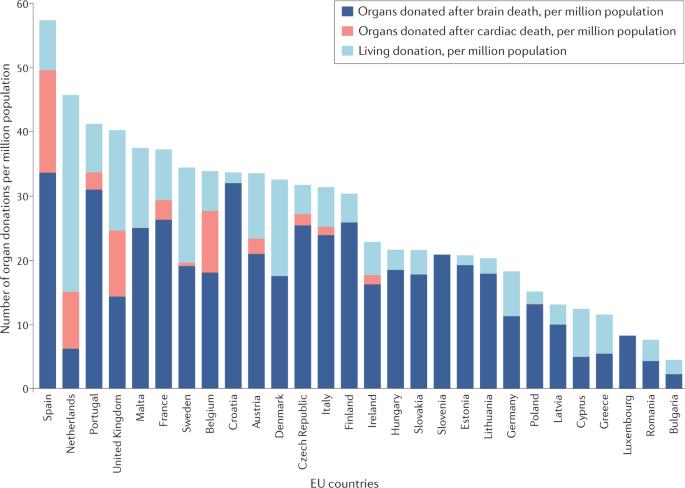
"In Germany, there are about 8,500 people waiting for an organ donation (www.Bundesärztekammer.de). On the Day of Organ Donation, the German Society for Health Economics (dggö) wants to emphasize the urgency of increasing organ donation rates to improve the lives of these individuals. This applies equally to deceased organ donation and living donation. An international comparison also shows that there is room for improvement in Germany: Both in terms of living and deceased donations per million population, Germany lags behind in the EU (see Figure 1).

Organ donation rates

...

"On Wednesday, May 31, 2023, Nobel laureate in economics and professor at Stanford University, Alvin Roth, spoke to a broad audience in the 6th virtual dggö Talk (see https://www.dggoe.de/aktuelles for details) about the possibilities of kidney exchange between compatible but previously unknown pairs and the implementation of cross-over donations and exchange chains in the US.

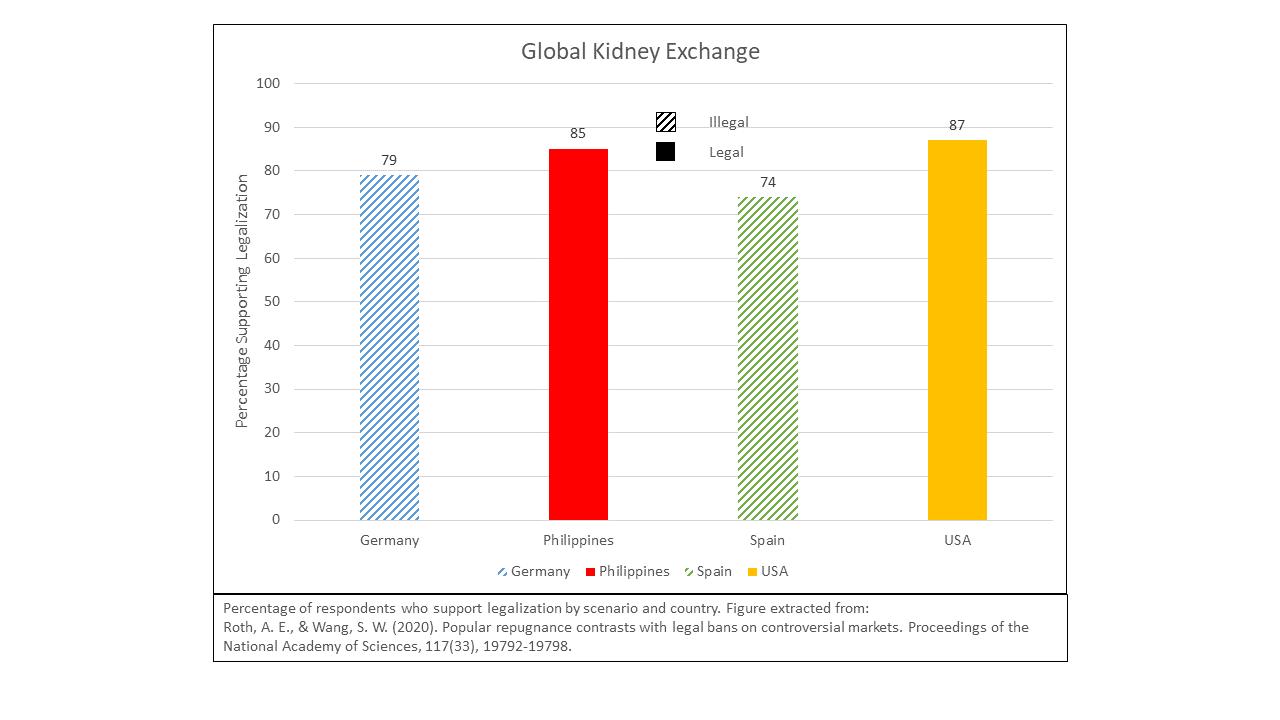
"Unlike in the US, in Germany, living donation outside of close family is only possible if a close relationship between the donor and recipient has been officially confirmed. Alvin Roth noted in the case of cross-over kidney donations, that it was very complicated for German hospitals to build up and prove a close relationship between two pairs of donors in front of a commission. This should be simplified, especially considering the overall strong support for kidney exchange among the German population. As Figure 2 from a survey conducted by Roth and Wang (2020) illustrates, 79% even agree to kidney exchange across borders and outside of family and friends, although such an exchange is currently not legally possible in Germany.

population supporting legalization of global kidney exchange


*********

Earlier: 

Tuesday, May 30, 2023


Tuesday, May 30, 2023

Kidney exchange, around the world and in Germany? German Health Economics Association (DGGÖ) webinar tomorrow

Tomorrow  I'll be giving a talk in Germany (8am California time, 17:00 in Germany), hosted by the German Health Economics Association (DGGÖ).  (Bob Slonim will be giving a talk in this series in the summer.)

My title will be Kidney Exchange to increase transplantation: around the world, and in Germany?
(One big issue is that kidney exchange isn't yet supported in Germany.) 

There is a webinar address at the above link for those who might like to listen.

Sunday, January 23, 2022

Paired kidney donation performed in Germany--a guest post by Ágnes Cseh

 Below is a post written by Ágnes Cseh, about a kidney exchange conducted legally in Germany, in October, after being identified outside of the medical establishment. (The links she supplies are all worth looking into, and Google translate works well enough.)

"The legal basis for a living organ donation in Germany is a relationship or close personal connection between donor and recipient. This well-meant rule implicitly forbids paired kidney donation, because even though recipient and donor are closely related in each of the two pairs participating in a paired donation, the physical graft a patient receives technically comes from the relative of the other recipient.

A cumbersome, but legal way around the regulation is to establish a close personal connection between all four persons involved in a paired donation. Then, an ethical committee might approve of the two transplants separately. This constellation even inspired filmmakers to shoot a fictional movie about such a venture -- the genre is supposed to be comedy. In reality, paired transplants have been performed very sporadically in the past years in Germany.

A new initiative offers a centralized platform for paired kidney donations. It is run by Susanne Reitmaier, an activist fighting for the complete legalization of paired donations and Ágnes Cseh, a researcher specialized in matching theory. They maintain a database of the voluntarily submitted medical data of incompatible recipient-donor pairs. If a possible match among these pairs is found, then the two pairs are put into contact with each other so that they can establish the personal connection required by the law.

The first match in this program was identified in July 2020. After a long journey (see the detailed report in English here and in German here), the transplants were finally performed in October 2021 in Berlin. The ethical committee first rejected their claim, but then approved of the two transplants as one paired donation, not as two separate donations. This might be a milestone in the practice and potentially lead to more standardized procedures in the future.

As time goes by and word gets around, more and more incompatible pairs enter their data into the database. A handful of already identified pairs for paired donations are currently in different stages of the medical and legal process. The first step taken by Charité Berlin encouraged other hospitals to show interest in conducting paired transplants.

Despite of this recent progress, an efficient kidney exchange program would clearly require a law change in Germany. It would be sufficient to modify the current regulation marginally, by stating that the close personal connection is meant for the pairs entering the pool together and not for the matched pairs."

*************

Here's a link to (and translation of) an op-ed I published in a German newspaper in 2016 urging that the law be amended to allow regular kidney exchange:

German organ transplant law should be amended or reinterpreted to allow kidney exchange: my op-ed in Der Tagesspiegel


And here are all my posts on kidney exchange in Germany.


Saturday, November 6, 2021

A step towards kidney exchange in Germany

 Here's an announcement of the German Medical Association's endorsement of kidney exchange, in the Deutsches Ärzteblatt.

Ärztetag spricht sich für Cross-over-Lebend­spende aus Mittwoch, 3. November 2021

Google translate: Doctors' day advocates cross-over living donation

"Berlin - The 125th German Medical Association (DÄT) has spoken out in favor of expanding the number of living organ donors. From the point of view of the medical parliament, a cross-over living donation - as it is already allowed in other countries - should also be made possible in Germany in the future.

"New legal regulations are required for this. Specifically, paragraph 8, approach 1 of the Transplantation Act (TPG) would have to be expanded, a donor-recipient pair can agree with a suitable second pair that two living organ donations are carried out crosswise (i.e. donor A / recipient B and vice versa).

"Living organ donation must be reorganized and rethought based on the current state of science," said Günther Matheis, President of the Rhineland-Palatinate Medical Association ( LÄKRLP ), at yesterday's debate.

T"he TPG currently limits the donor-recipient group for living organ donation to first- or second-degree relatives, spouses, fiancés or other persons who are obviously particularly close to the donor. The DÄT believes that a similar fate can bind people who have not been known to one another just as closely as people who are close to one another.

"In view of over 9,000 patients on the waiting lists who are urgently waiting for a life-sustaining transplant and the still far too low number of available donor organs, possible changes to the regulations on living organ donation have long been discussed in Germany."


HT: Axel Ockenfels

Earlier posts: https://marketdesigner.blogspot.com/search?q=Germany+AND+kidney&max-results=20&by-date=true

Saturday, June 5, 2021

It's time to allow kidney exchange in Germany: Axel Ockenfels in the Handelsblatt

 As I noted last month, there's a conclave on kidney transplantation at the end of June in Germany. Axel Ockenfels keeps the focus on kidney exchange, in the Handelsblatt:

Die Regeln für Organspenden in Deutschland sollten reformiert werden

Google Translate: "The rules for organ donation in Germany should be reformed.

In the Federal Republic of Germany only close relatives can be considered as living organ donors. This is unnecessarily restrictive, thinks Axel Ockenfels and promotes cross-donations."

...

"In Germany, the necessary reforms for cross-donation can be accomplished within the current value framework, which presupposes the voluntary and altruistic nature of organ donation. Organ trafficking can be reliably excluded through institutional arrangements.

In a new survey, cross-donation receives great approval, both in Germany, where it is still prohibited, and in countries where it is permitted. There is much to be said for reform."

***********

Here's a link to a (the?) survey of attitudes in Germany and elsewhere:

Thursday, July 30, 2020