What’s it like to win a Nobel Prize?
"Stanford physical chemist W.E. Moerner, who received the 2014 Nobel Prize in chemistry, and Stanford economist Guido W. Imbens, who received the 2021 Nobel Memorial Prize in economic sciences, reflect on what changed – and what didn’t – after receiving the award."
"Where were you when you learned you had won?
Imbens: I was at home and was woken up by a call from Sweden. It’s just this very strange sensation as they tell you, “Congratulations, we’ve voted to award you the prize and we’re going to have a press conference in half an hour.” So you have this half hour where there’s nothing happening, but there’s also a lot happening. It was this very delightful, exciting moment when the rest of the world didn’t know yet. Once it was announced, there were telephone calls and interviews the whole night and morning. Stanford sent over a team for video, photos, and to help with the press. Our kids made pancakes for the Stanford crew, who had the idea of having the three kids interview me, and the video is an absolute highlight from that morning.
...
How did winning the prize change your life?
Imbens: It does change the way people outside of academics treat you, and it opens up a lot of new opportunities. The Swedes are very keen on having people take on this role model part, and they took us to high schools there to talk to the students. That was a very nice and fun experience. The attention and invitations die down, but as far as I hear from other people, it doesn’t really go away. It’s a permanent change.
Within the academic world, it doesn’t change things all that much. I still write my papers, I submit my papers, I get them rejected. But it has broadened my research and changed a little bit of what I try to do. I spend more time trying to leverage what I do by working with students and other groups to do what I can to push the field forward.
...
The Nobel Prize Museum in Stockholm exhibits artifacts from
past laureates that offer a glimpse into their lives and work. What
object did you donate?
Imbens: When I did the work with Josh Angrist for which I got the prize, we were living in Harvard faculty housing and we didn’t have laundry facilities there. On Saturday mornings we would go to the local laundromat and do our laundry. That’s where we worked on the paper for which we won the prize. So I donated a bottle of laundry detergent to the museum. Recently, the museum had an advertising campaign and they had posters with “the detergent that changed the world.”
###########
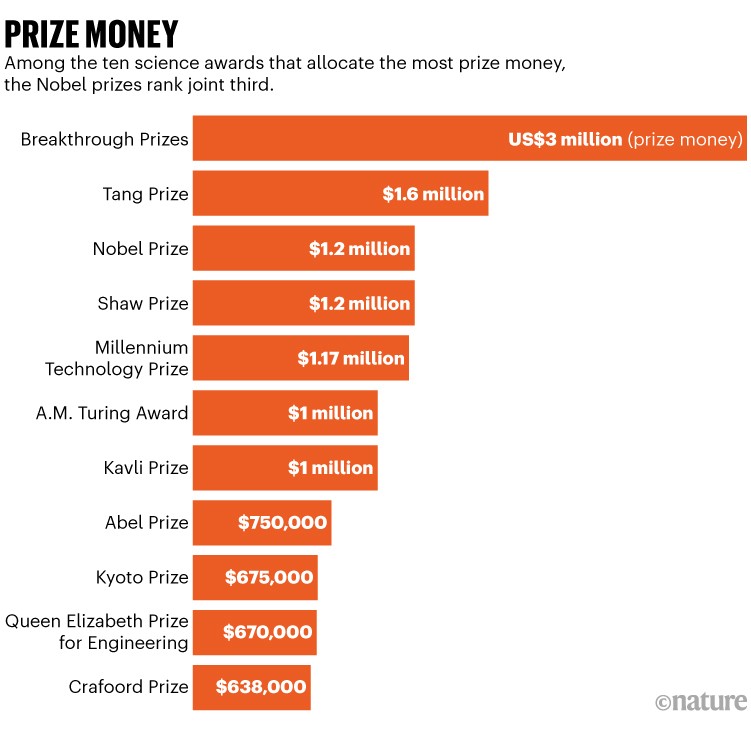
And here's an article in Nature about other science prizes, and how none of them have yet captured the world's attention the way the Nobels have:
These science prizes want to rival the Nobels: how do they compare?
By Chris Simms


 Posts
Posts


No comments:
Post a Comment