Friday, January 9, 2026

WHO Says Countries Should Be Self-Sufficient In (Unremunerated) Organs And Blood by Krawiec and Roth (now open source)

The published version of our paper is now widely available:

Kimberly D. Krawiec and Alvin E. Roth, “WHO Says Countries Should Be Self-Sufficient In (Unremunerated) Organs And Blood,” in James Stacey Taylor and Mark J. Cherry, eds., Markets in Human Organs for Transplantation: Controversy and Contention., Routledge, November 2025 (open source) https://www.taylorfrancis.com/reader/download/5885e1ba-c9af-4547-941c-821a2afaa7ee/chapter/pdf?context=ubx  

From the introduction:

[The nonremuneration principle] is only half of a WHO policy, broadly accepted around the world, that mandates both national (or sometimes only regional) self-sufficiency and an absence of remuneration for both blood products and transplantable organs (hereafter, the “twin principles”) (WHO 2009, 2023). This self-
sufficiency mandate, though less examined than the ban on  remuneration, presents a real hurdle to progress in transplantation, especially for smaller and low and middle income (LMIC) countries. 

"WHO’s insistence on self-sufficiency inhibits cooperative kidney
exchange efforts (as well as other innovations) among countries that
would benefit all concerned, especially the LMIC that the policy is purportedly designed to help. As will be discussed, the policy’s effect on blood products, especially when combined with the no remuneration rule, is even more stark – no country that fails to compensate donors is self-sufficient in plasma collection and few LMIC collect sufficient supplies of whole blood.
 

"This chapter critiques these twin principles, making several central points. In Section 2.2, we discuss the twin principles as applied to blood products, noting the particularly pernicious effects on plasma supply and availability, especially in poorer nations. In Section 2.3, we turn to transplantation, emphasizing the numerous benefits of international cooperation and cross-border transplantation – benefits that would be undermined by self-sufficiency, especially in smaller countries and those without well-developed domestic exchange programs. We illustrate this point with examples drawn from several noteworthy instances of cross-border kidney exchange.
 

"In Section 2.4, we argue that the current discourse around remuneration and organ donation is frequently overdramatic and unhelpful. Although nearly every effort to increase organ donation and transplantation presents ethical challenges, not every such effort amounts to “trafficking” or “a crime against humanity.” These labels stifle helpful deliberation, progress, and consensus. Section 2.5 concludes with recommendations for a saner approach to the scarce resources of blood products and transplantable organs – one that is focused on international cooperation, rather than self-sufficiency; evidence-based policies, rather than a reliance on decades-old
assumptions and understandings; and the use of pilot studies and trials to test the ethics, safety, and efficacy of incentives in various settings."

######

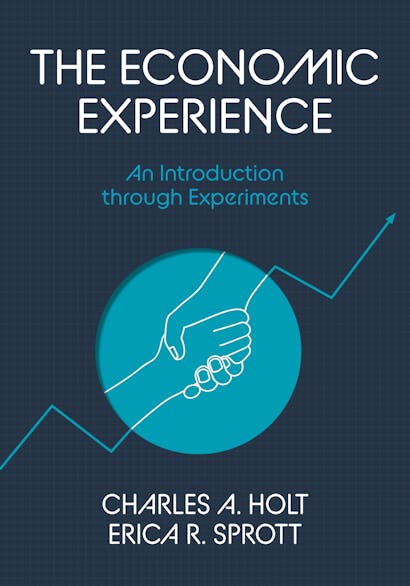
Here's the book:


Thursday, January 8, 2026

Commercial plasma collection in the US: the Jaworski report for 2025

 Peter Jaworski, a tireless student of blood donation around the world, has published a report on the plasma industry.  It's full of interesting facts, a few of which are highlighted below.

America’s Plasma Contribution to the World: 2025
Launching the Georgetown Blood and Plasma Research Group and the annual state of the U.S. plasma industry report
  by Peter Jaworski 

"I am proud to announce the official launch of the Georgetown Blood and Plasma Research Group. Housed at Georgetown University, this initiative will serve as a dedicated academic hub for research on the ethics and economics of global supply chains for not only blood plasma, but blood, bone marrow, and other medically-useful substances of human origin. Our goal is to provide data-driven insights, foster serious philosophical discussion, and be a home for interdisciplinary research.
 

"This 2025 Annual Report is the first contribution to that mission. 

...

"As of December 31, there are 1,247 plasma collection centers in the United States (including four centers in Puerto Rico).

"To put this into perspective: The U.S. is now home to more plasma centers than community colleges
(just over 1,000) or Kohl’s department stores (around 1,175). There are almost as many plasma collection centers as Denny’s restaurants (around 1,300). 

...

"we can look at the economics of independent plasma companies. Their business is to sell plasma to fractionators, not to make medicine from the plasma.

"The current selling price of a liter of plasma is around $190, give or take $10.

  • Donors receive between 30-40% of that revenue, or around $70 (an average donation is 850 - 880 mL, requiring more than one donation to equal a liter).
  • The center spends a majority of the remaining revenue on costs like employees, supplies (“softgoods”), testing, and facility overhead.
  • The plasma center will pocket around 8-12%, or around $15 in profit. 

...

"The U.S. plasma industry does more than save American lives, it provides the material for life-saving therapies for patients around the world.

"The 62.5 million liters collected in the U.S. in 2025 represents around 68% of global plasma collections for the manufacture of medicines. About 52% of those collections will end up in medicines to treat American patients, while the remaining 48% will end up treating patients in the rest of the world."

Wednesday, January 7, 2026

John Henry Kagel (1942-2026), an incomparable experimental economist

 John Kagel will be buried this morning,  January 7, at  New Tifereth Israel Cemetery in Columbus, Ohio. He passed away yesterday.  I don't know the details, but my sense is that he hadn't been well for a while. He was 83.

In his prime, John was the best experimental economist in the world.

He was also my friend, colleague, coauthor, co-editor, and all-around mensch and role model. He was full of life.  

Words fail. 

Here's his Google scholar page. 

In 2023 the journal Experimental Economics had a special issue in John's honor: here's the Introduction

May his memory be a blessing. 

Tuesday, January 6, 2026

Surrogacy stories (state regulators, take note)

 Surrogacy in the U.S. has become well established, with commercial surrogacy legal in almost all US states.  But problems sometimes occur, often of a financial nature, which suggest that in many places the regulatory oversight is still insufficient. (It's natural new regulations should be applied to newish markets as they experience fixable problems...)

Here are three recent stories that I recommend to the attention of regulators. 

WSJ:

Surrogacy Is a Multibillion-Dollar Business—but Surrogates Can Be Left With Big Debts
Booming fertility industry, a new target of private-equity and other investors, is largely unregulated, leaving the women giving birth with few financial or legal protections  By  Katherine Long


NBC

 How a top-tier surrogacy agency became an FBI target
Dozens of clients and surrogates were left panicked and in the dark after the agency’s owner seemingly disappeared. One intended parent, Mariana Klaveno, is missing $66,000.
 By Kenzi Abou-Sabe, Alexandra Chaidez, Liz Kreutz and Andrew Blankstein


NYT:

A Surrogacy Firm Told Parents-to-Be Their Money Was Safe. Suddenly, It Vanished.
Surro Connections held itself out as a reliable business. Now, clients have lost as much as tens of thousands of dollars meant to compensate women carrying their pregnancies. 
 
By Sarah Kliff

Monday, January 5, 2026

Prenups: formerly repugnant, now online

 The New Yorker writes about prenuptial agreements that can be written online, and not just for the wealthy.

Why Millennials Love Prenups
Long the province of the ultra-wealthy, prenuptial agreements are being embraced by young people—including many who don’t have all that much to divvy up.
By Jennifer Wilson

"The past few years have seen the rise of new apps such as HelloPrenup, Wenup, and Neptune that fast-track the process; the latter has couples discuss their finances with an A.I. chatbot before being matched, by algorithm, with a lawyer.

...

"There had been limited cases since the eighteenth century in which prenuptial contracts were recognized in the U.S., but these typically pertained to the handling of a spouse’s assets after death. The idea of a contract made in anticipation of divorce was considered morally repugnant. In an oft-cited case from 1940, a Michigan judge refused to uphold a prenup, emphasizing that marriage was “not merely a private contract between the parties.” You could not personalize it any more than you could traffic laws."
 

Sunday, January 4, 2026

Four international kidney exchange programs: 3 achieve substantial success

 Here's a paper reporting on the experience of four cross-border kidney exchange programs, whose experience teaches an important lesson.  In particular (see the figure below), one of  the programs is run by Spain, Italy and Portugal, whose  total population of approximately 118 million people is far larger than the combined population of the other three*, but manages to do less than 5% of the total cross-border exchanges, far fewer than any of the others.  Despite its size, the Spain-Italy-Portugal program only tries to match hard-to-match patient-donor pairs with other hard-to-match pairs, unlike the other three programs.

 International Kidney Paired Donation Programs: Evolution and Practices of 4 Large Collaborations
Klimentova, Xenia PhD1; Domínguez-Gil, Beatriz MD, PhD2; Viana, Ana PhD1,3; Manlove, David PhD4; Andersson, Tommy PhD5; Ashkenazi, Tamar RN, PhD6; Berlakovich, Gabriela MD7; Böhmig, Georg A. MD8; Burton, Jo RN, PGDip9; Coll, Elisabeth MD, PhD2; Dittmer, Ian FRACP9; Fiaschetti, Pamela MD10; Fronek, Jiri MD, PhD11; Hughes, Peter D. MBBS, PhD12,13; Ivo da Silva, Margarida MD14; Mor, Eytan MD15; Viklický, Ondřej MD, PhD16; Weinreich, Ilse Duus BMLS17; Ferrari, Paolo MD, FRACP18,19
Transplantation ():10.1097/TP.0000000000005602, December 24, 2025. | DOI: 10.1097/TP.0000000000005602


"Plain Language Summary: Kidney paired donation (KPD) programs are organized in various countries to facilitate the donation of kidneys from willing but incompatible donors by matching them with pairs in similar situations. These programs often struggle with an accumulation of difficult-to-match recipients and small pools of incompatible pairs. To address this, several international collaborations have emerged to expand the pool sizes and increase the number of transplants by “exchanging” donors’ kidneys across countries. We identified 4 established international KPD programs, each supported by protocols and agreements signed by the participating parties. Each program is presented separately, detailing its historical establishment, operational aspects, and statistics on pool characteristics and performance. Following this, we provide a comparative analysis of key aspects across the 4 programs. Each program has its unique context and specificities. Even though 3 of 4 collaborations started just before the COVID-19 pandemic, they have collectively facilitated >450 transplants. This underscores the importance of further developing these collaborations to share practices and experiences, and to facilitate more transplants, particularly for difficult-to-match recipients. Three of the 4 presented collaborations are either fully operated or led by European countries. This highlights the crucial role of ongoing international cooperation in the development of KPDs, in particular in Europe. By further promoting collaboration among countries, we can facilitate pan-European exchanges and improve access to live kidney transplants for patients in need.

 ...

"A fundamental difference between the programs is their collaboration model. STEP, ANZKX, and the Czech-Austrian-Israeli collaboration operate as “merged pool” model, where all participating pairs are combined for joint matching runs. For STEP and ANZKX, no other matching runs are conducted by partners at any level (hospital or national), whereas in the Czech-Austrian-Israeli collaboration, the Austrian and Israeli partners report performing local exchanges whenever compatible pairs are identified.
 

"In contrast, KEPSAT uses a “sequential pool” model, where national matches are attempted first, and only unmatched pairs are entered into the international pool. It is recognized that the last 2 strategy strategies may lead to a fragmented market, potentially limiting matches for highly sensitized patients, as easier-to-match pairs are removed beforehand."

 It's ironic that a program that appears to be intended primarily to help hard-to-match pairs is organized in a way that limits them in this way.

The paper concludes on an optimistic note (with which I fully agree):

"In conclusion, ongoing international cooperation is essential for advancing KPD programs globally. Expanding cross-border exchanges and improving access to kidney transplants can greatly benefit patients worldwide. Additional strategies, such as NDADs, desensitization protocols, and the inclusion of compatible pairs, can further enhance the effectiveness of both national and international programs. Oversight of these initiatives is crucial to safeguarding the welfare of both donors and recipients, as well as to maximizing the success rates of kidney transplants.
 

"Looking ahead, new initiatives, and projects, funded by international health organizations, such as the European Kidney Paired Exchange Programme project (https://www.hnbts.hu/euro-kep/project), funded by EU4Health and starting in November 2024, aim to expand global collaboration among KPD programs, building on and strengthening existing partnerships. This increased international cooperation is expected to create additional opportunities for patients in need of kidney transplants worldwide, making life-saving transplants accessible to more individuals regardless of their geographic location."

 ########

Earlier: Portuguese transplant docs noted the problem and argued for more global kidney exchange:

Tuesday, March 12, 2024 Kidney exchange between Portugal and Spain, and prospects for global kidney exchange

 ######### 

*Notes on population:

Spain: 49 million; Italy 59 million; Portugal 10 million ; KEPSAT total pop =  approx 118 million

 Australia 28 million; NZ 5 million: ANZKX total pop approx 33 million

Austria: 9 million, Czech Republic  11 million, Israel 10 million: AT-CZ-IL total 30 million

Sweden: 11 million; Norway:  6 million; Denmark 6 million; Finland  6 million: STEP total approx 29 mil

Saturday, January 3, 2026

Should more professional societies condemn some of their members?

 Robert Reich posed the question on his substack:

Ethics Shmethics
Why are America’s most powerful professional associations silent in the face of professional disgraces in the Trump regime?

Robert Reich 

"Hell, if the American Economic Association can permanently ban Harvard economist (and former treasury secretary) Larry Summers for conduct “fundamentally inconsistent with its standards of professional integrity” (Summers had repeatedly asked Jeffrey Epstein for advice on Summers’s pursuit of a younger economist), surely the American Bar Association should ban Lindsey Halligan, and the American Medical Association, Vinay Prasad.

"Where are the American Bar Association and the American Medical Association during Trump’s unscrupulous reign?

Friday, January 2, 2026

UNOS continues to run the deceased-donor organ allocation system

 The U.S. Health Resources & Services Administration (HRSA) has published a document outlining its progress in modernizing the Organ Procurement and Transplant Network (OPTN) as required by recent legislation.  The idea was to make the system less dependent on the United Network for Organ Sharing (UNOS), which had been the single federal contractor running the OPTN since its inception.  For the time being, at least, it appears that UNOS will continue to run the organ allocation system.

 Modernizing the Nation’s Organ Donation, Procurement, and Transplantation System

"For more than 35 years, the OPTN was operated through a single national contract.  

"While this structure supported growth in organ donation, procurement and transplantation, the increasing complexity of modern medicine and the demands of real-time technology, safety, data, and public accountability required a new approach.  

"The bipartisan 2023 Securing the U.S. Organ Procurement and Transplant Network Act gave a clear mandate: bring the OPTN into the modern era of governance, technology, and healthcare delivery". 


Thursday, January 1, 2026

Happier new year!

 Things I'm looking forward to in 2026 (not in chronological order)

U.S. midterm elections (forthcoming Nov 3, but you can start contributing/worrying now).

Publication of my new book, Moral Economics (forthcoming May 12, but you can preorder now:)

Grandchildren growing exuberantly older.

Their grandparents growing gently older (while their parents remain unchanged amidst the storm).