I post market design related news and items about repugnant markets. See my Stanford profile. I have a 2026 book : Moral Economics The subtitle is "From Prostitution to Organ Sales, What Controversial Transactions Reveal About How Markets Work."
"Would Jesus like Waymo? The Rev. A. Michael Charles Durant doesn’t think so.
“Jesus either walked or rode a beast,” Durant said in an interview at the Tenth Street Baptist Church in Washington, where he serves as pastor. “He would be opposed to technology that was opposed to people, and I believe that this is opposed to people.”
...
"In recent months, Durant has joined local Baptist pastors and other top leaders in the National Baptist Convention — which bills itself as the largest Black religious organization in the United States — in opposing autonomous vehicles, including in the District, where the D.C. Council is weighing a bill that would legalize their commercial operation.
...
“God created us to be interdependent,” Durant said from his green-carpeted office. “The greatest danger is not that humans will be not needed, but that we create an environment where humans don’t need each other.”
"Their opposition to autonomous vehicles comes as religious communities grapple with artificial intelligence and what the technology means for the human condition and all its messy beauty.
“Automation can dehumanize humanity. The Book of Genesis declares that God created man, and then he breathed into man’s nostrils, and man became a living soul,” said C.H. Johnson, the pastor at Christ Missionary Baptist Church in Maryland. “If we’re not careful, technology can rob us of our humanity, can rob God’s creation of our humanity.”
...
"In his first encyclical, published in May, Pope Leo XIV elevates the ethics of AI to a religious imperative. In “Magnifica Humanitas,” Leo argues that the unconstrained proliferation of AI may threaten humanity and foster inequity.
...
"Not all religious leaders oppose robotaxis. At an April event hosted by the Innovation Majority Institute think tank, the Rev. Thomas Bowen, from Shiloh Baptist Church in D.C., recalled when taxis drove right by him as a Black man in the District and New York years ago. He said he was excited when Uber and Lyft came on the scene but that he has faced similar issues with those services.
“Why should I have to put on a suit to get a taxi?” said Bowen, who is the general secretary of the Washington-based Progressive National Baptist Convention.
...
"For the National Baptist Convention’s annual gathering this week in Florida, Durant, chairman of the group’s board, prepared a video to screen in which he called on his fellow pastors to oppose autonomous vehicles in their communities around the U.S."
"Since the legalization of same-sex marriage, male couples have become the big growth market for American surrogacy, but the practice is booming among aspiring parents—married or single, straight or gay—who can afford the cost of hiring someone else to carry their child. In 2024, 11,821 embryos were transferred to surrogates in American clinics associated with the Society for Assisted Reproductive Technology, up from 8,461 three years earlier, and the United Nations estimates that the global worth of the industry is almost $15 billion. Most surrogacy in America today is commercial, meaning that the carrier is paid, and gestational, meaning that the carrier has no genetic relationship to the child.
...
" many liberal Americans are surprised to discover that their country is an outlier in its enthusiasm for commercial surrogacy. In Britain, where I live, a ban on the practice enjoys substantial support among feminists, who worry about the power differential between paid surrogates and wealthy would-be parents. (Altruistic surrogacy, in which the surrogate carries a baby solely out of generosity, is less controversial and is permitted.) A recent UN report went even further, declaring that commercial surrogacy “constitutes the sale of children, which is a crime,” and that “surrogacy arrangements can amount to or resemble slavery.”
...
"Because so much can go wrong, every country in the European Union has banned commercial surrogacy. France’s centrist liberal president, Emmanuel Macron, has described the practice as “not compatible with the dignity of women.” Italy’s right-wing populist leader, Giorgia Meloni, has enacted one of the strictest anti-surrogacy frameworks in the world. Not only is domestic surrogacy banned, but any Italian citizen who brings home a baby born to an overseas surrogate risks jail and a fine of up to 1 million euros. Many other developed countries have either tightly restricted surrogacy or chosen, as Britain and Canada have, to allow only the altruistic version. Israel allows surrogacy but imposes a raft of conditions: The commissioning parents must not have more than two children already, must not have serious criminal convictions, and must be of the same religion as the surrogate.
"In general, Europeans think of Americans’ enthusiasm for paid surrogacy the way we regard their fondness for guns and capital punishment: inexplicable. The piquant difference, however, is that surrogacy is a cause of the American left rather than the right. Red states tend to have tighter limits on surrogacy. Louisiana, for example, restricts surrogacy to married heterosexual couples using their own sperm and eggs. By contrast, when New York legalized commercial surrogacy in 2020, LGBTQ activists hailed it as a triumph for “fertility equality.”
The debate cuts across political traditions and defies easy categorization. When surrogacy goes well, the result is a happy family that would not otherwise have existed. When it goes wrong, however, it can do so in unpredictable and emotionally crushing ways. At its core, the ethical question is this: How much physical and emotional risk should individuals be allowed to take on in the name of a commercial transaction?
...
"America also stands virtually alone as a rich country that permits incoming surrogacy tourism from elsewhere. Many of these international intended parents are from China, where surrogacy is banned and where, until recently, family size was limited by the one-child policy. These customers have exacting standards.
...
"Look abroad, though, and it’s a different story. Some agencies offer “guaranteed baby” packages for as little as $50,000. Surrogacy destinations pop up anywhere the local laws are lax, such as Northern Cyprus, a territory that exists in a legal limbo and is recognized only by Turkey. (The problem is that babies born there can end up stateless.) For parents from Russia, nearby Georgia is a similar no-questions-asked destination.
"India used to be the most favored low-cost destination, but in 2015, Prime Minister Narendra Modi, citing fears of exploitation, banned commercial surrogacy for foreigners. Ukraine’s appeal as a surrogacy destination has diminished since Russia’s invasion in 2022, although the leading agency there, BioTexCom, told me that the company is still handing off one baby born via surrogacy every day on average, at a cost of about $60,000. A representative of the agency initially told me that it was planning to open a clinic in Kazakhstan, to cater to the growing Asian market. In July, however, that country abruptly banned foreign surrogacy amid concerns about exploitation. "
Human reproduction gives rise to lots of different controversies, with the partisans not always aligned across issues the ways you might suppose. Here are two articles responding to a recent controversy in the news, one about a proposed ban on surrogacy in Texas, and one proposing more comprehensive regulation as a way of supporting access to surrogacy in the face of opposition.
Here's an article from the 19th News (named after the 19th Amendment to the US constitution, which gave women the right to vote), about how abortion opponents in Texas are hoping to also outlaw surrogacy there.
"Anti-abortion activists and lawmakers in Texas are pressing to limit or even outlaw surrogacy, a new step toward restricting major forms of infertility treatment.
"Surrogacy, though far from common, has entered the national spotlight this summer, the result of an explosive case in which an Alaska woman named McKenna West — who had been hired to carry a pregnancy for a California-based couple — traveled to Texas to seek medical care after refusing to have an abortion. She gave birth in Dallas last week.
...
"the case has become a lightning rod for national anti-abortion activists, including Texas Attorney General Ken Paxton, who intervened in the case on behalf of West to argue that the child must receive life-sustaining treatment in Texas, even though court records indicate his parents sought for him to receive care in California. (Paxton, who has frequently allied himself with social conservatives, is in a competitive race to represent Texas in the U.S. Senate.) West has secured representation from the Alliance Defending Freedom, a prominent anti-abortion legal group.
Abortion opponents have argued that the case underscores a need to outlaw surrogacy entirely.
...
"Kristan Hawkins, the president of the national anti-abortion group Students for Life of America, argued on the social media platform X that surrogacy “is human trafficking with better marketing.”
...
“It’s reasonable to expect some legislation will move at least out of the Senate on this topic,” John Seago, the head of Texas Right to Life, an anti-abortion organization that opposes surrogacy in all forms, told The 19th. Seago’s organization also opposes the freezing of and destruction of embryos that are not used for pregnancy, a standard component of IVF.
...
"The Texas Public Policy Foundation, an influential right-wing think tank in the state, has also argued in favor of banning surrogacy. And the state Republican Party adopted a platform this summer saying it would support outlawing any “commercialization of human reproduction in Texas.”
######
And here's a call for more (and more national) regulation of surrogacy, in the WSJ:
Surrogacy Is Getting Weird Dozens of American babies commissioned by Chinese billionaires, felony charges, embryo mix-ups and more. By Emma Camp
Protections intended to thwart organ trafficking may inadvertently also "protect" legitimate patients and donors from receiving life-saving medical care.
"Globally, unrelated and nondirected living kidney donations have become important mechanisms for expanding transplant access.1 Structured programs in the United States and Spain support unrelated donation through rigorous psychological evaluation, independent donor advocacy, and transparent oversight systems.3,4 For example, nondirected donors serve as critical initiators of kidney paired donation chains, substantially amplifying transplant opportunities beyond a single donor-recipient pair.3-5 However, a recent regulatory shift in Mexico threatens to effectively preclude these pathways in practice, leaving living kidney donors (including living liver donors) with genuine altruistic intent declined and vulnerable patients losing critical access to life-saving transplants.
"WHEN ALTRUISM REQUIRES PROOF "On August 4, 2023, the National Transplant Center and the Federal Commission for Protection against Health Risks issued a High Health Directive (Alta Directiva Sanitaria), establishing mandatory standardized protocols for Mexican transplant centers.6 This directive emerged in response to well-documented regional concerns regarding organ trafficking, transplant tourism, regulatory gaps, and the “legal simulation” of donor-recipient relationships. These concerns are entirely legitimate and align with the principles articulated by the Declaration of Istanbul on Organ Trafficking and Transplant Tourism.7
...
"Although the directive does not explicitly outlaw nondirected donation, its evidentiary requirements effectively preclude it at the committee level. As a result, viable donor candidates may be categorically declined for regulatory rather than medical reasons.
...
"Although data isolating the exact proportion of donor evaluations declined solely for documentation rather than medical or psychosocial factors are currently unavailable, Mexican National Registry data highlight a concerning sign.9 During the 12 mo preceding the directive’s publication, 438 unrelated living donor kidney transplants were performed nationally, compared with 354 during the subsequent 12 mo—a 19% decline. "
...
"This directive severely limits Mexico’s potential to establish domestic paired-exchange networks or participate in cross-border paired kidney exchanges. The Global Kidney Exchange model, for instance, incorporates pairs from middle-income countries into US-initiated chains to overcome financial and immunological barriers.10 This approach has been accompanied by ethical discussion in the transplant literature, particularly regarding concerns about potential inducements and unintended exploitation.10"
...
"Ultimately, the critical question is not whether expanding living kidney donation should be permitted, but whether a transplant system can be considered ethically complete if a viable living kidney donor candidate is categorically declined for regulatory rather than medical reasons."
Here's a review paper concentrating primarily on transplantation of organs (primarily kidneys) from deceased donors. It closes with a set of open research questions.
Organ Allocation and Transplantation by Itai Ashlagi and Alvin E. Roth, Annual Review of Economics, Volume 18, 2026, Vol. 18:613-645, August 2026, https://doi.org/10.1146/annurev-economics-092425-123425
ABSTRACT: There is a large shortage of solid organs for transplants. This survey reviews the allocation of organs (particularly kidneys), with an emphasis on how deceased donor organs are obtained and allocated in the United States but with pointers to related issues involving living donors and transplantation around the world. We review some of the key institutional details and theoretical and empirical studies and describe some open questions that we hope will continue to attract attention from researchers interested in the economic and operational aspects of organ allocation.
1. INTRODUCTION "Since at least the turn of the century, organ transplants have attracted considerable interest from economists. This is due both to their importance in modern medicine and to the fact that organ transplantation deals directly with some of the most basic questions of economics—namely, how to efficiently allocate scarce resources and how to make them less scarce. "
...
OPEN QUESTIONS AND RESEARCH DIRECTIONS
This section highlights research opportunities, some of which have been raised above.
1. Can we design allocation rules free of justified envy that place hard-to-match organs quickly enough so that they remain transplantable? A large number of recovered organs that might be transplanted are discarded. How can we increase utilization of marginal-quality organs and get them accepted after fewer offers and less CIT? How can we do this in a transparent and equitable way? How can we use the information about organ quality that arrives during the offering process? 91 How can we use offer refusals in real time? How should we design allocation rules in the presence of social learning and potential information cascades (Zhang 2010, Doval et al. 2024)? How should the variability in centers’ willingness to accept marginal organs be accounted for? 2. How to design priorities to balance efficiency and equity? How can priorities be designed to account for both longevity and urgency (Zhang et al. 2024, Lazenby et al. 2025)? How can priorities depend on patients’ treatments, taking into account that treatment decisions may in turn depend on priorities (Sweat 2023)? Countries use different priority rules, and there is a need to compare these to better understand trade-offs between these rules. The OPTN is seeking to implement continuous distribution allocation policies for hearts and kidneys, which will assign priority points smoothly across patient and match features. There are not yet studies that offer guidance to the resulting (in)efficiencies. 92 3. How should organ quality be measured and reported? The KDPI is currently used for both acceptance decisions by surgeons and prioritization in the allocation system. As supply changes over time, percentiles correspond to different qualities. For example, a KDPI of 85% (which is the threshold for requiring patient consent to receive an offer) in 2018 corresponds to (i.e., has the same underlying nonnormalized KDRI risk measure as) a KDPI of 75% in 2024 due to the recovery of more organs and therefore the higher availability of organs of marginal quality. Would the use of the nonnormalized KDRI substantially change behavior and outcomes? 4. How should surgeons’ and patients’ preferences be elicited? The OPTN allows transplant centers to express preferences via filters that screen organ offers. Despite this, many organs are still declined hundreds and even thousands of times (Agarwal et al. 2021, Guan et al. 2025). How can we better design these filters? Can we use AI to help recommend filters or to predict organ refusals in real time? More broadly, how should waitlist mechanisms be designed given incomplete patient and center preferences? 5. How should transplant centers’ performance be measured? Should transplant centers be incentivized to accept marginal organs, for example, for patients facing many years of dialysis? How should we regulate transplant centers? Are new incentive schemes useful in increasing utilization? For example, how will the acceptance rate and pre-transplant mortality rate metrics impact centers’ behavior? The CMS has also launched the Increasing Organ Transplant Access model, 93 using a long-term field experiment that offers monetary incentives based on the number of transplants performed, graft survival, and percentage of accepted offers (Chan & Roth 2026.) How should we incorporate the huge role that transplant centers play in acceptance/rejection decisions when studying organ allocation mechanisms (Chan & Roth 2024, Ashlagi et al. 2025a)? There is a need for research on designing centers’ performance measures that include outcomes for patients on the waiting list. 6. How should OPO performance be measured? OPOs vary in performance in terms of organ recovery and utilization, and incentive schemes remain controversial. How effective is the new tier system for monitoring OPOs based on donation and age-adjusted transplant rates? How should OPOs be incentivized to improve performance and transparency and to coordinate with transplant centers (see Chan & Roth 2024, Bae et al. 2026, Skowronski et al. 2026)? 7. What should we incorporate in transplant centers’ preferences? Most theoretical models treat patients as the decision makers who accept or reject organ offers. In practice, however, transplant centers exercise substantial discretion over acceptance decisions, listing practices, and setting filters. How do equilibrium outcomes reflect centers’ preferences? There is a need for empirical and theoretical studies of how centers’ characteristics and incentives shape outcomes. 8. Can we design simulation tools that account for equilibrium behavior? Simulations and historical data have been instrumental to the study and design of allocation policies. Existing simulations apply myopic acceptance models that are invariant to the allocation rules. There is a need for simple modern simulation tools that account for the incentives of patients and centers. 94 It would be interesting to create tools that generate not only better equilibrium predictions but also short-term equilibration effects. 95 9. What kinds of experiments should the OPTN conduct? The OPTN conducts very few controlled experiments, despite facing ongoing allocation policy decisions. While simulation tools are useful to inform policy, field experiments offer another approach. Experiments can generate useful data to evaluate different approaches (e.g., for expediting placements). The size and heterogeneity of the United States present opportunities to test different approaches; but they also raise questions about whether different approaches would work differently in different regions, and about how to overcome the reluctance to conduct experiments. 10. How can countries with low transplant rates be helped? Many countries have low living and/or deceased donation rates. Understanding the underlying barriers (organization structure, population preferences, etc.) would be fruitful in making progress toward increasing transplant rates (see, e.g., Okubo et al. 2026). 11. What can be done to increase incentives for organ donation in ways that attract social support? What accounts for the widespread reluctance to increase organ donation by compensating donors? How can economists better explain the value of incentives in addressing scarcity and gather persuasive evidence to engage in a productive dialog with those who fear that this will increase rather than decrease black markets, or who feel there are fundamental religious or ethical objections to compensating organ donation? [For some thoughts on this, readers are referred to Roth (2026b)].
It turns out that Cornell had no rule preventing students from skinning bears in a communal dormitory kitchen. But now they do. (A lot of regulation works like that... keep an eye on AI...)
"Republicans in Congress have quietly blocked a proposal to expand military health coverage of in vitro fertilization treatment for service members and their families, heeding the calls of anti-abortion groups to limit access to a fertility option that President Trump vowed to make more widely available.
"The move is a shift from previous years, when there was enough bipartisan support for the idea of broadening the availability of I.V.F. for members of the military that it was included in the annual defense bill that passed both the House and Senate. Speaker Mike Johnson later stripped it out in final negotiations before the legislation became law, but the provision’s initial inclusion indicated that the vast majority of Republicans had been willing to accept it.
"This year, Republican senators banded together to bar the measure from being added to the defense bill in the first place. It illustrated how, while many G.O.P. members of Congress have said they are in favor of I.V.F. access, they have managed behind the scenes to thwart legislative efforts to ensure it."
Here's an editorial arguing that as the recently legalized kidney exchange in Germany is implemented, attention should be paid to the controversies that have been encountered and addressed elsewhere, including those about non-directed donors, and the governance and transparency of transplant decisions.
"In 1986 F.T. Rapaport outlined a core idea behind kidney paired exchange: that a registry can coordinate incompatible donor-recipient pairs so that incompatibility becomes a solvable matching problem rather than a barrier to transplantation1. Today, forty years later, Germany is on the verge of making that coordination legally possible. In October 2025, the German federal cabinet approved a draft amendment to the Transplantation Act that would enable kidney paired exchange and non-directed anonymous living kidney donation, while strengthening donor protection and establishing the legal basis for a national program with a central matching function. If operationalized, Germany would move from a restrictive framework for living kidney donation, historically tied to a strict requirement of a close relationship between donor and recipient, toward a governance model that supports kidney exchange and donor chains at scale.
"This moment is internationally relevant because Germany now faces the same policy questions that have shaped kidney paired exchange implementation elsewhere. The impending change creates an opportunity to learn from other countries on key issues, including who should govern a registry, which safeguards ensure legitimacy, how to balance privacy and transparency regarding organ quality, and how to promote access without risking commercialization. Rather than being mere technical considerations, these questions are constitutive for the legitimacy and public trust required for kidney paired exchange to function as a public good.
"Early debates about living kidney donation repeatedly straddled suspicion and admiration. In the 1970s, living non-related and particularly non-directed donors were sometimes portrayed in medical discourse as psychologically unstable or even pathological, raising concerns about whether such donors should be permitted to proceed2,3.
...
" History offers two more lessons: (i) Donor protection and respecting donor agency are not mutually exclusive: psychosocial assessment, independent counseling, and rigorous consent procedures can reduce coercion and misunderstanding while still recognizing donors as autonomous agents making a deliberate moral choice. (ii) Public legitimacy is fragile and easily lost: If suspicion dominates, programs risk being viewed as illegitimate or unfair. If, on the other hand, enthusiasm and implementation moves faster than safeguards, programs risk scandal, backlash and, ultimately, lose public support. Germany’s 2012 transplant scandal, involving the manipulation of patient data to improve waiting-list positions, offers a cautionary example of how deficits in transparency and accountability can erode trust in transplantation more broadly and disrupt an entire program4."
##########
There are many reviews of the international experience. Below is a recent one from physicians at Erasmus University in the Netherlands:
"Living donor kidney transplantation (LDKT) offers superior graft survival and cost-effectiveness compared with deceased donor transplantation (DDKT), yet the availability of immunologically compatible living donors limits its reach. Kidney exchange programs (KEPs) can overcome these barriers by matching incompatible pairs through paired exchanges, domino chains, and nonsimultaneous extended altruistic donor (NEAD) chains. This review summarizes the evolution and current landscape of national and international KEPs. We examine operational challenges (cold ischemia time [CIT], logistical coordination, algorithmic fairness, and ethical and regulatory heterogeneity) and explore innovations in matching algorithms, international kidney exchange debates, and machine perfusion technologies. We conclude by proposing strategic priorities to optimize capacity, equity, and outcomes in future kidney exchange efforts. "
Here's a story in the NYT, covering an uproar that's been in the German newspapers for a week or so now. A leader in the German governing coalition announced on social media that he and his husband had welcomed a new baby into their family, born via surrogacy in the U.S. But surrogacy in Germany is not legal, so this was a "for me but not for thee" hypocrisy moment there. (In general it's hard to ban effectively something that is legal in other jurisdictions: someone could write a book about that.)
"Mr. Spahn, 46, the leader of the party in Parliament, is a former federal health minister who has forged deep ties to the Republican Party under President Trump, including attending the 2024 Republican National Convention.
...
"Mr. Spahn stirred national outcry this week when he announced, on social media and in the tabloid paper Bild, that he and his husband, Daniel Funke, had become fathers to a son via a surrogate in the United States.
"Surrogacy is prohibited under German law. Mr. Spahn had defended that ban throughout his career, including as health minister.
"The birth announcement brought immediate cries of hypocrisy from across the political spectrum, including in Mr. Spahn’s own party. Some regional leaders of the Christian Democrats demanded his ouster. News outlets teemed with outrage.
...
"Mr. Spahn defended himself, essentially, on a technicality: German law does not punish parents who use surrogates abroad. He told a podcast interviewer he had struggled with the decision but chose to prioritize his family."
########
Here's a related story: German couples in need of surrogacy are not the only ones, and the US is not the only destination.
"The rise in the use of surrogates abroad is leaving more babies at risk of becoming stateless, experts have said, amid growing calls for urgent global regulation of the practice.
"The warning follows the suspension of a 15-year effort by The Hague Conference on Private International Law (HCCH) to establish a global surrogacy convention, which was paused due to divisions among member states.
...
"UK surrogacy agencies argue that an outdated legal framework at home is pushing couples to seek surrogates abroad, where regulations to protect surrogates from exploitation can be less robust or do not exist at all. Anti-surrogacy campaigners say the practice is fundamentally abusive in all cases and are pushing for a global ban.
"Prof Michael Hellner, who chaired the HCCH working group, said hugely differing opinions on the ethics of surrogacy between the member states involved meant the project to create a global framework on legal parentage in surrogacy cases had proved impossible.
...
"Experts said statelessness could happen in cases where a country does not automatically grant nationality to a child born there, and where surrogacy is not legally recognised in either the country of birth or the child’s final destination.
"Hellner said the project had proved difficult when some countries were “violently opposed to anything that could be seen as legitimising surrogacy, which they think is a violation of human rights and dignity”.
...
"Most of these children were born abroad, mostly in the US, Ukraine, Nigeria, Georgia, Colombia and Mexico. British people using surrogates abroad to have babies are forced to apply to the UK family courts for a parental order to become the legal parents of their child and, in some cases, also need to apply for British citizenship for the child."
"With this bill, we are facing death head-on," declared French President Emmanuel Macron on March 10, 2024. More than two years later, the Assemblée Nationale cast a definitive vote on Wednesday, July 15, on the bill establishing a right to assisted dying. With the adoption of the law, France joins 11 other countries where people with severe illnesses can obtain a lethal substance on medical prescription, based on criteria varying from one legal system to another.
"The "French end-of-life model," a phrase Macron used in 2023, originated from the president's own initiative. However, its design resulted solely from the work of MPs after four rounds of readings, the Sénat having rejected the bill three times. Supporters have praised the bill as "balanced" and "secure," offering safeguards to ensure that recourse to assisted dying remains "an exception." Its critics, however, argue that the "safeguards" provided are not sufficient for preventing "abuse."
##########
The Catholic Courier summarizes some of the opposition to the bill:
"PARIS (OSV News) — France’s bishops are strongly criticizing a “radical choice” made by French lawmakers to legalize “assisted dying.”
"A watershed vote by the National Assembly July 15 legalized assisted dying, including euthanasia and assisted suicide in certain cases.
"Cardinal Jean-Marc Aveline of Marseille and president of the bishops’ conference, lamented that “members of parliament have enshrined in French law the possibility of causing death.”
...
"For the bishops, one of the greatest dangers of the law stems from the fact that the principle that death can constitute a medical response to suffering has now become part of the legal heritage of the country. The choice to die can then be asserted as a right that could be extended to others.
“Experience in other countries shows that the criteria for access to assisted dying always tend to broaden, to the detriment of palliative care,” they noted.
"Meanwhile, “the effects of such legislation are not yet fully measured, but they are already taking shape,” the bishops warned. “Our relationship to vulnerability, old age, disability, and illness will change,” they added.
“The poorest are likely to be the first to pay the price: not wanting to be a burden on their children or grandchildren, elderly people in precarious situations may feel pressured to die,” the prelates warned.
"Catholic care facilities could face legal action for refusing euthanasia, assisted suicide on their premises For the bishops today, the most immediate and concrete concern is that, if the law goes into effect, care facilities — foremost among them Catholic institutions — could face legal action if they refuse to allow euthanasia or assisted suicide to take place on their premises. As it stands, the law will require the head of the facility or department to authorize outside practitioners to perform the lethal procedure.
"The bishops have therefore announced that they will “closely monitor the referrals to the Constitutional Council” that were announced prior to the vote.
...
"On July 14, while France was celebrating Bastille Day — the country’s biggest national holiday — Prime Minister Sébastien Lecornu surprised many by announcing that he would appeal to the Constitutional Council to submit the text of this law — to which he is personally opposed — for review. He justified this final recourse by citing the lack of agreement between the two chambers, the National Assembly and the Senate. A few days earlier, Senate President Gérard Larcher had announced his intention to take the same step.
"The Constitutional Council may approve the entire bill, strike down certain provisions, or issue interpretive reservations before the law is promulgated by Macron. The referral requested by the prime minister will focus in particular on the absence of a conscience clause allowing healthcare facilities — such as the Catholic nursing homes run by the Little Sisters of the Poor — to be legally authorized to refuse to provide such “assisted dying” services on their premises.
"Pending the outcome of the appeal, the bishops of France have reiterated their call to Catholics in France to “bear witness that another path is possible — one of faithful presence and attentive care that alleviates physical or psychological suffering, without ever abandoning anyone.”
"Speaker A: You have a pretty long chapter on same sex marriage in the book where you go through the sort of legislative history both in various states and the country. And after, like reading so much of the history of this, I would say, like, this is so Slate, I’m going to just come out and say that 95% plus of our listeners are perfectly fine with same sex marriage. It seems perfectly normal to us. It’s kind of hard for us to imagine why it was that we ever had a problem with it in the first place. But you went back, you Were looking at a bunch of contemporaneous literature. Do you have a sympathy for the anti side of the debate? Do you see where they were coming from?
Speaker B: Well, I think I see where they were coming from. I can do that without having necessarily a lot of sympathy for them. But they were tooled up quite early on. So for a long time in the United States, there were laws against sex that sometimes had the names unnatural acts in them. And in California, and I’m going to fudge the dates now, but sometime in the 1970s, long before there was any same sex marriage, they decided that laws against same sex sex violated the equal rights provisions of the California constitution. And so they changed them. They made those laws unconstitutional. And almost immediately after, like two years after, in the 1970s, the California legislature passed a law against same sex marriage. That is, the people who were looking into the far future and thinking that they really hated same sex marriage had felt protected by the laws against consensual sex between adults of, you know, say, sodomy. And all of a sudden they felt unprotected. So long before any same sex marriage became legal in the United States, there started to be laws against it.
Speaker A: That’s kind of wild. You’re just, you’re sort of like cutting it off at the past. It’s not legal anywhere. No one’s even trying to make it legal. We’re going to make it illegal just in case. And we saw that at the federal level as well.
Speaker B: Absolutely. When the state of Massachusetts finally, when its courts finally legalized same sex marriage in Massachusetts, the federal government passed a law called the defense of marriage act, which was intended to defend marriage against same sex marriage. So that’s a really unusual state of affairs. And again, when I say that’s a repugnant transaction, One of the things I emphasize in the book is I don’t mean that I disapprove of it or that you should, but that some people do. And the long political fight makes it clear that the people who objected to it objected very strongly.
Speaker A: I mean, I was around for a lot of these court cases and legislative moves, but even at the time, I didn’t entirely understand where the opponents were coming from. So is it mostly like a biblical thing?
Speaker B: So I think it’s partly a religious thing and some of that is biblical. There were some passages in Hebrew Bible even that could be interpreted as disapproving of same sex relations. And when you look back at the long history of humanity, there were lots of taboos about sex. And I think one way to think of them is, for most of human history, sex between a man and a woman often resulted in pregnancy, and pregnancy often resulted in a live birth in a baby. And society has and had some interest in making sure that babies were taken care of. And one way to do that is to say babies should be born into families, and therefore before people have sex, they should be married to each other. And so there are a whole set of taboos that might be thought of as society’s way of trying to take care of babies. But of course, technology changes. And contraception, reliable contraception, means that it’s possible to have sex without too much risk of a baby. In vitro fertilization, IVF means that it’s possible to have babies without sex. So all of a sudden, some of those barriers that may have seem essential to the orderly running of society didn’t seem so essential. And I think that opened up room for us to think more about who could have sex with whom and who could form a family with whom.
"In the decade since Canada legalized euthanasia, known there as medical assistance in dying, or MAID, its physician-assisted death regime has developed into one of the most permissive in the world. Between 2016 and 2024, 76,475 Canadians received lethal doses from doctors or nurse practitioners. The 16,499 cases in 2024 accounted for 1 out of 20 deaths in Canada. In some regions of Quebec, the rate is 13 out of 100.
"Now, however, Canada might finally be maxing out on MAID. On June 17, a special parliamentarycommittee recommendedthat the government “indefinitely exclude” patients whose only medical condition is a psychiatric one such as depression or schizophrenia. Pro-euthanasia activists had urged that MAID eligibility be expanded to include them, but “safe and equitable implementation” of MAID in such cases is simply not possible, the committee said.
...
"The committee also took the testimony of doctors from the Netherlands, one of two countries (Belgium is the other) where psychiatric euthanasia has long been allowed as part of a broader MAID regime — and where it has recently gone from rare exception to troublingly frequent occurrence. Nearly 850 people have received lethal injections for psychiatric suffering there since 2020, including teenagers as young as 16.
In fact, at roughly the same time as the Canadian commission issued its report, the Dutch themselves were tapping the brakes on psychiatric euthanasia. The Netherlands’ main professional organization for psychiatrists has issued new guidelines requiring stricter prior scrutiny for euthanasia requests."
"Ultimately, the committee makes the following recommendation: Recommendation 1 That the Government of Canada amend the Criminal Code to indefinitely exclude persons whose sole underlying medical condition is a mental illness from eligibility for medical assistance in dying. "
In an interview with Benzinga after the release of his new book Moral Economics, Stanford economist Alvin Roth said the strongest use-case for the technology may not be public platforms like Polymarket or Kalshi, but inside corporations. He described a scenario where engineers building a product know about delays that senior executives, working from optimistic reports, do not. A prediction market inside the company can get the information to the top faster.
...
"He said election markets are unlikely to face serious insider-trading risk, but neither are they guaranteed to beat good polling. “I don’t know that prediction markets do a lot better on elections than good polls do,” he said.
"He flagged a different concern: manipulation. State actors or well-funded propaganda operations could push large sums into a market to engineer a favorable price."
...
"Securities markets exist in part to help companies raise capital, he said, which requires public trust. Prediction markets do not carry the same burden, so the harm from insider activity is less clear.
"He added that if real insider trading is happening off political news, the likelier venue is the commodities market. “The price of Brent Crude moves rapidly when the president says something,” Roth said."
"The economist Al Roth, a professor at Stanford University, shared a 2012 Nobel Prize for his work in market design and matching theory. He spoke with Sarah Kessler about his latest book, “Moral Economics,” which offers a framework for understanding controversial markets, and how it applies to prediction markets. The conversation has been edited and condensed.
Your book explores what you call repugnant markets — meaning some people don’t think they should exist — like prostitution, surrogacy and drugs. How do prediction markets fit in?
When I think about repugnance and prediction markets, I think back to when Darpa proposed a policy prediction market that became characterized as a terrorist prediction market, and people really objected to that.
That objection was sort of misplaced. It would be great if terrorists who were planning attacks wanted to tip their hand by betting on them in advance. But also, if you were a terrorist who knew about the 9/11 attacks in 2001, and you wanted to make money, you wouldn’t bet on a prediction market. You would short United Airlines and American Airlines. What do you make of all the reports of insider trading on prediction markets?
The reason we forbid insider trading in securities markets is to give people confidence in them. Securities markets have an important financial function that is threatened by insider trading, and I’m not sure that prediction markets necessarily do.
What worries me about the current state of prediction markets and Washington insiders is more the blurring of private and public functions. I don’t think that being an associate of the president should allow you to bet on a Truth Social post by President Trump. That is very bad public policy, but not necessarily an indictment of prediction markets per se.
Do you have an opinion on whether prediction markets should be regulated by the C.F.T.C. or state gambling authorities?
Futures markets, like securities markets in general, play other roles in society. If you’re a farmer who’s growing wheat, a futures market allows you to sell your wheat before you’ve planted it, which allows you to buy the fertilizer and make plans. That’s one role for federal regulators.
The contract has a delivery date. It says on a certain day a freight car is going to deliver potatoes to me. If, for example, someone tried to corner the potato market by reserving all the freight cars so that you wouldn’t be able to deliver on the contract, the regulator could intervene. With prediction markets, there’s nothing that has to be delivered. It’s just that someone has to adjudicate whether the bet was a yes or a no. That requires maybe some kind of regulation, but that seems more like a customer relations thing.
Is there anything that you would change about the design of prediction markets?
I have some ideas about what we can do about gambling and addiction. An appropriate regulator or consumer protection agency could start to require that apps allow you to put a limit on your betting.
Before the game starts, you can say to the app: When I’ve lost a hundred dollars, shut down. Don’t let me make any more bets.
And that might help some people just the way bartenders are supposed to stop serving you if you’ve had too much to drink. "
A child receiving medical aid in dying clearly arouses more repugnance than when an adult accesses MAID. But surely that isn't because we think that a child dying in agony can tolerate it better than an adult. Difficult cases should make everyone think more clearly about their positions.
" A doctor in the Netherlands assisted in the death of a terminally ill child aged between 1 and 12 for the first time, a Dutch minister told lawmakers.
"Sophie Hermans, the minister of health, welfare and sport, disclosed the death in a letter this week to the Dutch House of Representatives. Assistance in death for children in this age range has been legal under certain rules since 2024.
"She wrote that it had been reported late last year to an expert committee that reviews such cases, and was its first notification for a child between 1 and 12.
"Ms. Hermans’s letter referred to “a termination of life” without giving specifics.
...
"In 2020, the Dutch government announced plans to allow doctors to end the lives of terminally ill children who are under 13 years old. Hugo de Jonge, the health minister at the time, predicted that the rule — which went into effect in 2024 — would facilitate the deaths of about five children a year. " Before the rule change, the country already allowed doctors to assist the deaths of people who are over 12 or less than a year old as long as their parents had consented.
...
"In Colombia, assisted death is allowed for children between the ages of 6 and 12, so long as the child understands the concept of death. Belgium also allows children to die with the help of a doctor."
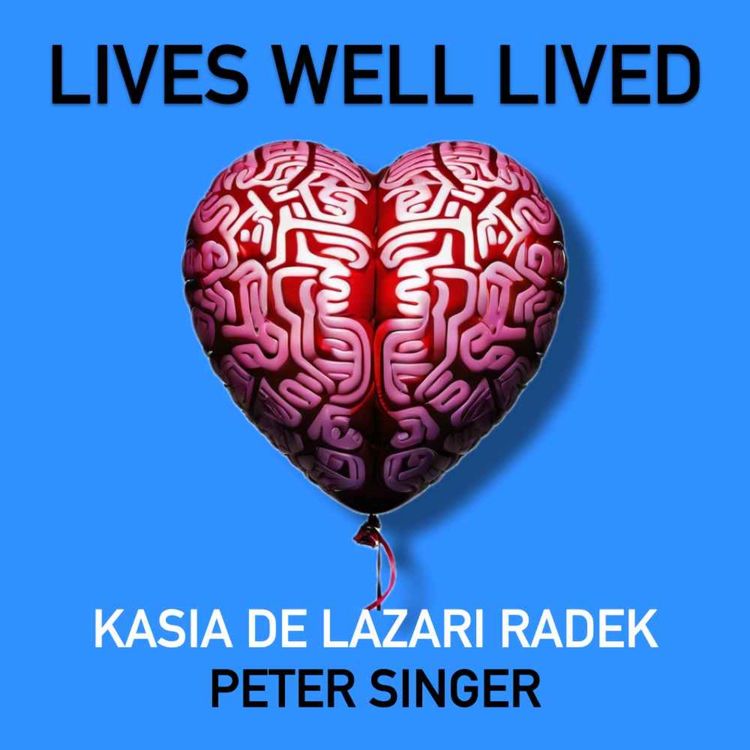
The moral philosophers Peter Singer & Kasia de Lazari Radek interviewed me about Moral Economics on their podcast Lives Well Lived. At the end, they ask their guests to think about their own life, and to what extent their own life has been well lived. That's a bit like being asked what you would like to have inscribed on your tombstone. So I hedged a bit. But the conversation that followed was interesting, so if you scroll down you'll see the transcript of that last bit, which starts about minute 1:09 in the recording.
Jun 25, 2026 "Nobel Prize-winning economist Alvin Roth explains how innovative market designs can reduce exploitation and save lives. Drawing on his pioneering work in kidney exchanges, Roth explores some of society’s most contentious moral dilemmas involving organ markets, surrogacy, and unpacks the ethical tensions surrounding what he calls “repugnant transactions.”
"Lives Well Lived is hosted by Peter Singer & Kasia de Lazari Radek. Episodes consist of interviews with remarkable guests who have lived well, both in the sense of living an ethical life, but also in that they are fulfilled and happy with what they have achieved in their lives. Some of these guests will be well-known figures, but others who are doing extraordinary things will be unfamiliar to almost all of our listeners. The conversations will often cover ground that involves ethics, how to live well, and how to make a positive difference in the world. It will inspire and empower its audience to change their own lives for the better. "
Here's the transcript of the last few minutes of the conversation (starting around minute 1:09 of the recording).
PETER: We always asked our guests to think about their own life, and to what extent their own life has been well lived, and by what criteria they make that judgment? Would you like to comment on that, Al?
Al: Sure. Has my life been well lived so far? Well, first, I've had a very fortunate life so far. I am lucky in my family, and my children, and my grandchildren, and my friends. And when you talk about friends, one thing that's often not talked about are the relations that professors have with students. So I've made lifelong friendships with many students who are productively engaged around the world, and that's very gratifying, and I hope it helps make my life worthwhile.
But also, I'm a market designer, and market design is very outward facing part of, economics. And, one of its goals is, a phrase even older than effective altruism, which is tikkun olam (תִּיקּוּן עוֹלָם) mending the world. And one of the things that market designers try to do is fix markets when they're broken or create them when they're absent. When you think of something like kidney exchange, you know, in a different podcast, on a different subject, I could tell you about victory after victory, where thousands, many thousands of transplants have been done, and lives have been saved through kidney exchange, even though it's in a war that we're losing: the shortage of kidneys is growing faster than the increase in transplants as diabetes grows, and high blood pressure, things like that. So, I would hope that some of my life has looked well lived, not just from the inside, but perhaps also from the outside.
Peter: Absolutely sure that it has. You're right. And what you've done for kidney markets is just one example, where you've saved many lives, and I think that obviously would be an important part of living well. despite the fact that the problem, as you say, has not been solved as a whole.
Kasia: It must be very satisfying.
Al: People often say that to me, and it will be satisfying when I'm retired. Right now, it's still frustrating, right? There's so much left to do, and it's not so easy to do it. But the times are changing. In two weeks, I'm gonna be opening up the American Transplant Conference in Boston, and, you know, there are people who invite me to these things. I sometimes joke with my young colleagues that as the old people who feel a lot of repugnance die off, it'll be left to just us young people. And we'll see.
I was in a transplant conference in Cairo in November. in which we tried to reach consensus on the question of, should countries have to be self sufficient in transplantation, which is the traditional position of the World Health Organization and some other organizations. And, of course, it works against countries that don't have much kidney exchange, because you need a big pool of patient-donor pairs to find lots of exchanges. And in that spirit, incidentally, during COVID, I was in the United Arab Emirates for the first kidney exchange between the UAE and Israel. And, that had to overcome a lot of obstacles, but it makes a lot of sense, because the UAE and Israel each have only a population of about 10 million. And that's not enough to find kidneys in your domestic pool for the hard to match patients, for patients who have a lot of antibodies to human proteins. So, we would like to see much more cooperation and not just between rich countries, but also inviting patients from poor countries, patient-donor pairs, to take part in American kidney exchange. And that's something that remains very controversial, but I think that we might be on the verge of making some progress with that. That's something that Peter has written about also.
Peter: Yes, I certainly hope so, and because I'm now working as a regular visiting professor in Singapore, which is another small country, the population of about 6 million, there's a very good case for saying that Singapore should also get into international kidney exchanges, and perhaps assist some of the poorer countries in its region. So we're trying to make that argument, and let's hope we succeed. One thing I've tell you, there might be bad news. I don't believe that when you retire from Stanford, you're going to stop working on these issues and be able to relax and feel satisfied, because I know I retired from Princeton 2 years ago, but the issues that I'm concerned about, whether it's the factory farming or global poverty, or all these kidney issues as well, I'm still concerned about, I can't let them go just because I'm no longer paid to be a professor at Princeton.
#########
In terms of lives lived well and deeply, here's an earlier post of mine about teachers and students.
The latest episode of Freakonomics looks at the controversies and philosophies involved in the growing legalization of medical aid in dying (MAID). Stephen Dubner interviews people with multiple perspectives, and offers a personal insight of his own.
"DUBNER: I have a sister who died last year, it was a pretty rotten death, honestly, and she wanted to hasten it. We couldn’t physically orchestrate it. And it really made me see this issue in a new way. It just seemed, you know, I don’t want to say the scales fell from my eyes, but I’d never encountered it first-hand. And it made me think that almost anyone who did encounter it first-hand might have a reckoning, might be in favor of it. But I don’t know, maybe that’s just me. Do you have any sense of how broad the support is for it generally?
ROTH: We’re an aging population, so I think not only do more people have a reason to contemplate their own death, but more people know a peer who’s died, and certainly parents have died, and relatives, you know, siblings and friends. So I would think that anyone who’s seen an agonizing death should at least give some thought to whether we should be legalizing medical aid in dying."
You can listen or read the transcript at this link:
Who Gets to Choose a “Good Death”? New York is the latest state to legalize medical aid in dying. Stephen Dubner speaks with the governor who signed the law, a Nobel Prize-winning economist, a death doula — and an ethicist who thinks the very idea is wrong.
"SOURCES: Kathy Hochul, governor of New York. Suzanne O'Brien, death doula, founder of Doulagivers Institute. Al Roth, economist at Stanford University. Daniel Sulmasy, physician, philosopher, director of the Kennedy Institute of Ethics at Georgetown University.
I'll be speaking Sunday at the American Transplant Congress, on kidney exchange. It will be hard to squeeze in all the recent developments in my half hour, including current controversies.
I'm no expert on the production of foie gras, but I am glad to see arguments about repugnant transactions and controversial markets that take seriously the concerns of opponents.
"There is now a proposedballot initiativemoving through Washington that wouldban foie gras entirely. No producing it, no selling or serving it. Fines between $1,000 and $5,000 per violation. License suspension for repeat offenses
...
""I am asking you to not sign the petition. But first I want to do something the other side rarely does, which is to take their concerns seriously.
"Gavage — force-feeding through a tube inserted down a bird’s throat — looks terrible. I know because I have seen it. I understand completely why someone sees footage of it and reacts with horror. If you imagine the same thing done to human beings, it looks like violence.
"But here is what I also know, and what the activists with the megaphones do not know and do not want to know because it would complicate the argument they have decided to make.
...
' A duck’s esophagus, where the gavage tube is inserted, is desensitized, without a gag reflex, and it is capable of swallowing whole crustaceans and scaly fish in the wild. Its windpipe is separate from the esophagus, meaning the gavage process has no impact on breathing. More importantly, this overfeeding is something the bird does naturally. Before their annual migration, ducks gorge — they stuff themselves with excess food. The calories are stored as fat, not only in the liver but in the expanded esophagus. (The verb “gorge” comes from this behavior.) What foie gras farming does is amplify a natural biological process rather than invent a cruel one .
...
"The producer I buy foie gras from exemplifies the kind of care and attention good farming demands. Their ducks are raised for 15 weeks, about twice the poultry industry standard, in open barns, on a vegetarian diet. Force-feeding by hand happens three times a day for the final three weeks. Each feeding takes approximately 1½ seconds, and, from my observation, the ducks barely seem to notice it."




 Posts
Posts

