Tuesday, October 7, 2025

Online dating in the US--is it past peak?

 Here's a 2022 survey I just came across from Pew Research. It caught my eye because it reports a much lower percentage of life partners arising from dating sites than were found in surveys by sociologists in 2009 and 2017.

From Looking for Love to Swiping the Field: Online Dating in the U.S.
Tinder is the most widely used dating platform in the U.S. About half of those who have used dating sites or apps have had positive experiences, and some have met their partners on one. But safety and harassment remain issues
By Colleen McClain and  Risa Gelles-Watnick 


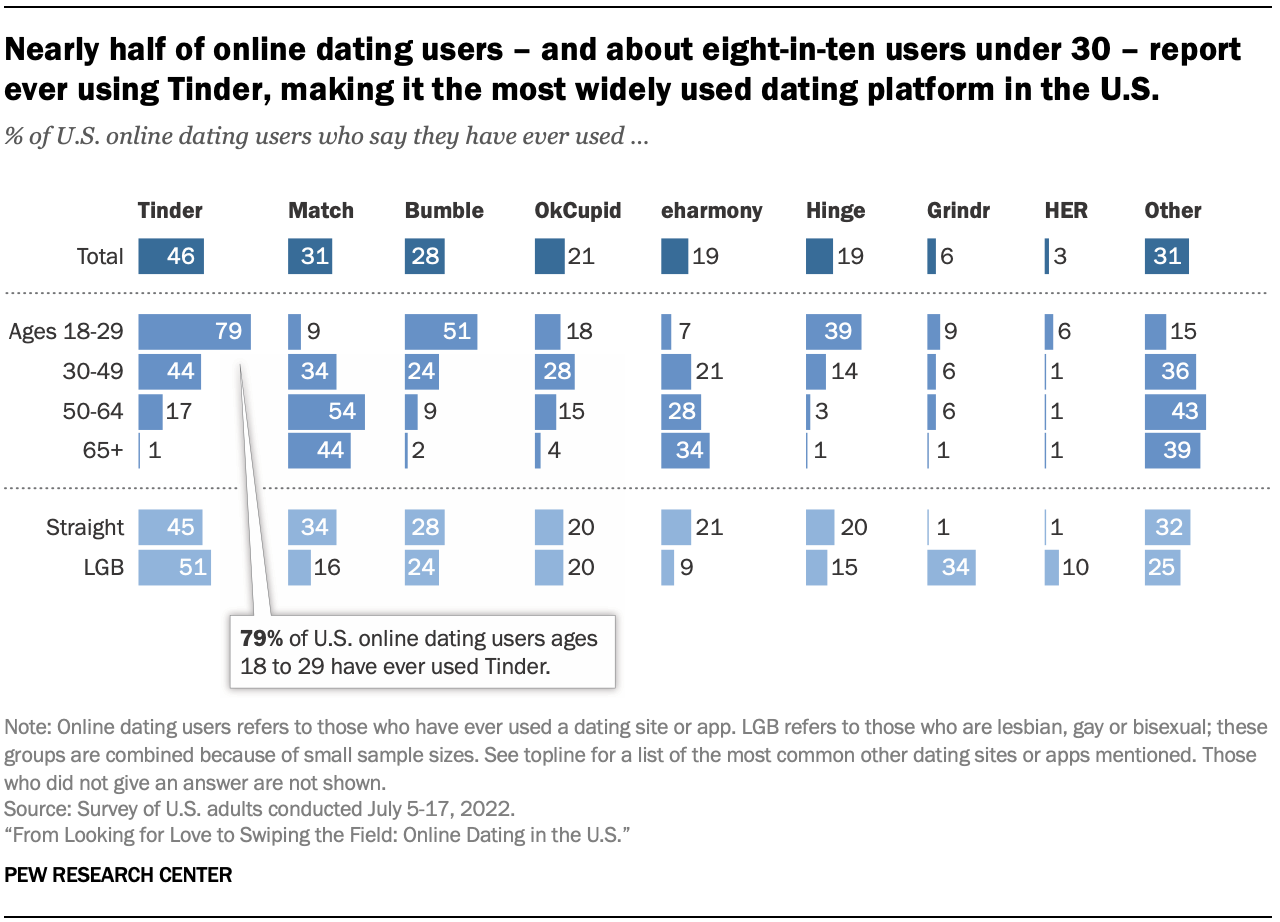
Nearly half of online dating users – and about eight-in-ten users under 30 – report ever using Tinder, making it the most widely used dating platform in the U.S. 


"One-in-ten adults who are partnered – that is, they are married, living with a partner or in a committed romantic relationship – say they met this person on a dating site or app. The share rises to 20% of partnered adults under 30 who say online dating brought them together; about a quarter of LGB partnered adults say the same."

####### 

Those numbers of partnerships seem a lot lower than earlier numbers I recounted in this post:

Friday, August 9, 2019  Coupling up with the help of the internet


Monday, October 6, 2025

Guido Imbens reflects on "What’s it like to win a Nobel Prize?

 What’s it like to win a Nobel Prize? 

"Stanford physical chemist W.E. Moerner, who received the 2014 Nobel Prize in chemistry, and Stanford economist Guido W. Imbens, who received the 2021 Nobel Memorial Prize in economic sciences, reflect on what changed – and what didn’t – after receiving the award."

"Where were you when you learned you had won?

Imbens: I was at home and was woken up by a call from Sweden. It’s just this very strange sensation as they tell you, “Congratulations, we’ve voted to award you the prize and we’re going to have a press conference in half an hour.” So you have this half hour where there’s nothing happening, but there’s also a lot happening. It was this very delightful, exciting moment when the rest of the world didn’t know yet. Once it was announced, there were telephone calls and interviews the whole night and morning. Stanford sent over a team for video, photos, and to help with the press. Our kids made pancakes for the Stanford crew, who had the idea of having the three kids interview me, and the video is an absolute highlight from that morning.

 ...

How did winning the prize change your life?

Imbens: It does change the way people outside of academics treat you, and it opens up a lot of new opportunities. The Swedes are very keen on having people take on this role model part, and they took us to high schools there to talk to the students. That was a very nice and fun experience. The attention and invitations die down, but as far as I hear from other people, it doesn’t really go away. It’s a permanent change.

Within the academic world, it doesn’t change things all that much. I still write my papers, I submit my papers, I get them rejected. But it has broadened my research and changed a little bit of what I try to do. I spend more time trying to leverage what I do by working with students and other groups to do what I can to push the field forward.

...

The Nobel Prize Museum in Stockholm exhibits artifacts from past laureates that offer a glimpse into their lives and work. What object did you donate?

Imbens: When I did the work with Josh Angrist for which I got the prize, we were living in Harvard faculty housing and we didn’t have laundry facilities there. On Saturday mornings we would go to the local laundromat and do our laundry. That’s where we worked on the paper for which we won the prize. So I donated a bottle of laundry detergent to the museum. Recently, the museum had an advertising campaign and they had posters with “the detergent that changed the world.”

###########

And here's an article in Nature about other science prizes, and how none of them have yet captured the world's attention the way the Nobels have:

These science prizes want to rival the Nobels: how do they compare?
By Chris Simms 

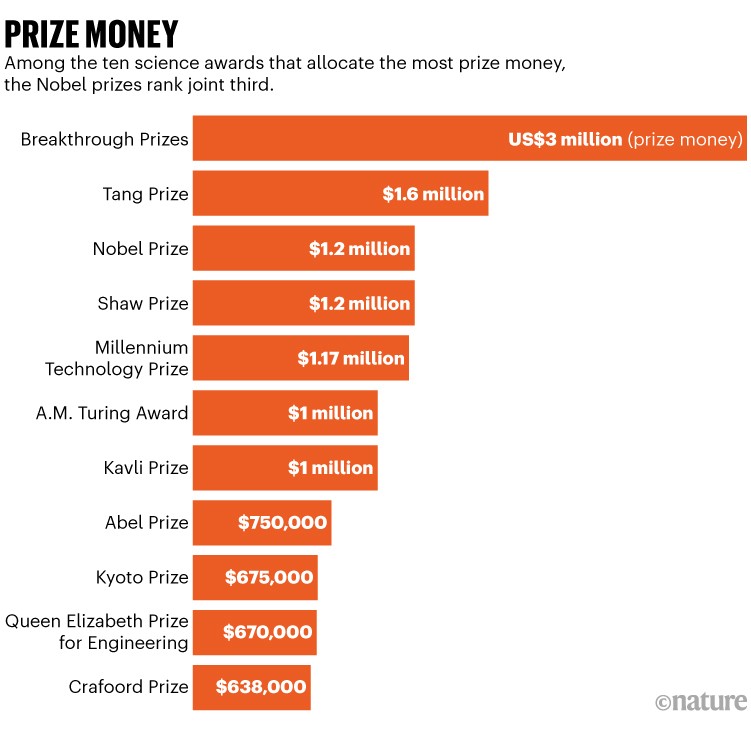
Prize money. Among the ten science awards that allocate the most prize money, the Nobel prizes rank joint third. The Breakthrough Prizes award US$ 3 million, the Tang Prize awards $1.6 million and the Nobel and Shaw Prizes award $1.2 million each. 


Sunday, October 5, 2025

Grace Guan defends her dissertation at Stanford

 Grace Guan defended her Ph.D. dissertation this past Friday.

Welcome to the club, Grace. 


 Here's my earlier post about one of the papers she spoke about--for extra credit, see if you can identify four of her coauthors in the above post-defense photo:

Friday, May 23, 2025  Deceased organ allocation: deciding early when to move fast


Saturday, October 4, 2025

Jane Goodall (1934-2025)

Iconoclastic scientists not only do novel science, but they do science in novel ways. Jane Goodall also communicated to a broad audience, and became an advocate as well as an observer.

 Nature publishes an appreciation of her life and work and its impact on science itself, and scientists.

Jane Goodall’s legacy: three ways she changed science.  The primatologist challenged what it meant to be a scientist. By Rachel Fieldhouse & Mohana Basu

"Goodall is best known for her work with chimpanzees in Gombe National Park in Tanzania. She was the first to discover that chimpanzees made and used tools1. She went on to become an advocate for conservation, human rights and animal welfare, including stopping the use of animals in medical research."

######### 

 Here's the NY Times obit: ( which mentions some of her recognitions, including an unusual one)

Jane Goodall, Who Chronicled the Social Lives of Chimps, Dies at 91. Her discoveries as a primatologist in the 1960s about how chimpanzees behave in the wild were hailed as “one of the Western world’s great scientific achievements.” By Keith Schneider 

"Her many awards include the National Geographic Society’s Hubbard Medal, presented in 1995, and the Templeton Prize, given in 2021. In 2003, Queen Elizabeth II named her a dame of the British Empire. In January, she was awarded the Presidential Medal of Freedom, the United States’ highest civilian honor, by President Joseph R. Biden Jr.

...

"In July 2022, Mattel released a Jane Goodall doll as part of its Barbie-branded Inspiring Women series." 

Friday, October 3, 2025

Race to the bottom: NLDAC and NY State both aim to be payers of last resort for reimbursing kidney donors

A tale of bureaucracy, in two acts 

1.  NLDAC, the federally funded National Living Donor Assistance Center, was for a long time the only organization that would reimburse  some expenses of living organ donors who qualified by not having high incomes, or any other sources for reimbursements.  That is NLDAC is a funder of last resort:

" Individuals considering becoming a living organ donor can apply for help with their travel expenses, lost wages, and dependent care expenses from NLDAC if they cannot be reimbursed for these costs by their recipient, a state program, or an insurance company.

2. In (very) late 2022,  New York State's Living Donor Support Act (LDSA, S. 1594) became law, and it is about to go into effect this year. The Act provides "state reimbursement to living organ donors, who are state residents, for medical and associated expenses incurred as a result of the organ donation, when the organ donation is made to another resident of the state" 

It further defines NY State as a payer of last resort:, and explicitly rules out payments to donors eligible for payment by NLDAC.

" THE  PROGRAM  SHALL  NOT  PAY  REIMBURSEMENT FOR EXPENSES PAID OR  REQUIRED TO BE PAID FOR BY ANY THIRD-PARTY  PAYER,  INCLUDING  WAGES  OR  OTHER  EXPENSES THAT WERE COVERED UNDER PAID MEDICAL LEAVE BY THE LIVING  DONOR'S EMPLOYER OR THAT ARE COVERED BY OTHER SOURCES  OF  REIMBURSEMENT  SUCH  AS  THE  FEDERAL  NATIONAL  LIVING  DONOR  ASSISTANCE PROGRAM. THE  PROGRAM SHALL BE THE PAYER OF LAST RESORT WITH RESPECT  TO  ANY  BENEFIT  UNDER THE PROGRAM. " 


I'm on NLDAC's mailing list, and  a few days ago received an email containing their policy statement on the NY State law. They say they will no longer make payments to NY residents who are covered by the NY State law.


Incidentally, here's my blog post from when the NY State law was passed:

Sunday, January 1, 2023 New York State's Living Donor Support Act (LDSA, S. 1594) was signed by Governor Hochul on Dec. 29

 "like the authorization for NLDAC,  the NY State law (https://www.nysenate.gov/legislation/bills/2021/S1594) "requires that the Program shall be payer of last resort..." I hope that this doesn't turn into a competition to be the payer of last resort in a way that might cause some NY donors to fall between the cracks, and not be reimbursed either by NLDAC or the State of New York."


I suppose the larger lesson is that designers of competing markets can create paradoxical situations. 

########

Related:

Sunday, July 16, 2023  National Living Donor Assistance Center (NLDAC): I rotate off the advisory board


Wednesday, October 1, 2025

Trading cycles for board games

 Trading cycles, often without the use of money, crop up here and there.  Here's an instance that was recently pointed out to me on Bluesky.

https://boardgamegeek.com/wiki/page/Math_Trades

"What is a math trade?

This is a trade between a whole bunch of people at once, using an algorithm (such as used by TradeMaximizer) to decide who should send their game to whom. Because of the algorithm used, you can only get a game you prefer over what you started with. (Or at worst, you may just keep your original game; i.e. it doesn't trade.)

This kind of trade was originally called a "mathematical no-risk trade list." Today, it's simply known as a math trade.

In a math trade, any potential trades found are always going to be "1 for 1" which is one of your offering(s) that you will ship out (or deliver if it's a "no ship") to another participant in the math trade. You will receive exactly one offering (from your "want list" for your offering) from most likely yet another participant. An "offering" is a single geeklist item, but the offering/item could be a bundle of more than one thing."

########

The software link goes to one that maximizes trade volume. So these aren't top trading cycles.

But here's a survey paper on those:

1.       Morrill, Thayer, and Alvin E. Roth, “Top trading cycles,” Journal of Mathematical Economics. 112, June, 2024,   https://www.sciencedirect.com/science/article/pii/S0304406824000466


Tuesday, September 30, 2025

In-game sports betting is something different

 The NYT has the story:

The Seductive, and Risky, Power of Live Sports Betting
In-game betting is predicted to grow to more than $14 billion by the end of the decade. It’s a huge part of the sports gambling industry. Public health officials worry that it could be increasing the risks for gamblers.  By Jenny Vrentas 

"These bets — known as in-game or live betting — have become ubiquitous and are one of the fastest growing areas of the sports gambling industry in the United States. They range from wagers on the result of a game while it is underway to what are known as microbets on events that are resolved quickly, sometimes in a matter of seconds, like the speed of a baseball pitch. Others are on outcomes of random events — will the halftime point total be an odd or even number, for instance. Once you are on the FanDuel or DraftKings mobile apps, there are scrolls and scrolls of bets, worldwide, day or night.

"For betting companies, or sportsbooks, the popularity of live betting is driving rapid revenue growth. Bets during games accounted for more than half the money wagered on FanDuel and DraftKings in recent quarters 

...

"With artificial intelligence being used to automate and accelerate the creation of more betting markets, in-game betting is expected to continue its rapid growth. Revenues from in-game bets could triple by the end of this decade, to more than $14 billion, according to a report released last October by the investment bank Citizens. That is an amount on par with the total revenue generated by the U.S. sports betting industry last year.

...

"Some professional sports leagues now allow ads for sports betting companies to be integrated into the live action of a game broadcast — as opposed to just during a commercial break. Michael Kay, the Yankees play-by-play announcer, or the N.B.A. commentators Charles Barkley and Kenny Smith will offer odds or set up predictions and direct viewers to a sportsbook that sponsors the broadcast and takes the bets. The N.B.A. and Major League Baseball permit up to two of these integrations per game.

"Streaming, too, has enabled new ways for fans to bet while they watch. Last year, the N.B.A. debuted an optional overlay on its livestreaming platform that displays in-game betting odds. Users can tap to click through to a prefilled bet slip in the DraftKings or FanDuel apps. The N.F.L. has gone a step further, allowing its games to be streamed inside sportsbook apps (and still count toward the Nielsen audience ratings).

"The professional sports leagues also benefit from live-betting revenue through their financial stakes in data providers, like Sportradar and Genius Sports. Those data companies sell the real-time data from games that facilitates live bets to sportsbooks, and they get a portion of the sportsbooks’ gambling revenues. The data companies have said that the percentage they take from in-game bets is higher than from pregame bets. (Chris Dougan, a spokesman for Genius Sports, said its partnership with the N.F.L. enabled legal and fair betting on N.F.L. games."

Monday, September 29, 2025

Repugnance and consequence-insensitivity (in connection to opposition to genetically-engineered food)

 There is a well developed literature on repugnance connected to food, and here is a recent, interesting example that focuses on the relationship between consequence-insensitivity and other correlates of moral outrage.

Inbar, Yoel, Sydney E. Scott, and Paul Rozin. "Moral opposition to genetically engineered food in the United States, France, and Germany." Annals of the New York Academy of Sciences (2025). 

 ABSTRACT: "When people are morally opposed to a practice, they often profess to be consequence-insensitive—that is, they say that they think it ought to be prohibited regardless of the risks and benefits. We investigate consequence-insensitive opposition to genetically engineered (GE) food in France, Germany, and the United States. Using nationally representative samples (total N = 1599), we find that most GE food opponents in all three countries are consequence-insensitive (France: 93.1%; Germany: 87.4%; United States: 81.3%). Consequence-insensitive opponents differ from other opponents in other ways consistent with their holding moral beliefs. They are more likely to display other properties of sacred moral values, like quantity insensitivity and universalism. They also see GE food as more personally important, are less willing to consume it, are more in favor of policies restricting it, and are more willing to engage in activism against it."


"In their research on moral GE food opposition in the United States, Scott et al. [15] asked par “It is equally wrong to allow some of this to happen as to allow twice as much to happen. The amount doesn't matter” (quantity insensitivity); and “This would be wrong even in a country where everyone thought it was not wrong” (universalism)ticipants three questions that were originally developed by Baron and Spranca [14] for their research on sacred values (which they call “protected values”). Scott et al.’s primary analyses focused on the consequence-insensitivity question, which asked whether GE food “should be prohibited no matter how great the benefits and minor the risks from allowing it.” Likewise, we here focus on the consequence-insensitivity item and test whether responses to other questions theoretically related to sacred values differ between consequence-sensitive and consequence-insensitive opponents. In the current study, we used two other items related to sacred values that were previously used in Scott et al.: “It is equally wrong to allow some of this to happen as to allow twice as much to happen. The amount doesn't matter” (quantity insensitivity); and “This would be wrong even in a country where everyone thought it was not wrong” (universalism). We also added two new exploratory items that were intended to tap moral outrage at the juxtaposition of secular (financial) considerations with sacred values [19]: “I am offended by the idea of putting a monetary price on allowing this”; and “It is morally wrong to put a monetary price on allowing this practice.” For each of these items, we test whether responses differ between consequence-sensitive and consequence-insensitive opponents. If consequence-insensitive opponents are more likely to display quantity insensitivity, universalism, and moral outrage at sacred-secular tradeoffs than consequence-sensitive opponents, then this would provide further evidence that consequence-insensitive opponents moralize GE food more than consequence-sensitive opponents."
 

Sunday, September 28, 2025

Remote work and reproduction

 Here's a recent paper indicating that work from home (WFH) may increase fertility, particularly when both partners in a household work from home. The paper suggests that this may be because WFH makes childcare easier. (I'd be glad to see if the effect holds for same-sex couples, as a control for an alternative hypothesis about the mechanism at work.)

Work from Home and Fertility
by Cevat Giray Aksoy, Jose Maria Barrero, Nicholas Bloom, Katelyn Cranney, Steven J. Davis, Mathias Dolls and Pablo Zarate
27 August 2025
 

Abstract: "We establish a positive relationship between work from home (WFH) and fertility, drawing on  our Global Survey of Working Arrangements (38 countries, N=19,241) and our U.S. Survey of  Working Arrangements and Attitudes (N=102,411). Respondents who WFH at least 1 day per  week had more biological children from 2021 to early 2025, and plan to have more children in  the future, compared to observationally similar persons who do not WFH. Respondents whose  spouse or domestic partner works from home also report higher recent and planned fertility. When both partners WFH at least one day per week, our results suggest that total lifetime  fertility is greater by 0.2 children in our global sample (0.18 in our US sample), as compared  to couples where neither partner engages in any WFH. We find qualitatively similar patterns in  our Asian subsample (N= 4,323), but some results are statistically insignificant for Asian  women. WFH is also less common in Asia. Taken together, these findings suggest that current  WFH levels have only small positive effects on fertility in Asia. "

  "Tensions between women’s career goals and childcare responsibilities, and other tradeoffs between fertility and lifestyles for women and men, are a key focus of recent research. Doepke et al. 2023 offers a recent review. Flexibility about when, where, and how to work –or the absence of such flexibility – is one potentially important factor in fertility decisions (Goldin 2014, 2021). Paid work from home (WFH) often brings greater flexibility in these respects, perhaps making it easier and less costly for actual and prospective parents to combine child rearing with employment"

Saturday, September 27, 2025

The effect of biological nudges may (also) have been overstated

 There have been a number of recent studies suggesting that the effectiveness of psychological "nudges" may have been substantially overstated. Here's a paper saying something similar about snorting testosterone:

 Dreber, Anna, Magnus Johannesson, Gideon Nave, Coren L. Apicella, Shawn N. Geniole, Taisuke Imai, Erik L. Knight et al. "Investigating the effects of single-dose intranasal testosterone on economic preferences in a large randomized trial of men." Proceedings of the National Academy of Sciences 122, no. 39 (2025): e2508519122. 

Abstract: "There is conflicting evidence on whether testosterone affects economic preferences such  as risk taking, fairness, and altruism, with most evidence coming from correlational  studies or small testosterone administration studies. To credibly test this hypothesis,  we conducted a large-scale, preregistered, double-blind randomized controlled trial with  1,000 male participants—10 to 20 times larger than typical prior studies. Participants  were randomly allocated to receive a single dose of either placebo or intranasal testosterone, and carried out a series of economic tasks capturing social preferences, competitiveness, and risk preferences. We find no evidence of a treatment effect for any of  our nine primary outcome measures, and no strong evidence of an association between  basal salivary testosterone and economic preferences within men. These results fail to  conceptually replicate previous high-impact publications reporting positive findings in  smaller samples, calling into question the idea that short-term testosterone fluctuations  are important drivers of men’s economic preferences. Our results do not rule out the  possibility that different effects might emerge under alternative dosages, administration  protocols, or task timings, or that behavioral effects differ between men and women. The  potential for developmental or long-term effects of testosterone also remains an open  question for future research, though such effects are ethically challenging to investigate  experimentally in humans." 


"The number  of participants in the studies reporting any statistically significant effects has ranged from N = 24 ( 18 ) to N = 118 ( 14 ). It is well  known that small, underpowered studies increase the risk that findings reported as statistically significant are false positives..."

...

"We fail to find evidence of a treatment effect of a single-dose of 
intranasal testosterone on any of our eight primary outcome measures or the hypothesized interaction effect for the ninth primary outcome measure. The 99.5% CI can be used to interpret which  effect sizes in the hypothesized direction we find strong evidence  against, see Figs. 1 – 3 . For our eight main effects primary hypotheses, we find strong evidence against effect sizes between about 0.15 Cohen’s d units (Investor Value and Loss Aversion) and 0.26 Cohen’s d units (Risk Aversion), which are considered small effect  sizes. We thus find strong evidence against the hypothesis that  single-dose intranasal testosterone administration has important  effects on economic preferences or behavior in men for all outcome measures in our study.

...

" Our study can be considered a highly powered conceptual replication of several previous results reported in high-impact journals, with a 10 to 20 times larger sample size than most previous  randomized controlled studies. However, our study does not constitute a direct replication of any specific previous study as we did  not base our design on one individual previous study ( 66 ). Our  study fails to conceptually replicate the following previous findings  about treatment effects of testosterone: that testosterone increases  offers in the ultimatum game ( 13 ); that testosterone decreases  offers in the ultimatum game ( 12 ); that testosterone decreases trust  in the trust game ( 16 ); that testosterone increases trustworthiness  (backtransfers) in the trust game ( 16 ), and that testosterone  increases risk taking (17). We furthermore fail to conceptually replicate previous correlational results that testosterone is positively correlated with economic risk-taking ( 26 , 29 , 67 ), that  testosterone is positively correlated with generosity in the dictator  game ( 30 ), and that testosterone is positively correlated with the  rejection of unfair offers in the ultimatum game ( 25 )."
Friday, September 26, 2025

Citation laureates in Economics: Autor & Katz, Bertrand & Mullainathan, and Bloom

 Clarivate, the company that now maintains the Web of Science/Science Citation index, annually nominates very well cited economists (and academics in other fields that are celebrated by the Nobel Foundation).  Their idea, aside from celebrating very influential academics, is to perhaps predict who will win a Nobel, if not this year then sometime in the not too distant future.

"Since 2002, the Institute for Scientific Information has identified individuals whose contributions have reshaped their disciplines. Using a data-driven approach grounded in Web of Science citation analysis, we’ve recognized more than 450 Citation Laureates — 83 of whom have gone on to receive the Nobel Prize. Discover the full list of these exceptional researchers.

 Here are their 2025 laureates in Economics (links on names point to their Web of Science page).  All of them look like worthy candidates for further celebration.

Citation Laureates 2025 in Economics
Celebrating economists whose research has reshaped policy, deepened insights into human behavior, and influenced global economic systems. 

"for seminal analysis of wage structure, earnings inequality, educational advance, and technological change"
 David Autor, United States and Lawrence F. Katz, United States

"for joint research on racial discrimination, corporate governance, and other aspects of labor economics determined by psychology and culture"
 Marianne Bertrand United States, and Sendhil Mullainathan  United States

"for analyzing the impact of economic and political uncertainty on investment, employment and growth"
Nicholas Bloom  United States 

Thursday, September 25, 2025

Recommendations From the International Society of Uterus Transplantation Ethics Committee

 The arc of history turns towards technology.

I didn't expect recommendation #2, although I've heard it discussed. 


Evolving Ethical Challenges After a Decade of Uterus Transplantation: Recommendations From the International Society of Uterus Transplantation Ethics Committee
by Wall, Anji E. MD, PhD1; Brännström, Mats MD, PhD2; Lotz, Mianna PhD3; Racowsky, Catherine PhD4; Stock, Peter MD, PhD5; Järvholm, Stina PhD2; Sustek, Petr PhD6; Brucker, Sara MD, PhD7; Tullius, Stefan G.8;  on behalf of The International Society of Uterus Transplantation Ethics Committee and endorsed by The Transplantation Society Ethics Committee*
Transplantation, August 26, 2025. | DOI: 10.1097/TP.0000000000005507 


Abstract:Uterus transplantation (UTx) became a clinical reality with the birth of the first baby in 2014. Following increased success, the procedure has now transitioned to clinical practice in many institutions throughout the world. With a rising number of donors, recipients, and babies born from this procedure, and with more institutions offering UTx, ethical challenges have evolved while novel aspects gained prominence. Here, the Ethics Committees of the International Uterus Transplantation Society, a section of The Transplantation Society, summarize current and future ethical challenges in UTx and provide recommendations for addressing these challenges. Ethical considerations covered here span (i) donor and recipient selection, (ii) living versus deceased donation, (iii) use of assisted reproductive technologies, (iv) informed consent, (v) clinical provision of UTx, and (vi) research protocols for further studies of UTx. For each topic considered, ethical analysis and recommendations are offered to ensure the practice of UTx remains within an acceptable foundational ethical framework that balances respect for autonomy, beneficence, and justice.

...

"Recommendation 2: Animal research is needed to determine the feasibility of UTx in, and uterus donation from, transgender patients and UTx in cisgender males who want to experience pregnancy. If medically and surgically acceptable, gender identity and reproductive status should not be exclusionary factors for uterus donation or transplantation.

Wednesday, September 24, 2025

Transplants and trust

Much of medicine's effectiveness depends on trust, and that is nowhere clearer than in organ transplantation, which depends on organ donation.  And hearts are uniquely time-sensitive.  Here's a reflection on how to move forward, maintaining trust while promoting efficacy, including by monitoring current policies and carefully analyzing alternatives. (Kurt Sweat is the market design economist on this medical team...) 

 Skowronski, J., K. Sweat, and M. Farr (2025). In transplant we trust? Perspectives on the erosion of trust in the United States transplant system. Journal of Cardiac Failure

 Here's the concluding paragraph:

"Heart transplantation is both a resource-intensive and symbolically resonant form of organ donation. It is also particularly vulnerable: donor scarcity, limited ischemic time, and increasing utilization and scrutiny of DCD magnify the consequences of every unused heart and every erosion of trust. The controversies facing the broader transplant system—questions of allocation, oversight, and ethics—are felt acutely in heart transplantation. The US has long been a leader in transplantation, and as we move forward, we must sustain excellence in outcomes and volume. Avoidable missteps put those on the waitlist at greater risk of deterioration and death. It is essential that OPOs, transplant centers, and policy makers increase transparency in outcomes and the policymaking process. This would entail prospective policy analyses and improved information sharing through OPO and transplant center dashboards. Enacting these policies is vital to restore and enhance trust in the transplant system. In hearts, ischemic time is short, waitlist mortality is high, and donor utilization is low, presenting an opportunity for especially impactful improvements in procedures. In an era that feels perilous and bleak, enhancements to policymaking procedures and outcome reports can improve trust and save lives." 

Tuesday, September 23, 2025

The Downside of Fertility by Claudia Goldin---Dads versus duds

 Here's the latest from Claudia Goldin, on dads versus duds.

 The Downside of Fertility  by Claudia Goldin, NBER Working Paper 34268, DOI 10.3386/w34268,  September 2025 

 Abstract: The fertility decline is everywhere in the world today. Moreover, the decline goes decades back in the histories of rich countries. Birthrates have been below replacement in the U.S. and Europe since the mid-1970s, although further declines occurred after the Great Recession. The reasons for the declines from the 1970s to the early 2000s involve greater female autonomy and a mismatch between the desires of men and women. Men benefit more from maintaining traditions; women benefit more from eschewing them. When the probability is low that men will abandon traditions, some career women will not have children and others will delay, often too long. The fertility histories of the U.S. and those of many European and Asian countries speak to the impact of the mismatch on birth rates. The experience of middle income and even poorer nations may also be due to related factors. Various constraints that I group under matching problems have caused fertility to be lower than otherwise and imply that fertility has a “downside.” 


"Even though women’s enhanced agency is an important factor in determining fertility in most developed nations today, its role in altering birth rates has depended on a related element. That factor is the ability of women to be assured they can reap the financial and personal rewards from their education while raising their children. The more that men can credibly signal they will be dependable “dads” and not disappointing “duds,”the higher will be the birthrate in the face of greater female agency.
 

"Therefore, even though the major factor in the decline of fertility is increased women’s agency, the real downside or obstacle is the need for husbands and fathers to reliably demonstrate their commitment. I will provide two related models that make the point that the real problem is a mismatch between what women  need to enjoy the fruits of their autonomy and what credible commitments men can make."

Monday, September 22, 2025

Science and politics: Can you fix science by doing much less of it?

 Today's NYT has a long opinion piece about (my former Stanford colleague) Jay  Bhattacharya in his role as the new head of the National Institutes of Health (NIH).  I found it confusing and confused. But the last two paragraphs made some sense.

Jay Bhattacharya Wants to Fix Science.  Is He in Over His Head?  
By Ari Schulman 

Here are the two concluding paragraphs:

"The mRNA vaccine decision was the clearest test case yet of how his idealism will go once released into the wild. In The Washington Post, he acknowledges that the Covid vaccines saved millions of lives without known safety problems. He notes unanswered questions, around dosing and side effects. But when push came to shove, his response to these questions was not, let’s answer them with science, as he told me, but: Shut the science down. It turns out that the power of science to solve problems has limits after all.

"The problem with Dr. Bhattacharya is not that he’s cynical, as his critics say. It’s that his theory is naïve about power, and so could easily become a mouthpiece for it. America’s golden age of innovation, backed by levels of public investment that make us the envy of the world, has been nice while it’s lasted. If we want to keep it going, this moment may call less for a fresh infusion of reason than some new animating spirit, not a new Galileo but a new Robert Moses, Carl Sagan, or J. Robert Oppenheimer. Let us hope that Jay Bhattacharya still has it in him. The country needs it." 

Sunday, September 21, 2025

The 2025 Golden Goose awards

 In these difficult times for science funding, the Golden Goose Award is a reminder of its benefits.

 Here's it's backstory

Here are the 2025 winners

“Nature has all the answers”

How a knack for nature’s oddities improved disease diagnostics & inspired scores of scientists

AWARDEE: Joseph G. Gall 

FEDERAL FUNDING AGENCIES: National Institutes of Health, National Science Foundation 

 and

Cisplatin Breakthrough Redefines Testicular Cancer Treatment 

 AWARDEES: Barnett Rosenberg, Loretta VanCamp, Thomas Krigas 

FEDERAL FUNDING AGENCIES: National Institutes of Health, National Science Foundation 

 ######### 

 Here are all my posts on the Golden Goose.  (Two of the early awards were for market design:)

Saturday, September 20, 2025

NBER Market Design Working Group Meeting, Fall 2025, October 17-18, 2025, Cambridge, MA


NBER Market Design Working Group Meeting, Fall 2025,  October 17-18, 2025, Cambridge, MA
ORGANIZERS Eric Budish, Michael Ostrovsky, and Parag A. Pathak 


Friday, October 17

8:30 am
9:00 am
10:30 am
11:00 am
12:30 pm
2:00 pm
3:30 pm
4:00 pm
5:30 pm
6:00 pm

Saturday, October 18

8:30 am
9:00 am
10:30 am
11:00 am
12:30 pm