Showing posts sorted by relevance for query Kidney. Sort by date Show all posts

Sunday, July 14, 2024

Kidney exchange collaboration: Alliance for Paired Kidney Donation (APKD) and MedSleuth

 Here's a press release from MedSleuth about their collaboration with the Alliance for Paired Kidney Donation.

The Alliance for Paired Kidney Donation, MedSleuth Partner to Increase Access to Kidney Transplants  NEWS PROVIDED BY MedSleuth  

"SAN FRANCISCO and TOLEDO, Ohio, July 9, 2024 /PRNewswire/ -- The Alliance for Paired Kidney Donation (APKD), a global leader in paired kidney donation, and transplant software company MedSleuth announced today a U.S. partnership launched to increase access to lifesaving kidney transplants. The organizations have consolidated their two paired kidney donation software platforms into one program called Kidney Matchgrid, significantly expanding the pool for matching living kidney donors with transplant candidates nationwide.

"Today in the U.S., family, friends and other loved ones may offer the gift of living kidney donation to a person in need of a kidney transplant. While these willing donors are not always compatible with their intended recipient, this incompatibility doesn't have to mean the end of their journey. A process called paired donation allows incompatible donor-recipient pairs to be matched to each other. Paired donation can result in a kidney exchange, in which two incompatible donor-recipient pairs are matched to each other, or a kidney chain, in which a willing donor gives a kidney to a stranger and starts a domino effect of kidney donations.

"Before launching the new collaboration, MedSleuth and APKD operated independently to provide paired donation services and software to match living kidney donors with recipients. APKD focused on kidney exchanges between transplant centers, while MedSleuth focused on kidney exchanges within a single transplant center that was supported by software to improve living donor intake. With this new partnership, transplant centers now have access to a larger pool of patient data from which they can choose between internal, regional or national kidney exchanges.

"As a result, Kidney Matchgrid, a HIPAA-compliant, SOC 2 Type II certified software powered by a Nobel Prize-winning algorithm, better enables transplant centers to deliver both process efficiency and access to more transplants for their hard-to-match transplant candidates and living kidney donors.

"This partnership is an example of what can be achieved when organizations combine their strengths to better serve patients and medical teams across the transplant community," said Dr. Michael A. Rees, transplant surgeon and CEO of APKD. "Bringing together the transparent APKD matching process and the straightforward business practices of MedSleuth puts transplant centers first, giving them tools to make the best choices for the patients they serve."

"Transplant centers working with APKD and MedSleuth will upload information about their donor-recipient pairs and non-directed living donors to Kidney Matchgrid, from which transplant centers and APKD will perform match runs as frequently as desired. MedSleuth will support the partnership by overseeing the sales and marketing of Kidney Matchgrid for all participating transplant centers, allowing APKD to focus on helping transplant centers deliver kidney exchange and first-rate care to the living donors who make kidney exchange possible.

"This partnership enables us to channel our energy into delivering exceptional customer service and outcomes for transplant centers from the first contact and continuing with every match run coordinated by our partners at APKD," said Ben Nightingale, COO of MedSleuth. "We look forward to working with transplant centers nationwide to further living donor transplant effectiveness and save more lives."

"In addition to Kidney Matchgrid, the expanded transplant center network will continue receiving access to services and software provided independently by MedSleuth and APKD.

"APKD's best-in-class support services include concierge-level support for transplant coordinators, donor and recipient protection programs offering lost wage and travel reimbursements, and the APKD KidneyPledge™, which gives priority for chain-ending kidneys to non-directed donors and their family members should they need a kidney transplant in the future. MedSleuth will continue offering transplant centers its BREEZE software to simplify living donor intake, as well as solutions that streamline the transplant process from recipient evaluation through the donor and recipient follow up.

"More information about Kidney Matchgrid and the associated transplant center, patient and donor support services provided by the new partnership is available through APKD at paireddonation.org and MedSleuth at medsleuth.com.


About the Alliance for Paired Kidney Donation

"The Alliance for Paired Kidney Donation (APKD) is a 501c3 with global reach that manages a kidney registry powered by a Nobel Prize-winning algorithm. APKD revolutionized kidney donation by performing the world's first non-simultaneous altruistic donor chain and the first international chain. APKD's commitment to innovation, research, education, technology and generosity allows it to fulfill its mission of saving lives by securing a living donor kidney transplant for every patient who needs one."

About MedSleuth 

MedSleuth seeks to expand access to transplantation by streamlining the transplant process. In addition to kidney paired donation, our BREEZE software platform simplifies candidate evaluation, optimizes waitlist management, and facilitates transplantation, with a focus on living donation. The patented, clinically validated platform collects relevant clinical and demographic data remotely, aiding participating transplant centers in their operations. For more information, visit medsleuth.com."

Monday, July 2, 2018

Kidney exchange in all its aspects: a view from India

Here's a survey that sees kidney exchange, and all the advances that have been made in how to use it to facilitate more transplants, as a force for making medicine more inclusive around the world.

Kidney exchange transplantation current status, an update and future perspectives
Vivek B Kute, Narayan Prasad, Pankaj R Shah, Pranjal R Modi
World J Transplant. Jun 28, 2018; 8(3): 52-60
Published online Jun 28, 2018. doi: 10.5500/wjt.v8.i3.52

Abstract: "Kidney exchange transplantation is well established modality to increase living donor kidney transplantation. Reasons for joining kidney exchange programs are ABO blood group incompatibility, immunological incompatibility (positive cross match or donor specific antibody), human leukocyte antigen (HLA) incompatibility (poor HLA matching), chronological incompatibility and financial incompatibility. Kidney exchange transplantation has evolved from the traditional simultaneous anonymous 2-way kidney exchange to more complex ways such as 3-way exchange, 4-way exchange, n-way exchange,compatible pair, non-simultaneous kidney exchange,non-simultaneous extended altruistic donor, never ending altruistic donor, kidney exchange combined with desensitization, kidney exchange combined with ABO incompatible kidney transplantation, acceptable mismatch transplant, use of A2 donor to O patients, living donor-deceased donor list exchange, domino chain, non-anonymous kidney exchange, single center, multicenter, regional, National, International and Global kidney exchange. Here we discuss recent advances in kidney exchanges such as International kidney exchange transplantation in a global environment, three categories of advanced donation program, deceased donors as a source of chain initiating kidneys, donor renege myth or reality, pros and cons of anonymity in developed world and (non-) anonymity in developing world, pros and cons of donor travel vs kidney transport, algorithm for management of incompatible donor-recipient pairs and pros and cons of Global kidney exchange. The participating transplant teams and donor-recipient pairs should make the decision by consensus about kidney donor travel vs kidney transport and anonymity vs non-anonymity in allocation as per local resources and logistics. Future of organ transplantation in resource-limited setting will be liver vs kidney exchange, a legitimate hope or utopia?"

An interesting section of the paper discusses different practices regarding anonymity in kidney exchange centers in different countries:

"PROS AND CONS OF ANONYMITY IN DEVELOPED WORLD AND (NON-) ANONYMITY IN DEVELOPING WORLD
There is disparity on standard practice of kidney exchange in developed and developing World in term of (non-) anonymity. There is variable practice on anonymity before and after surgery in different countries.
Conditional approach[38]: When the donor-recipient pairs give consent for meeting after surgery, they are allowed to meet each other after surgery in some countries such as the United States of America[39] and the United Kingdom[40]. In other countries, such as the Netherlands and Sweden[41], anonymity is absolute. Anonymity protects patients, donors and transplant hospital/ administration against the risks of revoking anonymity and prevents further commercialization of organs, and breach of patient donor privacy. An Ethical, Legal and Psychosocial Aspects of Organ Transplantation (ELPAT), a subsection of the European Society for Organ Transplantation reported that a conditional approach to anonymity should be possible after surgery[42]. Pronk et al[38] showed that most donor-recipient pairs who participated in anonymous donation process are in favour of a conditional approach to anonymity. Guidelines on how to revoke anonymity if both parties agree are needed and should include education about pros and cons of (non-) anonymity and a logistical plan on how, when, where, and by whom anonymity should be revoked.
Non-anonymous allocation[11,12]: Donor-recipient pairs are allowed to meet each other before allocation of donor for surgery and even after surgery. They can share medical reports of exchange donors before surgery and kidney transplant and donor surgery outcome after surgery. Donor-recipient pairs do not choose their match but donor-recipient pairs may decline a match or can withdraw from participation in the kidney exchange program at any time, for any reason. Non-anonymous allocation has the potential of commercialization of organs in case of compatible donor-recipient pairs along with breach in privacy of donor-recipient pairs. Kute et al[11,12] reported that donor-recipient pairs are willing for non-anonymous allocation process in single center study of 300 kidney exchange transplants in India. They reported that non-anonymity is more helpful in manual allocation in absence of computer software allocation which also increases trust between patients, donors and transplant hospital/administration and legal team. More long term prospective studies are required to explore the donor and recipient perspective on anonymity in living kidney donation in different socio-economic regions and countries."

Regarding Global Kidney Exchange they conclude:
"Global kidney exchange appears to provide life-saving kidney transplantation to poor donor-recipient pairs from developing countries that otherwise could die due to economic constrain[50-53]."

And here's their conclusion:
CONCLUSION
"Kidney exchange transplantation has increased living donor kidney transplantation for end stage renal disease patients with chronological incompatibility and financial incompatibility. The participating transplant teams and donor-recipient pairs should make the decision by consensus about kidney donor travel vs kidney transport and anonymity vs non-anonymity in allocation as per local resources and logistics. There is need of uniform algorithm for management of incompatible donor-recipient pairs."

Friday, January 5, 2024

Coalition to Modify NOTA (the National Organ Transplant Act of 1984)

 Elaine Perlman forwards the following discussion points:


Coalition to Modify NOTA Talking Points

modifyNOTA.org

What is the Coalition to Modify NOTA proposing? The Coalition to Modify NOTA proposes providing a $50,000 refundable tax credit to remove all disincentives for American non-directed kidney donors who donate their kidney to a stranger at the top of the kidney waitlist in order to greatly increase the supply of living kidney transplants, the gold standard for patients with kidney failure.


What is the value of a new kidney? The value of a new kidney, in terms of quality of life and future earnings potential, is between $1.1 million and $1.5 million.


What is the American kidney crisis? Fourteen Americans on the waiting list for a kidney transplant die each day. That number does not include the many kidney failure patients who are not placed on the waiting list but would have benefited from a kidney transplant if we had no shortage. The total number of Americans with kidney failure will likely exceed one million by 2030. 

Why not rely on deceased donor kidneys to end the shortage? A living kidney transplant lasts on average twice as long as a deceased donor kidney. Fewer than 1 in 100 Americans die in a way that their kidneys can be procured. Currently, the 60% of Americans who are registered as deceased donors provide kidneys for 18,000 Americans annually. Even if 100% of Americans agreed to become organ donors, this would raise donations by only about 12,000 per year. In the USA, 93,000 Americans are on the kidney waitlist. A total of 25,000 people are transplanted annually, two-thirds from deceased donors and one-third from living donors. The size of the waitlist has nearly doubled in the past 20 years, while the number of living donors has not increased.

What is the extra value that non-directed kidney donors provide? Non-directed kidney donors often launch kidney chains that can result in a multitude of Americans receiving kidneys. Fewer than 5% of all living kidney donations are from non-directed kidney donors who are an excellent source of organs for transplantation because they are healthier than the general population. 


How much does the taxpayer currently spend on dialysis? Kidney transplantation not only saves lives; it also saves money for the taxpayer. The United States government spends nearly $50 billion dollars per year (1% of all $5 trillion collected in annual taxes) to pay for 550,000 Americans to have dialysis, a cost of approximately $100,000 per year per patient, a treatment that is far more expensive than transplantation.


How many more lives will be saved with the refundable tax credit for non-directed donors? The number of non-directed donors increased from 18 in 2000 to around 300 each year. After our Act becomes law, we estimate that we will add approximately 7,000 non-directed donor kidneys annually. That is around 70,000 new transplanted Americans by year ten. 


How much tax money will be saved once the Act is passed? The refundable tax credit will greatly increase the number of living donors who generously donate their kidneys to strangers. We estimate that in year ten after the Act is passed, the taxpayers will have saved $12 billion. 


What is a refundable tax credit? A refundable tax credit can be accessed by both those who do and those who do not pay federal taxes. 


What do Americans think about compensating living kidney donors? Most Americans favor compensation for living kidney donors  to increase donation rates. 


Who is able to donate their kidneys?  Donation requires potential organ donors to undergo a comprehensive physical and psychological evaluation, and each transplant center has its own rigorous criteria. Only around 5% of those who pursue evaluation actually end up donating, and only about one-third of Americans are healthy enough to be donors. Providing financial incentives will encourage more Americans to donate their kidneys to help those with kidney failure.

 Do kidney donors currently have expenses that result from their donation? The medical costs of donation are covered by the recipients' insurance, but donors are responsible for providing for the costs of their own travel, out-of-pocket expenses, and lost wages. Programs like the federal NLDAC and NKR's Donor Shield can help offset these costs, making donation less expensive.

Is it moral to compensate kidney donors? Compensation for kidney donors can be viewed as a way to address the current kidney shortage and save lives. Americans are compensated for various forms of donation such as sperm, eggs, plasma, and surrogacy, all of which involve giving life. 

How long do we need to compensate living kidney donors? Compensation should continue until a xenotransplant or advanced kidney replacement technology becomes available. In the meantime, it's crucial to prevent further loss of lives due to the shortage.

 Will incentivizing donors undermine altruism?  Financial compensation for donors can coexist with altruism. Donors can opt out of the funds from the tax credit or choose to donate those funds to charity. The majority of donors support financial compensation, and relying solely on altruism has led to preventable deaths.

 In addition to ending the kidney shortage, what are other benefits of the Act? The Act can help combat the black market for kidneys and reduce human trafficking because we will have an increased number of transplantable kidneys. It can also motivate individuals to become healthier to pass donor screening, potentially further reducing overall healthcare costs.

 Why provide non-directed donors with a refundable tax credit of $50,000? The compensation is designed to attract those who are both healthy and willing to donate. Given the commitment, time, and effort involved in the donation process, this compensation recognizes the value of those who save lives and taxpayer funds.

 When more donors step forward, can transplant centers increase the number of surgeries?  There is considerable unused capacity at most U.S. transplant centers, and increasing the number of donors is likely to lead to more surgeries. The goal is to perform more kidney transplants and reduce the waitlist, benefiting patients in need.

 In what way does the Act uphold The Declaration of Istanbul?  While the Act deviates from one principle of the Declaration of Istanbul by offering compensation, it aligns with the other principles and is expected to standardize compensation and reduce worldwide organ trafficking.

 What about dialysis as an alternative to transplant?  Dialysis, while a treatment option, can be a challenging and uncomfortable process for patients. For those who could have been transplanted if there were no kidney shortage, dialysis can result in needless suffering and an untimely death.

 Why not compensate living liver donors? Liver donation is riskier and not as cost-effective as kidney donation. While the Act currently focuses on kidney donors, it's possible that compensation for liver donors could be considered in the future.

 What about the argument that providing an incentive to donate will exploit the donors, especially low income donors? 

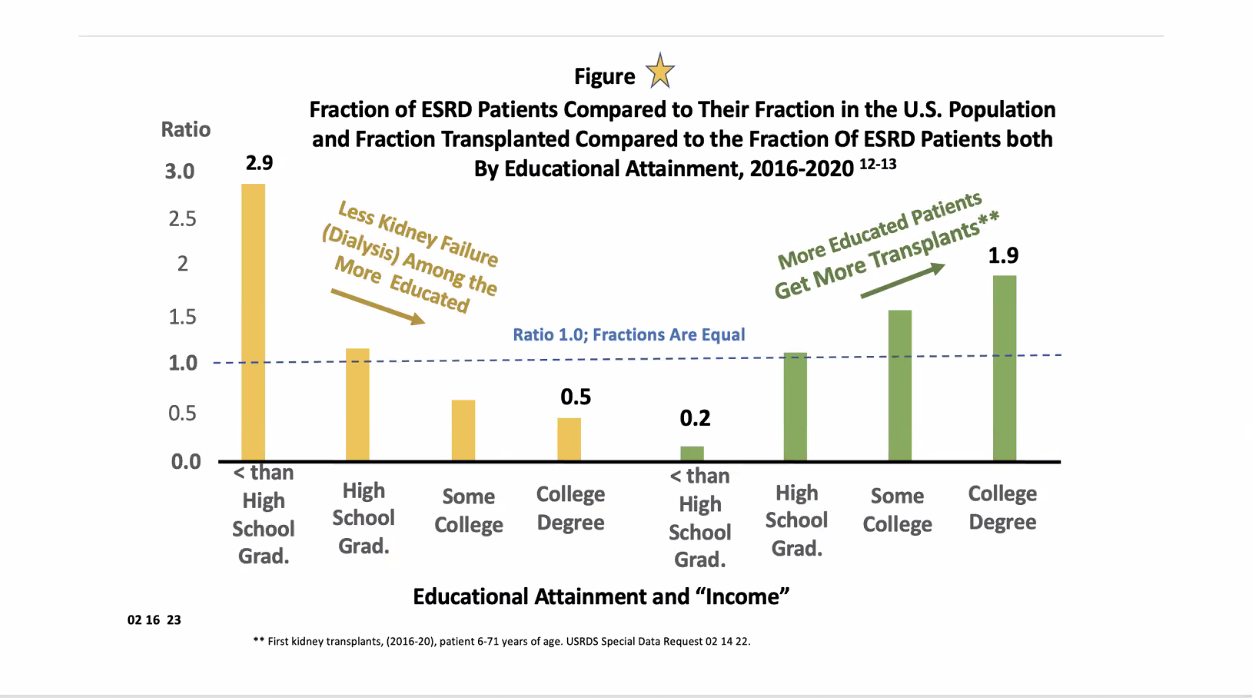
Primarily middle and low income kidney failure patients are dying due to the kidney shortage. People with lower incomes tend to have social networks with fewer healthy people because health is related to income level. In addition, being placed on a waitlist often costs money. Kidney donation also costs money, an estimated 10% of annual income. The refundable tax credit will help low income donors and recipients the most by making donation affordable and increasing the number of kidneys for those waiting the longest on the waitlist, frequently middle and low income Americans. The tax credit aims to help those most affected by the kidney shortage, as poorer and middle-income individuals often bear the brunt of the kidney crisis’s consequences. The Act will level the playing field, making it easier for those at all income levels to receive a life-saving kidney. 

Please examine this chart:


Wednesday, December 18, 2024

New rules for evaluating transplant centers

 Historically, transplant centers ('hospitals') have been primarily evaluated on the one year graft survival on the transplants that they do.*  Now Medicare announces it will test a new model, that will emphasize the number of transplants conducted ("achievement"), in addition to somewhat less emphasis on the ratio of deceased donor kidneys accepted or rejected ("efficiency") and graft survival ("quality").

Medicare Program; Alternative Payment Model Updates and the Increasing Organ Transplant Access (IOTA) Model.  A Rule by the Centers for Medicare & Medicaid Services on 12/04/2024 

"a. Proposed IOTA Model Overview

"End-Stage Renal Disease (ESRD) is a medical condition in which a person's kidneys cease functioning on a permanent basis, leading to the need for a regular course of long-term dialysis or a kidney transplant to maintain life.[2]

"The best treatment for most patients with kidney failure is kidney transplantation. Nearly 808,000 people in the United States are living with ESRD, with about 69 percent on dialysis and 31 percent with a kidney transplant.[3]

"Relative to dialysis, a kidney transplant can improve survival, reduce avoidable health care utilization and hospital acquired conditions, improve quality of life, and lower Medicare expenditures.[4 5]

"However, despite these benefits of kidney transplantation, evidence shows low rates of ESRD patients placed on kidney transplant hospitals' waitlists, a decline in living donors over the past 20 years, and underutilization of available donor kidneys, coupled with increasing rates of donor kidney discards, and wide variation in kidney offer acceptance rates and donor kidney discards by region and across kidney transplant hospitals.[6 7] 

...

"The IOTA Model will be a mandatory model that will begin on July 1, 2025, and end on June 30, 2031, resulting in a 6-year model performance period comprised of 6 individual performance years (“PYs”). The IOTA Model will test whether performance-based incentives paid to, or owed by, participating kidney transplant hospitals can increase access to kidney transplants for patients with ESRD, while preserving or enhancing quality of care and reducing Medicare expenditures. CMS will select kidney transplant hospitals to participate in the IOTA Model through the methodology proposed in section III.C.3.d of this final rule. As this will be a mandatory model, the selected kidney transplant hospitals will be required to participate. CMS will measure and assess the participating kidney transplant hospitals' performance during each PY across three performance domains: achievement, efficiency, and quality.

"The achievement domain will assess each participating kidney transplant hospital on the overall number of kidney transplants performed during a PY, relative to a participant-specific target. The efficiency domain will assess the kidney organ offer acceptance rate ratios of each participating kidney transplant hospital relative to a national ranking or the participating kidney transplant hospital's past organ offer acceptance rate ratio. The quality domain will assess the quality of care provided by the participating kidney transplant hospitals via a composite graft survival ratio. Each participating kidney transplant hospital's performance score across these three domains will determine its final performance score and corresponding amount for the upside risk payment that CMS would pay to the participating kidney transplant hospital, or the downside risk payment that would be owed by the participating kidney transplant hospital to CMS. The upside risk payment will be a lump sum payment paid by CMS after the end of a PY to a participating kidney transplant hospital with a final performance score of 60 or greater. Conversely, beginning in PY 2, the downside risk payment will be a lump sum payment paid to CMS by any participating kidney transplant hospital with a final performance score of 40 or lower. There is no downside risk payment for PY 1 of the model.

...

"The three performance domains will include: (1) an achievement domain worth up to 60 points, (2) an efficiency domain worth up to 20 points, and (3) a quality domain worth up to 20 points.

"The achievement domain will assess the number of kidney transplants performed by each IOTA participant for attributed patients, with performance on this domain worth up to 60 points. The final performance score will be heavily weighted on the achievement domain to align with the IOTA Model's goal to increase access to kidney transplants to improve the quality of care and reduce Medicare expenditures. The IOTA Model theorizes that improvement activities, including those aimed at reducing unnecessary deceased donor discards and increasing living donors, may help increase access to kidney transplants."

###########

CMS gives a high level overview here: Increasing Organ Transplant Access (IOTA) Model

and later today there's a webinar you can register for:

"The CMS Innovation Center will be hosting a welcome webinar to present an overview of the model on December 18, 2024, from 2 to 3 p.m. ET. Register to attend: https://cms.zoomgov.com/webinar/register/WN_hvGDyZTxQ5eNhX1OBolevA
 

########

*see Wednesday, October 2, 2024 Regulation of Organ Transplantation and Procurement (Chan and Roth in the JPE)

That paper suggests desirable regulations  would coordinate transplant and OPO incentives, and link them both to the health outcomes of all patients attributable to a given transplant center (and not just those patients who were transplanted). 

#########

quick update (from the Q&A following the webinar): 

this is viewed as an experiment on roughly half the transplant centers, but there isn't currently a commitment about what to do after the projected 6 years of the experiment.

. all transplant patients are considered, but payments are only for Medicare fee for service patients

achievement: . each center's target for annual transplants will be it's average number over the three years ending a year before the beginning of the experiment...(at least that was the answer for the first year).

    . both deceased and living donor outcomes will be included in the achievement metric.

quality: .the first year will consider one-year graft survival, and year n will consider graft survival for the first n years.

OPOs: there are no requirements for OPOs within the IOTA model 

risk adjustment: not for year 1, they are hoping to have risk adjustment measures in subsequent years.

Thursday, March 17, 2016

German organ transplant law should be amended or reinterpreted to allow kidney exchange: my op-ed in Der Tagesspiegel

During my recent visit to Germany, I spoke with a number of people about the fact that the German transplant law effectively outlaws kidney exchange.  I was invited to write an op-ed on the subject for the German newspaper Der Tagesspiegel, and it has just appeared:


Normally at this point I would use Google Translate to give a sense of the article, but in this case, since I wrote the op-ed in English, I can give you the original:

German organ transplant law should be amended or reinterpreted to allow kidney exchange
By Alvin E. Roth[i]
Kidney failure is epidemic around the world, and a shortage of organs for transplantation condemns many patients to dialysis, and early death. 

Most transplantable organs come from deceased donors, and there aren’t enough to fill the need. But because healthy people have two kidneys and can remain healthy with one, a healthy person can donate a kidney to a sick person.  A living-donor kidney works better than a deceased-donor kidney.
In the U.S. we now have around as many living donors as deceased donors (although we still have more deceased-donor transplants, since a deceased donor donates both kidneys).

But living donation isn’t always possible, even when a willing donor is available, because a kidney must be well-matched to its recipient. Often the life-saving gift cannot be given, because the donor’s kidney is incompatible with the patient. (It is now sometimes possible to successfully transplant an incompatible kidney, but, like a deceased-donor kidney, this does not keep the patient as healthy for as long as would a compatible living-donor kidney.)

In the U.S., there is a way for incompatible patient-donor pairs to help each other, through what we call kidney exchange, or kidney paired-donation. In its simplest form, two incompatible patient-donor pairs are identified by their doctors such that each patient is compatible with the kidney of the other patient’s donor. Then four surgeries are performed, two nephrectomies and two transplants, so that each donor gives a kidney and each patient receives a compatible kidney. Kidney exchange has become a standard form of transplantation in the U.S., and has saved thousands of lives. (This is one of the “matching” markets I helped design, and wrote about in my recently translated book, Wer kriegt was - und warum?.)

Notice that no money changes hands in this paired donation. It is just an exchange of gifts between two patient-donor pairs, which allows each donor to save a life and see his intended recipient restored to good health.
Laws around the world prohibit buying a kidney for transplantation, because of fear that allowing organs to be sold would exploit the poor and vulnerable. (The single exception is Iran, which has a monetary market for kidneys.) But German transplant law  imposes a severe further restriction: a patient may receive a living-donor kidney only from a member of his or her immediate family. This means that, unless a judge intervenes, kidney exchanges are illegal in Germany. (This law also restricts the number of direct living donations in Germany compared to countries like the U.S., in which uncles, cousins, friends, colleagues, members of the same church, etc., are often living donors.)

I surmise that the reason for this strict limitation in German law is to remove any possibility that a kidney being transplanted has been purchased rather than freely given. But if when you want to give a kidney to your brother there is no suspicion that you are a paid organ-seller, you should remain above suspicion even if your kidney is incompatible with your brother. Kidney exchange allows you to give a kidney and save a life, and have your brother’s life saved. Kidney paired donation is a mutually beneficial exchange of life-saving gifts, not a commercial transaction.

The U.S. law that includes the prohibition on organ sales is the National Organ Transplant Act of 1984.  When American surgeons explored kidney exchange in the first decade of this century, it wasn’t initially clear what its legal status might be, but in 2007 Congress passed an amendment to the NOTA making kidney exchange explicitly legal.  Kidney exchange is legal elsewhere in Europe, and is well developed in the Netherlands and Britain. A similar amendment to the German law, or even instructions to judges that kidney exchanges should be allowed after being examined, could save the lives of many patients in Germany, without opening to door to commercial transactions in body parts.


[i] Alvin Roth, a professor of economics at Stanford University, shared the 2012 Nobel Prize in Economics for his work on market design. His recent book about markets has just appeared in German translation, Wer kriegt was - und warum?: Bildung, Jobs und Partnerwahl: Wie Märktefunktionieren

Sunday, June 6, 2021

Global kidney exchange with Denmark, in the U.S.

A Danish citizen with a willing but incompatible living donor, received a kidney exchange transplant in the U.S., through the Alliance for Paired Kidney Donation (APKD).

Denmark is a wealthy country that has good health care for its citizens. ScandiaTransplant has recently started kidney exchange.  But there wasn't a match there for this incompatible pair. Fortunately for them they encountered Susan and Mike Rees, who were in Copenhagen for a transplant conference.

But Danish health insurance couldn't find a will and a way to pay for the transplant in the U.S., so there were still financial barriers that had to be overcome. About two thirds of the needed funds were raised from private donations in Denmark, and about a third was covered by the AKPD.


ABC news first reported the story:
Chance meeting at bus stop in Denmark saves many lives 

"Natacha Kragesteen, 28, was born with a genetic defect that eventually led to her need for a life-saving kidney transplant. She lives in Denmark with her two young daughters and her boyfriend Louis Plesner.

"Louis wanted to donate a kidney to Natacha, but he was not a match. That left her on the kidney transplant waiting list for the last few years and undergoing kidney dialysis three times a week for four hours a day.
...
"The couple connected with Susan, who is a registered nurse, and Mike, who is a kidney transplant surgeon, and came to the conclusion that they would be helped in Toledo in the paired kidney exchange.
...
"The life-saving chain wouldn't just help the young couple. Louis's kidney would be flown down to Wake Forest University in North Carolina to help someone there, and the donor from Wake Forest donated a kidney to someone at Duke University. The Duke donor's kidney came to Toledo to save Natacha's life.

"In addition to this life-saving chain, the Minister of Health from Denmark is now considering opening that country to the paired kidney exchange program so that other people waiting for kidney transplants have a greater chance of getting one.

"So a chance meeting at a bus stop has the potential to save thousands of lives."
***********
And here's an article from the Danish press (and Google Translate):

"After almost three years in treatment, the miracle happened. Louis was on a trip to Copenhagen and was waiting for a bus when he fell into conversation with two Americans at the stop.

"It turned out that they were researchers from Johns Hopkins Hospital in the USA, and that they had just been to a kidney conference in the Danish capital. 

"Louis told them about his girlfriend's situation, and they immediately offered their help. The two researchers knew the renowned kidney surgeon Michael Rees, who is behind a successful kidney exchange program in the United States.
...
" It was completely surreal when he showed up at the hospital. He explained to us about his kidney exchange program, where a kidney patient and a willing donor who unfortunately do not fit together are matched with other couples in the same situation. That way Louis could donate his kidney to a foreign patient who would then have his own donor ready who could donate a kidney to me. Several pairs could also be included in such a kidney exchange chain so that all kidney patients would get a kidney that fit them perfectly.

"A similar kidney exchange program exists in Scandinavia, but it would not have been possible for Natacha to find a kidney through this system due to the relatively small pool of donor pairs and Natacha's many antibodies.

" So I decided to give the American program a try, and Michael Rees took blood samples from both me and Louis home to the United States and ran them through his system. A few hours later, he had found six potential donors for me. I felt it was almost too good to be true.

"Maybe it was too. The operation cost 800,000 kroner, and like most others, Natacha and her family were nowhere near being able to pay the amount out of their own pocket. When they applied for financial help from the Danish state, they were rejected.
...
"Natacha refused to give up, however, and with the help of the businessman Claus Walther Jensen, who himself has kidney disease in the family and therefore has also had contact with Michael Rees, she started a fundraising campaign, where she via Facebook posts, newspaper articles and the website savenatacha.dk explained his situation and appealed to the support of the people. 
...
"On February 2, Natacha and Louis left for the United States to undergo their kidney surgery, which was to take place 11 days later at Toledo University in Ohio and performed by Michael Rees. Meanwhile, their two daughters were cared for by their grandparents back home in Denmark.
...
"Louis' operation did not go exactly as planned. During the operation, a vein ruptured and he was about to bleed on the operating table.

"The doctors therefore had to open him up completely to stop the bleeding, so he ended up getting a giant scar on his stomach instead of the expected three small scars where the kidney was taken out. 
...
"Nor did Natacha's operation go exactly as hoped. Shortly after the transplant, it turned out that the new kidney was not getting enough blood, so the doctors had to take it out again and try to angle it differently. It helped with the blood flow, but when Natacha subsequently started bleeding inside, she had to have surgery for the third time in  a few days.
...
"Today, Natacha is feeling better than she has been for many years. She takes immunosuppressive medication so that her body does not attack the new kidney, and is monitored regularly by the Danish healthcare system. But the time of countless hospitalizations and dialysis treatments is over.
...
"Natacha hopes that her story can raise awareness of the benefits of a kidney exchange program, and that in the future it will be easier for Danish kidney patients to have surgery abroad."
************
A Danish television broadcast in two parts is here (in Danish):
 

***********
One of the issues in Global Kidney Exchange is covering not only the initial costs of patients and donors who aren't insured in the U.S., but also arranging for insurance in case of complications.  This story gives some insight into the kinds of complications that can arise, even if only rarely.  Part of the market design issue is how to cover these costs in a systematic rather than an ad hoc way.  In the present case, the costs of caring for the donor and recipient when they returned home was taken care of by the Danish healthcare system, even though  it had declined to help with the transplant in the U.S.

Monday, August 26, 2019

The Iranian kidney market in Mashhad, by Mehdi Feizi and Tannaz Moeindarbari in Clinical Transplantation

Here's a new article in Clinical Transplantation:

Characteristics of kidney donors and recipients in Iranian kidney market: Evidence from Mashhad
Mehdi Feizi  Tannaz Moeindarbari
First published: 06 August 2019 https://doi.org/10.1111/ctr.13650

Abstract: The Iranian model of kidney transplantation is an example of a regulated living unrelated renal donation. In this paper, we collected and analyzed a unique dataset of 436 paired kidney donors and recipients, including their characteristics and the realized price of a kidney in Mashhad. As opposed to the global picture of kidney donation, we find that women are less likely to donate and more likely to receive a kidney. Moreover, the average price of a kidney amounts less than 2 years of work with the minimum level of wage.
***********

The article elicited a commentary by Gabe Danovitch, an eminent nephrologist at UCLA who speaks and writes frequently in opposition to compensation for donors:

COMMENTARY
Financial neutrality should replace the Iranian paid donor market
Gabriel Danovitch
First published: 16 July 2019 https://doi.org/10.1111/ctr.13665

He explains his opposition to markets in general this way: "the term “regulated market” is oxymoronic with respect to markets in general and specifically when it comes to human organs..."

(One wonders how the market for nephrologists works, and for medical specialists and subspecialists generally.  Someone should study that...)
**********

The article on Mashhad includes some very interesting description of the market there:

"Since the first live kidney transplant in Mashhad on 2 April 1985 until December 2017, more than 2500 people have had a kidney transplant in the Montaserie Organ Transplantation Hospital. It is operating as a center for dialysis and the only center in Mashhad and neighboring regions for transplantation of kidney, liver, and bone marrow. According to the latest reports, more than 7000 people from different age groups are now waiting for a kidney in Mashhad.

"In Mashhad, approximately 60 individuals refer to the IKF every week to sell their kidney. Of these donors, about 15 individuals are actively pursuing the process, while the rest are dissuaded due to various reasons. Out of these individuals, about one‐fifth are medically approved for kidney donation, after the 3 or 4 weeks of examinations.

"From the demand perspective, every end stage renal disease (ESRD) patient aged below 70 in Khorasan Razavi Province without having a willing related donor is referred through a nephrologist's letter to the IKF in Mashhad to enter the kidney waiting list according to their blood type. These patients can be entered in the waiting list of hospitals to receive a kidney from a deceased donor as well.

"From the supply perspective, each potential kidney donor, between 22 and 40 years old, should register at the IKF after undergoing the preliminary medical tests and bringing the notarized consent of him/herself and his/her family, including both parents for singles, only the spouse for married men, and the spouse and both parents for married women.
...
There are four different matching lines for each blood type, and the IKF usually pair each donor with a renal patient with the matching blood type in the waiting list based on a first come, first‐served basis. Nevertheless, this is not the only way of matching, and both sides can also publically advertise and find each other outside the IKF matching system. However, they have to register there and do the required paperwork and medical tests, as the transplantation centers only accept donors referred by the IKF, as a market maker.

"A renal patient should pledge in cash half the official price of a kidney to the IKF following the initial registration of the waiting list. Once a patient is matched to a donor and they both agree upon a price, the patient pays the remaining price of a kidney to the IKF via a cheque. After carrying out the transplantation, the IKF transfers all the amount of money received from the patient to the donor. However, the IKF neither receives any financial interest nor benefits from any monetary transactions, as it is a charity after all. Although there is no official ceil price, the IKF in Mashhad informally tries its best to convince and incentivize the donor not to ask a high price.
...
"Almost all kidney donors mostly face severe and urgent financial needs, for example, paying off debts (especially home rentals and blood money) and even living expenses, especially for single‐mother households. Thus, financial issues constitute the most frequent and primary motive for living unrelated donors in Iran.
...
"According to this law, compensated kidney donation in Iran is only possible between two individuals from the same nationality with the legal residence permits, especially refugees in Iran from Afghanistan.

"Since there is a large number of Afghan refugees in Mashhad, the IKF has formed a limited market for them. At the main kidney market for Iranians, donors do not have to wait to find a match, as there are always patients looking for a compatible kidney, especially those with a rare blood type such as AB. However, at the kidney market for Afghans, there is no patient in a queue to get a kidney and donors have to stay on the waiting list to find a suitable recipient.

"Moreover, for Afghan citizens, the amount of money a patient should pay to compensate a donor is determined not based on the official price of a kidney in Iran, but rather in a wholly agreed manner. In 2014, the total cost of kidney transplantation was about 6329 USD. While the government pays all kidney transplantation costs for Iranian patients and donors, Afghan renal patients should pay the hospital fees and other costs related to transplantation, which is estimated about 350 million IRR, almost 8650 USD, and reaches about 800 million IRR, almost 19 775 USD, with the cost of kidney purchase.
...
[Among Iranians] "Not only donors tend to be financially motivated for donation, but also recipients are not wealthy, as 47% of them are unemployed."

Monday, June 7, 2021

Help for Danish kidney-exchange pairs, from a private foundation (while waiting for the health care system to cover international exchange)

 Yesterday I blogged about a particular global kidney exchange in which a Danish pair joined an American kidney exchange chain. Among the obstacles to be overcome were some of a financial nature: the Danish healthcare system declined to pay for a transplant outside of Denmark, even though no compatible kidney had been found in Denmark after several years of waiting.

The first part of the good news is that both the patient and donor are thriving, back home in Denmark.  The second part of the good news is that a private Danish foundation has stepped forward to help bridge some of the financial obstacles.

Mike Rees writes to me as follows:

"A Go Fund Me-type campaign in Denmark was initiated by a Newspaper advertisement placed by Claus Walther Jensen. Many small donations later, and a large donation from a wealthy businessman, Niels Due Jensen, himself a kidney transplant recipient, helped pay for Natacha’s transplant and associated expenses to come to the US. The APKD subsidized about $40,000 of their costs—including the donor’s lost wages, travel expenses, etc. After seeing the success, Niels Due Jensen established a fund with 5M Kroner per year for five years to support GKE for Danish citizens who cannot match in Scandinavia. See: https://www.ndjaf.dk/ ." 


The page opens with the story that was the subject of yesterday's blog:

"13 people died in 2019 on the waiting list for a new kidney in Denmark. In addition, 47 people were permanently removed from the waiting list because they had become too ill to receive a new kidney.

"This is because we in Denmark and Scandinavia have a fundamental shortage of donor kidneys. 
Natacha is one of the patients who should still have been on the waiting list if it was up to the Danish healthcare system. In the United States, a matching kidney was found in less than 2 hours."
****
The site goes on to tell the larger story:
"Do we have a well-functioning kidney exchange system in Denmark?
...
"In Denmark, we are not skilled enough to optimize the supply of donor kidneys, which is partly due to the fact that we do not utilize the full potential of close friends and family who want to donate a kidney to their loved ones. This is because a donor kidney must "match" the recipient's tissue type and blood type in order for the recipient to benefit from the donor kidney.

"There will on average be a match for approx. 70% of cases, which means that in 30% of cases the donor does not have the opportunity to donate, which is a big waste - which can be partially avoided!

"For almost 20 years, so-called "kidney exchange systems" have existed abroad, which allow non-matching donors to indirectly help their loved ones, by donating to a pool (and thus to another person) so that one's loved ones in return receive a matching donor kidney from the same pool. With this, there are 2 or more "pairs" who exchange donor kidneys, so that all patients get a kidney that suits them.

"In Scandinavia, a "kidney exchange system" has now also been made, which is a major step forward. However, the system is not as efficient as in the USA, for example, where the pools of donor kidneys are much larger and thus also much more efficient. The system in the USA can therefore help those patients who cannot be helped via the Scandinavian system.

"So far, the Regions and doctors have chosen not to inform the Danish kidney patients about this possibility. In addition, Region H has in two cases refused to pay for Danish kidney patients who have been part of the kidney exchange system in the USA to have a transplant performed in the USA. The cost is approx. DKK 800,000 pr. person. The two patients have had the transplants completed in the USA by self-payment and collection from benevolent Danes, respectively. Both patients are well-functioning today and make a positive contribution to Danish society."
*******
And, to get to the point:
"Niels Due Jensen's non-profit foundation works to ensure that the Danish hospital system offers Danish kidney patients, approved for kidney transplantation in Denmark, who have a non-matching donor kidney, also approved for transplantation in Denmark, that they can be offered to join a foreign kidney exchange system and that the state will bear the costs associated with a transplant abroad. Of course, provided that the patient in question does not receive or is expected to be able to receive a donor kidney in Denmark within a reasonable time (one year).

"Until the Danish kidney patients get this right, Niels Due Jensen's non-profit foundation will donate up to 5 million every year DKK, to support people residing in Denmark who, based on an overall assessment of their own financial resources and health condition, have an urgent need for costly treatment for kidney transplantation, and possibly, for a transitional period, support the individual patient's convalescence."

I salute Mr. Jensen, and I look forward to the day when global kidney exchange will be a standard part of medical care to address the global problem of kidney failure.

Monday, March 11, 2024

Global disparities in kidney disease and care

 Here's a report on the availability of treatment of kidney disease around the world.  If you are unlucky enough to have kidney failure (which is a top 10 cause of death), it's good to be in North America or Western Europe. Most countries (70%) have at least a minimal capacity to perform transplants. But if I read the map correctly, preemptive kidney transplants (i.e. transplants before dialysis, in map D below) are relatively common only in the U.S., Britain, and Norway. (And worldwide, a transplant costs less than two years of dialysis...)

Bello, A.K., Okpechi, I.G., Levin, A., Ye, F., Damster, S., Arruebo, S., Donner, J.A., Caskey, F.J., Cho, Y., Davids, M.R. and Davison, S.N., 2024. An update on the global disparities in kidney disease burden and care across world countries and regions. The Lancet Global Health, 12(3), pp.e382-e395.

"Background

"Since 2015, the International Society of Nephrology (ISN) Global Kidney Health Atlas (ISN-GKHA) has spearheaded multinational efforts to understand the status and capacity of countries to provide optimal kidney care, particularly in low-resource settings. In this iteration of the ISN-GKHA, we sought to extend previous findings by assessing availability, accessibility, quality, and affordability of medicines, kidney replacement therapy (KRT), and conservative kidney management (CKM).

...

"Findings

The literature review used information on prevalence of chronic kidney disease from 161 countries. The global median prevalence of chronic kidney disease was 9·5% (IQR 5·9–11·7) with the highest prevalence in Eastern and Central Europe (12·8%, 11·9–14·1). For the survey analysis, responses received covered 167 (87%) of 191 countries, representing 97·4% (7·700 billion of 7·903 billion) of the world population. Chronic haemodialysis was available in 162 (98%) of 165 countries, chronic peritoneal dialysis in 130 (79%), and kidney transplantation in 116 (70%). However, 121 (74%) of 164 countries were able to provide KRT to more than 50% of people with kidney failure. Children did not have access to haemodialysis in 12 (19%) of 62 countries, peritoneal dialysis in three (6%) countries, or kidney transplantation in three (6%) countries. CKM (non-dialysis management of people with kidney failure chosen through shared decision making) was available in 87 (53%) of 165 countries. The annual median costs of KRT were: US$19 380 per person for haemodialysis, $18 959 for peritoneal dialysis, and $26 903 for the first year of kidney transplantation. Overall, 74 (45%) of 166 countries allocated public funding to provide free haemodialysis at the point of delivery; use of this funding scheme increased with country income level. The median global prevalence of nephrologists was 11·8 per million population (IQR 1·8–24·8) with an 80-fold difference between low-income and high-income countries. Differing degrees of health workforce shortages were reported across regions and country income levels. A quarter of countries had a national chronic kidney disease-specific strategy (41 [25%] of 162) and chronic kidney disease was recognised as a health priority in 78 (48%) of 162 countries.


Figure 3 Worldwide incidence of general, deceased-donor, living-donor, and pre-emptive kidney transplantations (cases pmp per year) (A) Incidence of kidney transplantation. (B) Incidence of deceased-donor kidney transplantation. (C) Incidence of living-donor kidney transplantation. (D) Incidence of pre-emptive kidney transplantation. pmp=per million population

Even in the U.S., we aren't able to supply enough transplantable kidneys for everyone who needs one. Domestic kidney exchange helps fill some of the gap, but the gap, and the resulting number of premature deaths, is still huge.  It's enough to make you think about global kidney exchange...

Tuesday, May 13, 2014

Podcast on kidney exchange at the PNAS

Science journalist Paul Gabrielsen interviews me about kidney exchange, and produced this (6 minute) podcast from our discussion.

Exchanging kidneys

Alvin Roth
Alvin Roth discusses how principles of economics can benefit people who need kidney transplants. Image ©iStockphoto/Eugene Kuklev.May 5, 2014 | Running Time: 6:10

00:00
00:00
*************
For those of you who prefer reading to listening, or who want to read along, here's the transcript (I always find it a little sobering to see the way I talk transcribed...):

Podcast Interview: Alvin Roth
PNAS: I’m your host, Paul Gabrielsen, and welcome to Science Sessions. Imagine that someone you love is one of the 99,000 people in the U.S. who need a potentially life-saving kidney transplant. You might gladly give them one of your kidneys to save their life, but if your kidney is incompatible with your loved one, the transplant cannot proceed. Will your loved one then have to wait for a deceased donor kidney to become available, and risk becoming one of more than
3,000 people every year who die while waiting for a transplant? Or is there another option? Alvin Roth, an economist at Stanford University, realized that many such pairs of incompatible patients and donors may exist, and that they may be able to help each other. I spoke with Roth, a member of the National Academy of Sciences, by phone to discuss how principles of economics can save the lives of people who need kidney transplants.

PNAS: So, what is the outlook like for someone who needs a kidney transplant?

Roth: Good question. So, the outlook is not so good. People live around 5 years on dialysis, I mean, there’s a lot of variance. Dialysis is no fun, and it’s not a great treatment. Over time it gets worse. So people on dialysis need transplants, and there aren’t enough organs. If you have a live donor that’s compatible with you, they might give you a kidney right away and you would be spared dialysis. So, if you didn’t have a living donor, you would just wait on the regional list for
deceased donor organs, which can be many years in length. And that’s where kidney exchange comes in. You could be in that situation, you love someone enough to give them a kidney, but they can’t take your kidney, and I’m in the same situation. But now, you could give a kidney to my patient and I can give a kidney to your patient, we’d have exchanged kidneys and arranged it so that each kidney patient could get a kidney that they were compatible with.

PNAS: And to that end, you helped found one of the first kidney exchange programs, the New England Program for Kidney Exchange, in 2004. So let's say I have a kidney that I'd like to donate and I sign up into one of these exchanges. Can you walk me through the process?

Roth: Okay, so that depends. One critical difference – when you say you have a kidney you’d like to donate, is whether or not you have an intended recipient.

PNAS: Let’s say I do.

Roth: Okay, so someone you love needs a kidney, you’re happy to give her a kidney, and you sign up together. So you guys now are an incompatible patient-donor pair, and you are entered into a database. And what the algorithm would look for, it would look for a combination of cycles and chains. So a simple cycle would just involve two pairs. But sometimes you can’t find simple pairs like that, and you might find yourself in a three-way exchange. So, you can give a kidney to someone in pair 2, the donor in pair 2 can give a kidney to someone in pair 3, and the donor in pair 3 can give a kidney to your intended recipient. That’s a three-way exchange. Now, we do those exchanges simultaneously, because you can’t write a contract on a kidney. So to do them simultaneously means that a three-way exchange requires six operating rooms and six surgical teams because there are three nephrectomies, operations to take the kidney out, and three transplants. Tha’s about as big as it’s practical to do an exchange. But there’s another way, and that’s because there are some donors who don’t have intended recipients, that’s why I asked you when you said you wanted to sign up. And they can start chains, because the exchange doesn’t have to come back to them, so they can give a kidney to someone, to some pair, and the donor in that pair can give a kidney to another pair, the donor in that pair can give a kidney to another pair. When we have one of these non-directed donor chains, we can do the exchanges non-simultaneously, and that allows the chains to become very long. So, the first non-directed donor chain had 20 people in it, because there were 10 nephrectomies and 10 transplants. Not
every chain is long. The important thing is the chains can be non-simultaneous.

PNAS: So, you’ve actually attended one of these nephrectomies in Cincinnati. Can you tell me what that experience was like and why you decided to go?

Roth: Well, so, I had gone there to give a seminar on kidney exchange, and as it happened, the day of my seminar, they were doing one of our exchanges. A surgeon named Steve Woodle said to me, why don’t you just come and watch, and I thought, what a great idea! And I was a little – I had some trepidation, I worried that I would feel ill or something, but it turns out it’s just so interesting to watch and to listen to them talk about what they’re doing that I didn’t have to worry about that. And the nephrectomy I saw is what’s called a hand-assisted laparoscopic
nephrectomy, and what that means is the surgeon is working through pretty small incisions, he’s working with a camera and a video screen, so you can watch, in detail, what he’s doing with his equipment, and he’s assisted by a surgeon who inserts his hand through a slightly larger incision, and the two of them work as a team, the surgeon doing the cutting asks the assistant to put tension on different tissues, and you see all this on a video screen. And finally, it’s like a magic trick, the kidney comes out in the surgeon’s hand.

PNAS: So, what is the future of kidney exchange?

Roth: For kidney exchange, we’re still doing lots of things on how to make the exchanges work better, and some of those have to do with how surgeries are organized, some of them have to do with how payments are organized. Eventually, I hope that in a hundred years, my grandchildren and yours will think of transplantation as an outdated barbarity, they’ll say to you, “So tell me again grandpa, you used to cut an organ out of one person and sew it into a sick person and that was modern medicine?” I hope that advances in medicine will eventually give a better solution. That doesn’t mean that we can ’t keep moving ahead now, because for the time being there are lots of people waiting on the waiting list, and many of them die while waiting.

PNAS: Thanks for listening. You can find more podcasts at pnas.org.
***************

This is from the collection of podcasts at the Proceeding of the National Academy of Sciences Science Sessions Podcasts

Science Sessions Podcasts

Podcast
Welcome to Science Sessions, the PNAS podcast program. Listen to brief conversations with cutting-edge researchers, Academy members, and policy makers as they discuss topics relevant to today's scientific community. Learn the behind-the-scenes story of work published in PNAS, plus a broad range of scientific news about discoveries that affect the world around us.