Showing posts sorted by date for query China AND organ. Sort by relevance Show all posts

Monday, January 23, 2023

Incentives for deceased organ donation, in Asia

 Here's a discussion, in an Asian context, of providing incentives to families to consent to deceased donation.

Introducing Incentives and Reducing Disincentives in Enhancing Deceased Organ Donation and Transplantation by Kai Ming ChowMBChB⁎ Curie AhnMD† Ian DittmerMBChB‡ Derrick Kit-SingAuLMCHK§ IanCheungMBBS║ Yuk LunChengMBChB¶ Chak SingLau MBChB Deacons Tai-KongYeungMBBS║ Philip Kam-TaoLi MD Seminars in Nephrology,  Available online 27 December 2022

*Department of Medicine and Therapeutics, Carol and Richard Yu PD Research Centre, Prince of Wales Hospital, The Chinese University of Hong Kong, Shatin, Hong Kong

† Department of Internal Medicine, Seoul National University Hospital, Seoul National University College of Medicine, Seoul, South Korea

‡Department of Renal Medicine, Auckland City Hospital, Faculty of Medical and Health Sciences, University of Auckland, Auckland, New Zealand

§Centre for Bioethics, Faculty of Medicine, The Chinese University of Hong Kong, Shatin, Hong Kong

║Cluster Services Division, Hospital Authority, Kowloon, Hong Kong

¶Department of Medicine, Alice Ho Miu Ling Nethersole Hospital, Tai Po, Hong Kong

#Department of Medicine, Queen Mary Hospital, University of Hong Kong, Pok Fu Lam, Hong Kong, China

Summary: Despite the effectiveness of solid organ transplantation, progress to close the gap between donor organs and demand remains slow. An organ shortage increases the waiting time for transplant and involves significant costs including patient morbidity and mortality. Against the background of a low deceased organ donation rate, this article discusses the option of introducing incentives and removing disincentives to deceased organ donation. Perspectives from ethics, general public opinion, and the health care profession are examined to ensure a comprehensive appraisal and illustrate different facets of opinion on this complex area. Special cultural and psychosocial considerations in Asia, including the family based consent model, are discussed.


This sentence caught my eye:

"After suggestion by Economics Nobel Laureate Alvin Roth for the community to unite to remove disincentives to kidney donation, the transplant community and academia have been having more discussion and analysis. That, in part, hinges on the estimates of the economic welfare gain for the society as a whole."

...

"PERSPECTIVES OF ASIAN SOCIETY

"It is widely recognized that deceased organ donation rates in Asian countries have been significantly lower than that in Western countries.

...

"No one disputes the social and cultural beliefs in the decision to donate organs. 

...

"An example of honoring the principles of reciprocity in incentivizing organ donor registrations is the organ allocation priority policy. Israel became the first country in 2008 to enact legislation incorporating such incentives based on individuals’ willingness to donate into their organ procurement system.26,42,43 The policy provides an incentive or motivation by the reciprocal altruistic dictum that “each partner helping the other while he helps himself,”42 granting priority on organ donor waiting lists to those individuals who registered as organ donors by signing a donor card for at least 3 years. Subsequent observations in Israel, as analyzed 5 years after introduction of the new policy, included an increase in the authorization rate of next of kin of unregistered donors, as well as a two-fold higher likelihood of next-of-kin authorization for donation when the deceased relative was a registered donor.44

"How does the concept of reciprocity apply for Asian societies? Will the results from Israel be replicated in Asia? Although social exchange theory should be a universal normal applicable to all human relationships, cultural influence or patterns might differ. Previous research on reciprocity across different cultural contexts, indeed, has shown that East Asians tend to reciprocate in kind and emphasize more on equity-based theory than Americans.45 Viewed through such a lens of “to give is to take,” it is relevant to quote another similar example in Taiwan, where incentives were provided to deceased organ donors’ families. In brief, after a person has become a deceased organ donor in Taiwan, up to three of his or her blood relatives will be granted priority to receive a deceased donor organ should they be on the waiting list for transplantation.46

"At the heart of the issue is the family based consent that is unique and vital, albeit not exclusive, in Confucian tradition within Chinese societies. It is important to note that organ donation is more often a family based consent process in Chinese culture than those “from a Western cultures”. As such, family priority right provided in the Israel or Chinese model would be more likely to motivate organ donation within a family based ethical culture.47 As in any discussion of culture's influence on organ donation decision, we must be mindful that East Asians tend to favor family centered decision making.

...

"If the concept of reimbursing funeral expenses for deceased organ donors is explored further then these four tenets are suggested as a guide: Tenet 1: the overarching principle is to appreciate and recognize the altruistic behavior of organ donors, and not the next of kin. Tenet 2: the second priority of reimbursing funeral expenses is to motivate the passive-positive public to sign up for organ donation. Tenet 3: the ultimate beneficiary from an incentive system is society, with an improved deceased organ donation rate. Government and charitable organizations, but not organ recipients, should be the source of payment. Tenet 4: as a token of expressing gratitude to the deceased organ donors, funeral expenses reimbursement preferably should be offered to those who have expressed the wish to donate (donor registration); they should have been provided the option to decline the offer."

Tuesday, January 10, 2023

Cross-border transplantation between China and Hong Kong

 Here are two recent reports of the first cross-border transplant between China proper and Hong Kong.

From the Global Times:

First organ donation between mainland and HK saves 4-month old baby By Wan Hengyi

"A medical team of the Hong Kong Children's Hospital successfully transplanted a heart donated from the mainland to a 4-month-old baby in Hong Kong Special Administrative Region on Saturday, achieving a historic breakthrough in the sharing of human organs for emergency medical assistance between the two places for the first time.

"The donated heart, which had been matched by China's Organ Transplant Response System (COTRS) through several rounds and had no suitable recipient, was successfully matched in Hong Kong through the joint efforts between 24 departments and 65 medical experts in the mainland and Hong Kong.

"Cleo Lai Tsz-hei, the recipient of the transplant from Hong Kong, was diagnosed with heart failure 41 days after birth and was in critical condition. Receiving a heart transplant was the only way to keep her alive, according to media reports.

"Moreover, the acceptable heart donation for Cleo requires a donor weighing between 4.5 kilograms and 13 kilograms, and the chances of a suitable donor appearing in Hong Kong are slim to none.

...

"COTRS initiated the allocation of a donated heart of a child with brain death due to brain trauma in the mainland on December 15. As a very low-weight donor, no suitable recipients were found after multiple rounds of automatic matching with 1,153 patients on a national waiting list for heart transplants in the COTRS system. In the end, the medical assistance human organ-sharing plan between the Chinese mainland and Hong Kong was launched.

"Some netizens from the Chinese mainland asked why a baby from Hong Kong who has not lined up in the COTRS system can get a donated heart when there is a huge shortage of donated organs in the mainland.

"In response, the organ coordinator told the Global Times that the requirements for organ donation are extremely high, noting that all the prerequisites including the conditions of the donor and recipient, the time for the organ to be transported on the road and the preparation for surgery must reach the standards before the donation can be completed.

"The COTRS system has already gone through several rounds of matching, which is done automatically by computer without human intervention, said the organ coordinator. 

"Medical teams from both jurisdictions, as well as customs officers in Shenzhen and Hong Kong, carried out emergency drills to reduce the customs clearance time to eight minutes, racing against the four-hour limit for preserving donated hearts, said Wang Haibo, head of the COTRS for medical assistance contact between the mainland and Hong Kong.

"The collection of donated hearts began at 17:00 pm on Friday, and the hearts were delivered to the Hong Kong Children's Hospital at 20:00 pm under the escort of Hong Kong police on the same day. At 1:00 am on Saturday, Cleo's heart transplant operation in Hong Kong was successfully completed, and she has not required extracorporeal circulation support at present."

********

And from the South China Morning Post:

Hong Kong could greatly benefit from cross-border organ imports mechanism, doctors say after local baby receives heart from mainland China  by Jess Ma

"Hong Kong could greatly benefit from cross-border organ donations given the city’s persistently low rate of residents willing to sign up to become donors, doctors have said after a local baby girl received a heart from mainland China in the first arrangement of its kind.

...

"Hong Kong’s organ donation rate is currently among the lowest in the world, at 3.9 donors per a million people in 2019, down from 5.8 in 2015, according to research conducted by the Legislative Council.

...

"Medical lawmaker David Lam Tzit-yuen and election committee legislators Elizabeth Quat Pei-fan and Rebecca Chan Hoi-yan urged the government to begin discussions on legal frameworks and procedures for cross-border transplants, saying that the mainland had a robust donation system and that organ sharing between the city and the mainland was not unusual.

"Human rights groups and lawyers have accused the mainland of forcibly harvesting organs from executed prisoners, a practice that then health minister Huang Jiefu publicly acknowledged in 2005. The government announced in 2015 that organ donations would only come from “voluntary civilian organ donors,” but critics argued prisoners were not excluded under the system.

But Chan argued that the mainland’s efforts to improve the transparency and ethics of its organ donation system over the past decade should be acknowledged.

“I disagree that this would be the beginning of a slippery slope. The transparency of the mainland’s organ donation system has been a lot clearer and stricter,” Chan said, adding that a lot of work had been done across the border to prohibit organ harvesting and trading."

Friday, June 3, 2022

Organ transplants and capital punishment don't go well together

 I recently blogged about a paper by Robertson and Lavee in the American Journal of Transplantation, looking at surgeries conducted in China before 2015, a period in which China acknowledged that most transplants there were conducted with organs from executed prisoners.  Now they summarize their report in a column in the WSJ.

In China, New Evidence That Surgeons Became Executioners. Clinical reports recount scores of cases in which organ donors were alive when operations began.  By Jacob Lavee and Matthew P. Robertson

"The Wuhan doctors write: “When the chest of the donor was opened, the chest wall incision was pale and bloodless, and the heart was purple and beating weakly. But the heartbeat became strong immediately after tracheal intubation and oxygenation. The donor heart was extracted with an incision from the 4th intercostal sternum into the chest. . . . This incision is a good choice for field operation where the sternum cannot be sawed open without power.”

"By casually noting that the donor was connected to a ventilator (“tracheal intubation”) only at midsurgery, the physicians inadvertently reveal that the donor was alive when the operation began.

...

"Our findings end in 2015, but we think the abuse likely continues. Medical papers like those we studied were first unearthed by Chinese grass-roots investigators in late 2014, and it would have been simple to command journals to stop publishing the incriminating details after that. While China claims to have stopped using prisoners in 2015, our previous research raises doubts. In a 2019 paper in the journal BMC Medical Ethics, we used statistical forensics to show that the official voluntary-organ donation numbers were falsified, inflating the success of a modest voluntary organ-donation reform program used to buttress the reform narrative.

"Global medical leaders have largely dismissed such concerns. The World Health Organization took advice from Chinese transplant surgeons in the establishment of its anti-organ-trafficking task force—and then installed them on the membership committee. In 2020, WHO officials joined long-time apologists for China’s transplant system, attacking our previous research showing falsified numbers."

...

"Dr. Lavee is the director of the Heart Transplantation Unit at Tel Aviv’s Sheba Medical Center and a professor of surgery at Tel Aviv University. Mr. Robertson is a research fellow with the Victims of Communism Memorial Foundation and a doctoral candidate in political science at the Australian National University."

Saturday, April 9, 2022

"Execution by organ procurement: Breaching the dead donor rule in China," by Matthew P. Robertson, and Jacob Lavee in the AJT

 Prior to 2015, it was legal in China to transplant organs recovered from executed prisoners. When I visited China in those days to talk about kidney transplantation from living donors, it was sometimes pointed out to me that, as an American, I shouldn't object to the Chinese use of executed prisoner organs, because we also had capital punishment in the US, but we "wasted the organs."  I replied that in the US we had both capital punishment and transplantation, but were trying to limit one and increase the other, and that I didn’t think that either would be improved by linking it to the other.  

So here's a just-published retrospective paper looking at Chinese language transplant reports prior to 2015, which identifies at least some instances that it regards as "execution completed by organ procurement."

Execution by organ procurement: Breaching the dead donor rule in China, by Matthew P. Robertson1, and Jacob Lavee2, American Journal of Transplantation, Early View, First published: 04 April 2022 https://doi.org/10.1111/ajt.16969

1 Australian National University |  Victims of Communism Memorial Foundation, Washington, D.C., USA

2 Heart Transplantation Unit, Leviev Cardiothoracic Center, Sheba Medical Center, Faculty of Medicine, Tel Aviv University, Ramat Gan, Israel

Abstract: The dead donor rule is fundamental to transplant ethics. The rule states that organ procurement must not commence until the donor is both dead and formally pronounced so, and by the same token, that procurement of organs must not cause the death of the donor. In a separate area of medical practice, there has been intense controversy around the participation of physicians in the execution of capital prisoners. These two apparently disparate topics converge in a unique case: the intimate involvement of transplant surgeons in China in the execution of prisoners via the procurement of organs. We use computational text analysis to conduct a forensic review of 2838 papers drawn from a dataset of 124 770 Chinese-language transplant publications. Our algorithm searched for evidence of problematic declarations of brain death during organ procurement. We find evidence in 71 of these reports, spread nationwide, that brain death could not have properly been declared. In these cases, the removal of the heart during organ procurement must have been the proximate cause of the donor's death. Because these organ donors could only have been prisoners, our findings strongly suggest that physicians in the People's Republic of China have participated in executions by organ removal.


"how should we understand the physician's role in a context where executed prisoners are the primary source of transplant organs? Might the transplant surgeon become the de facto executioner? Evidence suggestive of such behavior has emerged over many years from the People's Republic of China (PRC).8-14 To investigate these reports, this paper uses computational methods to examine 2838 Chinese transplant-related medical papers published in scientific journals, systematically collecting data and testing hypotheses about this practice. By scrutinizing the clinical procedures around intubation and ventilation of donors, declaration of brain death, and commencement of organ procurement surgery, we contribute substantial new evidence to questions about the role of PRC physicians in state executions.

...

"The data we rely on in this paper involves transplant surgeries from 1980 to 2015. During this period, there was no voluntary donation system and very few voluntary donors. According to three official sources, including the current leader of the transplant sector, the number of voluntary (i.e., non-prisoner) organ donors in China cumulatively as of 2009 was either 120 or 130,30-32 representing only about 0.3% of the 120 000 organs officially reported to be transplanted during the same period (on the assumption that each voluntary donor gave three organs).18, 33, 34 The leader of China's transplant sector wrote in 2007 that effectively 95% of all organ transplants were from prisoners.35 According to official statements, it was only in 2014 that a national organ allocation system could be used by citizens.36

...

"Procuring vital organs from prisoners demands close cooperation between the executioner and the transplant team. The state's role is to administer death, while the physician's role is to procure a viable organ. If the execution is carried out without heed to the clinical demands of the transplant, the organs may be spoiled. Yet if the transplant team becomes too involved, they risk becoming the executioners.

"Our concern is whether the transplant surgeons establish first that the prisoners are dead before procuring their hearts and lungs. This translates into two empirical questions: (1) Is the donor intubated only after they are pronounced brain dead? And (2) Is the donor intubated by the procurement team as part of the procurement operation? If either were affirmative the declaration of brain death could not have met internationally accepted standards because brain death can only be determined on a fully ventilated patient. Rather, the cause of death would have been organ procurement.

...

"We define as problematic any BDD in which the report states that the donor was intubated after the declaration of brain death, and/or the donor was intubated immediately before organ procurement, as part of the procurement operation, or the donor was ventilated by face mask only.

...

"The number of studies with descriptions of problematic BDD was 71, published between 1980 and 2015. Problematic BDD occurred at 56 hospitals (of which 12 were military) in 33 cities across 15 provinces. 

...

"We have documented 71 descriptions of problematic brain death declaration prior to heart and lung procurement. From these reports, we infer that violations of the DDR took place: given that the donors could not have been brain dead before organ procurement, the declaration of brain death could not have been medically sound. It follows that in these cases death must have been caused by the surgeons procuring the organ.

"The 71 papers we identify almost certainly involved breaches of the DDR because in each case the surgery, as described, precluded a legitimate determination of brain death, an essential part of which is the performance of the apnea test, which in turn necessitates an intubated and ventilated patient. In the cases where a face mask was used instead of intubation48, 49—or a rapid tracheotomy was followed immediately by intubation,50 or where intubation took place after sternal incision as surgeons examined the beating heart44—the lack of prior determination of brain death is even more apparent.

"If indeed these papers document breaches of the DDR during organ procurement from prisoners as we argue, how were these donors prepared for organ procurement? The textual data in the cases we examine is silent on the matter. Taiwan is the only other country we are aware of where death penalty prisoners’ vital organs have been used following execution. This reportedly took place both during the 1990s and then once more in March 2011.51, 52

...

"The PRC papers we have identified do not describe how the donor was incapacitated before procurement, and the data is consistent with multiple plausible scenarios. These range from a bullet to the prisoner's head at an execution site before they are rushed to the hospital, like Tsai's description, or a general anesthetic delivered in the operating room directly before procurement. Paul et al. have previously proposed a hybrid of these scenarios to explain PRC transplant activity: a lethal injection, with execution completed by organ procurement. 

...

"We think that our failure to identify more DDR violations relates to the difficulty of detecting them in the first instance, not to the absence of actual DDR violations in either the literature or practice. Our choice to tightly focus only on papers that made explicit reports of apparent DDR violations likely limited the number of problematic papers we ultimately identified.

...

"As of 2021, China's organ transplant professionals have improved their reputation with their international peers. This is principally based on their claims to have ceased the use of prisoners as organ donors in 2015."

Monday, November 15, 2021

Market design course for health policy and medical students, at Stanford, taught by Alex Chan and Kurt Sweat

 Starting tomorrow, a short course in market design:

BIOS 203, Fall 2021: Market Design and Field Experiments for Health Policy and Medicine 

Primary Instructor: Alex Chan chanalex@stanford.edu | Office Hours: By appointment

Secondary Instructor: Kurt Sweat kurtsw@stanford.edu | Office Hours: By appointment


Description. Market design is an emerging field in economics, engineering and computer science about how to organize systems to allocate scarce resources. In this course, we study (1) the theory and practice of market design in healthcare and medicine, and (2) methods to evaluate the impact of such designs. Students will be provided with the necessary tools to diagnose the problems in markets and allocation mechanisms that render them inefficient, and subsequently develop a working toolbox to remedy failed markets and finetune new market and policy designs.

With a practical orientation in mind, we will learn how to construct rules for allocating resources or to structure successful marketplaces through successive examples in healthcare and medicine: medical residency matching, kidney exchange, allocation of scarce medical resources like COVID vaccine and tests, medical equipment procurement, online marketplace for doctors, and, if time permits, reward system for biopharmaceutical innovation. Guest lectures by practicing market designers and C-suite healthcare executives (CEO, CFO) would feature in the course as well.

An important goal of the class is to introduce you to the critical ingredients to a successful design: a solid understanding of institutions, grasps of economic theory, and well-designed experiments and implementation. In the final sessions, students will also learn how to design and deploy one of the most powerful tools in practical market design: A/B testing or randomized field experiments. These techniques are widely used by tech companies like UBER, Amazon, eBay, and others to improve their marketplaces.

At the end of the course, students should have acquired the necessary knowledge to become an avid consumer and user, and potentially a producer, of the market design and field experimental literature (recognized by 4 recent Nobel Prizes in Economics: 2007/2012/2019/2020).

Time & Location.

● Tue, Thu 6:30 PM - 8:00 PM (beginning November 16, 2021) at Encina Commons Room 119

Course Webpage. ● https://canvas.stanford.edu/courses/145148


Schedule and Readings

(* required readings, others are optional)

Session 1. Market design and Marketplaces – November 16


1. * Roth, A. E. (2007). The art of designing markets. harvard business review, 85(10), 118.

2. Kominers, S. D., Teytelboym, A., & Crawford, V. P. (2017). An invitation to market design. Oxford Review of Economic Policy, 33(4), 541-571.

3. Roth, A. E. (2002). The economist as engineer: Game theory, experimentation, and computation as tools for design economics. Econometrica, 70(4), 1341-1378


Session 2. Matching Markets: Medical Residents and the NRMP – November 18


1. * Chapter 1 in Gura, E. Y., & Maschler, M. (2008). Insights into game theory: an alternative mathematical experience. Cambridge University Press.

2. * Fisher, C. E. (2009). Manipulation and the Match. JAMA, 302(12), 1266-1267.

3. * National Resident Matching Program. (2021). Feasibility of an Early Match NRMP Position Statement

4. Roth, A. E., & Peranson, E. (1997). The effects of the change in the NRMP matching algorithm. JAMA, 278(9), 729-732.

5. Gale, D., & Shapley, L. S. (1962). College admissions and the stability of marriage. The American Mathematical Monthly, 69(1), 9-15.


Session 3. Kidney Exchange and Organ Allocation – November 30


1. * Wallis, C. B., Samy, K. P., Roth, A. E., & Rees, M. A. (2011). Kidney paired donation. Nephrology Dialysis Transplantation, 26(7), 2091-2099.

2. * Chapter 3 in Roth, A. E. (2015). Who gets what—and why: The new economics of matchmaking and market design. Houghton Mifflin Harcourt.

3. Gentry, S. E., Montgomery, R. A., & Segev, D. L. (2011). Kidney paired donation: fundamentals, limitations, and expansions. American journal of kidney diseases, 57(1), 144-151.

4. Salman, S., Gurev, S., Arsalan, M., Dar, F., & Chan, A. Liver  Exchange: A Pathway to Increase Access to Transplantation.

5. Sweat, K. R. Redesigning waitlists with manipulable priority: improving the heart transplant waitlist.

6. Agarwal, N., Ashlagi, I., Somaini, P., & Waldinger, D. (2018). Dynamic incentives in waitlist mechanisms. AEA Papers & Proceedings, 108, 341-347.


Session 4. 1 st Half: Repugnance as a Constraint on Markets – December 2


1. * Roth, A. E. (2007). Repugnance as a Constraint on Markets. Journal of Economic perspectives, 21(3), 37-58.

2. * Minerva, F., Savulescu, J., & Singer, P. (2019). The ethics of the Global Kidney Exchange programme. The Lancet, 394(10210), 1775-1778.

3. Chapter 11 in Roth, A. E. (2015). Who gets what—and why: The new economics of matchmaking and market design. Houghton Mifflin Harcourt.

2 nd Half: Market Design and Allocation during COVID-19 – December 2

1. * Emanuel, E. J., Persad, G., Upshur, R., Thome, B., Parker, M., Glickman, A., ... & Phillips, J. P. (2020). New England Journal of Medicine. Fair allocation of scarce medical resources in the time of Covid-19.

2. Piscitello, G. M., Kapania, E. M., Miller, W. D., Rojas, J. C., Siegler, M., & Parker, W. F. (2020). Variation in ventilator allocation guidelines by US state during the coronavirus disease 2019 pandemic: a systematic review. JAMA network open, 3(6), e201

3. Schmidt, H., Pathak, P., Sönmez, T., & Ünver, M. U. (2020). Covid-19: how to prioritize worse-off populations in allocating safe and effective vaccines. British Medical Journal, 371.

4. Schmidt, H., Pathak, P. A., Williams, M. A., Sonmez, T., Ünver, M. U., & Gostin, L. O. (2020). Rationing safe and effective COVID-19 vaccines: allocating to states proportionate to population may undermine commitments to mitigating health disparities. Ava

5. Neimark, J. (2020). What is the best strategy to deploy a COVID-19 vaccine. Smithsonian Magazine.


Session 5. 1 st Half: Auction Design and Procurement in Medicine – December 7

1. * The Committee for the Prize in Economic Sciences in Memory of Alfred Nobel. (2020). Improvements to auction theory and inventions of new auction formats. Scientific Background on the Sveriges Riksbank Prize in Economic Sciences in Memory of Alfred Nobel 20

2. * Song, Z., Cutler, D. M., & Chernew, M. E. (2012). Potential consequences of reforming Medicare into a competitive bidding system. Jama, 308(5), 459-460.

3. Newman, D., Barrette, E., & McGraves-Lloyd, K. (2017). Medicare competitive bidding program realized price savings for durable medical equipment purchases. Health Affairs, 36(8), 1367-1375.

4. Cramton, P., Ellermeyer, S., & Katzman, B. (2015). Designed to fail: The Medicare auction for durable medical equipment. Economic Inquiry, 53(1), 469-485.

5. Ji, Y. (2019). The Impact of Competitive Bidding in Health Care: The Case of Medicare Durable Medical Equipment.

6. Thaler, R. H. (1988). Anomalies: The winner's curse. Journal of economic perspectives, 2(1), 191-202.

7. Chapter 2 in Haeringer, G. (2018). Market design: auctions and matching. MIT Press.

2 nd Half: (GUEST LECTURE) Ralph Weber, CEO, MediBid Inc. on “The Online Marketplace for Medicine” – December 7


Session 6. A/B Testing and Field Experiments to Test Designs – December 9


1. * Chapters 1, 4 in List, John. (2021). A Course in Experimental Economics (unpublished textbook, access on course website)

2. * Gallo, A. (2017). A refresher on A/B testing. Harvard Business Review, 2-6.

3. Chan, A. (2021). Customer Discrimination and Quality Signals – A Field Experiment with Healthcare Shoppers.

4. Kessler, J. B., Low, C., & Sullivan, C. D. (2019). Incentivized resume rating: Eliciting employer preferences without deception. American Economic Review, 109(11), 3713-44.


5. Chapters 3, 5, 6, 7, 8 in List, John. (2021). A Course in Experimental Economics (unpublished textbook, access on course website)

6. The Committee for the Prize in Economic Sciences in Memory of Alfred Nobel. (2019). Understanding development and poverty alleviation. Scientific Background on the Sveriges Riksbank Prize in Economic Sciences in Memory of Alfred Nobel 2019.


Bonus Session (optional). (GUEST LECTURE) Donald Lung, CFO, Antengene on “Designing Markets to Access Biopharmaceutical Intellectual Property Across Regulatory Regimes – the Case of China” – Date TBD

Bonus Session (optional). (GUEST LECTURE) TBD – Date TBD

Wednesday, July 17, 2019

Transplantation in China: update

I returned Sunday from a busy and potentially productive trip to China.

Since 2015 it has been illegal in China to use organs from executed prisoners for transplants. The passage of that law was the result of a long struggle between an opaque, often black market system of transplantation, and an emerging transparent system based on voluntary donation.  The transparent system has made, and is continuing to make, enormous strides.

In Shenzhen I visited the China Organ and Transplant Response System (COTRS), run by Dr. Haibo Wang, which organizes and records the data of transplant patients and donors. 

It also collects large amounts of data on all hospital stays at China’s largest hospitals. Together with the National Institute of Health Data Science at Peking University, run by Dr. Luxian Zhang, they are assembling a vast data resource that will have many uses.

In Beijing I also visited the China Organ Transplant Development Foundation, run by Dr. Jeifu Huang, which plays a role in guiding the emerging body of legislation through which transplants are being organized in China with increased transparency.

I also spoke at the Beijing Summit on Health Data Science.

It was a busy week that left me optimistic that we'll see continued big progress in healthcare delivery in China, including but not limited to transplantation.

Some photos were taken...


Tuesday, July 16, 2019

President Trump's Executive Order on kidney care

On July 10, while I was in China, President Trump issued an executive order touching on all aspects of care for kidney patients, including dialysis and transplantation from both deceased and living donors.

Here's the text of that executive order:
Executive Order on Advancing American Kidney Health
 Issued on: July 10, 2019

Because I anticipated being potentially incommunicado when the executive order was announced, I had filed an op-ed article (giving my proxy to my coauthor Greg Segal for any necessary last-minute edits) to be published on CNN's web site, applauding the order:
The Trump administration's organ donation efforts will save lives
By Alvin E. Roth and Greg Segal
Updated 1:20 PM ET, Wed July 10, 2019

As it happens, a reporter for PBS news hour reached me by phone in China, and so I got to chime in in person:
Trump’s plan to combat kidney disease aims to save money and lives. Can it?
Health Jul 10, 2019 4:39 PM EDT


The part of the executive order that touches most closely on my work on kidney exchange is Section 8:

"Sec. 8.  Supporting Living Organ Donors.  Within 90 days of the date of this order, the Secretary shall propose a regulation to remove financial barriers to living organ donation.  The regulation should expand the definition of allowable costs that can be reimbursed under the Reimbursement of Travel and Subsistence Expenses Incurred Toward Living Organ Donation program, raise the limit on the income of donors eligible for reimbursement under the program, allow reimbursement for lost-wage expenses, and provide for reimbursement of child-care and elder-care expenses."

Regarding deceased donor transplants, Section 7 says

"Sec. 7.  Increasing Utilization of Available Organs.  (a)  Within 90 days of the date of this order, the Secretary shall propose a regulation to enhance the procurement and utilization of organs available through deceased donation by revising Organ Procurement Organization (OPO) rules and evaluation metrics to establish more transparent, reliable, and enforceable objective metrics for evaluating an OPO’s performance.
(b)  Within 180 days of the date of this order, the Secretary shall streamline and expedite the process of kidney matching and delivery to reduce the discard rate.  Removing process inefficiencies in matching and delivery that result in delayed acceptance by transplant centers will reduce the detrimental effects on organ quality of prolonged time with reduced or cut-off blood supply."
***************
Here is some of the news coverage:
Trump signs executive order revamping kidney care, organ transplantation By Lenny Bernstein July 10 (Washington Post);
Trump signs executive order to transform kidney care, increase transplants 
By Jen Christensen and Betsy Klein, CNN Updated 4:21 PM ET, Wed July 10, 2019
This executive order is well worth supporting, and it will need support to achieve the goals it outlines.  The Secretary of Health and Human Services has been directed to do things in fairly broad terms, and we'll have to watch carefully to see the results, which will be interpreted, contested, and implemented through multiple political/regulatory processess
*************
Regarding removing financial disincentives for kidney (and liver) donors, I'm on the advisory board of the federally funded National Living Donor Assistance Center (NLDAC), which has been able, under very tight constraints, to reimburse some donors for some travel expenses (see related posts here).  A minimalist interpretation/implementation of the Executive Order would be to relax some of the constraints on whose expenses and which expenses can be reimbursed, and to increase NLDAC's budget accordingly.  A more expansive interpretation would be to remove some of those constraints so that no donor would have to pay to rescue someone with kidney failure by donating a kidney.

Sunday, June 2, 2019

A third life for a transplanted liver in Hong Kong

The South China Morning Post has the story, of a transplanted liver that survived its recipient and was successfully transplanted into a second recipient following the death of the first recipient (11 years after receiving the transplant):

World first as Hong Kong surgeons transplant single liver into second patient
World-first procedure sees organ transplanted 11 years ago successfully given to another patient

"Hong Kong surgeons have performed a double world first with a transplant from one Hepatitis B sufferer to another of a liver that had already been transplanted once 11 years ago.
Bodybuilder Wong Wan-shing, 37, received the graft at Queen Mary Hospital from a 60-year-old donor identified only as Mr So, who died of a stroke on October 1."

Monday, September 17, 2018

Kidney exchange scheduled to begin in Hong Kong

The South China Morning Post has the story:

New kidney donation scheme starts in October after change in Hong Kong law allows strangers to donate organs to patients
This is aimed at speeding up the long waiting time for a suitable organ and surgeries will be done at four of the city’s 43 public hospitals

"The paired organ donation arrangement, made legal after Hong Kong passed an amendment to its Human Organ Transplant Ordinance last month, allows a donor-patient pair who may not be a match for each other to donate organs to another donor-patient pair and vice versa, so that patients on both sides get the transplants they need.
...
"There is a huge supply-demand gap for kidney transplants in the city. As of June 30 this year, there were 2,214 patients on the transplant list in Hong Kong but each year there are only about 80 living or deceased donors. Two years ago the average waiting time for a kidney was over four years.
...
"Before the change in the law, strangers could not make live donations to transplant patients. Couples had to be married for more than three years and friends needed to obtain approval from the Department of Health’s Human Organ Transplant Board for live donations.

"Professor Philip Li, the chairman of the authority’s Central Renal Committee said in the UK and the Netherlands, the paired kidney donation programme was very mature and they were now having a very large number of successful matchings.

 “In Hong Kong, we are just starting, it will be quite a while before we actually see a significant effect,” Li said."

Tuesday, July 17, 2018

Compensation for plasma donors--calls for a ban in Canada

At the same time as there are calls for decriminalizing drug use in Canada (see yesterday's post), there are calls for bans on compensating plasma donors. (Repugnance is a big topic..)

This post collects some thoughts on compensation for plasma donors, following my participation in the recent Plasma Protein Forum.

Much discussed there is the rash of recent legislation and proposed legislation in Canada to ban compensation for donors (a sort of repugnance event...).

E.g.
B.C. joins 3 other provinces in banning payment for blood and plasma
Alberta, Ontario and Quebec already have laws prohibiting profit from blood donations

Senator introducing bill to ban payments for blood donation
"“The point of this bill is better safe than sorry,” Wallin said.

“Canadian blood donors are not meant to be a revenue stream.”


***************

One perplexing feature of this debate is that Canada already buys lots of plasma from the U.S., where it is supplied by paid donors. No one seems to be suggesting that should be changed.


(Here are my posts to date on plasma in Canada.)
**************
In related notes, China seems to be ramping up it's "source" plasma collection (obtained at the source via plasmapheresis, as distinct from "recovered" plasma obtained from whole blood donations), with collection of about 7 million liters in 2017.  My understanding is that Chinese law forbids the importation of blood products except for albumin.

See this Lancet editorial from 2017:
"China,  a  country  that  holds  the  questionable  honour  of  being a world leader in liver disease, is now also the highest consumer  of  serum  albumin,  using  300  tonnes  annually,  roughly  half  of  the  worldwide  total  use,  according  to  an  article  in  the  Financial  Times. 
************

In Brazil, compensation of plasma donors is forbidden (along with compensation of organ donors) in the Constitution, article 199
"(4) The law establishes the conditions and requirements to allow the removal of human organs, tissues, and substances intended for transplantation, research, and treatment, as well as the collection, processing, and transfusion of blood and its by products, all kinds of sale being forbidden."


Monday, March 12, 2018

Transplant diplomacy between China and the Vatican

The Global Times, a publication of the Chinese Communist Party, reports on further discussion with the Vatican on organ transplantation, in connection with an anticipated agreement on the appointment of Catholic Bishops in China:

China to attend Vatican organ trafficking meeting
Beijing, Holy See exchanges promoting mutual respect
By Li Ruohan Source:Global Times Published: 2018/3/11 2 

"Chinese scholars will join an anti-organ trafficking conference in the Vatican on Monday and Tuesday, to share the country's experience and boost people-to-people exchanges between Beijing and the Vatican. 

"This is the second time China has been invited by the Pontifical Academy of Sciences (PAS) to attend a meeting in the Holy See, as China's reforms on organ transplant have increasingly received papal and global recognition.

...

"In 2017, more than 5,100 deceased Chinese citizens had voluntarily agreed to donate their organs after death, saving, or improving the lives of more than 16,000 people, according to official data obtained by the Global Times on Sunday. 

"China criminalized unauthorized trading of organs in 2011, a crime for which the death penalty can be handed down in severe cases. From 2007 to 2016, 174 people were arrested in China for organ trafficking.
...
"China and the Vatican have no diplomatic relations. Lately there has been widespread speculation the two sides are close to a consensus on the appointment of bishops in China, a positive sign for improving relations between Beijing and the Vatican."
********

HT: Frank McCormick

Here's a story in the Washington Post about the larger diplomacy:
A Catholic bishop and his rural Chinese parish worry about a deal between Beijing and the Vatican   

By Emily Rauhala March 11

Friday, September 15, 2017

An optimistic view of transplants in China from the Washington Post

I've written a number of posts linking to optimistic stories about China's move away from using executed prisoners as sources of organs for transplants, and others expressing some skepticism. The Washington Post has some elements of reporting that indicates that they explored and discounted some of the reasons for skepticism, so I think this is the most credibly optimistic assessment I've seen to date.

Here's the Washington Post story:
China used to harvest organs from prisoners. Under pressure, that practice is finally ending.

"China had more than 600 organ transplant centers in a sprawling, unregulated system. That number was whittled down to about 160 registered and approved centers in 2007, when legislation was also introduced to outlaw organ trafficking and ban foreigners from coming to the country to receive Chinese organs.
...
"Chinese law does not explicitly rule out using organs of prisoners condemned to death by the criminal courts, and Huang himself was quoted in Chinese media in late 2014 and early 2015 as saying prisoners could “voluntarily” donate organs.
Huang now disavows those comments, insisting there is “zero tolerance” for using any prisoners’ organs in the hospital system. But in a country of 1.3 billion people, he said at a Vatican conference in February, “I am sure, definitely, there is some violation of the law.”
Lawyer Yu Wensheng said that one of his clients had shared a Beijing prison cell with a man facing the death penalty last November and that the condemned man was given a form to sign to “voluntarily” donate his organs.
Death-row prisoners, he said, were “given the choice not to sign the forms, but they would receive much more mistreatment and suffer much more. If they sign, their last days of life would pass more easily.”
Yet the supply of organs from executed prisoners seems to have been drying up because the number of death sentences appears to have fallen dramatically after a 2007 mandate requiring the Supreme Court to review all capital cases."
...
"Transplant patients must take immunosuppressant drugs for life to prevent their bodies from rejecting their transplanted organs. Data compiled by Quintiles IMS, an American health-care-information company, and supplied to The Post, shows China’s share of global demand for immunosuppressants is roughly in line with the proportion of the world’s transplants China says it carries out.
Xu Jiapeng, an account manager at Quintiles IMS in Beijing, said the data included Chinese generic drugs. It was “unthinkable,” he said, that China was operating a clandestine system that the data did not pick up.
Critics counter that China may also be secretly serving large numbers of foreign transplant tourists, whose use of immunosuppressant drugs would not appear in Chinese data. But this assertion does not stand up to scrutiny.
Jose Nuñez, head of the transplantation program at the World Health Organization, which collects information on transplants worldwide, says that in 2015 the number of foreigners going to China for transplants was “really very low,” compared with the traffic to India, Pakistan or the United States, or in comparison with transplant-visitor numbers in China’s past.
Chapman and Millis say it is “not plausible” that China could be doing many times more transplants than, for instance, the United States, where about 24,000 transplants take place every year, without that information leaking out as it did when China used condemned prisoners’ organs.
And lawyers who have defended Falun Gong practitioners also reject allegations that those prisoners’ organs are being harvested.
“I have never heard of organs being taken from live prisoners,” said Liang Xiaojun, who said he had defended 300 to 400 Falun Gong practitioners in civil cases and knew of only three or four deaths in prison.
In China, despite state repression, family members can be determined in speaking out and seeking justice when relatives vanish.
If tens of thousands of Falun Gong practitioners were being executed every year, that information would emerge, experts say.
A U.S. congressional commission on China, the State Department and the Falun Gong community website have separately tried to estimate the number of political prisoners in China, and the figures range from 1,397 to “tens of thousands” — and even that upper number is significantly lower than the 500,000 to 1 million claimed by Gutmann and others."

Friday, August 18, 2017

A still-skeptical view of transplantation in China

My recent post on transplantation in China reported on optimistic assessments of the move away from using executed prisoners as a source of organs. Not everyone is optimistic: here's a recent editorial from the BMJ:

Engaging with China on organ transplantation
BMJ 2017; 356 doi: https://doi.org/10.1136/bmj.j665  (Published 07 February 2017)
by Wendy A Rogers, Matthew P Robertson, and Jacob Lavee

It starts with a story from the bad old days, and then turns to the current environment, saying in part:

"Since January 2015, China has vowed to halt the use of organs from executed prisoners. After a pilot in 2010-14, a procurement programme using donated organs from people who meet circulatory death criteria was rolled out nationally. There are now national transplantation registries and organ procurement organisations. Yet there is no new law or regulation in China banning the use of organs from executed prisoners. Nor have existing regulations permitting the use of prisoners’ organs been rescinded. Prisoners remain a legal source of organs if they are deemed to have consented before execution, thus permitting ongoing retrieval of organs from prisoners executed with or without due process.1

"The transplant registries are not open to public scrutiny or independent verification. Inexplicably high volumes of transplantation continue to take place in China,8 and wealthy foreigners can still obtain liver and heart transplants, booked in advance.11 The Transplantation Society’s former president Francis Delmonico acknowledged under oath at a recent US Congressional hearing that he cannot verify claims about reform in China. The main evidence for reform has simply been the public assertions of Huang Jiefu and other government officials."

Friday, August 11, 2017

Organ transplants in China: an optimistic assessment

There are optimistic statements about China's progress on developing a system of voluntary organ donation (to replace the prior system of obtaining organs for transplant from executed prisoners.)   Some of these statements originate with the Chinese press. The Vatican is also optimistic.  The Vatican also has wide ranging diplomacy with China concerning quite different issues.  The stories below collectively reflect each of these things.

Here's a story in the SF Chronicle
China to lead in organ transplants by 2020

"China is on track to lead the world in organ transplant surgeries by 2020 following its abandonment of the much-criticized practice of using organs from executed prisoners, the architect of the country’s transplant program said Wednesday.
Chairman of the China Organ Donation and Transplantation Committee Huang Jiefu said the voluntary civilian organ donations had risen from just 30 in 2010, the first year of a pilot program, to more than 5,500 this year.
That will allow around 15,000 people to receive transplants this year, Huang said. The U.S. currently leads the world in organ transplants, with about 28,000 people receiving them each year.
“We anticipate according to the speed of the development of the organ donation in China, the momentum, in the year 2020, China will become the No. 1 country in the world to perform organ transplantation in an ethical way,” Huang said in an interview at his office in an ancient courtyard house inside Beijing’s old city.
China is seeking to expand the number of willing organ donors, but it has run up against some cultural barriers: Family members are still able to block a donation, even if the giver is willing, and Chinese are averse to registering as donors by ticking a box on their drivers’ licenses, considering it to be tempting fate.
Instead, authorities are partnering with AliBaba, China’s virtually ubiquitous online shopping and payment platform, to allow people to register in just 10 seconds, Huang said. Huang said more than 210,000 Chinese have expressed their willingness to become donors, although that’s a drop in the bucket compared with the country’s population of 1.37 billion.
...
"Huang said China has adhered to a complete ban on the use of organs from executed prisoners that went into effect in 2015, although some in the field outside China have called for the country to allow independent scrutiny to ensure it is keeping to its pledge.
Critics have questioned China’s claims of reform and suggested that the World Health Organization should be allowed to conduct surprise investigations and interview donor relatives. The U.N. health agency has no authority to enter countries without their permission.
Chinese officials say China shouldn’t be singled out for such treatment while other countries are not.
Further moving on from the days when foreigners could fly to China with briefcases of cash to receive often risky, no-questions-asked transplant surgeries, China has also taken measures to stamp out organ trafficking and so-called “transplant tourism,” including by limiting transplants to Chinese citizens."
*********
China’s organ transplantation reform hailed by international community

"By CGTN’s Yang Jinghao

A sensitive issue just a decade ago, organ donation and transplantation in China has seen a remarkable shift during the past few years. A total of 7,000 organs were voluntarily donated between January and July this year, according to a conference on organ transplantation held in China over the weekend.

Comparatively, the number in 2010 was just 34 for the whole year.

The conference, held in Kunming, southwest China’s Yunnan Province, gathered top organ transplant professionals from major international organizations. They reviewed the achievements China has made and discussed how to strengthen international cooperation."
**********

And here's a story from Crux (whose subhead is "Taking the Catholic Pulse")
Chinese state media highlights Vatican official at organ trafficking conference in Beijing

"In a sign of the slow thawing of relations between China and the Vatican, a Chinese state newspaper reported positively on a Vatican official’s remarks at an organ trafficking conference taking place in Beijing.
Argentine Bishop Marcelo Sánchez Sorondo, the chancellor of the Pontifical Academies of Sciences and Social Sciences, attended the conference on Thursday, part of China’s ongoing efforts to convince the world it has reformed its organ donation procedures.
In 2015, the communist country announced it was stopping the practice of using organs from executed prisoners. In 2016, official statistics stated surgeons in China had harvested organs from 4,080 donors and performed 13,263 transplant surgeries, the second highest in the world. Officials said all donors were through a registered volunteer donor system. By 2020, China is expected to surpass the United States to take the top spot.
Last month the Pontifical Academy of Sciences, the World Health Organization , the Transplantation Society (TTS), and the Declaration of Istanbul Custodian Group (DICG) - four of the most influential societies in promoting global ethical practices in organ transplantation - sent a letter expressing their appreciation for China’s efforts in organ donation and transplantation reform.
Despite the assurances of the government, many human rights activists are skeptical such numbers could be achieved through an exclusively voluntary system, especially after decades of reliance on the organs of prisoners."
*************
Here are comments from Chancellor Marcelo Sanchez Sorondo commending the development of the China Model

*************

And here's a story about another realm in which China and the Vatican are simultaneously engaged.

Vatican official hints at unofficial agreement with China on bishops
"HONG KONG (CNS) -- A senior Vatican official has hinted there is an unofficial agreement between the Holy See and Beijing on the appointment of bishops, even as negotiations to formalize arrangements continue to hit roadblocks, reported ucanews.com.

Argentine Bishop Marcelo Sanchez Sorondo, who attended a conference on the sensitive topic of organ donation and transplants in the southern Chinese city of Kunming, offered the hint during an interview with state-run Global Times Aug. 4.
**************
Here are my earlier posts on the positions taken by the Pontifical Academy regarding transplantation.

Tuesday, June 6, 2017

Frank Delmonico and the recent organ transplant meeting at the Vatican

When I was in Trento, I participated in a panel on markets for human organs, and had the chance to ask Dr. Ignazio Marino about the recent
Vatican statement on organ transplantation, which I pointed out seemed to conflate killing prisoners for their organs with much more ordinary attempts to increase voluntary organ donation.  Dr Marino replied that this had been part of the diplomacy involved with the Chinese delegation.

Here's an article about the backstory to some of that diplomacy, and the role played by my old friend Frank Delmonico

One doctor’s war against global organ trafficking
By Ryan Connelly Holmes And Dan Sagalyn May 29, 2017

"A controversy was brewing. Delmonico, a leading voice on ethical organ transplantation, had planned a February 2017 summit in Rome for representatives of more than 40 countries to discuss the ethics of transplanting organs and to sign a pledge to uphold high standards.

"But there was a hitch: A key invitee to the forum was Dr. Jiefu Huang, who has led reform of China’s organ donation practices. Critics, including some in the Vatican, wanted at the summit no representatives of China, which for years sold and transplanted organs from executed prisoners.

"Delmonico, however, saw the Chinese presence as a good thing. It was “an opportunity for them to proclaim a new day and be accountable” that the practice has stopped, he said. In fact, some of the Chinese old guard have attacked Huang because of his efforts to stamp out unethical and corrupt methods of obtaining organs.
...
"Pope Francis did not attend, but Marcelo Sánchez Sorondo, the chancellor of the Pontifical Academy of Sciences did. In a significant development, China signed the summit’s statement condemning the use of organs from prisoners and advocating the creation of national laws to prosecute transplant-related crimes. Beijing’s two delegates were joined by 75 other signatories representing more than 50 institutions and more than 40 nations at the conference. Delmonico called it a “seminal event” in the fight for global reform."
**********


I hope that this effort at diplomacy, aimed at ending the practice of using executions as the primary source of organs in China, will not be a source of confusion regarding attempts to increase the availability of organ transplants by ethical means.

Monday, June 5, 2017

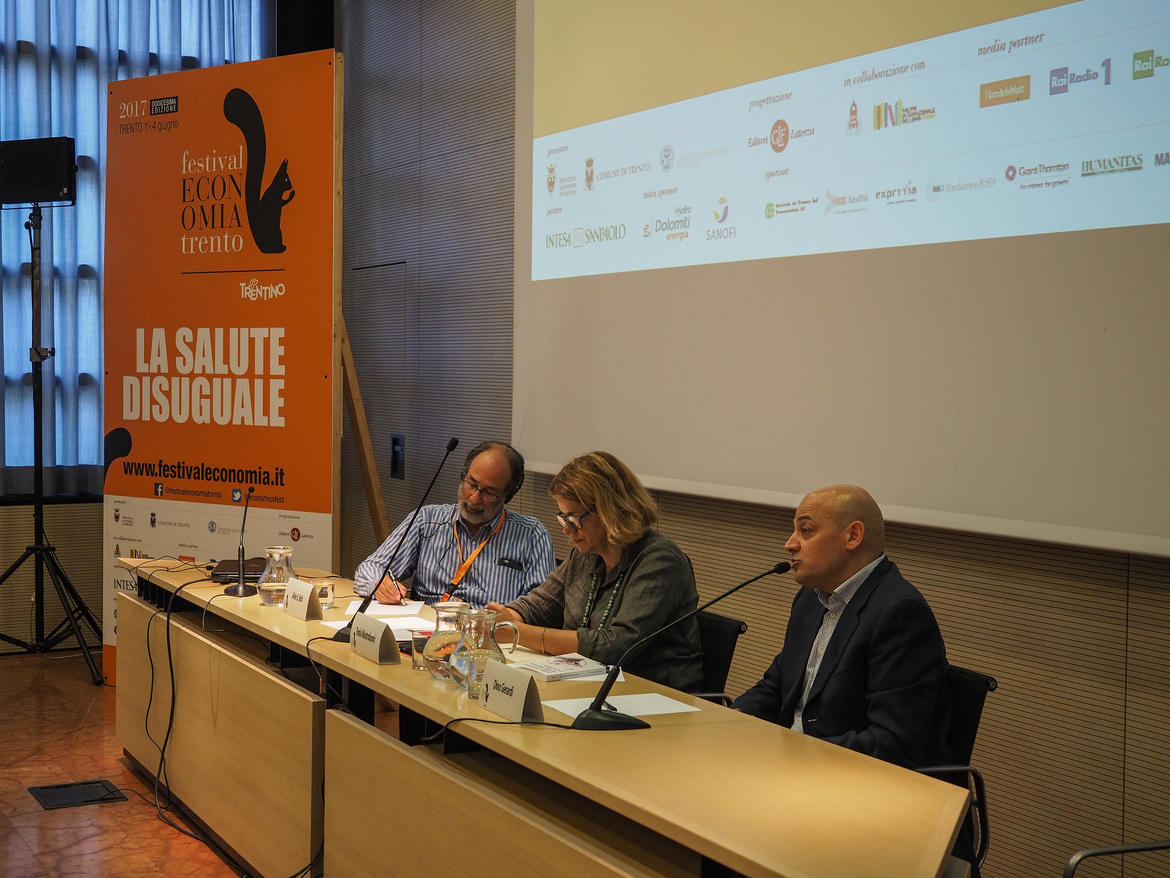
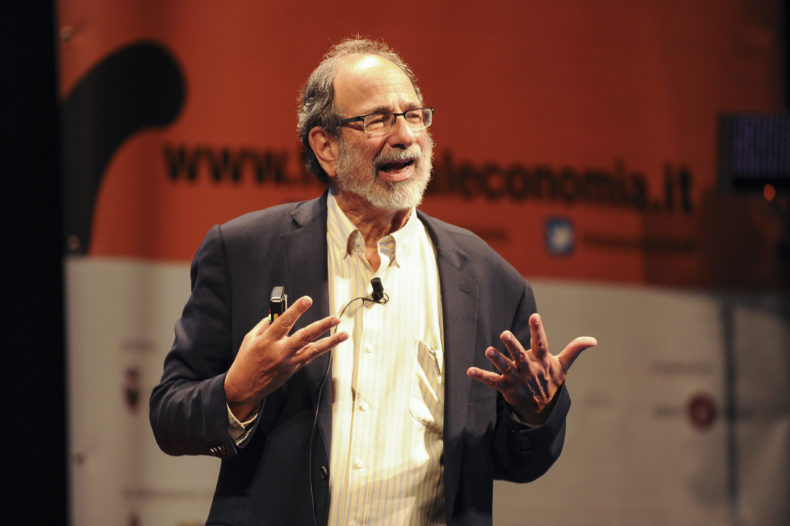
More from the Festival of Economics Trento

I'm back home, after two exciting days in Trento (and two long days of travel). There are a bunch of videos, and some press coverage, for those of you who speak Italian or like to use Google Translate.

You can hear the videos in English if you click on the URL, then start the video by clicking on the arrow in the middle of the screen, and then clicking on the gear icon in the lower right hand corner to select English. (It isn't enough to just click on the English symbol in the upper right...)

Here's a 1 minute video in English, a sort of trailer for my talk on global kidney exchange:

*********

Here's a link to the full video of my first talk, on global kidney exchange.
Mercato e disuguaglianze nella salute

The questions and answer period begins at minute 44, with a question by the eminent transplant nephrologist Giuseppe Remuzzi about his concern (which he mentions is also Frank Delmonico's) that the Philippines and Mexico, where Global Kidney Exchange has begun, are places where there is not only transplant infrastructure, but also illegal, black market organ trafficking.  He ends by saying that he remains to be (but hopes to be) convinced that GKE is a good idea.
My answer begins at minute 46:40.
I replied in part "One reason people get kidneys in illegal black markets is that they don't have better opportunities.  We would like to provide them with a better opportunity..."


Here's a video of the panel on my book: Matchmaking. La scienza economica del dare a ciascuno il suo  Play Video  It begins with a talk about the book, by Professor Dino Gerardi.  Afterwards I spoke in reply to questions from the moderator and the audience, and you can hear me in Italian translation.


And here's the panel on markets for organs "exploitation or opportunity?" also in Italian:
Mercati per il corpo umano: sfruttamento o opportunità?
I very much enjoyed meeting Ignazio Marino, the transplant surgeon who was for a time Mayor of Rome.

Below are some news reports on these sessions
*********
Here's a news story right after my talk on global kidney exchange, which was introduced by Tito Boeri:
"Il sistema delle catene" per donare gli organi
Al Teatro Sociale il Nobel Roth descrive il suo progetto per incrociare pazienti e donatori di Paesi ricchi e poveri
G-translate: "The Chain" system for organ donation
Al Teatro Sociale Nobel Roth describes his project to meet patients and donors of rich and poor countries

and here:
Dai modelli matematici si possono salvare molte vite umane. Il Premio Nobel Alvin Roth a Trento
"From the mathematical models you can save lives. The Nobel Prize Alvin Roth in Trento
We die because we can not afford a transplant. Roth: "Our program intends to solve the problem by crossing supply and demand"
**************
Here's a story covering my "book talk," in which Prof Dino Gerardi talked about the Italian translation of Who Gets What and Why, and I answered questions:
Matchmaking. La scienza economica del dare a ciascuno il suo


*************
Here's a story about the panel discussion on markets for body parts, moderated by Mario Macis, with Nico Lacetera, me, and Ignazio Marino, the transplant surgeon who was  mayor of Rome:
Mercati per il corpo umano: sfruttamenti o opportunità
Il premio Nobel Roth ha dialogato con l'ex sindaco di Roma (e chirurgo) Marino su trapianti e denaro

************
Here's a pre-festival story:
Oggi alle 16 l'inaugurazione al Palazzo della Provincia. Alle 18 al teatro Sociale l'apertura è affidata al Nobel Alvin Roth. Da domani anche la nostra emittente sarà in piazza S.Maria Maggiore 
Festival dell'economia, su il sipario


And here are two article from the Italian Jewish press:
Festival Economia – Pagine Ebraiche
Salute diseguale, in cerca di una cura
Pubblicato in Attualità il ‍‍30/05/2017 - 5

Il Nobel Alvin Roth a Pagine Ebraiche
“L’economia può riparare il mondo”

************
Updates:

Business Insider Italia has an interview with Ignazio Marino:
Ignazio Marino: “Il mercato nero dei trapianti si può mettere all’angolo salvando molte vite”
(Google translate doesn't seem to do a good job turning it into English, but the very last sentence is
"Quello che ci ha mostrato Roth è un sistema trasparente e può togliere ossigeno ai trafficanti”.
GT renders that as 'What showed us Roth is a transparent system and can remove oxygen to "traffickers.'


Here's a story with an inflammatory headline but a reasonable account, as near as I can tell from Google Translate:
L'economista che vuole legalizzare il traffico d'organi per salvare ricchi (e poveri) del mondo
"The economist who wants to legalize organ trafficking to save the rich (and poor) in the world
"In the US there are 100 thousand people on the waiting list for a kidney transplant but only 12 thousand a year. In the Philippines you do not pay you dialysis. In China they were using executed prisoners as donors. The organs of the problem is global and the Nobel Alvin Roth has the answer (maybe): scambiamoceli among us"
by Francesco Floris, June 7, 2017