Yesterday, Tito Boeri, David Card and I attended the award ceremony of the EconoMia and EcoQuiz competitions for high school and middle school students in Italy.
Here we are with the high school students whose essays received awards.
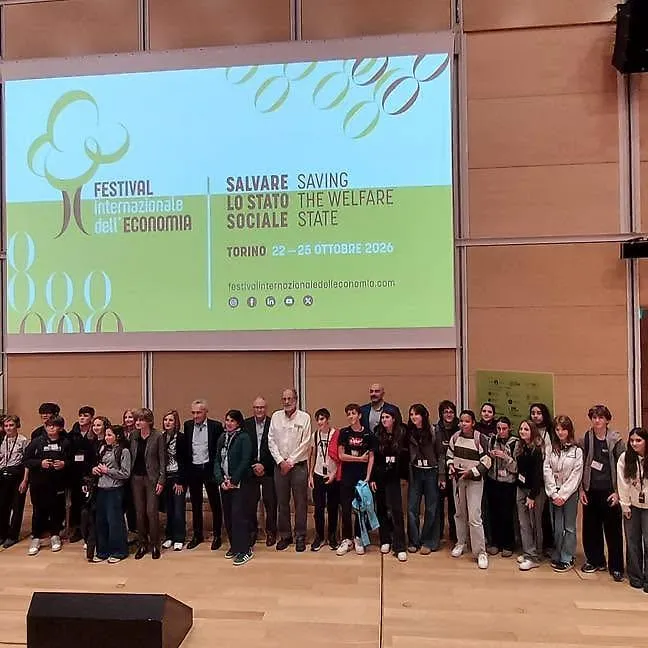
Yesterday, Tito Boeri, David Card and I attended the award ceremony of the EconoMia and EcoQuiz competitions for high school and middle school students in Italy.
Here we are with the high school students whose essays received awards.
CHI DECIDE? VITA, LIBERTÀ E CONFINI MORALI
WHO GETS TO CHOOSE? LIFE, FREEDOM, AND MORAL BOUNDARIES
sabato 24 ottobre
17:00 - 18:00
Centro Città
Collegio Carlo Alberto | Auditorium
Piazza Vincenzo Arbarello, 8, Torino
With
MARCO CAPPATO, ALVIN ROTH
Moderates
CATERINA SOFFICI
Live translation available
Quando le scelte riguardano il corpo, la vita e la morte, dove finisce la libertà individuale e dove deve iniziare la regolazione pubblica? Cosa dovrebbero fare le società quando le convinzioni morali divergono profondamente? Come possono le istituzioni proteggere la libertà di scelta senza lasciare indifesi i più vulnerabili?
When choices involve the body, life, and death, where should individual freedom end and public regulation begin? What should societies do when moral convictions sharply diverge? How can institutions protect freedom of choice without leaving the most vulnerable unprotected?
In the run-up to the International Festival of Economics in Turin starting today, Vanity Fair in Italy publishes an interview with me under this headline:
Alvin Roth: «Sono più preoccupato per la democrazia che per l’intelligenza artificiale»
"I'm more worried about democracy than artificial intelligence"
The Festival itself publishes this article:
ROTH E LA SFIDA DEI MERCATI RIPUGNANTI ROTH AND THE CHALLENGE OF REPULSIVE MARKETS
And here's an essay I sent in English, translated into Italian, which you can translate back pretty well:)
Economia in cerca di morale
Esistono mercati controversi (alcol, gioco d’azzardo, utero in affitto...) su cui i vari Paesi hanno posizioni diverse, riflette il Nobel Alvin E. Roth: non sempre si arriverà al consenso collettivo, ma è lecito esplorare compromessi La Lettura
Di ALVIN E. ROTH (traduzione di Rita Baldassarre)
Economy in search of morale
There are controversial markets (alcohol, gambling, surrogacy...) on which the various countries have different positions, reflects the Nobel Prize winner Alvin E. Roth: collective consensus will not always be reached, but it is legitimate to explore compromises
Silvia Console Battilana, who co-founded Auctionomics along with Paul Milgrom, writes in Forbes about the prospects for market design efforts to help conserve Utah's Great Salt Lake.
How Market Design Could Help Save Utah’s Great Salt Lake by
By Silvia Console Battilana
"the Great Salt Lake is drying up.
"To save the lake while protecting water users, business leaders can adopt a little-known but powerful economic tool: market design. When water levels drop, the consequences immediately hit commercial supply chains and local commerce. Market-based incentives give businesses a way to reward upstream water conservation, bringing more water to the lake without hurting regional growth. The invisible hand of the market could identify the least expensive conservation, compensate participating water users and restore the Great Salt Lake.
...
"The shrinking of the Great Salt Lake has many causes, and there is no silver-bullet fix. But any solution to refill the lake will likely involve conservation within Utah. Seventy-one percent of the water diverted from the lake’s basin is allocated to agriculture. If those commercial users could make more efficient use of water, more would reach the lake.
The catch is that many conservation practices, like water-friendly infrastructure and precision irrigation, are expensive. Under Utah’s traditional “use-it-or-lose-it” water rights system, users have little financial reason to conserve. Without modern economic incentives, asking businesses and farms to voluntarily cut back simply isn’t realistic.
Even if water users could be forced to cut back, it’s not clear who should cut back, or by how much. The costs of water conservation aren’t the same across users, and they can be very hard to estimate.
Market design can address both of these challenges. Crucially, markets don’t force particular actions or behaviors. Instead, well-designed markets create an incentive for farms and communities to cut back on water and be rewarded for their efforts. Anyone who can cost-effectively reduce consumption will do so, while others aren’t compelled to conserve if it would be too expensive.
Market Design Works
Even when the stakes are high and a lot stands in the way, intentionally designed markets can successfully align self-interest with the public good.
Further, market design can be used to align incentives even when money isn’t exchanged: it has been used for organ donation exchanges and food banks. Harnessing the invisible hand of the market to align incentives in pursuit of a common goal is an effective tool for difficult problems."
The International Festival of Economics will take place in Turin from 22 to 25 October 2026. I hope to be there to participate in all but the first day. (I'll be speaking on Saturday.)
The International Festival of Economics 2026
"Following the success of its first four editions, respectively dedicated to The New Generations of the World (2025), Who Owns Knowledge (2024), Rethinking Globalization (2023), and Merit, Diversity and Social Justice (2022), the Festival will return from October 22 to 25 in some of the most beautiful venues in the center of the Piedmontese capital with a new edition titled Saving the Welfare State. In Turin, some of the most authoritative economists and international experts working at the forefront of research on this topic will meet, together with scholars from many other disciplines.
The International Festival of Economics is curated by Editori Laterza and Collegio Carlo Alberto - Torino Local Committee (TOLC) under the scientific direction of Tito Boeri. The event is promoted by the TOLC, which brings together the Piedmont Region, the City of Turin, Fondazione Compagnia di San Paolo, Fondazione CRT, the University of Turin, the Polytechnic University of Turin, the Turin Chamber of Commerce, Unioncamere Piemonte, Unione Industriali Torino, and Legacoop, coordinated by the Fondazione Collegio Carlo Alberto.
Collegio Carlo Alberto will be one of the festival's venues, hosting 29 events.
I wonder if this is the first time an economics book has been reviewed in the American Journal of Transplantation.
Poetic justice: A review of moral economics by Alvin E. Roth
Michael A. Rees
"Alvin E. Roth describes poetic justice as the Virginia state flag flying at half-mast in 2020 in honor of Bernie Cohen, who argued the US Supreme Court case Loving v. Virginia that made interracial marriage legal. Turns out Mildred and Richard Loving were convicted of interracial marriage in 1967, arrested by police at 2 AM at home in their bed, and sentenced to 1 year in prison but suspended on the condition that they leave Virginia for 25 years. Reading what the Virginia Court of Appeals judge wrote, side by side with what the US Supreme Court wrote, is, by itself, worth the price of the book.
"Those of us in the field of transplantation have felt—and will continue to feel—the impact of repugnance. In moral economics, Alvin E. Roth takes us on a grand tour of how repugnance shapes transactions across a wide spectrum of human activities. Take uterus transplantation, pioneered in Sweden, a country where repugnance to surrogacy has made it illegal. You can transplant a uterus into a woman with infertility in Sweden, but do not you dare use a surrogate’s uterus in her own body to help you achieve a baby! Alvin E. Roth defines repugnance as a morally contested market that some people would like to participate in, but others think should be outlawed. He goes on to call a transaction repugnant if “all parties to the transaction want to engage in it, and others think they shouldn’t be allowed to for moral or religious reasons, even though those others can’t detect that the transaction has taken place unless someone tells them.”1 I found it fascinating to walk through all the ways in which repugnance has shaped the world in which we live.
"The book starts with a clear example of a transaction that many people want to engage in: sex. Of course, I knew about the repugnance surrounding prostitution and pornography, but could hardly believe the stories of how far people go on either side of a repugnant transaction. I found my own views challenged by what I thought was right, especially when considering the outcome I desired from the controversy being described. It was interesting to have these stories told by the “Father of Market Design” and to think about sexual desire as a contested marketplace with good and bad outcomes that could be influenced by better market design.
"It is not the first time I have been surprised to think about a human desire for something like love or health as a transaction that economists could study. I first met Alvin E. Roth in about 2004 when he thought he could help us transplant professionals do a better job with kidney exchange. I made the mistake of thinking that economists only worried about money, albeit at both the microlevel and macrolevel. This book makes clear that if we want to have the desired outcome of helping as many people as possible through organ transplantation, we are going to have to think like market designers and overcome repugnance to innovation. Remember Richard Lower in 1968 being threatened with criminal charges for “wrongful death” for removing a donor heart prior to the establishment of brain death criteria?
"My favorite chapter was about reproduction. You would not believe all the interesting twists and turns that have happened as artificial reproductive technology has blossomed, and some people wanted to have babies using it, whereas others were morally aghast at their desire, working hard to stop them. It was interesting to see different sides of contraception, abortion, in vitro fertilization, egg and sperm donation, paternity, maternity, parenthood, and surrogacy. But Alvin E. Roth has such a nice way of distilling complicated concepts, such as this quote: “Some critics have said that looking for an egg donor who attends Harvard, for example, reeks of eugenics. In response to that, Professor Kim Krawiec, perhaps the leading legal scholar of “taboo trades,” gave a very cogent response: “Fertile people have been screening for beauty and intelligence for years and years. It’s called dating.”2
"If transplantation attracted you as a field in part because of the ethical challenges encountered when considering organ donors and recipients, Moral Economics provides a narrated guide through thorny issues. Near the end of the book, we find perhaps the best call to action for those of us who want to solve problems. The Persian poet Rumi invites us to navigate repugnance: “Out beyond ideas of wrongdoing and rightdoing, there is a field. I’ll meet you there.”3
1. Roth, A.E.
Moral Economics: From Prostitution to Organ Sales, What Controversial Transactions Reveal About How Markets Work. Hachette UK; 2026
2026
2. Jones, A. Putting a Price on a Human Egg.”
Wall Street Journal. July 26, 2015;
Accessed XXX www.wsj.com/articles/putting-a-price-on-a-human-egg-1437952456
3.Rumi, “Out Beyond Ideas of Wrongdoing and Rightdoing.” Poetry Society of America.
Kidney exchange, which was pioneered in South Korea in the late 1990's, has largely been moribund there. But here's a call to change that.
Reemerging kidney paired donation in Korea: simultaneous two-way swaps to overcome human leukocyte antigen and anatomic barriers
Eunjeong Kang1,2, Kyung Ok Min1, Hee Gyung Kang3, Yohan Ahn3, Eun Young Song4, Ara Cho5, Ahram Han5, Sangil Min5, Jongwon Ha5,6,7, Sehoon Park2, Yong Chul Kim2, Yon Su Kim2,8, Hajeong Lee2,8 Kidney Research and Clinical Practice 2026;j.krcp.25.391. DOI: https://doi.org/10.23876/j.krcp.25.391
Abstract
Background
South Korea first implemented kidney paired donation (KPD) to overcome ABO-incompatible living-donor kidney transplantation. Although utilization declined as desensitization matured, persistent desensitization failure and anatomic constraints have renewed interest in KPD within a regulated framework. We report a recent single-center experience.
Methods
KPD exchanges were coordinated within an institutional registry under national supervision. We retrospectively reviewed six consecutive, simultaneous two-way exchanges (12 recipients) from 2022 to 2025. We assessed predefined desensitization failure or anticipated failure with the intended donor, compared immunologic compatibility between intended and exchange donors, and recorded perioperative desensitization, graft function, delayed graft function (DGF), and biopsy-proven acute rejection (BPAR).
Results
Five of six exchanges were undertaken for immunologic reasons. All five met criteria for desensitization failure or anticipated failure to the intended donor, with positive crossmatch and high donor-specific antibody (DSA) burden. Reassignment to the exchange donor reduced risk, lowering maximum DSA mean fluorescence intensity (MFI) from 13,228 to 1,350 and total DSA MFI from 20,542 to 2,240, although selective desensitization was still required in some recipients with residual human leukocyte antigen or ABO incompatibility. The remaining exchange addressed an anatomic constraint (adult–pediatric size mismatch). At a median follow-up of 12.2 months (range, 0.9–42.1 months), no DGF or BPAR occurred; all grafts were functioning, and the median estimated glomerular filtration rate was 66.8 mL/min/1.73 m2.
Conclusion
KPD is a safe alternative when desensitization fails or is predicted to fail, including in highly sensitized and anatomically complex candidates. These findings support renewed implementation of KPD alongside selective desensitization in Korea.

If the skies remain open, I'm on my way to Jerusalem, to participate in a twice-recheduled event at the Hebrew University of Jerusalem. (It was first scheduled for June 2025, to coincide with HUJI's 100th anniversary, but it was postponed to June 2026 on account of war with Iran. The June 2026 event was again postponed, for the same reason...)
Now, a week before Israeli elections (and less than a month before American midterm elections), amidst all the political polarization in both countries, I'm reminded that universities are one of the bastions of democracy. I don't doubt that most of the other honorees gathering in Jerusalem feel the same way. (I note that three of the honorary doctorate recipients have received the Nobel memorial prize in economics.)
Honorary Doctorate Recipients:
Prof. Joshua D. Angrist
Danna Azrieli
Dr. Naomi Azrieli O.C.
Dr. Sharon R. Azrieli CQ
Prof. Shafi Goldwasser
Steven H. Lavin
Marc O. Mayer
Prof. Joel Mokyr
Yehuda Leon Poliker
Prof. Alvin E. Roth
Prof. Sabine Schmidtke
Bublick Prize Recipient:
Prof. Eliezer Rabinovici
Rothberg Prize Recipient:
Eshel Gat
Honorary Fellowship Recipients:
Ronen Barel
Florence de Botton
Jean-François de Clermont-Tonnerre
Benjamin Horwood
Dr. John Lourie
Prof. Malcolm Shaw KC
Dr. Wallace N. Weber
Zvi Yekutiel
Here's a blurry photo that appeared on the front page of the 16 October Haaretz, with the names and nationalities of the honorees (sent to me by Assaf Romm)

Marilda Sotomayor is increasingly recognized as among Brazil's most important economists.
Consuni approves granting the title of Doctor Honoris Causa to Marilda Sotomayor
"The University Council (Consuni) approved, by acclaim, the granting of the title of Doctor Honoris Causa to the professor and mathematics Marilda Antonia de Oliveira Sotomayor.
...
"Marilda Sotomayor is recognized for her contribution to Game Theory and Matching Theory, an area dedicated to the study of allocation mechanisms in two-sided markets. The opinion of the Special Commission highlighted its contribution to the consolidation of this field of research in Brazil and its international projection.
"Graduated in Mathematics from the Federal University of Rio de Janeiro (UFRJ), Marilda completed a master’s degree at the Institute of Pure and Applied Mathematics (Impa) and a doctorate from the Pontifical Catholic University of Rio de Janeiro (PUC-Rio), in partnership with Impa. During the postdoctoral degree at the University of California, Berkeley, she worked with David Gale, one of the founders of Matching Theory.
"Among her main contributions is the book Two-Sided Matching: A Study in Game-Theoretic Modeling and Analysis, published in 1990 in co-authorship with Alvin Roth. The work received the Lanchester Prize and became an international reference in the area. Marilda is also a member of the Brazilian Academy of Sciences and the American Academy of Arts and Sciences and has received, among other distinctions, the 2016 TWAS Award.
"The proposal to grant the title was presented by Professor Maurício Bugarin to the Department of Economics (ECO/Face) and encamped by the Faculty of Economics, Administration, Accounting and Public Policy Management (Face)."
###########

There are two ways of measuring the success of military measures to limit the supply of cocaine. There's the military measure of how many people are killed and how much cocaine is confiscated. And there's the economic measure of how much cocaine is available to consumers, at what price and quality.
The WSJ has the story (of plunging prices and rising quality):
Why U.S. Airstrikes Are Failing to Stop the Global Cocaine Boom
Smugglers are shifting routes and using new tactics to evade military targeting, resulting in record supplies, plunging prices and high purity in the U.S. and Europe by Juan Forero
|
"BUENAVENTURA, Colombia—The Trump administration’s bombing campaign against cocaine-smuggling speedboats is starting to have an impact on the global drug trade—but not necessarily in a good way.
...
"Record supplies of cocaine still arrive in the U.S., Europe and as far away as Australia every day, cheaper and purer than they’ve been in decades, said law-enforcement officials across four continents.
"President Trump has celebrated the airstrikes, noting his administration has “made tremendous strides in stopping the flow of illegal drugs into our country.” In the past 13 months, American military drones and aircraft have destroyed more than 70 vessels, killing nearly 240 crew members and depriving criminal groups of $1.5 billion in cocaine, according to U.S. officials.
“The drugs coming in by sea are down by 97%,” Trump said in June. “We’re trying to figure out who the 3% are, because they are the bravest people on earth.”
...
"The scale of the trade is evident on the streets of drug-consuming countries, where supply is outstripping demand to the point that prices are plunging. In Miami, wholesale cocaine sold for about $16,500 a kilogram this summer, well below the historical $22,000 to $25,000 range. Similarly, European prices have plummeted from $45,000 to as low as $16,000 a kilogram in some cities.
"In both markets, purity remains remarkably high, sometimes hitting 98% in Europe, because dealers no longer need to stretch supplies with adulterants. "
Here's the program for the NBER Market Design Working Group Meeting, Fall 2026
I'll be discussing Moral Economics with Canice Prendergast.
There's growing consensus in India on moving towards a nationwide kidney exchange program.
Kute V, Kumar A, Balwani M et al.
Operational guidelines for kidney swap transplantation in India: an ISOT-NOTTO Delphi consensus
The Lancet Regional Health – Southeast Asia, 2026; 0

Among the consensus recommendations is this one, which summarizes the general positive tone adopted for national kidney exchange.
"Each transplant center should initiate and expand swap transplantation, given that it is legal, cost-effective, yields better outcomes, and can help prevent unethical commercial transplants by improving access. Multicentric swap transplantation programmes should roll out in phases: start with intra-city exchanges, then intra-state, and eventually inter-state and national collaborations. This phased approach ensures growing scale is matched with operational readiness, providing safe, equitable, and efficient transplants across regions."

E. Steve Woodle, MD
Woodle, professor of surgery and the William A. Altemeier endowed chair in surgery at the College of Medicine, is a multiorgan transplant surgeon and transplant immunologist who has spent more than four decades advancing the understanding of organ rejection and pioneering immunosuppressive therapies that have reshaped transplantation. Earlier in his career at the University of Chicago, he performed a liver transplant on a 10-day-old infant, setting a Guinness World Record for the youngest liver transplant recipient. He joined the College of Medicine in 1999 and directed the Division of Transplantation for nearly two decades, building an internationally recognized program of clinical and research excellence. In 2001, he performed Ohio’s first allogeneic islet transplant for type 1 diabetes. After undergoing his own liver transplant in 2003, Woodle returned to the operating room and became the first liver transplant recipient to perform a liver transplant.
Woodle has helped originate several therapeutic approaches now considered standard in transplantation. As a fellow, he conceived the genetic re-engineering of OKT3, the first FDA-approved monoclonal antibody — work later developed into teplizumab (Tzield), which the FDA approved in 2022 as the first immunomodulatory therapy for type 1 diabetes. He was the first investigator to introduce plasma cell-targeted therapy for a non-malignant human disease, using proteasome inhibitors to treat antibody-mediated rejection in kidney transplant recipients. He also pioneered corticosteroid-free immunosuppression, including the field’s landmark double-blind, placebo-controlled trial of early corticosteroid withdrawal. He helped conceive and establish clinical kidney exchange for incompatible living-donor pairs, publishing the field’s first peer-reviewed description in the New England Journal of Medicine in 1997. Kidney exchange now accounts for roughly one in five living-donor kidney transplants in the U.S.
His scholarship includes more than 400 scientific publications cited more than 22,000 times, and he has delivered more than 700 invited lectures and mentored generations of transplant surgeons, physicians and pharmacists. In 2025, he received the American Society of Transplantation’s Senior Achievement Award in Clinical Transplantation and was named an Ashbel Smith Distinguished Alumnus by the University of Texas Medical Branch, where he earned his medical degree.
Featured photo at top: Daniel Drake Medal. Photo/University of Cincinnati.
Kim Krawiec, the great legal scholar of repugnant transactions, has written that rare (almost never seen) book review that extends the empirical study of an important, well-studied social science event, namely Rhode Island's experience of legal prostitution. It provides an illuminating followup to the germinal paper by Cunningham and Shah. (Prostitution in R.I. is one of the controversial markets covered in Moral Economics, and I believe Krawiec's book review is headed for a forthcoming symposium on the book in Œconomia .)
The Smallest State's Big Experiment by Kimberly D. Krawiec
October 09, 2026
Abstract
Rhode Island’s accidental decriminalization of prostitution in 1980 is typically told as the story of a legal change that went unnoticed for more than two decades. This review of Alvin Roth’s latest book, Moral Economics, challenges that standard account and explores its implications for Roth’s argument that markets need social support to flourish. Drawing on court records, contemporaneous news reports, arrest statistics, and legislative proceedings, I show that the statutory change was noticed almost immediately. Prostitution-related arrests continued, not because police and prosecutors were ignorantly arresting and charging sex workers and clients under a statute that no longer existed, but because the legal system adapted using tools – primarily the loitering prohibition that survived the 1980 rewrite – that have long been used to police behavior and individuals considered repugnant. After a 2003 judicial ruling closed an important enforcement avenue against indoor sex work and vaulted the market into the open, a coalition formed around trafficking concerns that eventually paved the way for recriminalization in 2009. Rhode Island’s accidental experiment with decriminalized sex work provided neither the deliberately designed regulatory framework nor the political backing that could build the type of social support that Roth insists (correctly, in my view) markets need to function well.
Canada has reversed its plan to expand access to medical aid in dying to people with only psychiatric illnesses, after a long controversy (now characterized as a lack of "perfect consensus." But Canada has expanded access to allow those with progressive diseases to make advanced commitments, ahead of the day when they no longer may be capable of consent.
Canada Halts Plan to Allow Medically Assisted Death for the Mentally Ill. People who have mental illness alone will not qualify for assisted death, but patients who have other conditions and expect to have a cognitive decline can make an advanced request. By Vjosa Isai
"Canada will reverse its plan to allow people whose sole condition is a mental illness to seek medically assisted death, the government announced on Wednesday, abandoning a move to expand access to these patients.
“While there is not a perfect consensus on this issue, we believe this is the correct approach,” Sean Fraser, the minister of justice, told reporters on Parliament Hill.
"A law, introduced under the former Prime Minister Justin Trudeau, that allowed people with intolerable suffering from incurable mental health conditions to access a medically assisted death was initially poised to take effect in March 2023. Access for these patients was postponed for a year after public and some medical-community concerns that the existing system was not yet prepared to evaluate applications from these patients. In March 2024, the government delayed again, this time until March 2027, pending reviews by a panel of experts.
"With the clock ticking toward that deadline, Mr. Fraser said the government “very recently” formalized its stance and that Canadians can soon expect parliament to pass legislation that will indefinitely bar people whose sole medical condition is a mental disorder from seeking medically assisted death.
"The government is broadening the law to allow people with serious illnesses to make advance requests for medically assisted death if they anticipate their cognitive health will decline in a way that would prevent them from providing consent for the procedure in the future. This is already available to patients in the province of Quebec. The ability to make an advance request for assisted death has considerable public support."
Here's an interview with Harvard Professor Sarah Richardson about her recent article raising concerns about menstrual tracking apps. She has doubts both about whether they give useful advice, and about the low or absent guardrails on the data they generate.
"According to GenderSci Lab director Sarah Richardson, Aramont Professor of the History of Science and professor of studies of women, gender, and sexuality, the apps can dangerously mislead women while also exposing them to commercial exploitation and legal concerns.
...
"These apps are marketed as wellness and medical tools, but there are no protections on the data. Data is often sold, raising concerns for reproductive autonomy and privacy. Menstrual apps are unique compared to other kinds of digital trackers because they can expose reproductive and gender status.
"It is possible for there to be misuse of this data. This was deeply scrutinized after the Dobbs decision a couple of years ago with many scholars recommending that people not use these tracking apps, because there had been explicit threats made by regulators to try to access that data for use in criminal prosecution.
"Menstrual status can be used to give evidence of reproductive status. If the use of one of these apps exposed somebody as having been pregnant and then no longer being pregnant, for example, that could potentially be, in some jurisdictions, used either to discriminate against them or to implicate them criminally under laws that are meant to restrict abortion. "
#####
Here's the article in the BMJ:
Digital menstrual tracking risks creating more harm than benefit
BMJ 2026; 394 doi: https://doi.org/10.1136/bmj-2026-100858 (Published 30 September 2026) by Lee, Katharine MN, Marina DiMarco, Madeleine Pape, Meredith Reiches,
Patricia Homan, Sheree Bekker, Margo Mountjoy, and Sarah S. Richardson.
"Digital menstrual tracking apps claim to scientifically analyse individual data to provide guidance that will improve health, wellbeing, and performance based on estimated menstrual cycle phase. But neither digital menstrual tracking nor related practices of cycle syncing—that is, synchronising physical activity and nutrition to menstrual cycle phases—have been convincingly shown to improve health or other performance outcomes. Moreover, these practices raise serious concerns, given their risks of harm."